

Gradient Ceramic Coffee Mug Gift: 6 Things Buyers Should Compare
Reading time: about 9 minutes
Every December, our packing table turns into mug triage. The plain white cups go out last — safe, forgettable, easy to get wrong. The gradient pieces go out first, because a glaze that fades from charcoal into cream, or rust into blush, reads as studio pottery even off a production line. A gradient ceramic coffee mug gift is the rare present that ends up on the desk instead of buried in the cabinet.
That same handmade look is what makes gift shoppers hesitate, and the same questions reach our inbox every week: Is the glaze food-safe for daily coffee? Will the ombre fade in the dishwasher? Does the handle scorch during a microwave reheat? How much does it actually hold? And will it match the photo? This is the comparison we walk customers through before recommending something like The Gradient Coffee Tea Mug — plus the checks you should still run on the live listing yourself, because care labels and specs can shift between production runs.
Who a gradient ceramic coffee mug gift actually suits — and who should skip it
Ombre mugs earn gift status by being visible. Three looks dominate the category right now:
- Japandi neutrals — matte gray-to-stone or black-to-sand fades that sit well beside wood trays and linen.
- Sunset and reactive glazes — rust, blush, and teal transitions with the slight irregularity of a kiln piece.
- High-contrast ombre — bold top-to-bottom shifts that photograph well and suit playful recipients.
Buying for someone whose cabinet is already a wall of identical white diner mugs? A piece from our unique coffee mugs collection fills that gap. Buying for a household that wants six matching place-setting cups? Skip this category — one-of-a-kind gradients rarely match mug to mug, and pretending otherwise is how returns happen. Also think twice for sealed-tumbler commuters, insulated-stainless loyalists, and drop zones like kids' sidelines or poolside tables, where ceramic's breakability is a genuine drawback.
Lead-free and cadmium-free claims: how to read the fine print
Food-contact safety is the first non-negotiable check for anything that will hold hot coffee every morning. The number that matters: the FDA action level for lead leaching from ceramic cups and mugs is 0.5 µg/ml in an acidic leaching solution. That is a lab threshold for pottery, not a marketing phrase, and it exists because badly fired glazes can leach — especially into acidic drinks like coffee or citrus tea.
FDA guidance specifically cautions against using untested traditional, antique, damaged, or brightly colored orange, red, and yellow pottery for food. A 2017 pilot study also found lead from some retail ceramic mugs leaching into coffee and tea, with results varying mug by mug rather than by beverage; under typical-use assumptions, one mug exceeded California's 0.5 µg/day MADL. New in a box does not automatically mean tested, so read instead of assume:
- Look for an explicit lead-free and cadmium-free statement on the listing — not a vague "food-safe" tagline.
- Choose modern, labeled production for daily hot drinks over thrifted, souvenir, or heirloom pieces.
- Retire any mug with a chipped, crazed, or worn interior; the glaze is the barrier.
- Treat a Proposition 65 warning and the FDA action level as two different rulers — one is a daily-exposure warning framework, the other a leaching concentration limit.
We will not type "lead-free" on a product's behalf without seeing it on that product's own page. Open the listing for this gradient coffee and tea mug and read the current food-contact language before gifting it for everyday use.
Will the gradient fade in the dishwasher or turn scorching in the microwave?
The microwave question is settled physics. FDA guidance notes that ceramic containers are fine in microwave ovens because microwaves pass through ceramic; the vessel itself is not heated by the waves but by the drink inside. That conduction is why one handle stays comfortable and another feels scalding after a 90-second reheat — wall thickness, handle shape, and how long the liquid sat matter more than the color ever will.
Colorfastness is murkier, and honesty is the only useful answer: there is no long-term public data proving ombre finishes survive years of dishwasher cycles unchanged. Detergent, heated dry, and abrasive pads can dull matte or reactive surfaces over months, and light-toned interiors show tea staining sooner — a baking-soda paste lifts most of it without scratching. Customers who want the gradient to stay camera-ready hand-wash the exterior and keep scrubbers away from the transition band. Customers who run a heavy nightly cycle are often happier with a simply glazed solid-color mug, and we would rather say that now than after the wrapping paper is on.
Before checkout, confirm on the listing itself:
- Explicit microwave-safe wording for the finished mug — "ceramic" alone is not a promise.
- Dishwasher-safe wording, including any top-rack-only note.
- Any mention of glaze variation, fade behavior, or hand-wash preference.
For a deeper walkthrough of finishes and care, our gradient mug gift guide covers the same comparison from another angle.
Real capacity and handle fit: the two specs product photos hide
Pretty glaze means nothing if the mug fights you at 7 a.m. Three details decide daily comfort, and none of them show well in a hero shot:
- Knuckle clearance. A medium adult hand should fit without scraping the wall. Oversized statement handles photograph beautifully and feel clumsy at a laptop.
- Rim feel. A thick rolled lip slows small sips; a thin rim sips nicely but chips sooner against the faucet.
- Stated versus usable capacity. Most people pour to 80–90% full, so the practical serving is always smaller than the printed number — and the gap grows if the interior curves in early.
We deliberately will not quote an ounce figure here; capacity is a listing fact, and confirming the current number on this ombre-style mug's product page beats taking any blog's word for it, including ours. If the recipient microwaves yesterday's coffee every afternoon, picture the mug full, in their hand, walking from kitchen to desk. That mental test catches more bad fits than a spec sheet.
Gifting outside the gradient category? Our ceramic mug gifting checklist runs these fit questions across the whole category.
Why no two reactive-glaze mugs look identical — and how that changes gifting
Most product pages skip this, and it explains half the "looks different than the photo" reviews in the category. Gradient effects come from three main methods:
- Sprayed or airbrushed ombre. Colorants are layered before firing; spray density and alignment drift slightly piece to piece.
- Reactive or transmutation glazes. Glaze chemistry shifts in the kiln — oxides bloom, run, and mute in ways a potter can steer but never clone.
- Dipped transitions. Overlapping dips create bands that soften in the fire.
| Finish type | Handmade feel | Matches a set | Care forgiveness |
|---|---|---|---|
| Reactive / one-off gradient | Highest — every piece varies | No | Hand-wash safest |
| Printed / controlled gradient | Lower — consistent pattern | Yes | Most forgiving |
| Solid glaze | Minimal | Yes | Most forgiving |
Photos are lighting-dependent, too; matte gradients shift noticeably between warm kitchen bulbs and cool daylight. Read customer photos where the listing has them, and treat the hero image as a style reference rather than a promise of an identical twin.
Packaging and pairing: making the unboxing match the mug
A gradient mug carries visual weight, so the wrapping should keep up. What works in real unboxings:
- A small bag of whole beans or loose-leaf tea that continues the color story — dark roast beside charcoal fades, citrus or floral tea beside blush tones.
- A linen coaster or small wood saucer for the Japandi-leaning looks.
- A handwritten line about why you picked that fade; people remember the reason longer than the object.
One practical warning: gift-ready packaging is not automatic. Some ceramics ship in protective mailers you will want to rewrap, so check the listing for a gift box before your shipping deadline does. We cover the unboxing angle further in our gift-ideas breakdown for this specific mug.
Six checks before you add a gradient mug to your cart
Run this list against the live listing — not against your memory of a similar mug from another store:
- Confirm explicit lead-free and cadmium-free food-contact language.
- Confirm microwave and dishwasher wording, then decide whether hand-washing better protects the finish you fell for.
- Match the stated capacity to how the recipient actually drinks, remembering the 80–90% pour.
- Study the handle in photos: knuckle room, balance, and heat path if they reheat constantly.
- Accept glaze variation if the listing describes handmade, reactive, or sprayed work — it is the feature, not a defect.
- Plan the presentation: box, wrap, beans or tea, and a note.
If the listing passes all six, start with the Gradient Coffee Tea Mug listing, or browse more one-of-a-kind designs in our unique coffee mugs range and compare fades side by side before you commit.
Frequently asked questions
Are gradient or ombre ceramic mugs microwave and dishwasher safe, and will the colors fade?
Microwave safety depends on the finished mug being free of metal and rated for the appliance; microwaves pass through ceramic, and the drink supplies the heat. Fading is separate — detergent and heated dry can dull matte or reactive finishes over months, and no long-term public data guarantees otherwise. Verify the care wording on the listing, and hand-wash the exterior if a sharp gradient matters more to you than convenience.
Are gradient mugs lead-free and cadmium-free for daily hot coffee or tea?
Trust only an explicit lead-free and cadmium-free statement on the product page you are buying from. The FDA action level for lead leaching from ceramic mugs is 0.5 µg/ml in acidic testing, and a 2017 pilot study found leaching varied mug by mug among retail ceramics. Skip any mug with a chipped or crazed interior — the glaze is the barrier.
Will a reactive gradient mug look exactly like the product photos?
Usually close, not identical. Sprayed fades and reactive glazes shift with application and kiln behavior, so sibling variation is normal. Treat photos as a style reference, and choose a controlled printed finish instead if you need two perfectly matched mugs for a couple.
Does the handle stay cool in the microwave?
The mug warms from the hot liquid inside rather than from the microwaves themselves, per FDA guidance on ceramic containers. Handle comfort then comes down to handle size, wall thickness, and reheat time. After the first cycle at home you will know how that specific piece behaves — if it runs hot, let it rest half a minute before carrying.
Is a gradient ceramic coffee mug gift a good present for a coffee or tea lover?
Yes, when they drink from open ceramic at a desk or kitchen counter and the listing verifies glaze safety, capacity, and care. It is a weaker pick for sealed-tumbler commuters or anyone who wants perfectly matched sets. Add beans or tea and a short handwritten note to finish the unboxing.
Read more

Best Mountain Coffee Mugs For Gifts: What Buyers Should Compare
We handle mountain-themed mugs every week at CoffeifyMug. Here we compare enamel, ceramic, and insulated steel gift options on heat hold, pack weight, safety, and care — so the mug matches where th...
Read more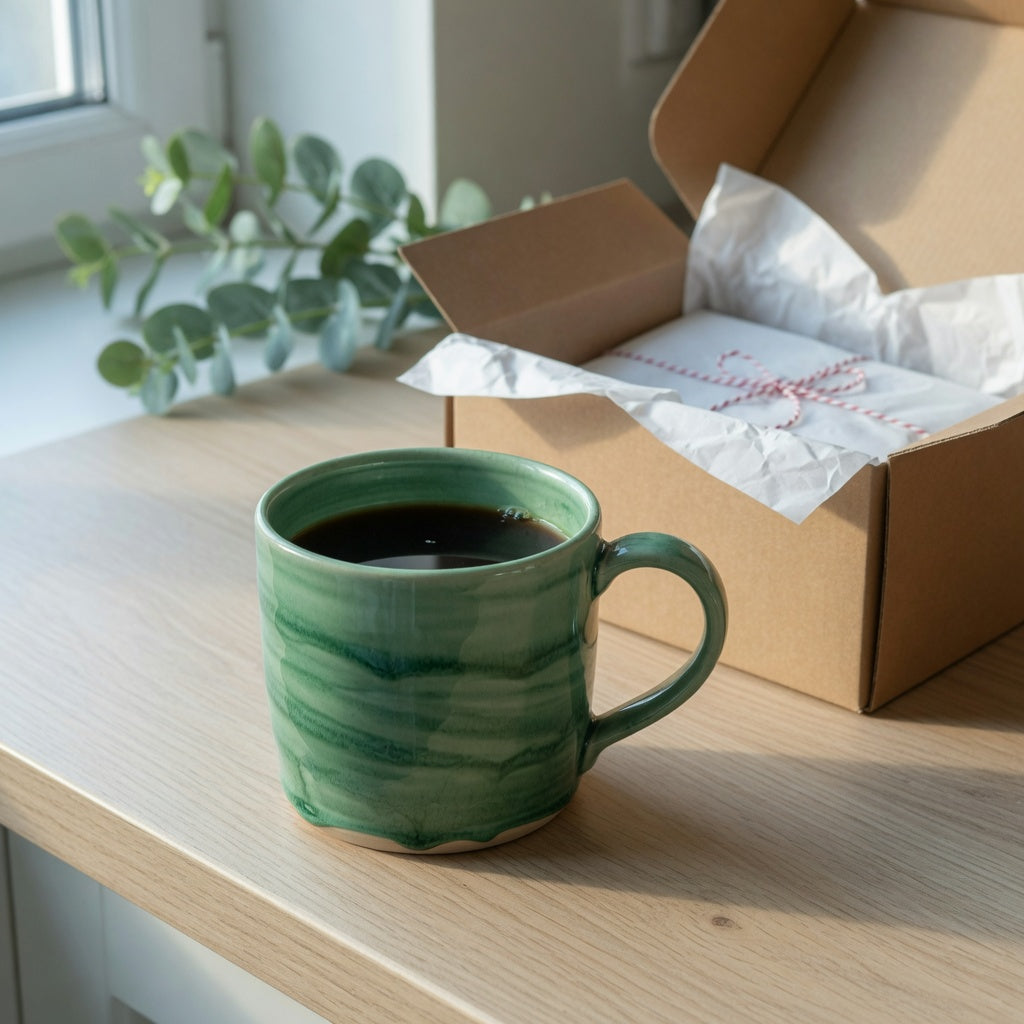
Green Waves Mug Gift: What Buyers Should Compare
Compare design fit, large-ceramic size, handle comfort, and glaze care before ordering a green waves mug gift. A store-side checklist built from what our team sees in real gift orders and follow-up...
Read more
Leave a comment
This site is protected by hCaptcha and the hCaptcha Privacy Policy and Terms of Service apply.