

Gift Mug for Home Decor Enthusiasts: What to Compare
Reading time: about 13 minutes
A housewarming mug can look perfect in the tissue paper and still fail by Tuesday. We hear the same three stories after the party: a metallic line went dull in the dishwasher, the handle pinched a knuckle, or the base rocked on a stone counter and left a ring. A gift mug for home decor enthusiasts is being asked to do two jobs that do not always agree. It has to look chosen next to the bowls and the cutting board, and it has to hold a hot drink without a care surprise.
We sell drinkware that people also put on open shelves. In our store the useful comparison is not which photo is cutest. It is which limits the recipient will actually live with. On our team, the product page gets read before the mug goes in a gift box.
Is this gift mug for home decor enthusiasts a daily cup, a shelf piece, or both?
Start with their morning, not the mood board. If they drink from the same two mugs and wash them every night, the gift has to survive that routine. If they rotate a small group on a rail and keep a plain workhorse in the cupboard, a more delicate or sculptural piece can still be right. The trouble starts when one object is forced to do both.
We sort the decision this way:
- Daily drinkware. A foot that sits flat, a lip that feels smooth on the second sip, a handle opening their fingers can pass, and care notes that match how they wash.
- Shelf piece. Silhouette, glaze, and color do the work. Drinking is occasional, and the listing may limit heat, dishwashers, or food contact.
- Both. Only when the current product page states food-contact use and gives care instructions you can follow. A styled photo is not that statement.
Someone who already owns plain cups often wants one distinctive mug, not another blank one. That is when we open the Mountain Sea II coffee and tea mug. The listing is named as a coffee and tea mug with a wooden handle. Treat the name as a reason to read the current materials and care lines, not as proof you can soak the handle or send the mug through a dishwasher or microwave. Before you treat it as everyday drinkware, confirm stated capacity, how the handle is described now, and whether the page marks it for food use. We will not fill those blanks from the photo. A glazed body and a separate handle material do not share one set of limits.
If the shelf needs several shapes that can rotate, start in our unique coffee mugs and compare silhouettes side by side. One hero image will not tell you how a row of handles will look.
This kind of gift is a poor fit for a matching service for eight, a lidded commute cup, or a mug you plan to send through a heated dry cycle every night when the listing never mentions appliances.
Will the glaze and scale sit with the kitchen they already have?
Decor-minded buyers rarely want a mug that shouts over the room. They want one that looks chosen with the shelf. Match what is already there, in the light of that kitchen, not in a saved pin.
- Matte or satin glaze stays quiet beside oak, plaster, and stone. It also shows water spots more honestly than a high gloss, so a mug over the sink will need a wipe.
- Speckle and iron fleck sit easily with other stoneware and linen. Heavy speckle next to a glossy white dinner set can look accidental rather than collected.
- Low contrast in sand, ink, moss, or charcoal is what people usually mean by Japandi or wabi-sabi. Skip the trend label. Keep the shelf calm.
- A pictorial or sculptural mug works as one focal object. Two competing story mugs on one rail start to look like a shop display.
- Kitsch and novelty shapes are a real taste. They fail in a restrained kitchen. If the shelf is already full of character pieces, a plain matte mug will look unfinished instead.
Color is the detail shoppers misjudge on a phone. Warm kitchen light pushes greens toward olive and blues toward gray. If they are particular, hold a listing photo next to a mug they already own, in daylight, rather than trusting a screen swatch.
Scale matters as much as glaze. A very wide bowl-mug eats a narrow shelf and can feel clumsy for a small tea pour. A tiny espresso cup disappears beside tall canisters. For its lead guideline, the FDA describes cups and mugs as small ceramic hollowware, commonly used for hot drinks such as coffee or tea, normally but not always about 8 fl oz (240 mL), and usually made with a handle. That is a regulatory description of the category, not the size of any mug we sell. It is still a useful anchor. If the listing's stated capacity is far from how they drink, the gift will live on the shelf or feel wrong in the hand.
Check the page for stated capacity, height, and diameter. If those numbers are missing, ask before you buy. Do not estimate from a photo that includes a plant and a book.
What should the listing confirm before hot coffee goes in it?
Decorative does not automatically mean unsafe, and handmade does not automatically mean food safe. The page has to say which one you are buying. A styled mug fails when the shelf likes it and the sink does not.
These are the misses we walk through after the ribbon is in the trash:
- Food-contact status. If the piece is marked decorative only, the drinking plan stops. Under FDA rules, ceramicware that looks suitable for food is treated as foodware unless it has both a conspicuous consumer-facing stick-on label and a permanent statement on the base, using specified warning language. One of those warnings is "Not for Food Use. May Poison Food." Follow it. Coffee is not a small exception.
- Stated capacity in ounces or milliliters, not "large" or "cozy."
- Handle clearance. Can their fingers pass without a knuckle hitting the body? A narrow or sculpted handle looks elegant and then stays in the cupboard. When a listing gives no measurement, our rough counter check is whether two fingers slide through the opening without scraping.
- Lip. A thick, gritty, or sharply glazed rim is what people notice on the second sip, not in the product photo.
- Base. It should sit flat. In our experience, a rocking foot shows up on stone and quartz more than on a soft wood table, because the hard surface does not forgive a high spot on the foot ring.
- Weight. Heavy stoneware plus a full pour gets tiring if they cradle the mug on the sofa. Listings rarely print filled weight. Use the empty weight when it is given, then picture the drink on top of it.
- Care notes in the maker's words: dishwasher, microwave, hand wash, wood or metal parts, and any display-only line.
Lead is why that warning exists. The FDA has explained that lead may be present in the glazes or decorations on some traditional pottery, and that lead can leach into food or drink if the piece was not made properly. Some ceramic foodwares have been found to leach significant quantities of lead from surfaces that can touch food. The metal is extractable by food and, with continued use, can contribute to chronic lead poisoning along with a wide range of other adverse effects. Lead is toxic. Larger exposures can cause lead poisoning, and in children that poisoning has been linked to learning disabilities, developmental delays, and lower IQ scores. Washing, boiling, or other home processing does not remove lead from pottery. If a consumer test finds leachable lead, do not cook, serve, or store food or drinks in that piece.
The FDA's listed action level for lead leaching from ceramic cups and mugs is 0.5 micrograms per milliliter of leaching solution. In its guide for cups and mugs, that level is applied to any one of six units tested. Its listed action level for cadmium in ceramic small hollowware is also 0.5 micrograms per milliliter. Those figures are enforcement thresholds. They are not a promise that every mug under the number feels good in the hand, and they are not a test you can run at the sink.
A "lead free" sticker is not proof. The FDA has reported traditional pottery labeled that way that still released extractable lead at levels comparable to lead-glazed ware, in some cases above its action levels. Ware above those levels should not be called lead free. Pottery made in commercial factories for everyday use is described as much less likely to have this problem than higher-concern pieces: handmade ware with a crude or irregular appearance, antiques, damaged or worn glaze, items from flea markets, street vendors, or unknown makers, and pottery brightly decorated in orange, red, or yellow. Traditional pottery is often earthenware, a porous clay that has to be glazed to hold liquid. If a lead-containing glaze is not fired properly, the lead may not fuse into the glaze. If you cannot tell who fired the piece, do not guess. Choose a current listing that states food use plainly, or keep the object on the shelf.
How do glaze, print, metal, crackle, and add-on clay change the wash?
Care is not one rule for every ceramic surface. It depends on the finish and on anything attached to the body. Gift roundups skip that split, then the mug comes back cloudy or the decoration lifts.
| What you see | What to verify on the listing | Limit we tell buyers |
|---|---|---|
| Kiln-fired glaze on a ceramic body | Dishwasher and microwave, stated separately | If those words are missing, hand wash. Do not assume a heated dry cycle is harmless. |
| Surface print or decal | Whether the print sits under the glaze or on top | On-top prints can fade, scratch, or peel. A graphic is not automatically as tough as the clay. |
| Gold, silver, or other metal accent | Separate microwave and dishwasher lines | If the page is silent on the microwave, do not microwave it. A metallic rim is a common reason a pretty mug becomes shelf-only. |
| Crackle or crazing | Whether the maker calls it food safe or decorative | Crackle can be a planned look or a failed surface. Staining in the lines is a reason to treat it as display until the maker says otherwise. |
| Polymer clay, resin, or sculpted add-ons | Care notes for the add-on, not just the mug blank | These are not a fired glaze. Treat heat and the dishwasher as open questions until the listing clears them. |
| Wood or another separate handle | Soak, dishwasher, and heat limits for that part | Do not assume the handle shares the body's limits. Confirm before you gift it as an everyday washer. |
None of those rows is a certification, and none replaces the page in the cart. If two sellers describe similar mugs differently, trust the listing you are buying, not a comment about a different piece.
Where should the mug sit so it reads as decor, not overflow?
A decor enthusiast will judge the gift by where it can sit on a Tuesday, not by the tissue paper on Sunday. Open shelves reward fewer objects. A short row with space between handles reads as a collection. A packed rail reads as overflow from a closed cabinet.
Hooks under a shelf keep handles visible and stop bases from stacking into chips, but a heavy mug on a small hook stresses the handle every time someone bumps it. A mug tree helps in a tight kitchen and looks busy in a quiet one. Match the stand to the room, not to how many mugs they own.
Dust and grease film are the unglamorous part. Mugs above a range pick up a tacky layer that dulls matte glaze and clings in speckle. If their display is over the cooktop, a smoother surface they can wipe is kinder than a deeply textured sculptural mug. Undercuts and attached figures trap dust a sponge misses. Those belong on a shelf someone actually dusts, or they stop looking styled within a month.
Sculptural mugs and pieces with a protruding or delicate handle should stay out of the daily stack. Stacking saves a cupboard and cracks a rim. If the gift is the one beautiful object, give it a spot where nothing nests inside it.
Is one statement mug a better housewarming than a set?
For a new apartment with empty shelves, one confident mug often lands better than four they did not choose. A set makes sense when you have seen their dinnerware and you are filling a real gap: two breakfast mugs, or a short stack in one glaze family. A bulky bundle fails when they are particular and you guessed. A bag of beans they dislike becomes clutter with a ribbon. Add a simple drink pairing only if you know they will use it.
Personalization is its own trade-off. A name or a date makes the gift specific and makes regifting harder. On a decor-led shelf, the glaze or the form may already be the personal part. Skip an extra print if the object is doing the work.
Before checkout, reread the page as if you will be the one washing this gift mug for home decor enthusiasts next month. The page still has to confirm capacity, handle, base, care, and food-use or ornamental-only wording. If a decorative piece is missing those lines, pick a different listing or ask the seller. A housewarming mug they are afraid to drink from becomes a dustable ornament with a guilty backstory.
If you are choosing that single shelf piece from what we carry, open the Mountain Sea II listing, read the current materials and care lines, and only then decide whether it is the daily cup or the object beside the cups. If their shelf needs more than one shape, the unique mug collection is the faster side-by-side.
A last pass we use at the counter:
- Who drinks from it, and how often?
- Display, daily use, or both, and does the listing allow that?
- Finish and color against their real shelf, not a saved photo.
- Capacity, handle opening, lip, and a flat base.
- Decoration type, and the care that type can actually take.
- Any ornamental warning, including "Not for Food Use. May Poison Food."
- One statement mug, a quiet pair, or a set they can rotate.
The pretty photo is step zero. The listing is the decision.
Frequently asked questions
What makes a gift mug for home decor enthusiasts different from a basic coffee mug?
The recipient will judge it on the shelf as well as in the hand. You still need a stated capacity, a usable handle and lip, and a flat base if they will drink from it, but glaze, color, and silhouette have to sit with the kitchen they already have. A basic mug is the better gift when they wash the same cup every day and the decorative option has no care or food-use notes.
How do I know a decorative mug is safe to drink from?
Read the current listing for a food-use statement, and check for an ornamental warning on the label and the base. Ceramicware that looks usable is treated as foodware unless it is marked otherwise with both a conspicuous stick-on label and a permanent base statement. "Not for Food Use. May Poison Food" means you do not put drinks in it. A "lead free" claim is not enough on its own. The FDA has found traditional pottery using that phrase that still leached lead.
Will a gold rim or a printed design survive the dishwasher?
Only if that exact listing says so, and only for the appliance it actually names. A metallic accent is a common reason to keep a mug out of the microwave when the page is silent. Surface prints can fade or scratch even when the ceramic body would have been fine. If dishwasher and microwave guidance are missing, hand wash the mug and skip the microwave.
Should I buy one sculptural mug or a matching set for a styled kitchen?
Buy one statement mug when they already own everyday cups and the shelf needs a single focal object. Buy a pair or a short set when you know their glaze family and they are short on drinkware they will actually rotate. A row of busy pictorial mugs usually looks more like storage than styling.
What if the handmade mug has a crazed or crackled glaze?
Ask whether the maker intends it for food or for display. Crazing can be a planned crackle effect or a sign the surface is not sound. If the lines are stained, or the listing never mentions food contact, keep the mug on the shelf rather than in the coffee rotation. Home washing will not fix a glaze that is already taking on liquid.
More from our blog
Read more
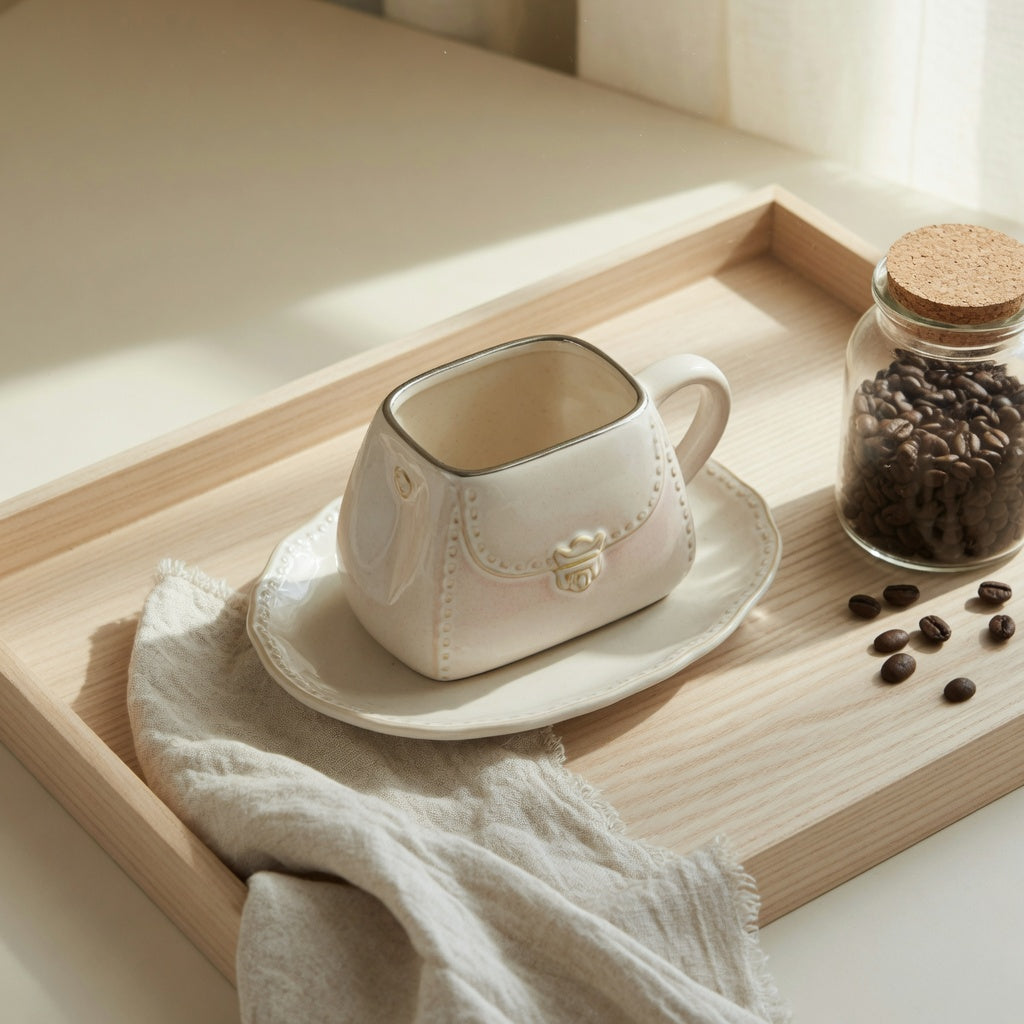
Handbag Coffee Tea Mug for Coffee Lovers Home Decor: Buyer Fit
Purse-shaped cups get chosen for the silhouette, then judged on fill size, metal trim, and whether they are for drinking. We sort a handbag coffee or tea mug the way we would before it lands on a t...
Read more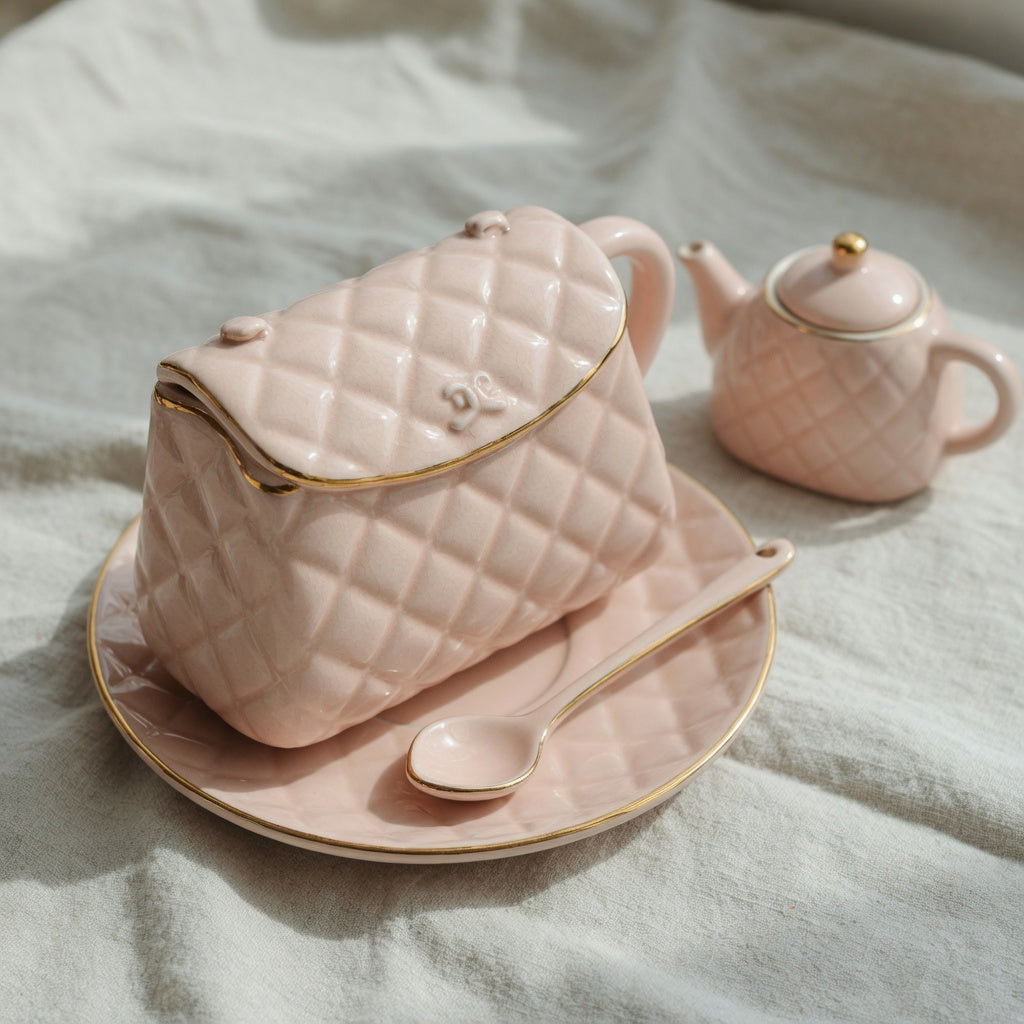
Ceramic Handbag Tea Cup: Size, Gold Trim, and Use
A ceramic handbag tea cup can be a sharp gift or a poor daily mug. We compare stated size, gold-trim care, microwave and dishwasher limits, and food-contact labels before you buy.
Read more
Leave a comment
This site is protected by hCaptcha and the hCaptcha Privacy Policy and Terms of Service apply.