

Geometric Coffee Mug Everyday Mug Rotation Product Shortlist Guide
Reading time: about 9 minutes
A mug can look right on a product page and still lose its place after two weekday uses. The handle catches the cabinet edge, the body takes up more shelf room than expected, or the listed capacity does not match your normal pour. Our geometric coffee mug everyday mug rotation product shortlist guide starts with those ordinary kitchen and desk problems, then compares three ceramic coffee-and-tea mugs by visible form, current product details, and the job each one could perform in a practical rotation.
When our team handles and packs mugs, we pay attention to the points shoppers often cannot judge from a front-facing photo: the total width including the handle, the shape of the foot ring, the rim profile, and where changes in the exterior plane may need extra attention during washing. We do not treat a bold shape as proof of durability, easier cleaning, or greater capacity. The live product page remains the source of truth for the exact capacity, selected option, and care instructions.
Use this geometric coffee mug everyday mug rotation product shortlist guide for capacity, shape, and storage
A useful shortlist gives each mug a specific role. Before comparing colors or finishes, answer three questions about the slot you are trying to fill:
- Pour size: Does the currently listed capacity suit your usual coffee or tea serving without forcing an extra refill?
- Storage envelope: Will the body, handle, and rim clear your shelf height and neighboring mugs?
- Use frequency: Is this a daily mug that will be washed repeatedly, or a lower-frequency piece kept for guests and slower weekend drinks?
The three shortlisted product listings identify the mugs as ceramic, but their visible shapes serve different preferences. Material alone does not establish microwave or dishwasher compatibility, so check the care information for the exact product option before using either appliance.
| Mug | Listed material | Capacity comparison | Visible form |
|---|---|---|---|
| Rhombus | Ceramic | Confirm the current listed capacity for your selected option | Angular, faceted rhombus profile |
| Planet | Ceramic | Confirm the current listed capacity rather than estimating from width | Rounded, planet-like geometric profile |
| Gradient | Ceramic | Compare the current listing with your measured everyday pour | Smooth geometric taper with a gradient finish |
Three everyday scenarios for the Rhombus, Planet, and Gradient mugs
Rhombus: an angular mug for a dedicated shelf position
Reader situation: You keep one or two mugs on an open shelf or coffee counter and want the geometric form to remain noticeable between uses. The Rhombus Coffee Tea Mug is the most direct match because its visible faceted body provides a clearly angular alternative to a plain cylinder.
Choose it when: the current listed capacity matches your pour, and you have measured enough width for the body and handle. It makes more sense as an individually placed mug than as a piece bought solely for dense stacking. Skip it when: every mug must nest, fit a narrow straight-sided slot, or require minimal attention when wiping around exterior changes in plane. A simpler cylindrical mug would be more practical in those conditions.
Planet: rounded geometry for a desk-focused rotation
Reader situation: Your mug moves from the kitchen to a home-office desk, and you prefer a rounded geometric outline rather than pronounced facets. The Planet Coffee Tea Mug fits that visual preference while remaining distinct from a standard straight-sided mug.
Choose it when: you want softer geometry and have checked that the widest point and handle fit beside your keyboard, notebook, or coaster. Do not assume a rounded body uses less space simply because it has fewer visible angles. Skip it when: the angular look is the main reason you are shopping, or your cabinet requires mugs to line up flush with very little side clearance.
Gradient: a clear visual cue in a shared kitchen
Reader situation: Several mugs sit on the same drying mat, and you want to identify yours quickly by its finish. The Gradient Coffee Tea Mug pairs a smooth geometric profile with a visible color transition, giving it a different role from the more form-led Rhombus and Planet options.
Choose it when: the gradient finish is useful as a personal color cue and the listed capacity suits your morning drink. Skip it when: you are building a uniform neutral set, need the tightest possible storage arrangement, or care more about insulation and a sealed lid than appearance. In that last scenario, a purpose-built travel mug would be the better category.
How do listed capacity, shelf height, and handle clearance change the choice?
Outer shape is a poor capacity gauge. A mug may look broad in a photo without holding more than a narrower alternative, while a tapered wall can also make the interior volume hard to estimate. We recommend a quick measurement using the mug you already reach for most often:
- Fill your current mug to the level you normally drink, then transfer that liquid to a measuring jug. Compare the result with the capacity listed on each product page.
- Measure the vertical space from the cabinet shelf to the shelf or cabinet frame above it. Leave enough clearance to lift the mug without striking the rim.
- Measure total usable width, not just the base. Include the handle and enough finger room to pull the mug forward.
- Check the base against your usual coaster, desk pad, or warming surface if you use one.
- If you plan to use a dishwasher, first confirm that the product care instructions permit it, then check rack height and tine spacing without forcing the mug into place.
This process separates drinking capacity from external footprint. Both matter in an everyday rotation, and neither should be inferred from the product name alone.
What should you inspect when a ceramic geometric mug arrives?
We use a simple counter check before a mug enters display, packing, or regular use. It is also useful before wrapping one as a gift:
- Set the empty mug on a clean, flat counter and check that the foot ring sits as expected without a pronounced wobble.
- Run a finger carefully around the drinking rim to identify an unexpected rough point, sharp glaze edge, or hairline crack.
- Inspect both handle joins under direct light. A crack or separation at either attachment point should be addressed before the mug is used.
- Look inside for unexpected glaze gaps, pinholes, or shipping damage, especially around the bottom curve where residue can be harder to see.
- Compare the received finish and option with the current product page before removing packaging needed for a return or exchange.
For routine care, follow the product instructions. If appliance compatibility is not stated, use a non-abrasive sponge, mild dish soap, and warm water rather than making assumptions from the ceramic material. Rinse coffee oils or tea residue before they dry, and let the mug dry fully before placing it in a closed cabinet. Do not force geometric mugs into a stack if their rims and bodies do not align naturally.
Who should leave a geometric mug out of the daily rotation?
A geometric mug is not automatically the best everyday tool. Choose another style if you need a sealed commuting lid, insulated walls, a mug that nests tightly with several identical pieces, or a straight body that fits a precisely measured cabinet slot. It is also reasonable to keep a distinctive mug for weekend coffee or guest service rather than making it handle every wash cycle.
That distinction matters because a practical rotation does not have to contain only daily mugs. One dependable weekday piece, one desk mug, and one lower-frequency visual option can be more useful than three mugs competing for the same job.
A two-minute test for assigning each mug a real job
Use the geometric coffee mug everyday mug rotation product shortlist guide as a filter rather than a reason to buy every form. Assign one available position before opening the product pages:
- First-pour position: prioritize the right listed capacity, easy cabinet access, and a shape you are comfortable washing frequently.
- Desk position: prioritize base fit, handle clearance, and room beside the objects that stay on your desk.
- Display or guest position: prioritize the visible form and finish, while still checking that the mug can be stored without pressure from neighboring pieces.
If two products are competing for the same position, use measured fit and capacity as the tiebreakers. If none matches, do not force the shortlist. A simpler outline may serve the routine better.
Frequently asked questions
How do I shortlist a geometric coffee mug for everyday use?
A geometric coffee mug everyday mug rotation product shortlist guide should compare your normal pour, available shelf space, total handle width, care instructions, and desired shape. Start with the mug you already use, measure it, and compare those real dimensions and capacity needs with the current product listings.
Are the Rhombus, Planet, and Gradient mugs the same capacity?
Do not assume that they are. Compare the capacity currently listed on each linked product page and confirm the selected option before checkout. The apparent exterior size or width of a geometric mug does not reliably tell you its usable volume.
Can a ceramic geometric coffee mug go in the dishwasher?
Ceramic material by itself is not enough to confirm dishwasher compatibility. Follow the care instructions shown for the exact mug and option you purchase. If the listing does not state that dishwasher use is suitable, hand washing is the more cautious approach.
Which geometric mug is best for a crowded cabinet?
There is no universal winner because handle projection, shelf height, and neighboring mugs determine the fit. Measure the available slot first: consider the Rhombus for a dedicated angular display position, the Planet for a rounded visual profile, and the Gradient when an identifiable finish matters. If all three exceed the available space, choose a simpler straight-sided mug.
Is a geometric coffee mug a practical gift?
It can be, especially when you know the recipient's usual drink size and preference for angular, rounded, or color-led designs. Check the current capacity and care details, then inspect the rim, handle joins, foot ring, and glaze after delivery before wrapping it.
Measure your current favorite, assign one role, and compare the three product pages against that checklist. For other shapes that may fit the remaining positions, browse our unique coffee mug collection and keep shelf fit, listed capacity, and actual use frequency ahead of appearance alone.
More from our blog
Read more
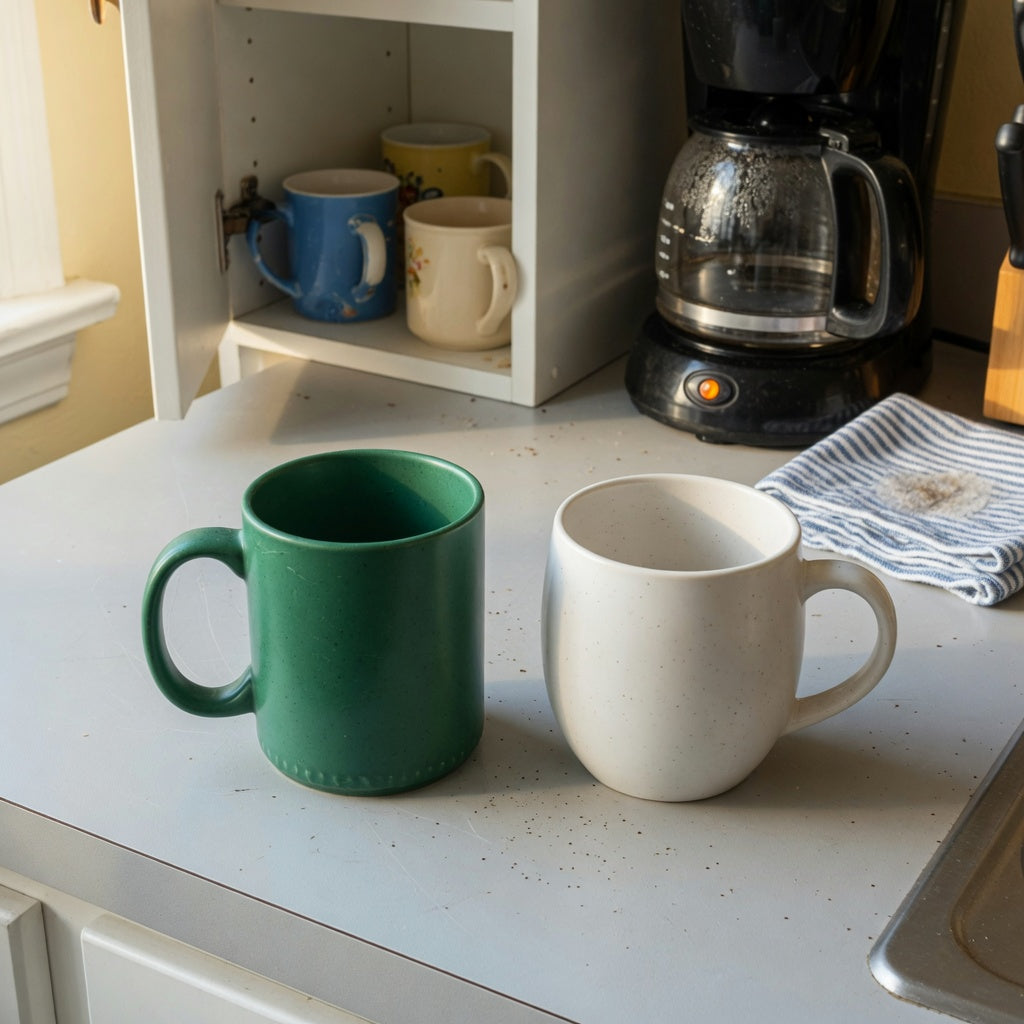
Emerald Green Coffee Mug Everyday Mug Rotation Product Shortlist Guide
Build a two- or three-mug rotation around real use frequency, shelf space, visible form, handle shape, and listed capacity. See exactly when to choose or skip each CoffeifyMug option.
Read more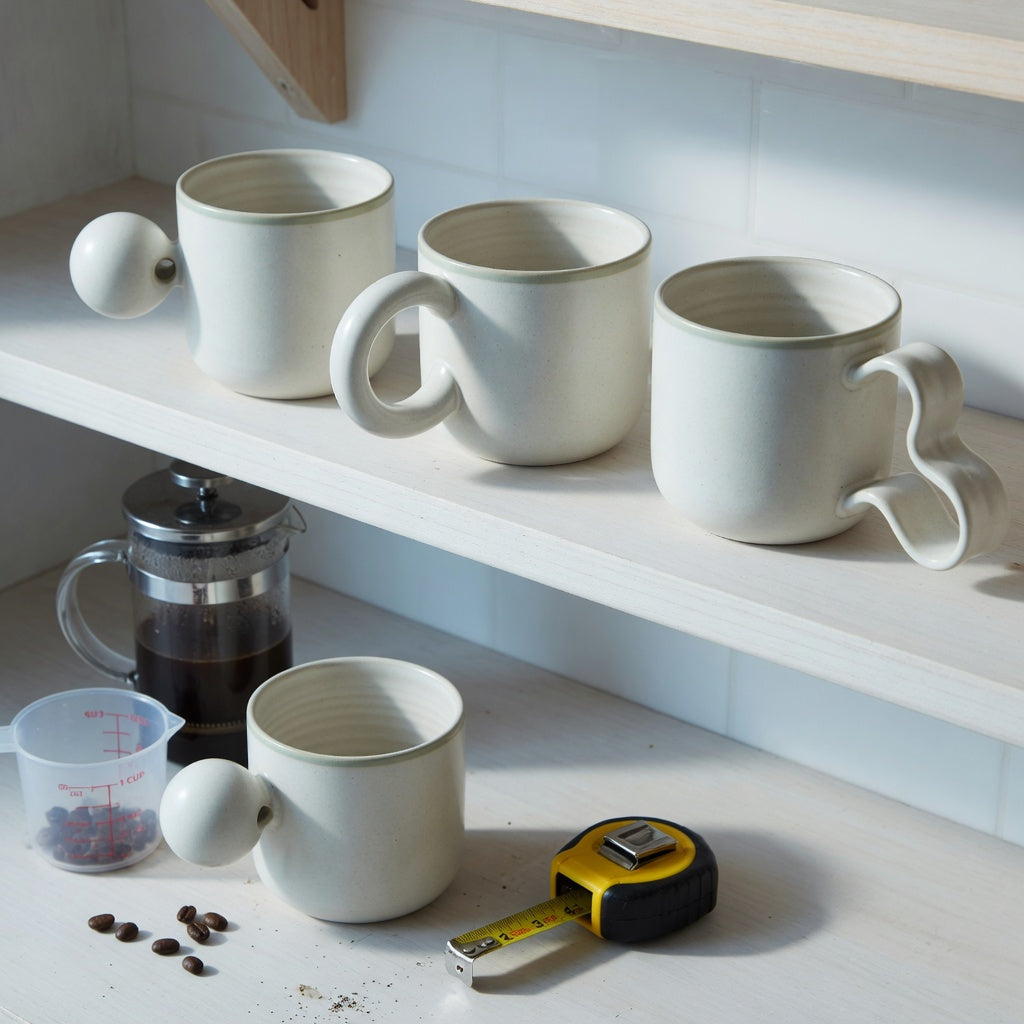
Ceramic Coffee Mug With Handle: Everyday Rotation Checklist
Use this shelf-first checklist to compare ceramic material, listed capacity, vessel shape, and visible handle form. It also identifies care, fit, and performance details that must be confirmed befo...
Read more
Leave a comment
This site is protected by hCaptcha and the hCaptcha Privacy Policy and Terms of Service apply.