
Dandelion Coffee Mug Storage Fit Guide: Shape and Shelf Space
Reading time: about 10 minutes
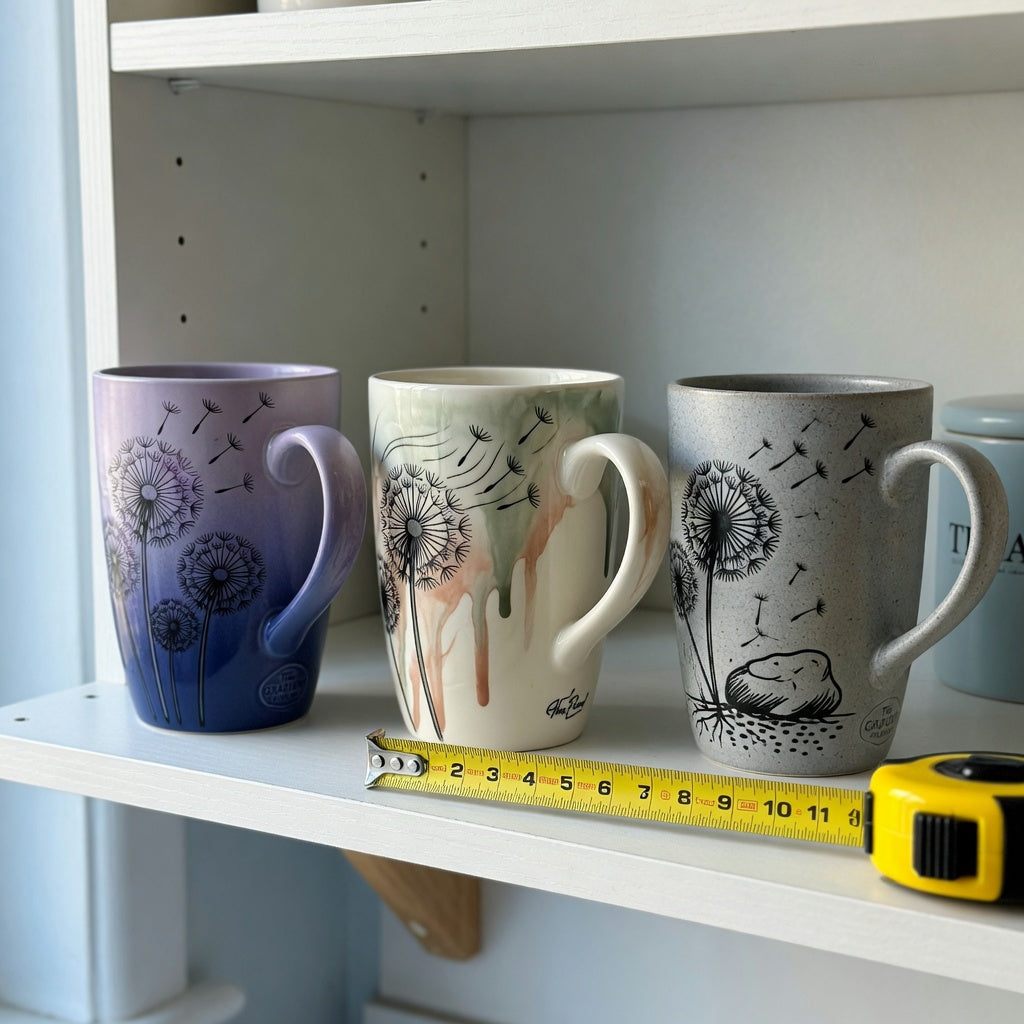
A mug can clear the shelf and still stop the cabinet door from closing. The body fits, but the handle meets the face frame or catches the mug beside it. We check that relationship whenever we arrange mugs on our packing and display shelves. This dandelion coffee mug storage fit guide compares the current shapes by listed capacity, visible body profile, handle projection and the space needed to lift each mug out without knocking its neighbors.
The verified catalog details give us three capacities: The Gradient coffee and tea mug is 400 ml, The Flow coffee and tea mug is also 400 ml, and The Rock coffee and tea mug is 480 ml. Complete exterior dimensions and exact handle projection measurements are not part of the verified facts supplied for this comparison, so we will not replace them with estimates. The practical approach is to compare the visible forms, check any current dimensions shown on the product pages and measure the actual storage location.
Dandelion coffee mug storage fit guide: which measurements matter?
Measure the clear usable space, not the cabinet's advertised size. Hinges, face frames, shelf supports and the inside surface of the door can all reduce the room available to a mug. We usually start with an existing mug that fits well and use it as a physical reference.
- Clear shelf depth: Measure from the back panel to the nearest point reached by the closed door or cabinet frame.
- Maximum body width: Check the widest part of the mug, not only the base footprint. A curved body can occupy more side-to-side space above the shelf.
- Handle projection: Note how far the handle extends beyond the body and whether it can be turned sideways without touching another item.
- Clear height: Leave enough room above the rim to lift the mug before pulling it forward. A mug that technically fits can still be awkward under a closely spaced shelf.
- Finger clearance: Allow room to grip the handle or body without moving every neighboring mug first.
Capacity alone cannot answer these questions. Two 400 ml mugs may have different exterior footprints because of wall shape, taper, rim width, base design and handle geometry. Product photographs are useful for comparing silhouettes, but they should not be treated as scale drawings.
How do The Gradient, The Flow and The Rock use shelf space?
When we place the current forms together, each makes a different storage trade-off. These are relative observations from the visible silhouettes and our handling of this category, not substitute measurements.
| Mug | Listed capacity | Visible storage profile | Best starting point for | Main trade-off |
|---|---|---|---|---|
| The Gradient | 400 ml | A more contained, gently tapered outline with a handle that sits visually closer to the body | Tighter cabinet rows, compact kitchen shelves and shared office storage | A close-in handle may offer less finger room for shoppers with larger hands |
| The Flow | 400 ml | A softer, more rounded body line with moderate handle projection | Open shelves or cabinets with enough lateral space for the curved form | The fuller outline may require a little more separation between neighboring mugs |
| The Rock | 480 ml | A broader, more substantial silhouette with the most assertive-looking handle of the three | Deeper shelves, roomy counters and buyers who want the larger listed capacity | It asks for more storage allowance and will generally feel heavier once filled |
If compact placement is the priority, The Gradient is the first product we would compare against your measurements. The Flow suits a shopper who wants the same 400 ml capacity with a more visibly curved form and has room to display it. The Rock fits a larger-serving routine, including tea or another hot drink, but it makes the most sense where shelf depth and handle clearance are not tight. You can view the broader unique coffee mug collection to compare current product photography before deciding.
Which handle position gives the best cabinet-door clearance?
Handle orientation can matter as much as body size. In a shallow cabinet, turning the handle sideways often reduces front-to-back projection. On an open shelf, a forward-facing handle is easier to grab, but the mug body should remain fully supported rather than sitting near the edge just to make room for the handle.
For a cabinet with a face frame or inward-reaching hinges, perform a dry fit with an existing mug. Place it where the new mug will live, rotate the handle through several positions and close the door slowly. Also lift it out as you would during a rushed morning. A position that clears the door but requires twisting around plates or glasses is not a practical everyday fit.
There is a comfort trade-off here. A handle that stays close to the body usually stores more efficiently, while a more projecting handle can provide additional room for fingers. The right choice depends on hand size, grip preference and whether you normally hold a full mug by the handle alone or support the body with the other hand.
Does 400 ml or 480 ml fit your drink routine and cabinet better?
The Gradient and The Flow share a listed 400 ml capacity, so choosing between them is mainly a question of visible shape, handle feel and available shelf width. The Rock holds 480 ml, which is 80 ml more than either 400 ml option. That extra capacity may suit a larger coffee, tea or alternative hot drink, but a fuller mug also places more weight in the hand and usually benefits from a less crowded route between the counter, desk and sink.
- Choose The Gradient as a starting point if you have a tight upper cabinet, want a restrained footprint or regularly line several mugs side by side.
- Choose The Flow as a starting point if you want 400 ml capacity with a softer display shape and your shelf has comfortable side clearance.
- Choose The Rock as a starting point if you prefer the 480 ml capacity, have a deeper storage location and value a more substantial handle profile.
These mugs are not the strongest choice for a nesting storage system because no verified nesting or stackable feature is supplied for the current forms. We recommend planning for one layer rather than balancing one mug on another. They are also difficult to recommend for a mug tree or under-shelf hook without confirmed handle-opening dimensions and the hanger manufacturer's load guidance. A smaller, specifically stackable or hook-compatible mug style would be more practical for those setups.
Where should each mug live in a kitchen or office?
For a compact apartment cabinet: Start with The Gradient. Its visually contained profile gives it the clearest storage advantage, though the final decision should still follow actual measurements. Place the handle sideways if the closed door is the limiting point.
For an open kitchen shelf: The Flow is a useful middle option. Its curved form has room to be seen, and the 400 ml capacity does not require stepping up to The Rock. Leave enough space around the body to lift it without rim-to-rim contact.
For a roomy lower shelf or dedicated drink station: The Rock can make sense because its broader form and 480 ml capacity are less constrained. It is not our first recommendation for a crowded cabinet above shoulder height, where a larger filled mug can be more awkward to remove.
For an office desk shelf: Check more than depth. Make sure the handle will not catch a laptop stand, cable, file tray or the shelf upright. The Gradient or Flow will usually be the more practical place to begin if the work surface is already busy. The Rock is better suited to a desk with a clear, stable mug area.
For a gift: Avoid choosing by artwork alone if you know the recipient has a small kitchen. A 400 ml option is the safer direction for limited storage, while The Rock is better for someone with open shelving, a drink station or a preference for a larger serving. If their space and routine are unknown, compare all three current product shapes rather than assuming the largest capacity is automatically the better gift.
How can storage reduce rim, handle and surface contact?
The vulnerable points in a crowded mug cabinet are usually the exposed rim and handle. A handle can strike the cabinet frame during removal, while rims can meet when mugs are pushed together. We use a few straightforward habits when arranging display and packing shelves.
- Store each mug upright on a flat, stable shelf with its full base supported.
- Leave enough separation to lift one mug without scraping the rim or handle against the next mug.
- Do not stack the current shapes unless the product information specifically confirms that use.
- After washing, let the mug dry before placing it in an enclosed cabinet. Follow the care directions supplied with the product rather than assuming dishwasher or microwave compatibility from appearance.
- If dishwasher use is permitted by the care instructions, position the handle so it cannot knock against adjacent items during the cycle.
- Lift the mug clear of the shelf instead of dragging the base across a rough or dirty surface.
A shelf liner can reduce sliding on a smooth shelf, but it should lie flat. A curled edge or thick pad can make a mug less stable and reduce already limited vertical clearance.
Use this shelf-fit check before ordering
Our dandelion coffee mug storage fit guide comes down to six checks. Complete them at the cabinet, shelf or desk where the mug will actually stay.
- Record clear shelf depth with the cabinet door closed.
- Measure usable height, including the room needed to lift the mug.
- Check side clearance between neighboring mugs or shelf supports.
- Decide whether the handle must face forward or turn sideways.
- Choose between the 400 ml Gradient or Flow and the 480 ml Rock based on both serving size and available space.
- Review the current product page for any listed exterior dimensions and care information before placing the order.
If every measurement is tight, begin with The Gradient rather than forcing a larger silhouette into the cabinet. If side clearance is available and appearance on an open shelf matters, compare The Flow. Choose The Rock where the larger capacity and more substantial handle have a properly sized home.
Frequently asked questions
What should I measure before using this dandelion coffee mug storage fit guide?
Measure clear shelf depth, usable height, side-to-side room and the space reached by the closed cabinet door. Also check the intended handle orientation and leave enough room to lift the mug without touching the shelf above.
Which current dandelion mug is the most practical for a tight cabinet?
The Gradient is the best starting point because its visible profile is more contained and its handle appears closer to the body. That is a relative comparison, not a fit guarantee, so check current product details against your cabinet measurements before ordering.
Do The Gradient, The Flow and The Rock stack safely?
No verified stacking or nesting feature is included in the supplied catalog facts. Plan to store these mugs upright in a single layer unless the current product information specifically states that stacking is supported.
Is the 480 ml Rock a better choice for tea or another hot drink?
The Rock provides 80 ml more listed capacity than the 400 ml Gradient and Flow, so it suits a shopper who wants a larger serving. It also needs more storage allowance, and the greater filled volume may feel less convenient in a crowded cabinet or on a small desk.
Can these mugs fit on a narrow office desk shelf?
The Gradient or Flow is the more practical place to start for limited office storage. Measure around shelf uprights, laptop stands and cables, then check that the handle can rotate without catching nearby equipment. The Rock is better where a wider, deeper and stable mug space is available.
Take your measurements to the current unique coffee mug collection, compare the three silhouettes and open the relevant product page to confirm the latest details. Choose the mug whose handle, body and listed capacity fit the space it will use every day.
More from our blog
Read more
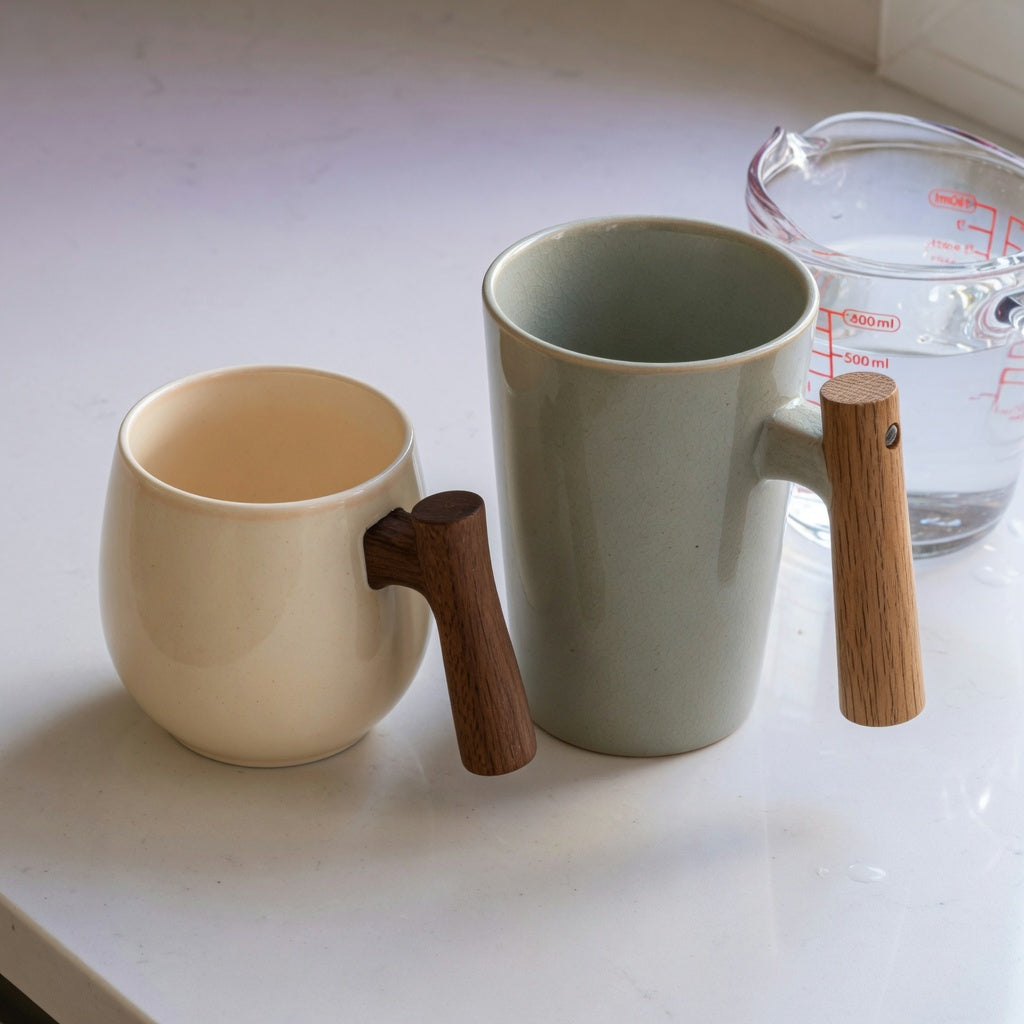
Ceramic Mug With Wooden Handle Size Decision Guide: 400 or 480 ml
Compare The Cloud at 400 ml with Mountain Sea II at 480 ml using your measured pour, preferred vessel profile, and visible handle shape. This guide also explains what capacity cannot tell you about...
Read more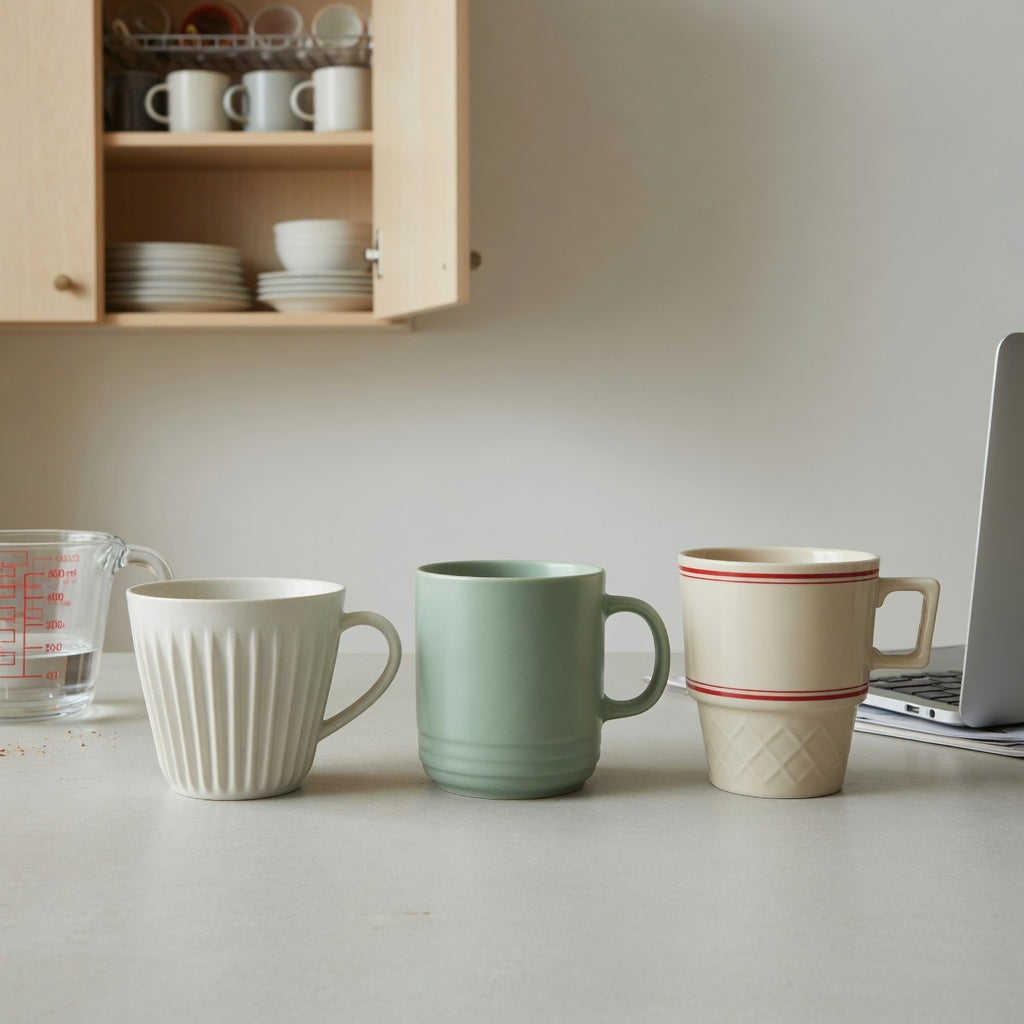
Minimalist Ceramic Mug Size Decision Guide: 390 to 480 ml
Compare CoffeifyMug's current 390 ml, 400 ml, and 480 ml ceramic options by measured pour, available space, visible shape, and handle. See when a smaller-capacity mug or the larger option is the mo...
Read more
Leave a comment
This site is protected by hCaptcha and the hCaptcha Privacy Policy and Terms of Service apply.