
Cute Espresso Cups Shared Household Practical Purchase Checklist
Reading time: about 8 minutes
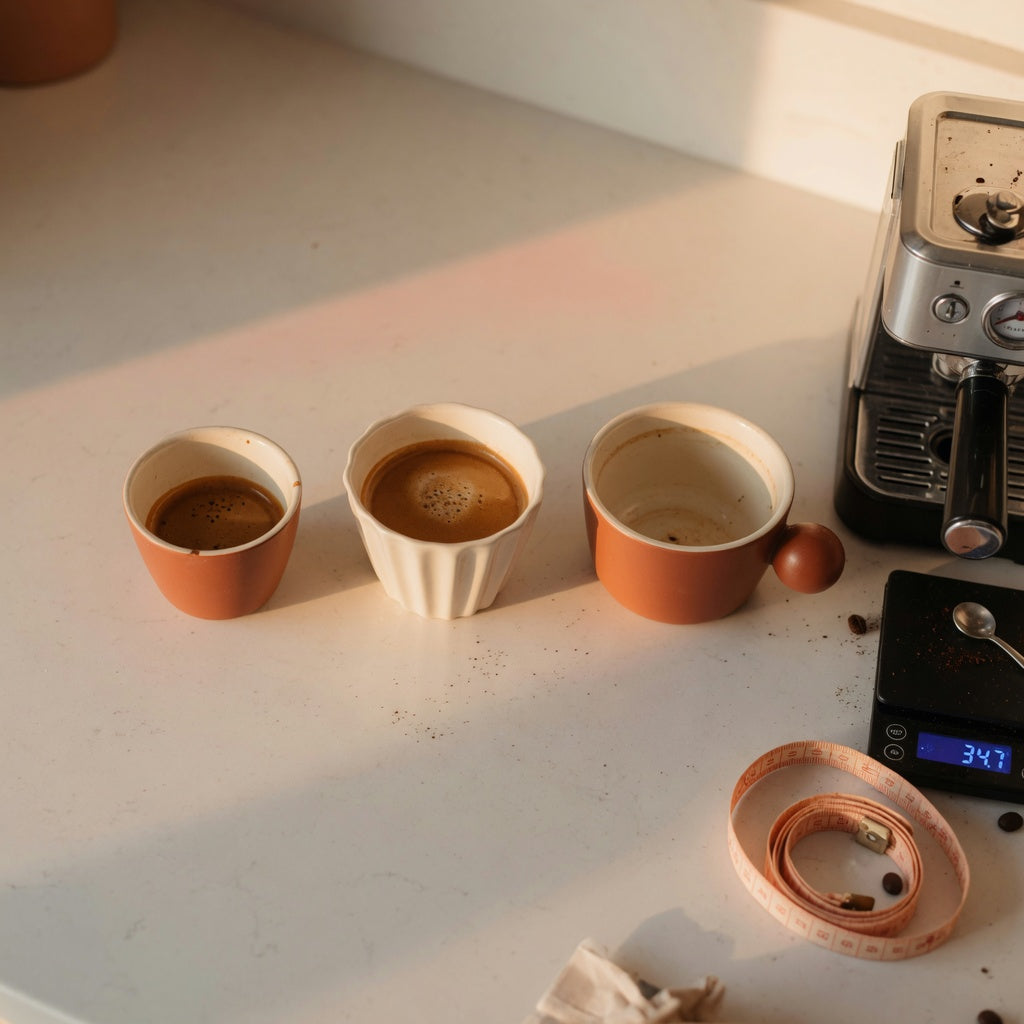
Four people, one espresso machine, and a shelf of cups nobody agrees on — that is the scene behind most of our shared-household questions. The cute espresso cups shared household practical purchase checklist we walk customers through starts with the drink, not the glaze: who pulls a ristretto, who makes a 1:2 double, who wants a cortado, and who just wants a small tea at nine at night.
The prettiest cup in the cabinet often spends two months as the one nobody reaches for. Too narrow for the double. Too tall for the shelf. Handle too small for a thumb. That is the real test, and it starts with the people who will actually pull the handle.
Where shared-household cup buying actually goes wrong
The usual mistake is buying one cup style for four drinkers. A cup that flatters a ristretto tends to insult a cortado, because the difference is not a matter of taste — it is liquid volume.
Map the drinks before you map the shelf:
| Drink in the house | Roughly how much lands in the cup | Cup capacity that works |
|---|---|---|
| Ristretto or single espresso | About 20–35 ml | 50–90 ml demitasse |
| Modern double (1:2, often near 36 g) | About 36–60 ml | 90–150 ml |
| Macchiato or cortado | About 60–150 ml | 150–200 ml |
| Small tea or americano | 150–250 ml | 170–250 ml |
Treat those volumes as a sizing guide, not a rulebook. The point is the spread: the gap between a ristretto and a cortado is roughly five times the liquid. No single espresso cup size serves a whole household, which is why the checklist below is built per drinker rather than per shelf.
Your cute espresso cups shared household practical purchase checklist
Seven things to verify before checkout. The first four need a measuring tape; the last three need a careful read of the listing.
- Capacity matched to the heaviest drinker, not the lightest. A cup that is slightly too big for a straight shot is easier to live with than a cup that overflows on a cortado. Size up if anyone in the house drinks milk drinks.
- Clearance from the spout to the drip tray. Cup height plus saucer has to clear the group head. No published standard exists for this — it is per machine — so measure your own clearance and compare it with the listed cup height.
- Inner rim width against your portafilter. A narrow, tulip-shaped opening catches one stream and lets the other run down the outside of the cup. Wider rims are more forgiving.
- Room for a scale. If anyone doses by weight, the cup sits on a scale under the spout, which adds stack height. Plenty of charming cups fail this before they fail anything else.
- Handle grip in a real hand. Finger-sized loops look wonderful and pinch thumbs. Hold the thing the way you would hold it full and hot.
- Saucer, stack, or stand — pick one. Saucers add height and dishwasher volume; stacking saves cabinet space; stands need counter depth. Mixing all three turns the shelf into a jigsaw.
- Glaze type and the food-contact statement. Decorative-only ceramicware exists, and it is not meant for drinking. Confirm the listing treats the cup as drinkware.
Which of our three ceramic cups fits which drinker?
We carry three compact ceramic cups. The honest starting point: none is a traditional 50 ml Italian demitasse. They are larger than a single-shot cup. For a shared household that can be useful; for a purist chasing a tiny bowl of crema it is a compromise.
| Cup | Listed capacity | Drinker it suits | Trade-off to accept |
|---|---|---|---|
| Retro Coffee & Tea Cup | 170 ml | A macchiato, a small milk drink, or a modest evening tea | A 30 ml shot will look small in it; it is not a classic demitasse |
| Pleated Coffee & Tea Cup | 200 ml | The house that splits between coffee and tea | Oversized for a straight espresso |
| Ball Handle Coffee & Tea Mug | 250 ml | Whoever measures the morning by volume rather than by crema | Leaves a lot of empty air around a single shot |
Those are capacity recommendations, not performance claims. The verified facts are the listed capacities and ceramic body; whether a cup suits your machine is a measurement you make at home. Each link is a separate product page, so confirm on the current listing whether a saucer or multi-pack is included before you assume a matching set.
If you want to compare shapes and handles side by side, browse the unique coffee mugs collection before assigning sizes per person.
Will the cup clear your group head and catch both streams?
Two numbers decide whether a pretty cup becomes a daily driver:
- Height with saucer, to the underside of the group head. Include the saucer if you use one, and include the scale if you weigh shots.
- Inner rim diameter. A wide opening gives a bottomless portafilter room to send two streams into the cup instead of past it.
Because there is no industry standard for spout-to-tray clearance, this is on you. Partially lower the portafilter with a cup in place and watch the gap. If it is tight, a shorter cup beats a taller one every time — and a stackable cup without a saucer is often the only thing that fits a low-clearance machine.
Do the handles and saucers survive a real shared kitchen?
Small handles divide households more than flavour does. Large hands and small loops are a bad pairing, especially with hot milk drinks, so check the handle opening before you buy rather than after. If anyone in the house has grip issues or arthritis, a fuller loop is worth more than any pattern.
Saucers are the other quiet decision. In a café they catch drips; at home they double the number of items going into the dishwasher and add height under the machine. If your cabinet gap is tight, skip the saucer and accept the occasional ring on the counter.
Matching is optional. Two 170 ml cups, one 200 ml, and one 250 ml stack fine as long as you check rim widths against each other — a wide cup perched on a narrow one is how shelves collapse.
What do glaze safety and dishwasher cycles mean for daily cups?
The U.S. FDA explains that lead in ceramic glaze is bound into the finished piece when pottery is fired correctly, but if it is not fired properly the lead may not fuse and can contaminate food. The agency also notes that some traditional pottery labelled lead-free has still shown extractable lead, and that ceramicware intended only for decoration must be identified so it is not used with food. That is the practical reason to buy drinkware from a listing that treats the cup as drinkware, not from a decorative-object listing with a pretty photo.
On the dishwasher: we will not promise a painted or speckled glaze survives years of cycles, because long-term chip and fade resistance is not consistently standard-tested across this category. If a cup matters to you, hand-wash it and skip the heated dry cycle — heat and detergent age a glaze fastest.
One more detail nobody mentions: interior colour. A plain white interior is the conventional choice for judging crema because you can see the contrast against the coffee. Dark or heavily patterned interiors hide it. If someone in your house cares how the shot looks, keep at least one white-interior cup in rotation.
Should a gift cup and a daily driver be the same cup?
These are different purchases with different failure modes. A gift cup has to survive an unboxing and look good on a shelf. A daily driver has to survive the third dishwasher cycle of the week and still clear the portafilter. Buying one cup to do both tends to produce something too precious to use.
For a gift, pick the size that matches the recipient’s most common drink rather than the smallest cup in the shop. For the household, use the collection and assign sizes per person. If the espresso side of the cabinet is the sticking point, start with the capacity table above and measure your machine before you fall for a glaze.
One boundary worth stating plainly: plush espresso-cup toys, ornaments, and purely decorative miniatures appear in the same search results, and they are not drinkware. Keep them out of a checklist about drinking.
Frequently asked questions
What belongs at the top of a cute espresso cups shared household practical purchase checklist?
Capacity per drinker and clearance under the spout. Those two eliminate more cups than style ever does, because a beautiful cup that overflows on a cortado or bumps the group head will simply stop being used. Rim width is the third check.
Will a 170 ml cup work for a single espresso?
It works, but the shot will occupy a small fraction of the bowl, which changes how the crema pools and how hot the drink stays. It is a better fit for a macchiato or a small milk drink. If someone in the house wants a classic demitasse experience, a 50–90 ml cup is the right target.
Are hand-painted or speckled glazes dishwasher safe?
That varies by maker and there is no category-wide standard, so read the specific listing’s care line rather than assuming. When a glaze matters to you, hand-washing and skipping heated dry is the conservative routine.
Is a decorative ceramic cup safe to drink from?
Not automatically. Per the FDA, ceramicware intended only for decoration should be identified as such so it is not used with food. If a listing does not describe the piece as drinkware, treat it as an ornament.
Can one cup serve espresso and tea in the same household?
Yes, with a trade-off. Something in the 200 ml range handles a cortado and a modest tea, but it will feel oversized for a straight shot. Shared households usually end up better served by two sizes than by one compromise cup.
Start with the drink that gets made most often in your house, measure the clearance under your group head, then choose sizes per person from the collection. That order of operations solves more morning arguments than any glaze will.
More from our blog
Read more

Cute Espresso Cups Shared Household Product Shortlist Guide
A shared kitchen rarely needs four identical cups. Here is how we shortlist 170 ml, 200 ml and 250 ml ceramic cups against each person's real pour, plus the plain reasons to skip each one.
Read more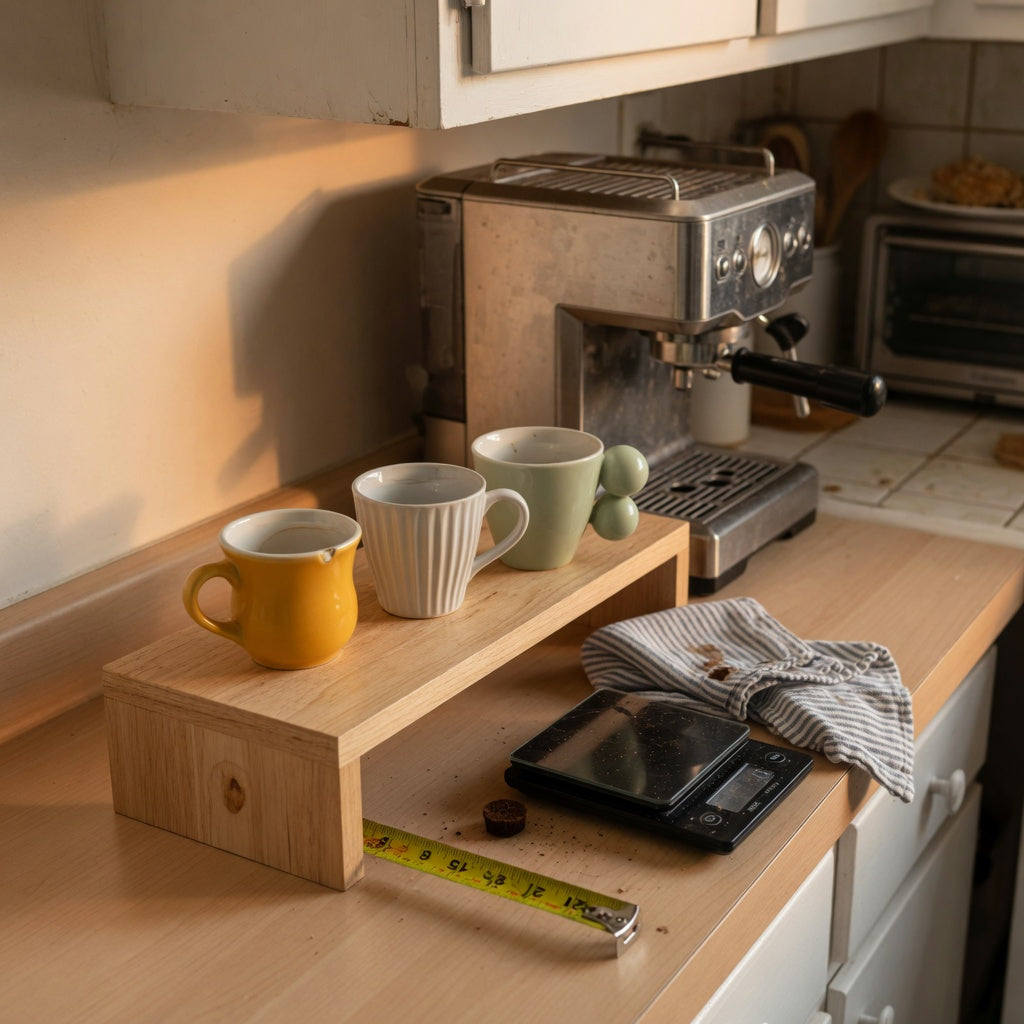
Cute Espresso Cups Compact Kitchen Product Shortlist Guide: 170–250 ml
A scenario-based shortlist of 170 ml, 200 ml, and 250 ml ceramic cups for tight counters, with the spout-clearance and shelf measurements that decide which one to buy—and when to skip all three.
Read more
Leave a comment
This site is protected by hCaptcha and the hCaptcha Privacy Policy and Terms of Service apply.