
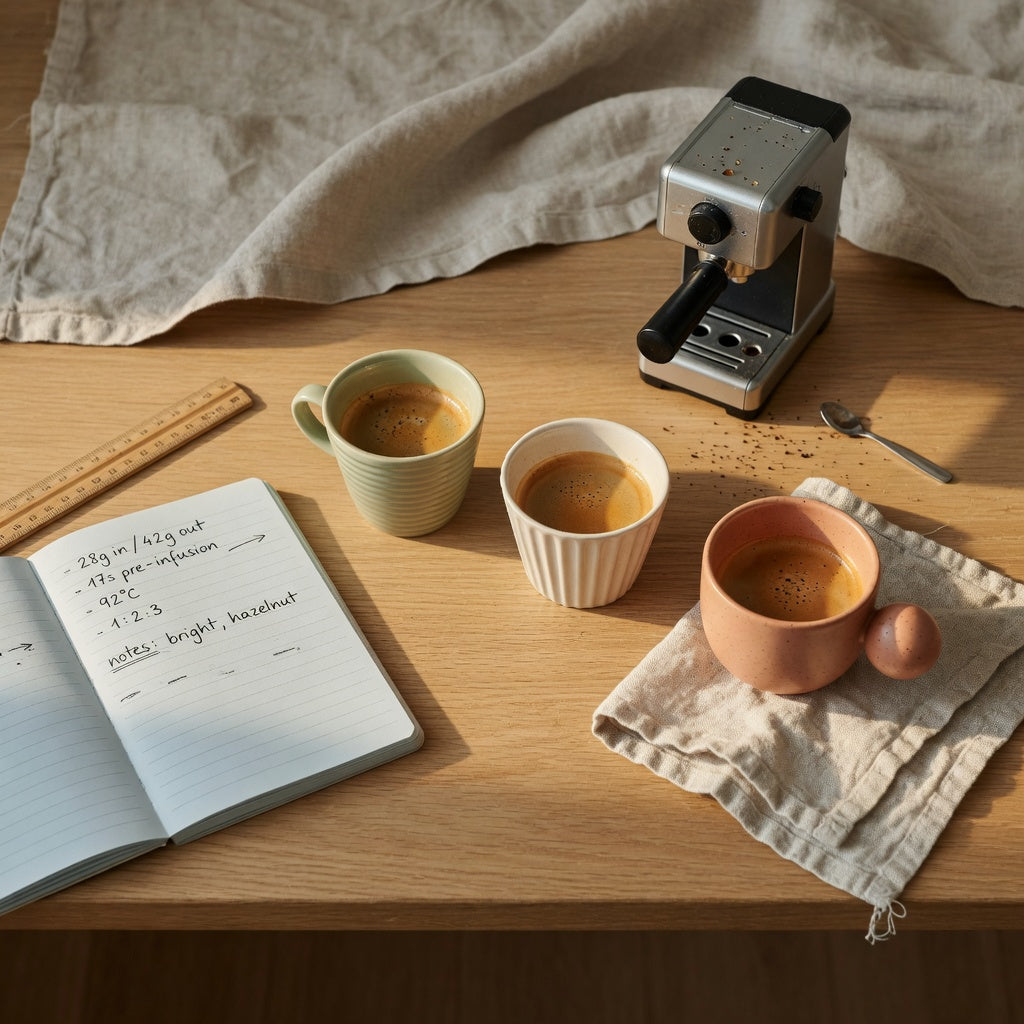
Cute Espresso Cups Home Office Practical Purchase Checklist
Reading time: about 9 minutes
Nine times out of ten, the thing that spoils a home-office espresso routine isn't the grinder. It's the cup. Someone pulls a decent double at 9 a.m., sets it beside the keyboard, answers two messages, and comes back to a lukewarm mouthful spread thin across a wide, pretty bowl. Cute espresso cups are their own category with their own fit problems, and the fix is not simply buying the smallest one on the shelf.
This is the sequence we walk customers through in our store when they're buying for a desk rather than a café bar — the cute espresso cups home office practical purchase checklist we wish more people read before checkout. Capacity first, then machine clearance, handle room, glaze care, and finally which cup suits the drink you make at 8 a.m. versus the one you make at 3 p.m.
Why the listed capacity — 170 ml, 200 ml, 250 ml — decides more than the glaze does
A traditional Italian espresso is often described as roughly 25 ml. Specialty definitions usually land in a 25–35 ml band, and the classic demitasse built around that drink holds about 50 ml. Our three cups are listed at 170 ml, 200 ml, and 250 ml — compact ceramic cups rather than demitasse, and larger than a single-shot vessel. That one fact matters more than colour when you're buying for a desk.
A 25 ml shot in a 170 ml cup sits as a shallow layer with a lot of empty wall above it. More exposed surface generally means faster heat loss, so the last sips land cooler than they would in a 50 ml cup. That's the honest trade-off of buying cute for a desk: you get a cup that looks good on a video call and handles a milk drink well, but someone chasing a straight ristretto should buy a true demitasse instead.
| Cup | Listed capacity | Best desk job | Where it gives up |
|---|---|---|---|
| Retro | 170 ml | Straight double, macchiato, smallest pour of the three | A 25 ml ristretto — shallow pour, cools quickly |
| Pleated | 200 ml | Shot plus a splash of milk, espresso-to-tea crossover | Anyone expecting a true 50 ml demitasse |
| Ball Handle | 250 ml | Cappuccino-sized milk drinks, slow sipping | Tight machine clearance; overkill for a single shot |
One caveat on that table: listed capacity is the only volume number we publish. We don't quote usable volume below the rim, and we don't publish height or rim diameter, so measure your machine clearance yourself and confirm the rest on the current product page.
Will the cup clear your spout, and will the rim catch both streams?
Machine fit is the check people skip and then regret. No standards body publishes a spout-to-tray clearance figure, and machines vary enough that a number borrowed from a review is worthless. This is a two-minute measurement job with a ruler.
- Lock in the portafilter and measure from the drip tray up to the underside of the spout.
- Add margin for the spout tips — on some machines they hang lower than the group head.
- Measure the cup. Because we publish capacity in millilitres rather than height in millimetres, confirm height on the live listing instead of inferring it from a photograph.
- Check the rim's inner diameter against your portafilter's stream spread. A bottomless basket splits the shot into two streams a few centimetres apart, and a rim narrower than that spread sends espresso down the outside of the cup.
Tight clearance favours a shorter cup. Comfortable clearance means you can buy the one you actually like looking at.
Handle room, balance, and the two-finger pinch test
Small decorative handles are the most common post-purchase complaint in this category, and it's rarely about looks. It's about knuckles. A two-finger pinch grip feels fine on an empty cup and turns awkward once 250 ml of liquid shifts the balance point forward.
Run the test with water before the first real shot: does your index finger pass through the loop without scraping, and does the handle clear your knuckles when the cup is full? On the Ball Handle cup, the rounded loop is the whole design premise, and a round loop is generally the easier grip with a full pour — but judge the loop size from the listing photos, because we don't publish handle dimensions. The Retro and Pleated cups are smaller pours, and a fingertip grip is usually enough.
Which cup matches your 8 a.m. shot versus your 3 p.m. milk drink?
Most people need one cup for a fast morning shot and a different one for an afternoon drink. Buying the same size twice is how a desk ends up with four cups and no favourite.
- You drink straight doubles and want a classic silhouette. The Retro cup at 170 ml is the smallest pour we list, which leaves headroom for a double without swallowing the shot. It's the sensible first cup if your morning routine is one pull and out the door to your desk.
- You alternate espresso and tea, or like a splash of milk. The Pleated cup at 200 ml splits the difference. The pleated body reads decorative on a shelf and still holds a cortado-sized pour without looking half empty.
- You drink cappuccino or a long black you sip across a meeting. The Ball Handle cup at 250 ml is the one. A cappuccino is often in the 150–180 ml range, so 250 ml leaves room for milk texture and a little headspace.
If your afternoon drink is a 350 ml drip brew, none of these are the right purchase — that's mug territory. Browse the rest of our unique coffee mug collection with your measurements in hand and compare shapes side by side before you commit.
Does a decorated interior hide the crema you're trying to read?
Tasting guidance tends to favour a plain white interior, and there's a practical reason: crema colour and texture are the fastest read on whether a shot ran fast or slow. A dark glaze, a dense floral pattern, or a heavily textured inside hides that feedback. On a 170 ml cup with a wide bowl, the crema layer is already thin relative to the surface area, so a busy interior makes the shot harder to judge.
If you're still dialling in a grinder, pull your test shots into a plain cup for the first week and buy the decorated one for a drink you've already learned to pull. Decorative exteriors cost you nothing. Decorative interiors cost you information.
Glaze care: what we can promise, and what only the listing can confirm
Hand-painted and novelty glazes are where "cute" and "dishwasher-safe" start to argue. Long-term dishwasher durability of painted glazes is largely anecdotal across the category — no standards body publishes a chip-resistance test for decorative espresso cups — so treat any care claim as product-specific and confirm it on the listing you're buying.
On the food-contact side, the U.S. Food and Drug Administration explains that lead in ceramic glaze is bound when pottery is fired correctly, but if firing goes wrong the lead may not fuse and can contaminate food. The agency also notes that some traditional pottery labelled lead-free has still shown extractable lead, and that ceramicware intended only for decoration must be identified so it isn't used with food. That's precisely why we keep our claims narrow — listed capacity, ceramic body, visible form — and won't stretch them to cover firing method or care instructions we can't verify.
Care habits that hold for most decorative ceramic cups: hand wash the first few cycles to see how the glaze behaves, don't stack rim-to-foot without a cloth between, and skip the microwave unless the listing says otherwise. Confirm height, dishwasher guidance, and microwave guidance on the current product page. Those are the details we don't want you to assume from a photograph.
Where a cute ceramic cup is the wrong purchase
It won't hold heat the way a double-wall or insulated vessel does. It isn't a travel mug and we don't sell it as one — no spill claims, no commute. If your "home office" is really a laptop bag and a train seat, a lidded tumbler is the correct buy.
It also won't silence a saucer. Ceramic on ceramic clinks, and on a shared call that clink carries. Set the cup down on a cloth coaster or a mousepad if you're the person who refills mid-meeting. And if a search result turns up a plush or purely ornamental espresso-cup object, remember that's a novelty item, not drinkware — we only sell cups intended to hold a drink.
The five-minute cute espresso cups home office practical purchase checklist
- Write down the drink you make most often and its rough volume.
- Measure spout-to-tray clearance and compare it with the cup height shown on the current listing.
- Check rim inner diameter against your portafilter's stream spread.
- Decide whether the interior needs to be plain while you're still dialling in.
- Confirm care and microwave guidance on the listing, not from the photo.
- Buy a pair if a second person ever drinks at your desk.
Start with the size you'll use before noon, measure your clearance once, and let the glaze be the last decision rather than the first. Compare the cups in our unique coffee mug collection with those numbers written down, and the one you buy will still be the one you reach for in week six.
Frequently asked questions
Is a 170 ml cup too big for a single espresso?
It's larger than a traditional demitasse, yes. A 25 ml shot sits shallow and cools faster than it would in a 50 ml cup. If you only pull single ristrettos, buy a proper demitasse; if you pull doubles or add a splash of milk, 170 ml is a sensible size.
Will these cups fit under my espresso machine?
We can't promise that for your machine, because clearance varies by model and no standard covers it. Measure from the drip tray to the underside of the spout, then compare that number with the cup height shown on the current product page.
Are these cups dishwasher and microwave safe?
Check the individual product listing before you buy. Ceramic bodies are common in this category, but painted and novelty glazes vary, and we won't extend a care claim from one cup to another.
Can I use the 250 ml cup for a cappuccino instead of a straight shot?
That's the most natural fit of the three. A cappuccino is often around 150–180 ml, so 250 ml leaves room for milk texture and headspace without the cup looking empty.
Are cute espresso cups a good gift for a coworker?
Yes, if they drink short milk drinks or espresso rather than large drip coffee. Run the same cute espresso cups home office practical purchase checklist you'd use for yourself — drink size first, glaze second — and buy two of one design rather than a mixed set.
More from our blog
Read more
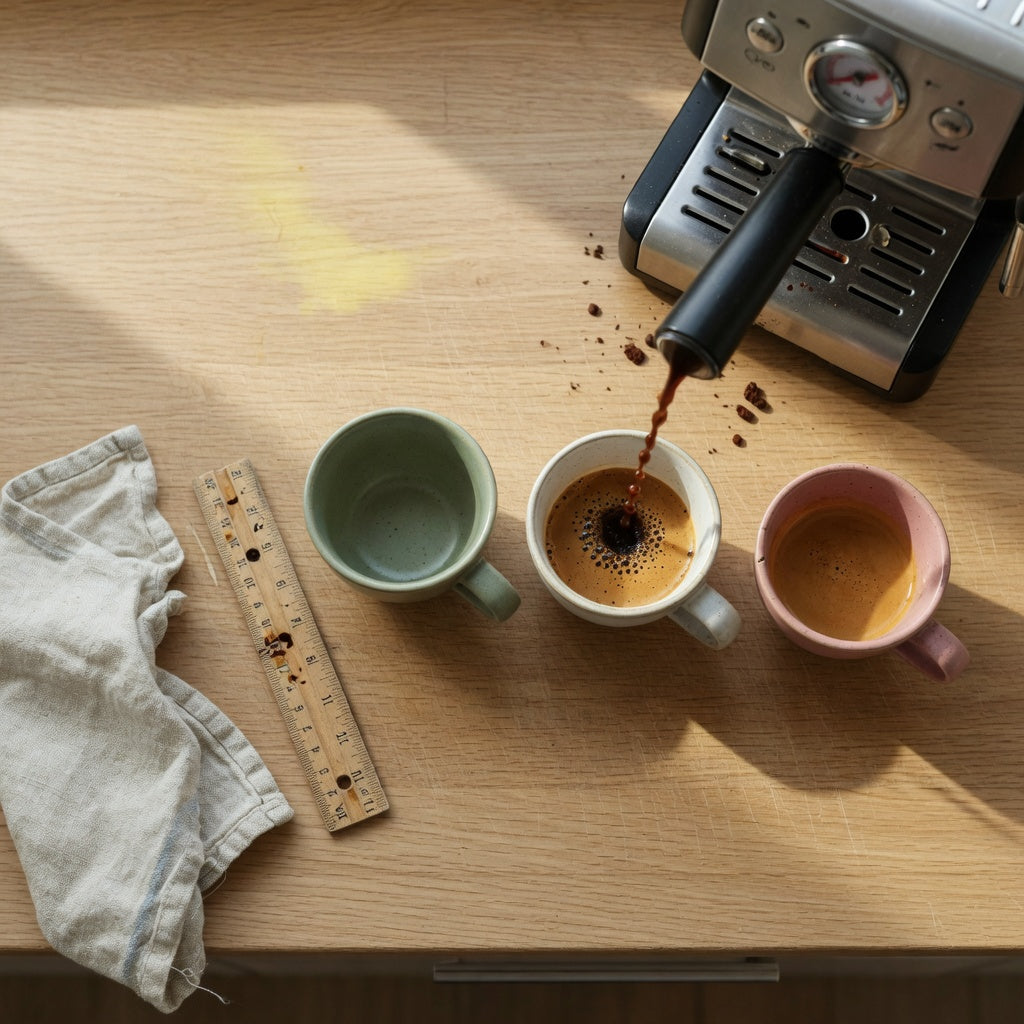
Cute Espresso Cups Daily Use Guide: 170 vs 200 vs 250 ml
A store-side cute espresso cups daily use guide: what 170, 200 and 250 ml ceramic cups actually mean at the machine, which pour each suits, and where these compact cups stop being the right tool.
Read more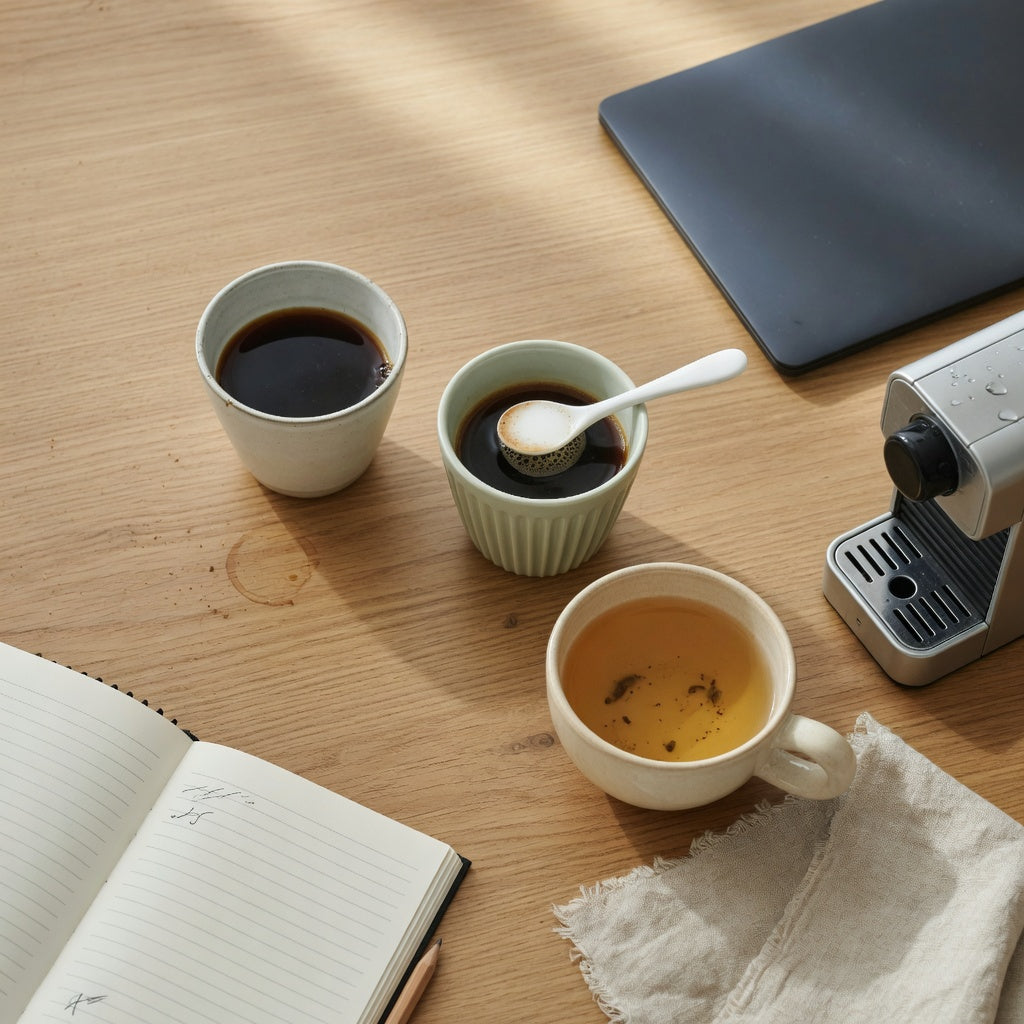
Cute Espresso Cups Home Office Product Shortlist Guide: 3 Picks
A desk-routine shortlist of three ceramic cups at 170 ml, 200 ml and 250 ml — with the honest reason to skip each one and the two measurements to take before you order.
Read more
Leave a comment
This site is protected by hCaptcha and the hCaptcha Privacy Policy and Terms of Service apply.