

Crane Ceramic Tea Cup: What to Compare Before You Buy
Reading time: about 8 minutes
A customer emailed us last month with a photo of a crane ceramic tea cup she had shortlisted for her father's retirement. Her first question was not about capacity, glaze, or care. She wanted to know what the crane means. That order of curiosity is typical in our store: the motif pulls people in, and the practical questions arrive once the cup is nearly in the cart.
Both halves of the decision matter. A crane cup that sparks in the microwave or fades after a few dishwasher cycles stops being a gift and becomes an apology. Below is the same walk-through we give shoppers comparing styles, safety labels, and handmade tells — so the piece you pick drinks as well as it looks.
What does a crane on a tea cup actually symbolize?
In East Asian art and folklore, the crane carries three ideas: longevity, good fortune, and fidelity. The red-crowned crane in particular is associated with long life and loyal pairing, which is why the bird appears on wedding pieces, anniversary gifts, retirement presents, and housewarmings far more often than a plain white cup does. The motif reads as intentional. You chose it because it says something.
In our experience, gift buyers who start from the occasion choose better than buyers who start from the prettiest thumbnail. A couple setting up their first kitchen usually wants a pair. A retiree often prefers one quieter, well-made cup that can live on a desk. A household that brews coffee as often as tea needs a handled mug, or the crane piece ends up displayed instead of used — which defeats the point of a gift meant for a daily ritual. Symbolism opens the conversation; the drinking habit closes the decision.
Yunomi, lidded cup, matcha bowl, or handled mug — which shape fits the way you drink?
Most crane ceramics fall into four working shapes. Mixing them up is the fastest way to buy a cup that photographs well and feels wrong at the table.
| Style | Best for | Watch-outs |
|---|---|---|
| Handle-less yunomi | Everyday sencha, light green teas, short sessions | Thin walls get hot to hold; awkward for large coffee pours |
| Lidded cup | Holding heat through long steeps; desk-to-kitchen carrying | Check lid fit and any glaze chips around the rim |
| Matcha bowl (chawan-style) | Whisked matcha; occasional serving pieces | Too wide for most leaf teas; not a practical daily mug |
| Western handled mug | Tea-and-coffee crossover; office desks; bigger pours | Loses the classic Japanese silhouette some gift buyers want |
Handle-less cups reward smaller, hotter pours. A compact yunomi suits sencha and other leaf teas; a wide bowl suits whisked matcha; a handled mug suits anyone who refills with coffee mid-afternoon. Capacity is the spec buyers skip and later regret, so match the volume to the drink rather than to photo scale. If someone in the household has grip or heat-sensitivity issues, skip handle-less shapes entirely — bare ceramic walls get uncomfortable fast.
If your days run half sencha and half office coffee, a handled crane mug is the honest pick, and that is exactly the drinker The Crane Coffee Tea Mug is aimed at. Confirm the current listing for exact capacity, material, and care instructions before you commit — those specifics belong on the listing, and we would rather you verify than assume. You can line up other shapes side by side in our unique coffee mugs collection, and our comparison of ceramic mugs for coffee and tea drinkers covers the crossover questions in more depth.
Is the glaze food-safe? Reading lead, cadmium, and “Not for Food Use” labels
Decorated ceramics are where food-safety questions get real. Some crane cups are sold as décor only. Others are food-contact rated but still carry warnings about metals in the glaze or overglaze decoration. Retail listings rarely explain the labels in plain language, so buyers guess — and guessing is a bad plan with anything that holds hot liquid.
Ask one question before anything else: is this cup sold for drinking, or for looking at? Every other decision follows from the answer.
Before you pay, ask the seller:
- Is the piece sold for food and beverage use, or marked décor / “Not for Food Use”?
- Have the glaze and any overglaze decoration been tested for lead and cadmium leaching under food-contact rules?
- If there is a Proposition 65 or similar warning, what exactly triggered it — the decoration, the glaze, or the packaging?
- Is the painted or metallic design sealed under a clear food-safe glaze, or sitting on the surface where it can wear into the drink?
A “Not for Food Use” mark is not a style note. It means the cup belongs on a shelf, not in a tea rotation. Metallic gold or silver trim can look festive in photos and still be the reason a listing carries a warning. If a seller cannot answer clearly, walk away. We would rather lose a sale than send a decorative piece into someone's morning routine.
Microwave and dishwasher limits for painted crane decoration
Care instructions are the thin spot on most crane cup listings, and they are where glaze wear and kitchen mishaps start.
Microwave risk comes first. Metallic trim can arc — even a thin gold line on a rim or a wing detail is enough to spark. If the listing does not explicitly state that the decoration is microwave-safe, treat the cup as kettle-only: heat the water separately, then pour.
Dishwashers are gentler on plain glaze than on painted work. High heat and alkaline detergent dull overglaze colors cycle after cycle, and abrasive racks can roughen a soft painted surface. For any cup with a crane you want to stay crisp, we tell customers to hand-wash with a soft sponge, skip scouring pads, and dry the rim before stacking. Slower, yes. But it protects the exact thing you paid for.
Thermal shock is the quiet failure mode nobody mentions. A fridge-cold cup flooded with boiling water can crack a thin wall or craze a poorly bonded glaze — we have seen more cups lost that way than to drops. When a piece feels cold to the touch, warm it first with a rinse of hot tap water.
Buying checklist for a crane ceramic tea cup: capacity, material, kiln marks, handmade tells
- Capacity in ml or oz. Sencha feels right in a smaller cup; matcha needs a wide bowl; coffee crossover wants more volume and a handle. Confirm the listed volume against how you actually pour.
- Material feel. Porcelain tends to be lighter and finer; stoneware is denser and holds heat differently. Neither wins by default — match the weight to how long you cradle the cup.
- Origin and marks. If “handmade” or “made in Japan” is part of the appeal, look for kiln marks, backstamps, or maker signatures. A mass-printed motif can look sharp in a thumbnail and carry no kiln identity at all.
- Handmade tells. Slight brushwork variation, an uneven foot ring, or minor glaze pooling usually signals hand finishing. Perfectly identical prints across a full set point to industrial transfer decoration.
- Gift packaging. Check whether the listing includes a box or protective sleeve. Fragile painted rims travel far better in proper packing than in repurposed tissue paper.
Authenticity is a spectrum, not a stamp. A cup can be a handsome, food-safe reproduction without being a kiln-marked Japanese piece — decide whether you are paying for motif and function or for provenance, then verify that specific claim on the listing rather than in a marketplace title. If size is your sticking point, our notes on the 350 ml ceramic tea mug — size, glaze, and handle care give you a baseline to measure against before the crane decoration becomes the tiebreaker.
Which crane cup suits which recipient?
- Weddings and anniversaries: a pair of matching handle-less cups, or two handled mugs if the couple brews coffee as often as tea.
- Retirements: one well-made cup with clear care guidance — a lid helps if they steep slowly at a desk.
- Housewarmings: a durable handled mug that can live on a counter without feeling too formal for guests.
- Tea collectors: yunomi or matcha-bowl shapes with visible handmade cues over mass-printed designs.
Be honest about the limits, too. A crane ceramic tea cup is a poor fit for someone who wants a large iced-drink vessel, insists on microwaving metallic-trimmed pieces, or runs everything through the dishwasher and expects zero fade. Those shoppers are better served by plainer, appliance-rated mugs — forcing the motif on them only ends in a cupboard piece.
Ready to compare beyond a single listing? Browse the unique coffee mugs collection for crane and other distinctive ceramic designs, and read our take on the best ceramic mug for tea and coffee gifts for the questions that matter once the motif is decided.
Frequently asked questions
Can a hand-painted crane ceramic tea cup go in the dishwasher?
Hand-washing is the safer default for painted or metallic decoration. Dishwasher heat and alkaline detergent dull overglaze color and wear soft painted surfaces over repeated cycles. Even if a listing claims dishwasher safety, expect gradual fade on a delicate motif.
Is a crane cup with gold or silver trim microwave safe?
Treat metallic trim as microwave-unsafe unless the seller states otherwise in writing. Metal decoration can arc and spark, even in thin lines. Heat water in a kettle, then pour.
What does the crane symbolize on a Japanese-style tea cup?
Across East Asian traditions, cranes commonly stand for longevity, good fortune, and fidelity — which is why they anchor wedding, anniversary, retirement, and housewarming gifts. Confirm the cup's food-use status separately from the symbolism.
How do I know if a decorated ceramic tea cup is safe to drink from?
Ask whether the piece is sold for food contact, whether the glaze and overglaze were tested for lead and cadmium leaching, and what any Proposition 65-style warning covers. Skip cups marked “Not for Food Use” for anything you plan to drink from.
Should I buy a handle-less yunomi or a handled crane mug?
Choose a yunomi for short, hot leaf-tea sessions where you cradle the cup in both hands. Choose a handled mug if you also drink coffee, pour larger volumes, or find bare ceramic walls uncomfortable. Verify the exact capacity on the listing either way.
Before checkout, run one last pass: confirm food-contact status, note the microwave and dishwasher limits for the decoration, match the capacity to your real tea or coffee habit, and decide whether you are buying symbolism, daily function, or both. Then open the listing for The Crane Coffee Tea Mug or scan the unique coffee mugs collection, and make the care icons answer to how you actually drink.
Read more
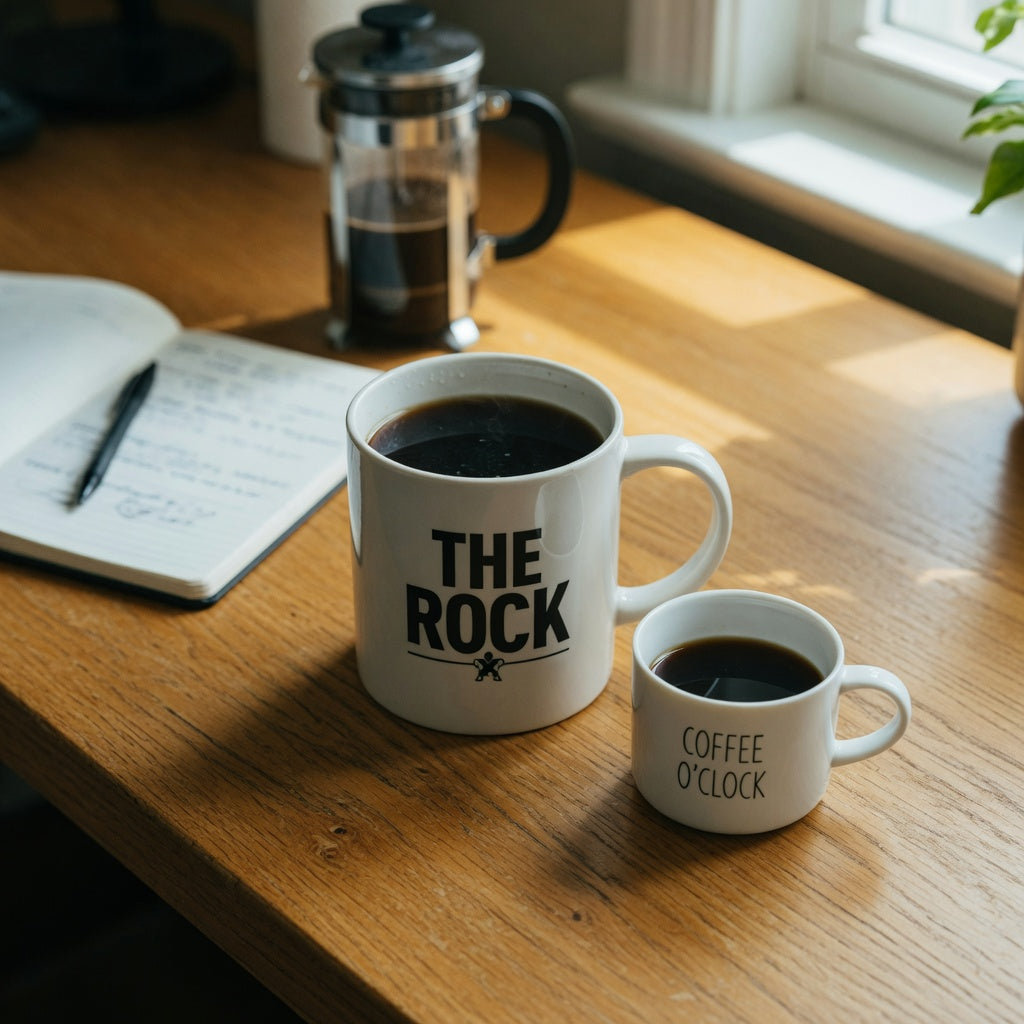
Is 480 ml Mug Big? Size in Oz, Cups, and Who It Fits
Yes — 480 ml is roughly 16 US fl oz, just over a pint, and exactly two 240 ml cups. We compare it with the mugs you already own, run the caffeine math, list the jumbo-mug trade-offs, and show who T...
Read more
Best Green Ceramic Coffee Mug for Tea: What to Compare Before You Buy
A green glaze is easy to love and easy to get wrong for tea. We break down the capacity, rim shape, heat retention, glaze food-safety, and care checks our team runs with customers — so the green mu...
Read more
Leave a comment
This site is protected by hCaptcha and the hCaptcha Privacy Policy and Terms of Service apply.