



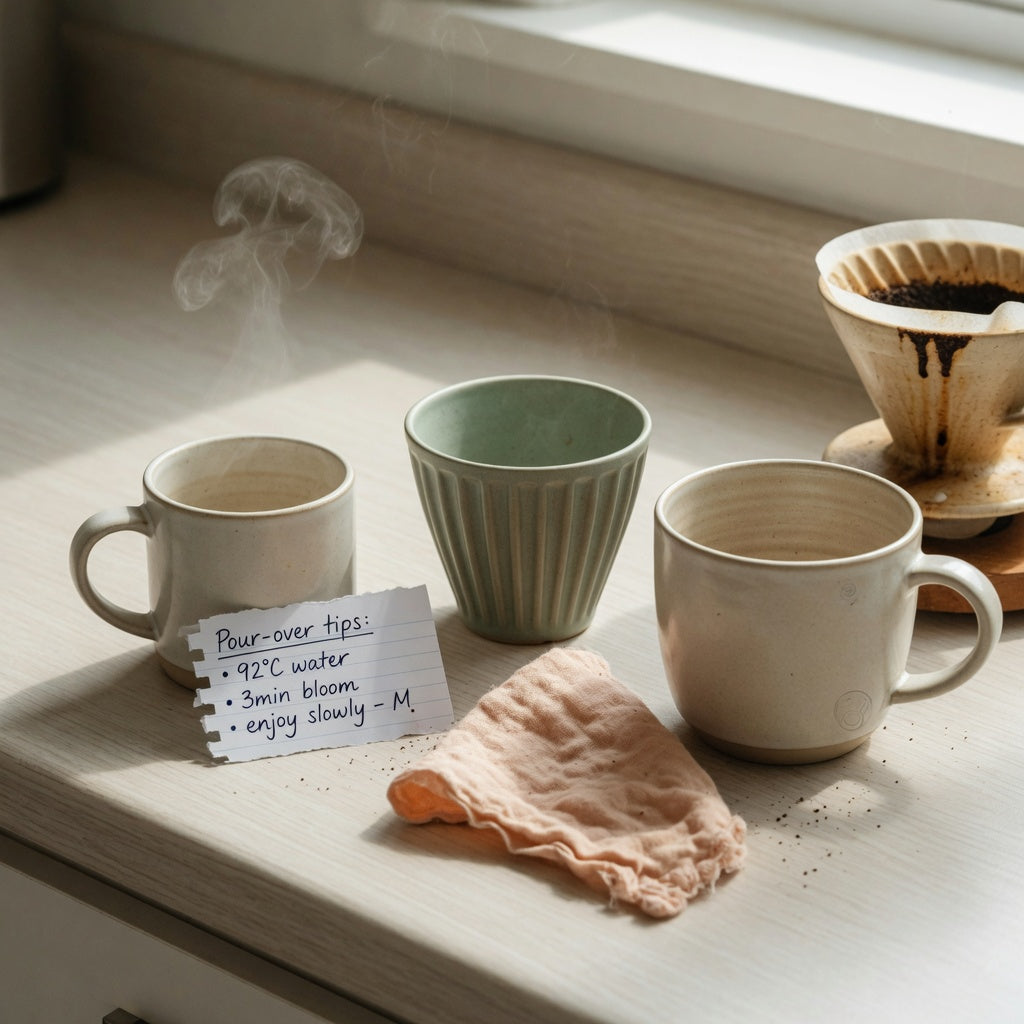
Coffee Mug Gifts Ideas Weekend Coffee Practical Purchase Checklist
Reading time: about 12 minutes
Sunday, second cup. The mug gets set down on the arm of the couch, lifted one-handed while the other hand keeps a book open, then set down again on a cushion. Inside an hour the recipient knows whether it joins the rotation or lands on the back shelf beside the conference freebies.
We pack and ship ceramic drinkware most weeks, so we see which pieces come back as exchanges and which ones customers still mention months later. The pattern is boringly consistent: artwork rarely decides it. Capacity, a handle that clears the knuckles, and a glaze they trust with a hot drink do. That is why this coffee mug gifts ideas weekend coffee practical purchase checklist leads with the drink rather than the design — it is the version we hand to friends who ask us what to buy.
Will this person actually use another mug, or is yours headed for the back shelf?
Some people want a mug as a gift and use it daily. Others own eleven and reach for two. The difference is not taste. It is whether the new mug does something the existing ones cannot.
A mug earns counter space when at least one of these is true:
- The capacity is new. Someone whose only cup is a 350 ml office mug has a real gap if they started pulling espresso at home.
- The ritual changed. A switch from drip to pour-over, or a new evening tea habit, creates a use their old mugs were never bought for.
- The hand-feel is different. A pleated exterior or a wider foot changes how a cup sits in the palm and how it stays put on a couch arm.
Skip the mug when the recipient already has a daily favorite and no room for a second, or when their coffee travels. Weekday coffee goes into a sealed tumbler with a lid. Weekend coffee stays home in an open cup. Crossing that line is the most common gifting miss we see, and we would rather point you to a travel mug than sell you ceramic that never leaves the cupboard.
We also make no heat-retention claims for our ceramic mugs. Open ceramic suits someone who finishes a cup within the sitting. A recipient who wants coffee still warm after a two-hour drive needs a different product category entirely.
200 ml, 400 ml, or 440 ml: which listed capacity fits the weekend pour?
Listed capacity is measured to the brim. Usable capacity is not — nobody carries a brim-full cup across a room. Plan on leaving 1.5 to 2 cm of headspace below the rim, then ask whether what remains still covers the drink they actually make.
Our three ceramic mugs are listed at 200 ml, 400 ml, and 440 ml. Those are the figures we can stand behind. Where the fill line lands depends on how full the recipient pours, so treat the matches below as a starting point rather than a spec sheet.
- Pleated coffee & tea cup — listed at 200 ml. A concentrated-drink size: cortado, flat white, small strong tea, short americano. A poor gift for a large-drip-with-milk drinker, who will refill twice and feel short-changed.
- The Flow coffee & tea mug — listed at 400 ml. The middle ground, and the safest pick when you do not know the recipient's habits well. It leaves working room for a splash of milk or a spoon of foam without pushing liquid to the rim.
- Morning and Night coffee & tea mug — listed at 440 ml. The largest listed capacity in our range. Best for a long weekend pour, a cafe au lait with generous milk, or a big tea someone plans to sit with through a chapter or two.
| Mug | Listed capacity | Weekend pour it suits | Confirm on the listing |
|---|---|---|---|
| Pleated | 200 ml | Cortado, flat white, small tea | Handle opening; care instructions |
| The Flow | 400 ml | Drip or pour-over with room for milk | Care instructions; stated weight |
| Morning and Night | 440 ml | Long pours, cafe au lait, big teas | Care instructions; filled weight |
That last column carries as much weight as the other three, and only the current product page can settle it.
Which mug for which recipient: three scenarios we get asked about most
They pull espresso drinks and the kitchen counter is already crowded
The 200 ml Pleated cup is the match, and the pleated ceramic finish shown on it gives damp fingers somewhere to sit when someone is working beside a stovetop. The honest trade-off: if they also pour a big drip coffee on Saturday, this becomes a second cup rather than a replacement. Buy it as an addition, not as their only mug.
You do not know their habits — coworker, teacher, new neighbor
The 400 ml Flow mug hedges better than either extreme. A 200 ml cup looks stingy to a drip drinker; a 440 ml cup can feel like a bucket to someone who takes a small flat white. The smooth wall shown in the Flow photos is also the easier surface to live with, since it wipes clean in one pass instead of needing a rinse around ridges. If none of the three shapes feels right for the person, browse our collection of unique coffee mugs for a silhouette that does not duplicate what they already own.
They linger — a reader, a tea person, a slow Sunday
The 440 ml Morning and Night mug suits the long sitting. One caveat we raise with customers: 440 ml of liquid weighs roughly 440 g before you add the ceramic itself, so a full cup this size is a two-hand lift for some people. Check the handle opening in the photos — a loop that takes two or three fingers spreads the load, while a small loop on a large body forces a pinch grip. In our experience that single detail decides whether a mug gets used daily or quietly avoided.
What a product photo can tell you, and what only the listing text can answer
Two things are genuinely judgeable from photography: the exterior finish and the shape of the handle opening.
Finish first. The pleating on the Pleated cup gives fingers a grip surface, which matters when hands are damp from kitchen prep. The smoother wall on The Flow is the surface people cup with both palms on a cold morning. The trade-off cuts both ways: textured exteriors need a quick scrub if milk foam dries in the grooves, while smooth walls wipe clean in one motion.
Bases next. A wide, level foot resists tipping on a couch cushion, a duvet, or a bedside table — the three surfaces where weekend coffee actually gets set down.
Handles last. Look at where the handle meets the body relative to the rim. For a left-handed recipient, that placement changes which side the cup naturally lands on and whether the handle seam faces them or away.
What photos cannot answer: the handle's inner dimensions, the mug's weight in grams, its filled weight, and whether a given piece is rated for the dishwasher or the microwave. We will not print a care rating here that could outlive a supplier change, so check the care section on the individual product page and message us if a detail is missing. Please do not carry those answers over from a similar-looking mug by another maker — clay bodies and glazes vary between studios, and batch finishes change.
Handmade, vintage, or brightly glazed: what to ask before the mug meets hot coffee
Mugs bought through normal retail channels are generally low-risk, and the FDA describes commercially made everyday pottery as much less likely to have lead problems. The agency points at narrower categories instead: handmade pieces with crude finishing, antiques, damaged ware, pieces of uncertain origin, and brightly orange, red, or yellow decorated pieces.
Where lead sits in a glaze or decoration and the piece was not made or fired properly, it can leach into drink, and washing or boiling will not remove it. The FDA lists an action level of 0.5 µg/ml of leaching solution for ceramicware cups and mugs under the method in Compliance Policy Guide 545.450. A label is not a lab test either: FDA guidance says ware containing extractable lead should not be marked 'Lead Free', which tells you what a responsible seller may print — not what an unverified marketplace listing has confirmed.
There is a regulatory backstop as well. Under 21 CFR 109.16, decorative ceramicware that looks suitable for food use is treated as foodware unless it carries a conspicuous 'Not for Food Use' statement, including a permanent mark on the base, or has a hole bored through the contact surface.
The practical version for gift buyers: purchase from a seller who states the piece is intended for food use, and pass on the vintage-shop mug with the gold rim or the unmarked import with a bright red interior, however good it looks on a shelf. Our breakdown of what to compare in a ceramic mug gift for coffee lovers goes deeper into finish and food-contact questions.
Dishwasher, microwave, metallic trim: three separate questions, not one
Shoppers collapse these constantly. A mug can be dishwasher safe and not microwave safe, or the reverse, and neither claim says anything about how a decoration was applied.
- Ask for a written dishwasher statement, not an inference. Metallic rims, luster finishes, and some applied decals behave very differently from a design fired into the glaze. A print that survives hand washing can dull through repeated high-heat cycles, and 'dishwasher safe' should be a line you can quote rather than a guess based on how glossy the mug looks.
- Ask about the microwave separately. Any metallic trim — gold bands, platinum luster, foil accents — should stay out of a microwave regardless of what the dishwasher line says.
- Do not carry a rule across makers. Clay bodies and glazes vary between studios, and assuming a handmade mug behaves like a factory ceramic is exactly the assumption that ruins a gift in week one.
For our own mugs, the dishwasher and microwave answers belong on the individual product page, not in a blog post that could outlive a supplier change — check there, and ask us directly if something is missing. If you are still narrowing shapes, our comparison of morning coffee ceramic mug options works through the same variables.
Finishing the gift without handing over more clutter
A mug on its own is easy to hand over and easy to forget. A mug with something inside it gets used the same week.
- Pair it with the drink, not with candy. A 100 g bag of whole bean coffee or a small tin of loose-leaf tea drops into a 400 ml or 440 ml mug without spilling over the rim. In the 200 ml cup, a tea tin or a single wrapped truffle is the right scale.
- Skip the filler. Individually wrapped sweets and paper shred end up in a drawer, and they make a considered mug look like a gift basket.
- Write the care note by hand. Two lines — 'hand wash to keep the finish sharp' or 'no metallic trim in the microwave' — take ten seconds and prevent the most common first-week regret.
- For an office gift, split a bag of coffee between two mugs rather than buying one oversized basket nobody wants to carry home on a bus.
The coffee mug gifts ideas weekend coffee practical purchase checklist, in eight steps
Run your shortlist through these before checkout. A mug that clears all eight has a real chance of becoming the cup they reach for on a Saturday.
- Does it match a drink they actually make? Concentrated espresso drinks, standard drip, and long milk drinks point at different listed capacities — 200 ml, 400 ml, and 440 ml in our range.
- Is it different from what they already own? A new finish or an unfamiliar size justifies shelf space. A near-duplicate does not.
- Have you subtracted headspace? Assume the usable fill sits 1.5 to 2 cm below the rim, and confirm the remaining volume still covers their normal pour.
- Can you see the handle opening clearly? On the larger sizes, look for a loop that takes two or three fingers rather than a pinch grip.
- Does the base look stable? A wide, level foot matters on soft furniture and uneven tables.
- Is food-contact status stated? The seller should describe the piece as drinkware. Anything marked decorative or 'Not for Food Use' is not a coffee mug.
- Are the dishwasher and microwave answers written down? If either is missing, ask before you buy rather than after the first wash cycle.
- Can you finish the gift without clutter? Small-batch coffee, loose-leaf tea, or a handwritten care card turns drinkware into a complete present and keeps it out of the drawer.
Those eight checks are the ones we run in our store before any ceramic mug ships. If no single shape matches the person on your list, read that as a signal to look wider rather than settle — browse the unique coffee mugs collection and compare silhouettes against what they already own before you commit.
Frequently asked questions
Does anyone actually want a coffee mug as a gift, or do most people already have too many?
Both happen, and often in the same family. Plenty of recipients will use a well-chosen mug daily; plenty of others already own more than they reach for. The deciding factor is whether the new mug changes their weekend pour — a new capacity, a different finish, or a better grip. That is the first line on a coffee mug gifts ideas weekend coffee practical purchase checklist, and it is why we steer ceramic only toward people whose coffee stays home.
Is a 200 ml cup too small for weekend coffee?
It depends on the drink, not the day. A 200 ml cup suits a cortado, a flat white, or a small tea. If the recipient makes a full drip coffee with milk, the 400 ml or 440 ml options match better, because the smaller cup will feel like a ration. Read the listed capacity, then subtract the headspace you actually leave below the rim.
Is a ceramic mug a better gift than an insulated travel mug?
Only when the drink stays home. Open ceramic suits a pour-over at the kitchen table or a tea someone lingers over on a Sunday. For a commute or a long drive, a sealed tumbler with a lid is the more useful gift, and we would rather point you there than sell you an open cup that lives in a car console.
Can I microwave a ceramic mug with a metallic rim?
Do not assume so. Metallic bands, luster finishes, and foil accents are the decorations most likely to cause trouble in a microwave, and a dishwasher-safe claim says nothing about microwave safety. Look for a separate microwave statement on the listing before heating anything in a gifted mug.
Does 'lead free' on a handmade mug guarantee it is safe for hot coffee?
Not by itself. The FDA notes that some traditional pottery labeled lead free has still shown extractable lead when tested, while describing commercially made everyday pottery as much less likely to have lead problems. Buy from sellers who state the piece is intended for food use, and skip antiques, damaged ware, unmarked imports, and brightly red, orange, or yellow decorated pieces for drinking.
Still deciding? Start with the shape of the weekend pour, then let the listing text settle the rest: compare the 400 ml Flow mug against the 440 ml Morning and Night mug, confirm the care notes, and only then choose the finish.
More from our blog
Ready to pick your mug? Two ways to save on today's order:
Ordering 1–3 mugs? Get an extra 10% off your 1st order with code 10_OFF Apply 10% Off & Shop Wooden-Handle Mugs →
Gifting 4+ mugs? Buy 3, Get the 4th Free applies automatically at checkout (no code needed; offers do not stack) · Free standard shipping (Nov pre-Christmas delivery: 15–20 calendar days US) · Free replacement if chipped in transit.
Popular mug buying guides: Ceramic Mugs with Lids Compared · Wooden-Handle Tea Infuser Mugs Compared · Christmas & Secret Santa Mugs 2026 · Espresso & Cortado Cups Guide · Cup & Saucer Gift Sets · All 25 Mugs Spec Table · Mug Size Guide · Shipping & Promo FAQ
FIRST ORDER 10% OFF (CODE: 10_OFF) · OR BUY 3, GET THE 4TH FREE


Read more
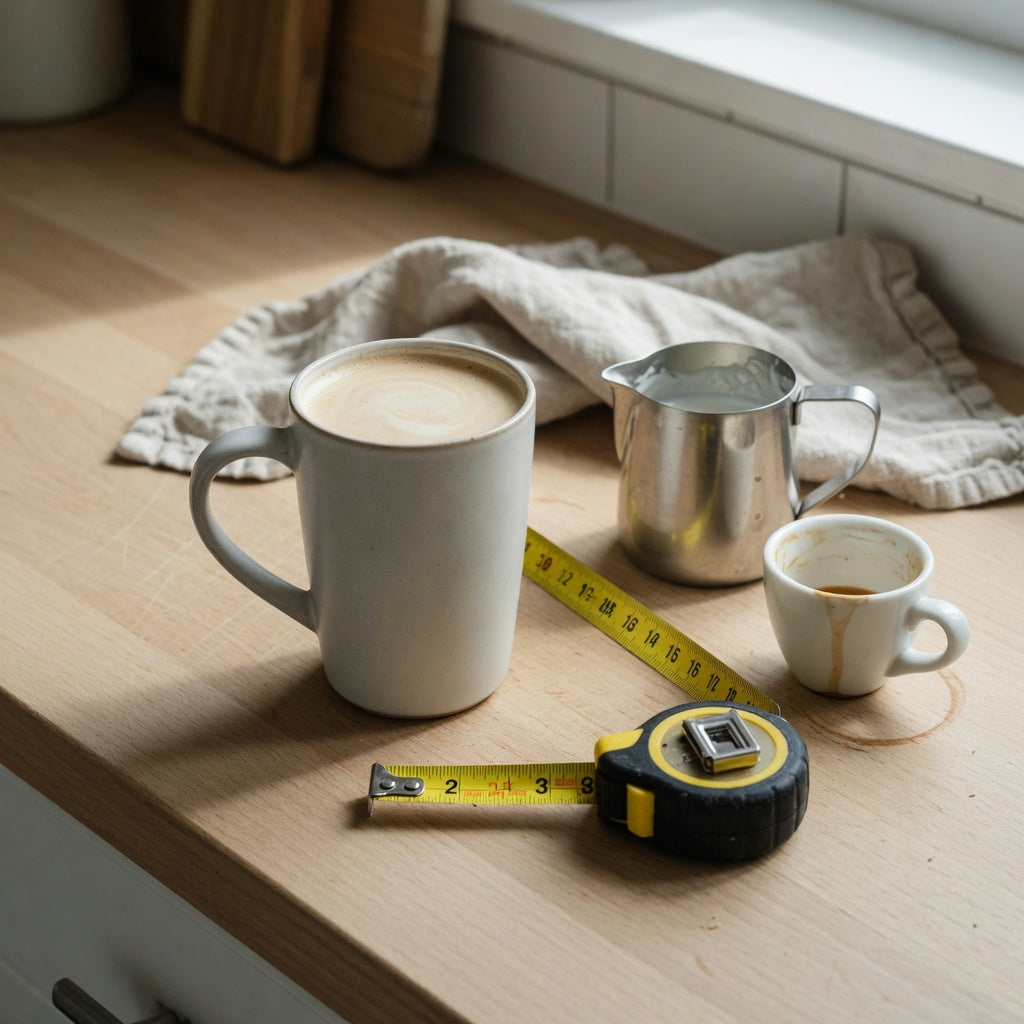
Latte Mugs Tall Weekend Coffee Practical Purchase Checklist
A weekend latte is a slower pour, so the mug has to fit your machine, your fill line, and your hand—not just a capacity label. Compare The Flow, Morning and Night, and The Rock, then verify the dim...
Read more
Coffee Mug Gifts Ideas Weekend Coffee Product Shortlist Guide
A scenario-first shortlist that matches three ceramic cup sizes to real weekend coffee routines, with an explicit reason to give or skip each one, plus the care details to confirm before you order.
Read more
Leave a comment
This site is protected by hCaptcha and the hCaptcha Privacy Policy and Terms of Service apply.