
Coffee Mug Display Ideas for Kitchens, Shelves, and Small Spaces
Reading time: about 8 minutes
A crowded mug cabinet usually fails in the same way: the handle catches on the next mug, the stack leans, and the one cup you actually want ends up buried behind a row of mismatched extras. Good coffee mug display ideas solve that problem before they turn into daily annoyance.
We handle mugs in our store every day, and the best displays are the ones that do two jobs at once. They keep cups easy to grab for morning coffee, and they make the collection look intentional instead of accidental. That balance matters more than most people expect.
If you are comparing layouts for a kitchen counter, open shelf, office nook, or gift setup, these are the coffee mug display ideas we would actually use ourselves. For more setup-specific inspiration, our guide on Coffee Mug Display Guide for Kitchens, Offices, and Small Spaces pairs well with this one.
What makes a mug display look good without getting in the way?
The best display keeps the mugs visible, spaced enough to read as a collection, and close enough to use daily. That sounds simple, but the small details make the difference.
We look for three things in a real kitchen setup:
- Clear handle access. If you need to move two mugs to reach the one in front, the display is too tight.
- Enough vertical room. Taller mugs need more clearance than standard 10 to 12 oz cups, especially on shelves with a low underside.
- Visual rhythm. Repeating shapes, like round mugs or matching glaze colors, look calmer than a random row of unrelated cups.
That is why simple open shelves often work better than deep cabinets. The mugs stay visible, dust is easier to notice, and you are less likely to forget what you already own.
At the same time, open display is not ideal for every household. If you have a lot of grease near the stove, very little wall space, or you hate wiping dust, a closed cabinet with glass doors or a lower-profile rack may be the better choice.
Should you use an open shelf, wall rack, or counter display?
Each setup solves a different problem, and not every layout fits every kitchen. We usually narrow it down by how much space is available and how often the mugs are used.
| Display type | Best for | Trade-off |
|---|---|---|
| Open shelf | Daily-use mugs and coordinated collections | Needs dusting and good spacing |
| Wall rack | Small kitchens with limited cabinet space | Can look busy if overloaded |
| Counter tray or stand | Gift mugs, seasonal mugs, or a small featured set | Takes up valuable prep space |
If you want a display that works on a shelf or counter without looking bulky, a rounded profile often helps. Our Round Coffee Tea Mug is a good example of a mug shape that stacks visually well with similar rounded pieces and feels at home in a simple lineup.
For shoppers still deciding between display pieces and the full range, the all collection is the fastest way to compare styles side by side before you commit to a theme.
If you want a deeper breakdown of rack-focused setups, we also cover that in Coffee Mug Shelf Display Ideas for Real Kitchens and Small Spaces.
How do you arrange coffee mugs on a shelf so they do not look cluttered?
The easiest method is to treat the shelf like a small product display, not a storage bin. Start with the mugs you use most often and leave breathing room around them.
- Group by shape or color. Put round mugs together, or keep similar glaze tones in one section.
- Use even spacing. A small gap between handles keeps the row from looking jammed.
- Vary height carefully. If you mix mugs with different shapes, place the taller ones at the ends or in the back.
- Limit the count. A shelf with five mugs that each have space will look cleaner than a shelf packed with eight.
- Leave one practical slot. Keep one easy-to-grab mug in the most accessible spot for everyday use.
Our experience is that shoppers often overfill the shelf because they want to show everything. That works for a collector’s wall, but not for a working kitchen. If the mugs are mostly decorative, fine. If you drink from them daily, keep the display smaller and easier to clean.
For a more room-by-room approach, our article Coffee Mug Display Ideas That Actually Work in Real Kitchens covers setups that still make sense when the coffee maker, dish rack, and breakfast prep all share the same counter.
Which mug shapes and designs photograph well on display?
Simple shapes usually display better than busy ones. A mug with a clean silhouette, readable artwork, and a comfortable handle tends to look intentional from a few feet away and still hold up in real use.
We see three design types work especially well:
- Round-bodied mugs for soft, balanced shelf rows.
- Illustrated mugs for a focal point, especially when the art faces outward.
- Matching sets when you want the display to feel tidy rather than eclectic.
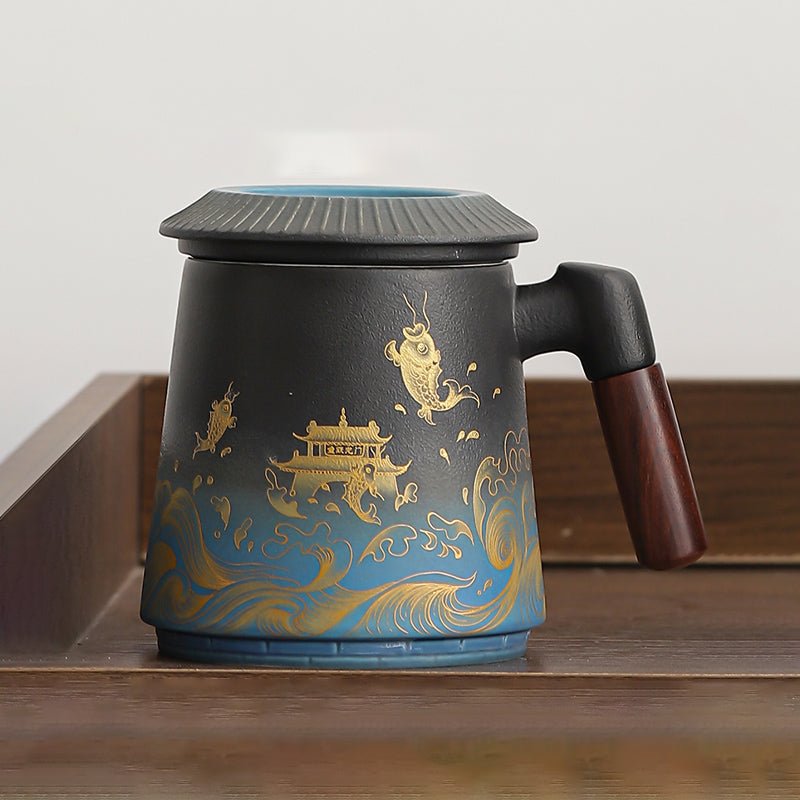
The Elk and Moon Coffee Tea Mug is a strong choice if you want one piece to anchor a shelf with a more graphic look. The Koi Fish Coffee Tea Mug works well when you want a display that feels a little more decorative without turning into clutter. Both are better suited to visible shelves than to a dark cabinet where the artwork gets lost.
That said, decorative mugs are not the best pick if you want every cup to match or if you store a lot of tall travel mugs alongside them. Their strength is visual variety. Their limitation is consistency.
What details matter most if you want the display to last?
This is where the practical side matters. A display that looks good for one afternoon but chips, stains, or gathers dust is not a real solution.
From a handling perspective, we pay attention to four details:
- Material feel. Ceramic and stoneware give a more substantial look on open shelves than thin lightweight cups.
- Glaze finish. Glossy glazes reflect light and can brighten a darker shelf; matte finishes hide some fingerprints but can show dust more clearly depending on the color.
- Handle clearance. A handle that is too tight to the body makes everyday grabbing awkward.
- Care routine. If the mug is used daily, it should be easy to wash without needing special treatment.
For most buyers, dishwasher-safe care is a major deciding factor, because display mugs usually end up being everyday mugs too. If a cup requires hand washing only, it belongs in a lower-use decorative rotation, not front and center beside your coffee machine.
We also recommend checking for common defect modes before you arrange a display: uneven bases that wobble on a shelf, glaze pooling near the rim, and small handle joins that feel rough in hand. Those details are easy to ignore in a product photo and very obvious once the mug is on display.
How do you make a small kitchen display look intentional instead of crowded?
Small spaces need restraint. That does not mean boring. It means choosing one display zone and giving it a purpose.
A compact setup usually works best with one of these approaches:
- Two to four mugs only on a narrow shelf near the coffee maker.
- One mug per hook on a slim wall rack, with the handles all facing the same direction.
- One tray display on the counter for seasonal or special mugs.
We would not recommend packing a small kitchen with a full mug wall if you still need counter space for food prep. The trade-off is simple: more mugs on display means less room for actual kitchen work.
If your space is tight, pick a few pieces that deserve the spotlight and keep the rest stored away. That makes the display feel curated instead of overloaded.
How should you style mugs for gifts, office desks, or a coffee corner?
Different spaces ask for different display behavior. A home kitchen can be more relaxed. An office desk or gift setup usually needs more restraint.
For a coffee corner, we like a small cluster with one obvious centerpiece. For a desk or break room, a single mug plus a small tray is usually enough. For gifting, the display should help the buyer imagine the mug in daily use, not just as decor.
That is also why some shoppers prefer browsing a broad assortment before deciding. The all collection is useful here because it lets you compare a practical mug, a decorative mug, and a more themed mug without jumping between unrelated pages.
If you are thinking about mug gifting too, our seasonal write-up on Coffee Mug Christmas Gift Ideas People Will Actually Use covers the same practical question: will this sit on a shelf, or will someone reach for it every morning?
Frequently asked questions
How many coffee mugs should I display at once?
For most kitchens, three to five mugs is the sweet spot. That is enough to look intentional without crowding the shelf or blocking access to the handle of the mug you want to grab first.
Are open coffee mug displays hard to keep clean?
They do need occasional dusting, especially on open shelves near cooking areas. If you cook often or have limited time, keep the display smaller and choose mugs with simple surfaces that wipe down quickly.
What is the best mug style for a shelf display?
Simple silhouettes with readable artwork usually work best. Round shapes, balanced handles, and clear graphics show well on shelves and also stay practical for daily drinking.
Can I mix decorative mugs with everyday mugs on the same display?
Yes, but keep the ratio under control. We usually suggest putting the decorative mugs together and leaving the everyday mugs in the easiest-to-reach spot so the display still functions as storage.
Should I display mugs by color or by size?
Color is usually easier for a clean visual result, while size matters more for usability. If you want the shelf to feel polished, group by color first and then adjust by size so the taller mugs do not crowd the smaller ones.
If you want a practical next step, compare your shelf width, how often you actually use each mug, and whether you want a display piece or a daily-use cup. Then browse the full CoffeifyMug collection and choose two or three mugs that fit the space instead of filling it.
Read more

Smiley Face Coffee Mug: What to Check Before You Buy
A smiley face coffee mug should do more than look cheerful on a shelf. We break down the size, finish, handle comfort, and care details that matter once it is on your desk or in your dishwasher.
Read more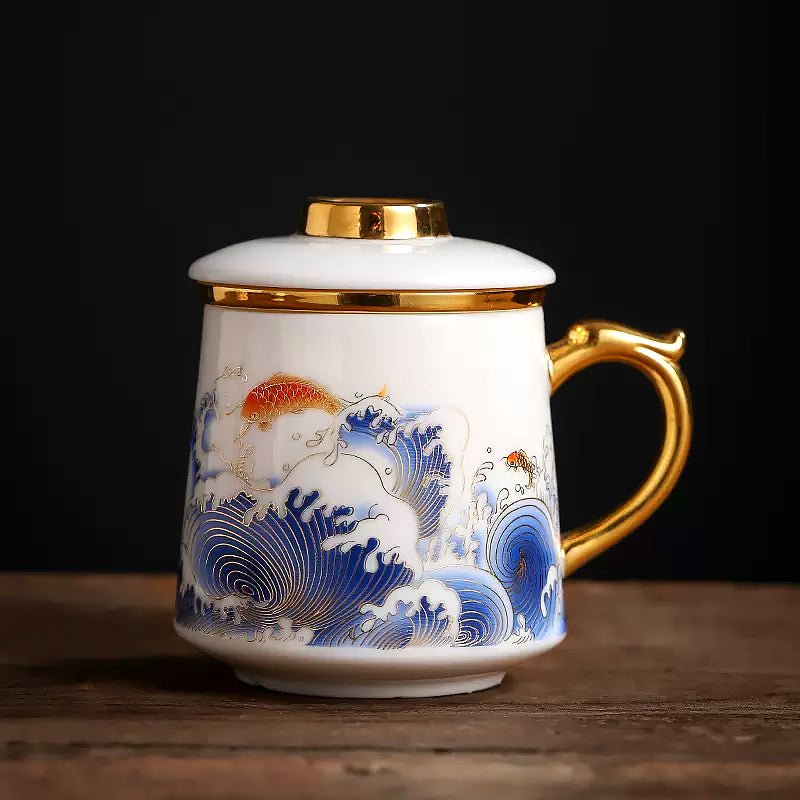
What Are Coffee Mugs Made Of? Materials, Trade-Offs, and Best Uses
Coffee mugs are usually made from ceramic, porcelain, stoneware, glass, stainless steel, or plastic. We break down how each material feels in daily use, what it’s good at, and where it falls short ...
Read more
Leave a comment
This site is protected by hCaptcha and the hCaptcha Privacy Policy and Terms of Service apply.