

Clay Pottery Coffee Mugs Size Decision Guide: 200-350 ml
Reading time: about 10 minutes
A mug can hold your drink and still be the wrong size for the place you use it. A 350 ml option may crowd a narrow desk beside a keyboard, while a 200 ml option may mean another trip to the kitchen during a long work block. This clay pottery coffee mugs size decision guide compares the current 200 ml, 270 ml, and 350 ml choices using the variables that matter after delivery: your measured pour, additions, hand comfort, available surface, storage, care routine, and gifting plan.
In our store, we treat capacity as a fit question rather than a quality ranking. At the packing table, we pay attention to the room required around the mug body, rim, and handle. Those details affect storage and handling even though they are not captured by the capacity number alone.
Start by scanning our current unique coffee mugs collection for designs you would genuinely use. Then apply the size checks below before appearance persuades you to accept an impractical capacity.
Product-fact boundary: The recommendations below are general guidance based on the listed 200, 270, and 350 ml capacities. Check each linked product page for the exact capacity, material description, dimensions if provided, and care instructions for the specific mug you are considering.
Clay pottery coffee mugs size decision guide: which capacity fits?
The most reliable starting point is not a generic drink-size label. It is the amount you already pour. Using this clay pottery coffee mugs size decision guide takes only a measuring jug and the mug you currently reach for most often.
- Place your current mug on the counter and add water to the level where you normally stop pouring.
- Pour that water into a marked measuring jug and record the volume in milliliters.
- If you usually add milk, creamer, foam, or ice, recreate that addition before judging the final fill level.
- Leave the headspace you need to carry the mug without liquid reaching the rim.
- Compare the finished volume with 200, 270, and 350 ml rather than choosing from product photography alone.
A listed capacity should not automatically become your fill line. Filling any mug close to its rim can make the walk from the kitchen counter to an office desk awkward. Your practical capacity is the amount that fits while preserving comfortable headspace.
| Listed capacity | Situation where it makes sense | Main trade-off |
|---|---|---|
| 200 ml | Your measured pour is modest and surface or shelf space is limited | Less reserve for milk, foam, or ice |
| 270 ml | Your finished drink exceeds 200 ml but does not require the largest option | Can still feel tight for ice-heavy or generous mixed drinks |
| 350 ml | Your measured drink needs more room or includes bulky additions | More filled weight and potentially more storage space |
When does 200 ml make sense on a desk or compact shelf?
The 200 ml option is practical if your water test lands comfortably below that capacity and you value a smaller vessel more than spare volume. Think of a narrow desk with a laptop, mouse, notebook, and phone already competing for space. It can also suit a crowded bedside table or a kitchen cabinet where larger mugs force handles to overlap.
This size is not reserved for one brewing method. Coffee and tea drinkers can both use it successfully if the finished drink fits. The deciding factor is your actual pour, not a borrowed rule about what a serving should be.
The limitation is clear. A 200 ml mug is a poor match if you routinely add several ice cubes, a substantial milk pour, or a layer of foam. It is also less convenient if you want one larger drink rather than smaller refills. If the compact profile matches your routine, use the clay pottery options in our mug collection and keep only designs whose product page confirms the capacity you measured.
Is 270 ml the practical middle choice for mixed routines?
A 270 ml mug provides 70 ml more listed capacity than a 200 ml mug and 80 ml less than a 350 ml mug. That makes it close to the numerical middle, but it does not make it universally correct. It works best when your measured drink passes the comfortable limit of 200 ml while leaving unused space in a 350 ml option.
This capacity can make sense for a mug that moves between the breakfast table and an office desk. It gives modest additions more room without automatically choosing the largest footprint. It is also a reasonable gift candidate when you know the recipient does not favor either very small pours or large iced drinks.
Do not select 270 ml merely because it sounds moderate. A compact shelf may still favor 200 ml, while a finished drink with ice and milk may push beyond 270 ml. Measure first and let the number confirm the decision.
When is 350 ml worth the extra filled weight and shelf space?
Choose 350 ml when your finished drink does not fit comfortably below 270 ml. The larger option offers 150 ml more listed capacity than 200 ml and 80 ml more than 270 ml. That extra room can be useful for ice, milk, or a larger single pour, provided you will actually use it.
The trade-off appears as soon as the mug is filled. More liquid adds weight, and a larger vessel may need more clearance on a shelf, in a gift box, or between other items in a dishwasher rack. Capacity does not reveal the exact outside dimensions, so confirm any listed measurements on the product page if cabinet or rack clearance is tight.
A 350 ml clay pottery mug is not automatically a travel mug. Do not assume it will fit a vehicle cup holder, seal against spills, or work with a lid unless the product page expressly says so. For commuting or walking with a drink, a purpose-built lidded travel style may be the more practical purchase.
How should milk, ice, and carrying headspace change the number?
Additions must be included in the size test. Shoppers sometimes measure only the brewed liquid and discover later that their normal milk or ice leaves the mug too close to the rim. We recommend reproducing the complete drink with water and your usual additions before ordering.
- Drinks without additions: Measure the liquid and preserve enough empty space for the way you carry the mug.
- Milk or creamer: Count the amount you actually add rather than assuming it will fit above the measured coffee.
- Foam: Allow vertical room so the finished drink does not sit at the rim.
- Ice: Put your usual quantity of ice in the current mug before adding measured water. Ice shape varies, so a real test is more useful than a fixed estimate.
- Kitchen-to-desk carrying: Favor additional headspace if the route includes stairs, doors, or a crowded work surface.
If additions only appear occasionally, decide which inconvenience is easier to accept: using a larger mug every day or choosing another cup for the occasional iced or milk-heavy drink. A single mug does not have to cover every beverage routine.
Which current product page should you check after choosing a size?
Capacity should narrow the field before design makes the final call. Product images are useful for comparing appearance, but differences in crop and scale make them unreliable size references. Open the written product details and confirm that the listed capacity matches the result of your home measurement.
- Mountain Sea: If this design suits your kitchen or gift recipient, compare your target capacity and care needs with the details on the Mountain Sea Coffee Tea Mug page.
- Great Mountain: Keep the Great Mountain Coffee Tea Mug in consideration only if its current listed details fit your measured pour and storage limits.
- Landscape: If you prefer this design, verify the capacity and product-specific instructions on the Landscape Coffee Tea Mug page before ordering.
We do not recommend assuming that similarly styled mugs have identical capacities, outside dimensions, or care requirements. The individual product page is the source of truth for the piece being purchased.
How do clay pottery care and cabinet space affect size?
The rim and handle are the areas we protect most deliberately while packing because they can make first contact with nearby hard surfaces. At home, avoid storing mugs so one handle presses against another mug's rim. If the product page permits dishwasher use, leave enough rack clearance to prevent the mug from knocking neighboring ceramic during the cycle.
If hand washing is required or preferred, use a soft, non-abrasive sponge and avoid striking the rim against the sink or faucet. Let the mug dry fully before placing it in a closed cabinet. Always follow the specific care instructions on the linked product page rather than treating every clay pottery item as microwave- or dishwasher-compatible.
Remember that internal capacity and external size are different measurements. A 270 ml mug with a broad body or projecting handle could require more shelf width than expected, while another shape may use vertical space differently. If your shelf, coffee station, or dishwasher has little clearance, compare any listed dimensions and measure the available area before checkout.
If stackability, a fitted lid, guaranteed cup-holder compatibility, or a specific appliance use is essential, choose a product expressly designed and described for that purpose. A decorative clay pottery mug may not be the right style for those requirements.
Which capacity is easier to choose for a gift?
Start with what you know about the recipient's routine. A 200 ml mug makes sense for modest pours and compact kitchens. A 350 ml option is more defensible when the person regularly prepares larger drinks or uses ice, while 270 ml avoids either extreme when no strong preference is known.
Also consider the recipient's storage. A generous mug can look appealing during a gift unboxing but become inconvenient in a small cabinet. If you cannot confirm their usual pour or available space, include a gift receipt or choose based on a mug size you have seen them use rather than guessing from beverage labels.
Frequently asked questions
What does the clay pottery coffee mugs size decision guide suggest if I am between 270 and 350 ml?
Measure the complete drink, including milk, foam, or ice, and leave your normal carrying headspace. Choose 270 ml if everything fits comfortably; move to 350 ml if the smaller option would place the drink near the rim. Also check whether the extra filled weight and storage space of 350 ml will bother you.
Is a 200 ml clay pottery mug too small for coffee or tea?
Not if your usual finished drink fits with headspace left at the top. Capacity is about your pour rather than the beverage name. It becomes too small when additions or the amount you drink regularly push beyond its practical fill level.
Should I automatically choose 350 ml for iced coffee?
No. Ice varies in size and quantity, so test your normal ice in an existing mug and add measured water to the level you usually drink. Choose 350 ml only if that finished combination needs more room than the smaller listed capacities provide.
Can clay pottery coffee mugs go in a dishwasher or microwave?
Do not assume that one care rule applies to every product. Check the care instructions on the specific Mountain Sea, Great Mountain, or Landscape product page before using a dishwasher or microwave. If a use is not stated, choose a mug whose page explicitly supports the care routine you need.
Do the Mountain Sea, Great Mountain, and Landscape mugs have the same capacity?
Do not assume that they do based on their shared category or product photos. Confirm the current listed capacity on each linked product page and compare it with your measured drink. This also protects you from choosing a preferred design that does not fit your practical size requirement.
Before ordering, run the check once more: measure your finished pour, include additions, preserve carrying headspace, confirm cabinet or rack clearance, and read the product-specific care details. Then compare the qualifying designs in our unique coffee mugs collection and choose the one that fits both your routine and your space.
More from our blog
Read more
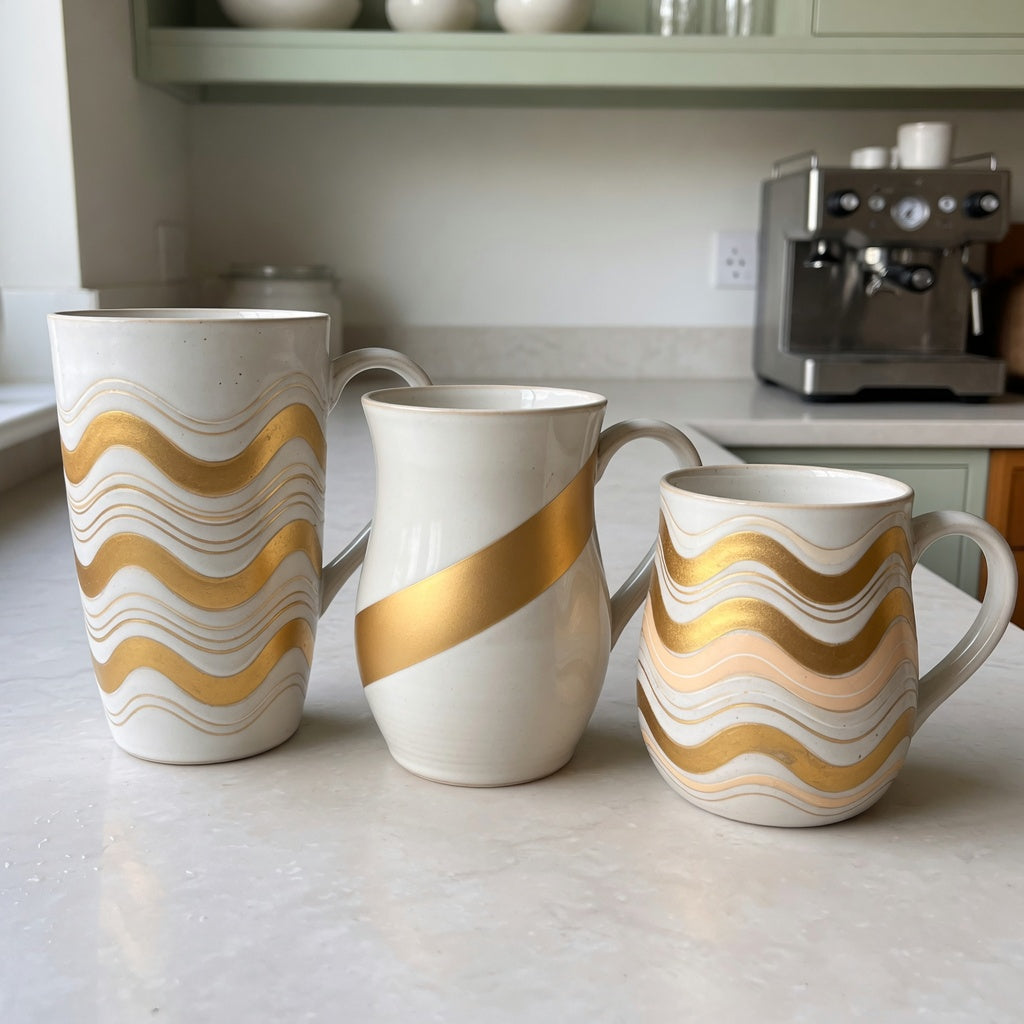
Compare large decorative coffee mugs current product facts: size, shape
Compare three current CoffeifyMug ceramic designs by listed 400, 440, and 480 ml capacities, shape cues, and decorative details. This fact check also identifies the dimensions, weights, care direct...
Read more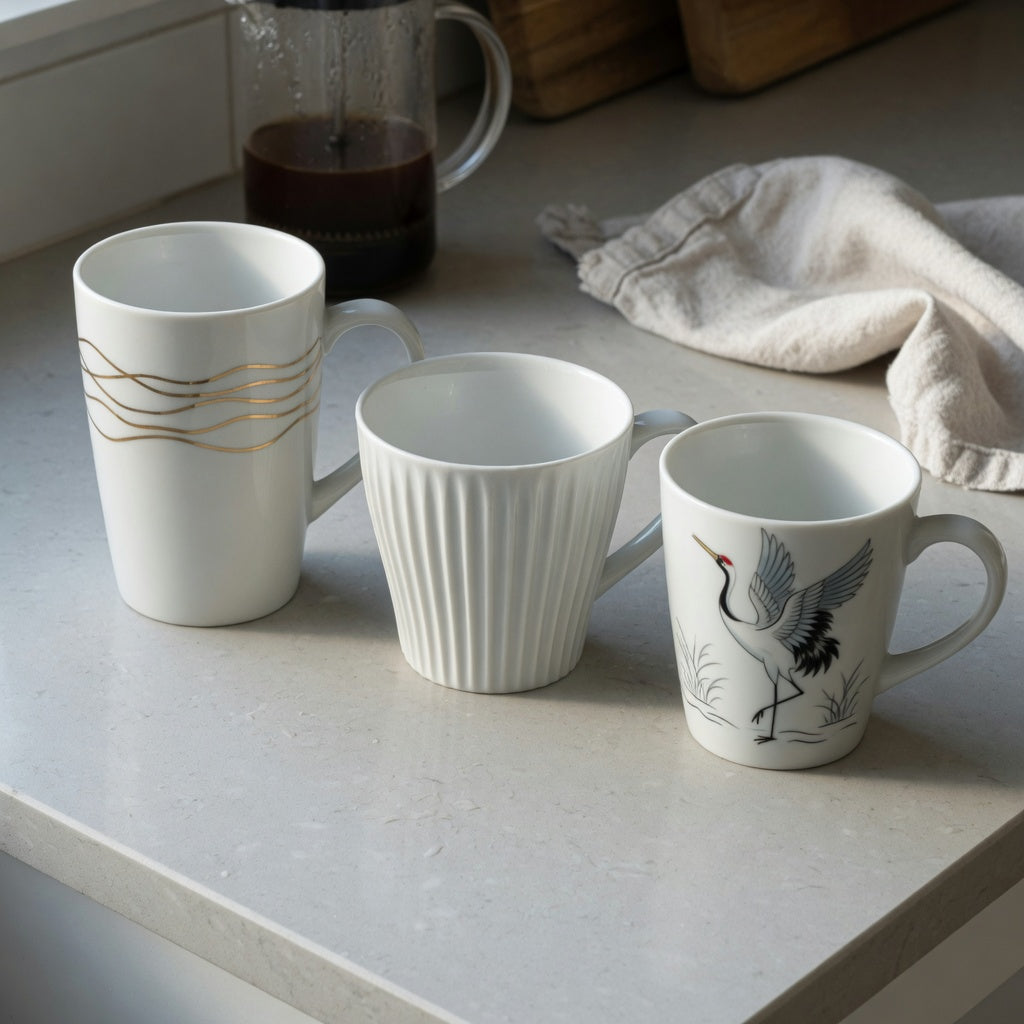
White Pottery Coffee Mugs Current Product Facts: Compare 3
Compare three currently listed white pottery designs by their 400-480 ml capacity range, silhouette, texture, and decoration. We also flag the dimensions, care limits, and fit details that require ...
Read more
Leave a comment
This site is protected by hCaptcha and the hCaptcha Privacy Policy and Terms of Service apply.