
Ceramic vs Porcelain Coffee Mugs: Replacement Purchase Shortlist
Reading time: about 10 minutes
A chipped rim beside the sink and a handle that pinches your middle finger are two different replacement problems. Buying another mug marked ceramic does not solve either one by itself. Our ceramic vs porcelain coffee mugs replacement purchase product shortlist guide starts with the limitation of the mug leaving your cabinet, then compares only the current shapes that could correct it.
In our store, the most useful replacement conversations begin with what still worked. A familiar fill level, comfortable handle, or cabinet-friendly height may be worth preserving even if the glaze, grip, or decoration was not. That evidence produces a shorter and more practical list than choosing porcelain or ceramic on reputation alone.
Why does this ceramic vs porcelain coffee mugs replacement purchase product shortlist guide begin with the old mug?
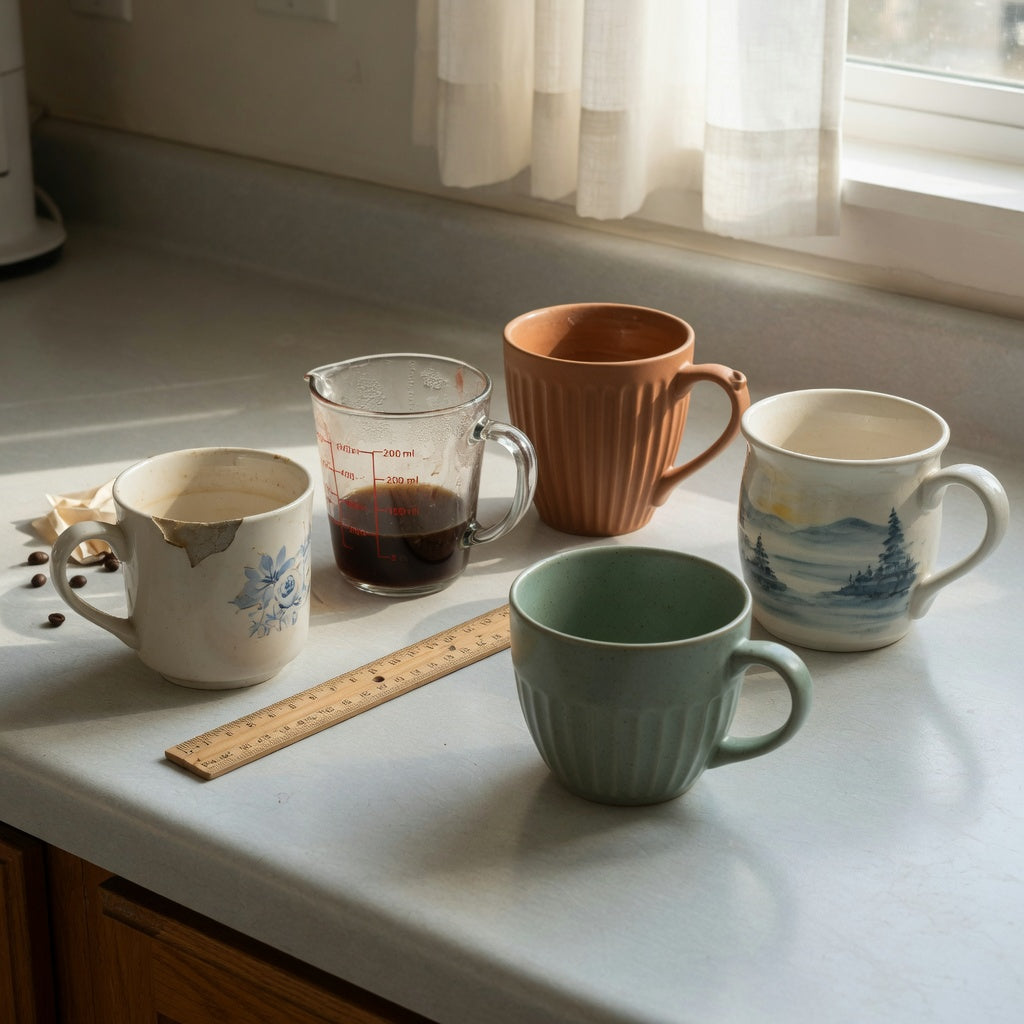
Record the old mug before discarding it. You do not need specialist tools, but you do need more detail than an estimated capacity. We use four checks to turn a vague replacement search into a specific brief:
- Measure the amount you actually drink. Fill the mug to your normal level, then pour that liquid into a marked measuring jug. Your everyday fill can be more useful than a brim-full capacity.
- Measure the complete footprint. Note the height, body diameter, and total width from the outside of the handle to the opposite wall. Compare those figures with shelf clearance, a coffee machine platform, and your usual coaster.
- Name the failure mode. Separate a rim chip from a crack through the body, a hairline at the handle joint, glaze crazing, an unstable-feeling base, or a slippery exterior.
- Write down the care routine. A mug used in a dishwasher twice a day has a different brief from one hand-washed after weekend tea.
Crazing is the fine network of lines that can form in a glaze; it is not automatically the same as a structural crack through the clay body. A sharp rim chip, a spreading crack, or movement at the handle joint is a stronger reason to retire a mug. Those defects can make drinking uncomfortable and cleaning unreliable.
Product-claim boundary: The linked product page is the controlling source for each mug's current material, dimensions, capacity, and care directions. We use the product names and visible designs to build this shortlist, but we do not infer dishwasher, microwave, or stacking suitability from a photograph.
Does ceramic or porcelain fix the failure you actually had?
Porcelain is a type of ceramic, not a completely separate material family. The broader ceramic label can also cover earthenware, stoneware, or an otherwise unspecified clay body. Porcelain is generally made from a refined body fired to become dense and vitrified, but that definition does not tell you the wall thickness, handle geometry, glaze quality, or finished weight of a particular mug.
| Replacement variable | Useful general guidance | What must be checked on the product page |
|---|---|---|
| Weight and hand feel | Porcelain can be made with relatively thin walls, while many stoneware mugs feel more substantial. Construction matters more than the category name. | Finished dimensions, capacity, handle opening, and any listed weight |
| Rim and impact damage | A thin rim can feel refined but still be vulnerable at a sink or against another mug. A thicker edge is not unbreakable. | Close product images showing rim shape and wall profile |
| Heat at a desk | Wall mass, starting temperature, drink volume, and room conditions all affect cooling. The word porcelain does not guarantee longer heat retention. | Capacity and construction details; use an insulated vessel if long retention is essential |
| Stains and glaze wear | A sound, fully glazed surface is usually easier to clean than a worn or crazed one. Coffee discoloration can collect in damaged glaze regardless of the broad material label. | Finish description and stated cleaning instructions |
| Microwave and dishwasher use | Clay type alone does not settle either question. Glaze, decoration, attached details, and manufacturing instructions matter. | Explicit microwave-safe and dishwasher-safe statements |
This is why we do not declare porcelain the automatic upgrade from ceramic. A dense porcelain mug can still have a delicate edge, while a substantial stoneware piece can be awkward for a shopper with limited grip. Replace the specific weakness rather than trading one unverified assumption for another.
Which current CoffeifyMug shape matches the job your old mug missed?
These three options earn a place for different reasons. We keep material claims separate from shape and styling claims here; confirm the current specifications on each linked listing before ordering.
Your old shape worked and you want a direct-feeling replacement
Start with the Round Coffee Tea Mug if a rounded design suits the space and routine you already have. It is the least disruptive candidate for someone who liked the general feel of the previous mug and does not need exterior decoration to solve a grip problem.
Choose it for: a familiar coffee-or-tea role and a visually straightforward replacement. Skip or pause: if the old mug slipped in wet hands, if you require a stackable profile, or if exact handle clearance is non-negotiable. The word round does not prove those features, so compare the listing with your measurements.
Your smooth mug slipped during rinsing or a hurried refill
The visible pleated treatment makes the Pleated Coffee Tea Cup the relevant candidate when an uninterrupted exterior felt too slick or visually plain. Pleats add changes in surface contour that fingers can register, but we would not describe any ceramic cup as drop-proof or guarantee grip without handling it.
Choose it for: a shopper who wants exterior texture to be part of the decision. Skip or pause: if fast one-wipe cleaning is the priority, if cabinet space is extremely tight, or if you need mugs to nest. Textured surfaces can require more attention around their recesses, and the listing should settle the actual dimensions and care method.
The old mug functioned well but felt too anonymous to replace like for like
Consider the Landscape Coffee Tea Mug when the replacement also needs to refresh an open shelf, personal desk, or gift unboxing. Its landscape design gives the buyer a concrete visual reason to choose it rather than treating decoration as an afterthought.
Choose it for: a decorative daily mug or a gift recipient who enjoys illustrated drinkware. Skip or pause: for a strict minimalist, or when you cannot confirm that the stated care directions fit the recipient's routine. A good-looking gift that requires care the recipient will not follow is not a practical replacement.
If material, capacity, handle shape, or cabinet fit eliminates all three, move to the broader unique coffee mugs collection with your measurements in hand. Keep the shortlist to candidates that correct the old limitation; do not add a mug merely because its decoration is different.
Will the replacement work at a desk, kitchen sink, or gift unboxing?
- For a crowded office desk: compare the listed body and handle dimensions with the coaster and the gap beside your keyboard. If tipping was the old problem, do not assume stability from a front-facing photo; wait until the base geometry and measurements support the choice.
- For a busy kitchen: make the stated dishwasher and microwave directions pass-or-fail requirements. Exterior pleating may be worth the extra cleaning attention for better tactile feedback, while a simpler wall may suit quick rinsing.
- For a gift: match the recipient's routine before matching a color. Confirm their preferred drink volume, available shelf height, and willingness to hand-wash. Inspect the rim, foot, glaze, and handle joint during unboxing before the first use.
- For iced coffee: account for the space taken by ice and check that the opening suits the cubes you use. A conventional ceramic or porcelain mug is not a sealed travel cup; choose another category if spill resistance or commute-ready insulation is required.
Heat retention deserves the same restraint. A heavier or thicker mug may absorb more heat at the start of a pour, but total mass and wall construction influence how the drink cools. For a long meeting, a lid or insulated vessel can matter more than choosing between the words ceramic and porcelain.
Can cabinet fit and care rules eliminate an option before checkout?
- Open the current listing. Confirm material, dimensions, capacity, and every stated care instruction. Treat an omitted feature as unconfirmed rather than assumed.
- Compare all three dimensions. Height settles shelf clearance, body diameter affects machine and coaster fit, and total handle-to-wall width determines how much cabinet space the mug really uses.
- Check your normal serving volume. Allow room above the liquid for carrying, milk, foam, or ice instead of selecting solely by a nominal capacity.
- Inspect the mug on arrival. Run a fingertip around the rim, look at the handle joints, check for a through-body hairline, and make sure the foot does not rock on a level counter.
- Follow the listing during cleaning. If dishwasher use is permitted, load the mug so its rim and handle cannot knock against another piece. Use a non-abrasive sponge for hand washing and avoid sudden transitions between very cold and very hot conditions.
An unglazed foot ring also deserves attention. Keep it clean, check it for rough spots, and use a coaster on a surface that marks easily. If a product has metallic-looking decoration, do not place it in a microwave unless its current instructions expressly permit that use.
Which option should you choose, and which should you skip?
| Your replacement situation | First candidate | Reason to choose | Reason to skip or verify |
|---|---|---|---|
| The former mug fit well but broke or wore out | Round Coffee Tea Mug | Keeps the search focused on a straightforward rounded design | Does not by name solve grip, stacking, or exact-size requirements |
| A smooth exterior contributed to poor handling | Pleated Coffee Tea Cup | Puts exterior contour into the shortlist | Pleats may need more deliberate cleaning; verify cabinet fit |
| The replacement should feel decorative or gift-ready | Landscape Coffee Tea Mug | Adds a visible landscape design to an everyday drinkware role | Not the best fit for minimal styling; verify decoration care |
| Material, size, or handle shape is non-negotiable | Unique Coffee Mugs collection | Provides more current candidates to compare against recorded measurements | Do not restart an unfiltered browse; retain the same pass-or-fail criteria |
Use the ceramic vs porcelain coffee mugs replacement purchase product shortlist guide as a filter, not a promise that one material wins. The useful shortlist is the smallest group that meets your actual fill, fit, grip, care, and style requirements.
Frequently asked questions
How should I use a ceramic vs porcelain coffee mugs replacement purchase product shortlist guide?
Start with the old mug's failure and record its normal fill volume, height, body diameter, and total width. Eliminate any candidate that repeats the failure or leaves a required material, dimension, or care rule unconfirmed. Compare the remaining two or three options by daily use rather than by material name alone.
Is porcelain less likely to chip than a ceramic coffee mug?
Porcelain is itself ceramic, and the label does not provide a universal chip-resistance ranking. Rim thickness, edge shape, body construction, glaze, and contact with sinks or other dishes all affect damage. Inspect the specific product design and handle either material carefully around hard surfaces.
Does porcelain keep coffee hot longer than ceramic?
Not as a dependable category rule. Wall thickness, mug mass, drink volume, starting temperature, and ambient conditions can outweigh the clay-body label. Choose an insulated or lidded vessel if extended heat retention is a firm requirement.
Can I assume a ceramic or porcelain mug is dishwasher and microwave safe?
No. Those uses depend on the complete product, including glaze and decoration, not only the clay family. Look for explicit directions on the current listing and follow them; an absent statement is not permission.
What should I do if none of these three mugs matches the one I am replacing?
Keep the four measurements and the original failure mode beside you, then review the current unique mug selection. Remove every option that misses a required size, material, care method, or handle need. Your next step should end with two or three qualified candidates, not another unrestricted browse.
More from our blog
Read more

Plain White Ceramic Coffee Mugs Gift Choice Product Shortlist Guide
Compare three white ceramic mugs by recipient routine, brewer clearance, hand feel, decoration, and care habits. Each option includes practical reasons to choose it, skip it, or keep browsing.
Read more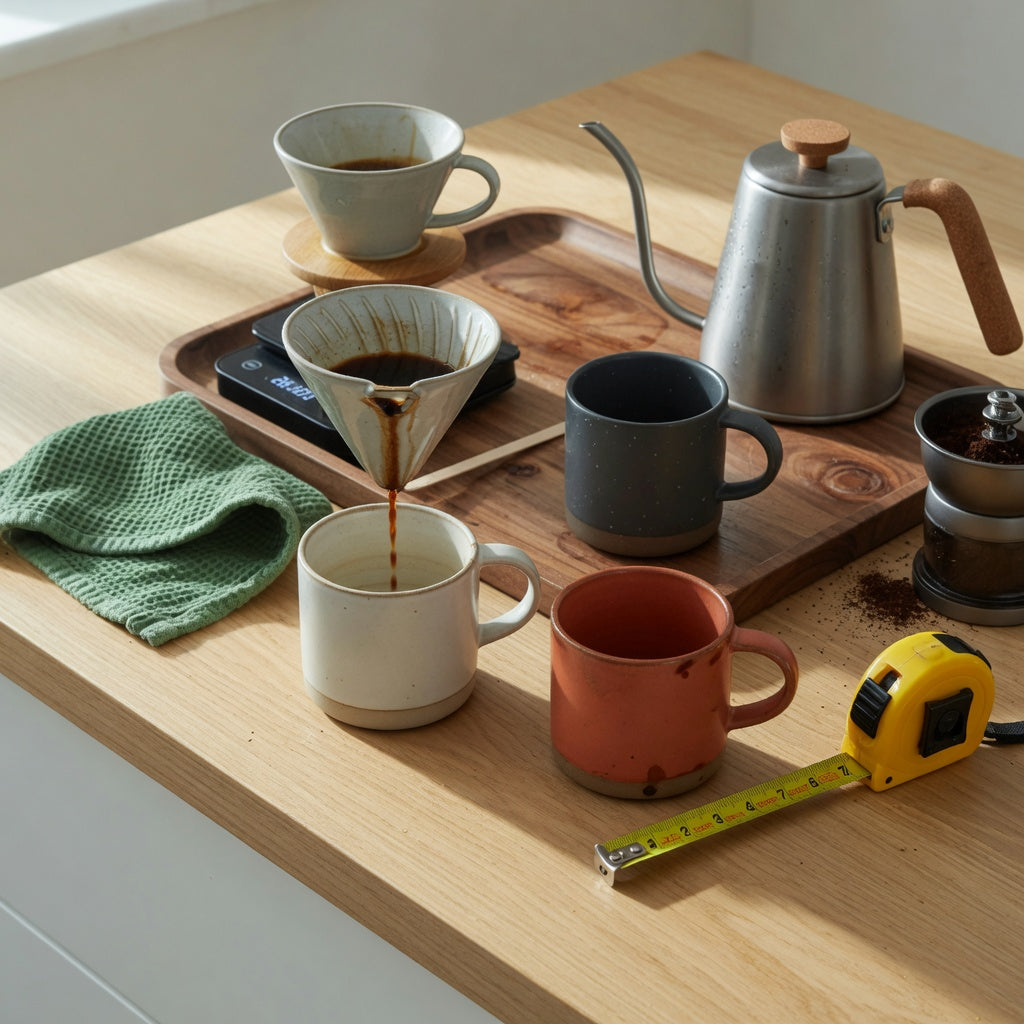
Thick Ceramic Coffee Mugs: Home Coffee Station Purchase Checklist
Measure dripper clearance, mug footprint, handle room, working capacity, and storage before buying. This checklist explains ceramic trade-offs, care limits, and how to compare The Rock, The Flow, a...
Read more
Leave a comment
This site is protected by hCaptcha and the hCaptcha Privacy Policy and Terms of Service apply.