
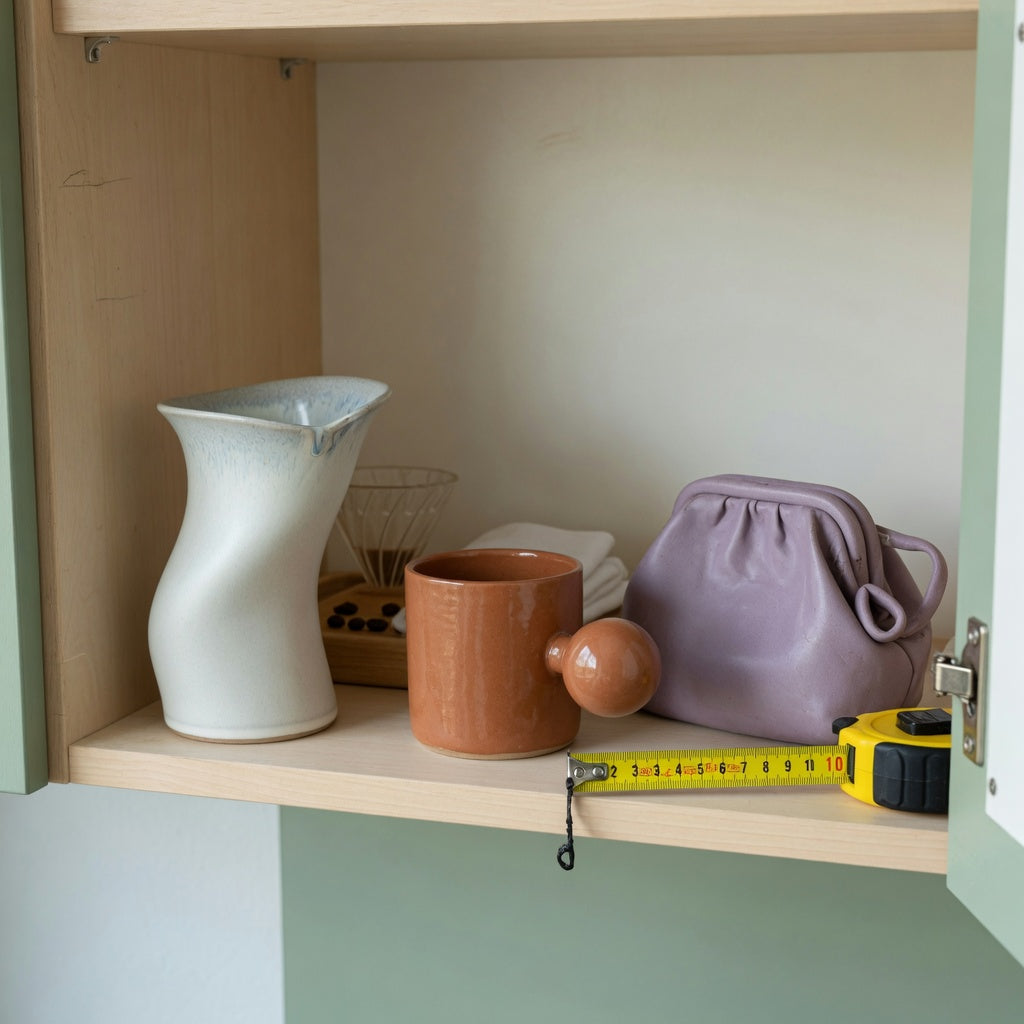
Ceramic Sculptural Mug Storage Fit Guide: 3 Shapes Compared
Reading time: about 9 minutes
A mug can pass through a cabinet opening and still keep the door from closing. The body clears the shelf; the handle meets the door. This ceramic sculptural mug storage fit guide addresses that practical mismatch by comparing CoffeifyMug's three current forms through facts shoppers can verify: ceramic construction, listed capacity, visible shape, and any external dimensions provided on the live product page.
In our store, we assess a sculptural mug as a three-dimensional object rather than relying on the front product image. We look at the base footprint, widest body point, outermost handle point, and the space a hand needs to retrieve the mug. We do not estimate width or height from liquid capacity. This comparison is about physical form, not surface artwork.
Use our ceramic sculptural mug storage fit guide to compare the current shapes
| Mug | Verified capacity and form | Main fit question | Placement to test first |
|---|---|---|---|
| The Flow 400 ml | 400 ml ceramic mug with sculptural curves | Where is the widest curve, and will it clear neighboring mugs? | Open shelf or uncrowded cabinet bay with side clearance |
| Ball Handle 250 ml | 250 ml ceramic mug with a rounded sculptural handle | Does the outer handle point enter the door path or neighboring space? | Dedicated shelf or desk position with handle clearance |
| Handbag 310 ml | 310 ml ceramic mug with a purse-shaped silhouette | Will the full outline clear the shelf opening and cabinet hardware? | Open display or a cabinet section without tightly packed rows |
We deliberately do not rank one of these mugs as the smallest overall. The 250 ml, 310 ml, and 400 ml figures describe liquid capacity, not the external storage envelope. A lower-capacity mug can still require substantial clearance at a protruding handle, while a higher-capacity mug may distribute its volume through a different body shape.
Check The Flow at its widest curve, the Ball Handle at the outside of its rounded handle, and the Handbag around the complete purse-like outline. We only use an external measurement when it is stated on the current listing. If a listing does not clarify whether its width includes the handle, do not assume that it does.
How should you measure shelf depth, height, and door clearance?
Measure the cabinet opening and retrieval path, not just the shelf board. Face frames, hinges, door bumpers, and under-shelf lips can reduce usable space even when the interior looks generous.
- Record the clear opening height. Measure from the shelf surface to the lowest obstruction at the front of the cabinet. The opening can be shorter than the space farther inside.
- Find the usable depth. Measure from the back panel to the inside plane of the closed door at the exact bay you intend to use. Note any hinge hardware that enters that area.
- Measure the available width. Include the space needed by the mug's widest body or handle point, plus enough separation to prevent ceramic from knocking against its neighbor.
- Test the retrieval path. Your fingers need to reach the body or handle without tilting the mug through a narrow frame or pulling it across another ceramic rim.
- Cross-check the live listing. Look for total height, maximum width, and front-to-back depth. Confirm which measurement includes the handle. Ask us before ordering if a missing dimension will determine whether the mug fits.
Our practical fit rule: if a mug must be scraped past another piece, tilted around a hinge, or pulled by only its handle to leave the shelf, that cabinet is too tight for comfortable daily use.
For a close fit, make a simple paper or cardboard footprint using only verified maximum dimensions. Place it on the shelf, close the door gently, and check the remaining hand space. The template cannot reproduce every curve, but it exposes obvious depth and width conflicts before the mug arrives.
Why can handle projection matter more than mug capacity?
Handle projection is the distance from the mug body to the handle's outermost point. Depending on how the mug faces, that projection consumes either cabinet depth or row width. Turning a handle sideways may help the door close, but it can take space from the next mug. Turning it forward may save lateral room while moving the handle into the door path.
This is the key check for the Ball Handle. Its verified 250 ml capacity does not guarantee the smallest shelf footprint because the rounded sculptural handle remains part of the maximum external shape. On The Flow, the widest storage point may be one of the body curves. On the Handbag, assess the whole purse-shaped silhouette rather than measuring only the base.
Fit also includes use. A mug that technically occupies the shelf but cannot be gripped without contacting the cabinet frame will become frustrating during a rushed morning or a short office break.
Open shelf, closed cabinet, or office desk: which mug fits the situation?
A larger drink on an open shelf
If you want the largest verified capacity of these three and have room around the body, start with The Flow coffee and tea mug. Its 400 ml capacity suits a longer coffee or tea serving, while the sculptural curves give it visual presence on an open shelf. It is a weaker choice for a tightly packed row where every mug must share the same straight-sided footprint.
A smaller serving with a dedicated handle zone
The Ball Handled coffee and tea mug makes sense for a shopper who prefers a 250 ml capacity and has a clear zone around the rounded handle. On an office desk, keep the full base on a level surface and orient the handle away from passing elbows while preserving room for your hand. Do not choose it for a shallow cabinet solely because it holds less liquid.
A gift or display shelf built around a recognizable silhouette
The Handbag coffee and tea mug pairs a 310 ml capacity with a purse-shaped outline. That combination suits a gift recipient with an open coffee station, display shelf, or uncrowded cabinet section. It is less practical for someone who stores every mug in a rigid row of plain cylinders.
Gift storage deserves attention before checkout. A memorable silhouette can become permanent counter clutter if the recipient only has dense closed cabinets. For more forms to compare against the available space, browse our unique coffee mugs collection and judge each option by its full three-dimensional outline.
Hooks, stacking, and dishwasher racks: where do fit problems appear?
- Stacking: this guide does not rely on a verified stackability claim for any of the three shapes. Plan one mug per shelf footprint unless the current product listing specifically states otherwise and the base-to-rim contact is stable.
- Mug hooks and trees: check the handle opening, hook diameter, branch length, and clearance from neighboring branches. The Ball Handle's rounded sculptural form should be checked against the actual hardware rather than treated like a standard loop handle.
- Dishwasher racks: follow the care directions on each live product page. If dishwasher use is permitted, confirm that the mug sits without being forced between tines and that adjacent dishes cannot strike the curves or handle during a cycle.
- Daily cabinet handling: leave enough room to support the mug body instead of pulling a wedged piece through a narrow gap by its handle. A clean, dry, non-slip shelf liner can also reduce sliding and ceramic-on-ceramic contact.
Exposed ceramic points deserve a quick inspection after any hard knock. Check the rim, the outer handle surface, and the handle-to-body area for chips or hairline cracks before using the mug again. These checks are especially relevant after moving house, unpacking a gift, or unloading a crowded dishwasher rack.
Who should choose a simpler mug shape instead?
Sculptural ceramic mugs trade storage density for a more distinctive physical form. A straight-sided or purpose-built stackable mug is likely to serve you better if:
- You need several mugs to stack in one narrow cabinet bay.
- Your only storage is a hook rack designed for thin open-loop handles.
- You cannot leave clearance between ceramic pieces.
- You need a lidded, insulated, or leak-resistant travel mug.
- Your shared office dishwasher gives you no control over rack placement.
These three mugs make more sense when the object itself is part of the kitchen, desk, or shelf display and each piece can keep a defined footprint. That storage cost is the central trade-off, not a minor detail to discover after unboxing.
Frequently asked questions
Which current ceramic sculptural mug is easiest to fit in a closed cabinet?
There is no responsible way to rank them from capacity alone. Compare your cabinet's clear depth, opening height, and usable width with the current product dimensions, paying particular attention to the widest curve or handle point. An open shelf is more forgiving if your cabinet clearance is uncertain.
Does the 250 ml Ball Handle use less shelf space than The Flow 400 ml?
Not necessarily. The 250 ml and 400 ml figures describe liquid volume, while shelf fit depends on external height, body width, depth, and handle projection. Check the Ball Handle at its outermost rounded point and The Flow at its widest curve.
Can The Flow, Ball Handle, and Handbag mugs be stacked?
We do not use an unverified stackability claim for these mugs. Plan to store them in a single layer unless the live listing states that a specific product is stackable and you can confirm stable base-to-rim contact. Do not balance one mug on a curved or irregular contact point.
Can I wash a ceramic sculptural mug in the dishwasher?
Check the care instructions on the individual product page rather than inferring dishwasher compatibility from ceramic material alone. If dishwasher use is permitted, make sure rack tines do not force the mug into an unstable angle and keep protruding parts away from adjacent dishes. Ask us before ordering if dishwasher use is a firm requirement and the listing is unclear.
How should I use this ceramic sculptural mug storage fit guide before ordering?
First choose the exact cabinet shelf, open shelf, or desk position where the mug will live. Measure its clear opening, depth, width, and retrieval path, then compare those values with only the dimensions stated on the live listing. Capacity should guide your drink size decision, not your storage estimate.
Run this shelf-fit check before adding a mug to your cart
- Choose the mug's permanent storage or desk position.
- Measure the clear opening rather than the cabinet's nominal size.
- Account for the widest body curve and outermost handle point.
- Confirm that the product dimensions include the handle.
- Leave room to grip, lift, wash, and replace the mug without contact.
Use those five checks while viewing the CoffeifyMug unique coffee mug collection. Pick the silhouette whose widest point and retrieval path fit the space you already own.
More from our blog
Read more
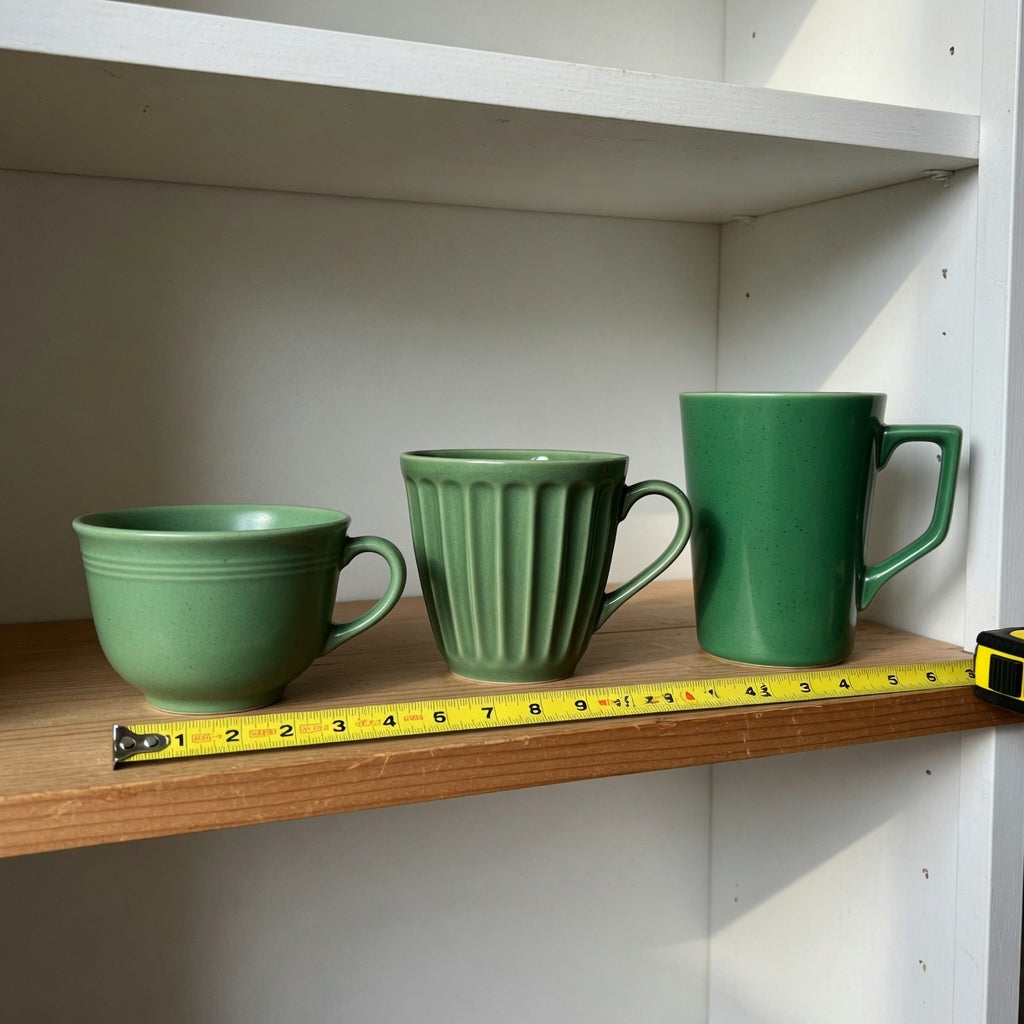
Green Tea Mug Storage Fit Guide: Compare 3 Current Shapes
Compare the verified 170 ml, 200 ml, and 270 ml capacities with each mug's visible profile, handle clearance questions, and realistic cabinet, open-shelf, and office-desk needs.
Read more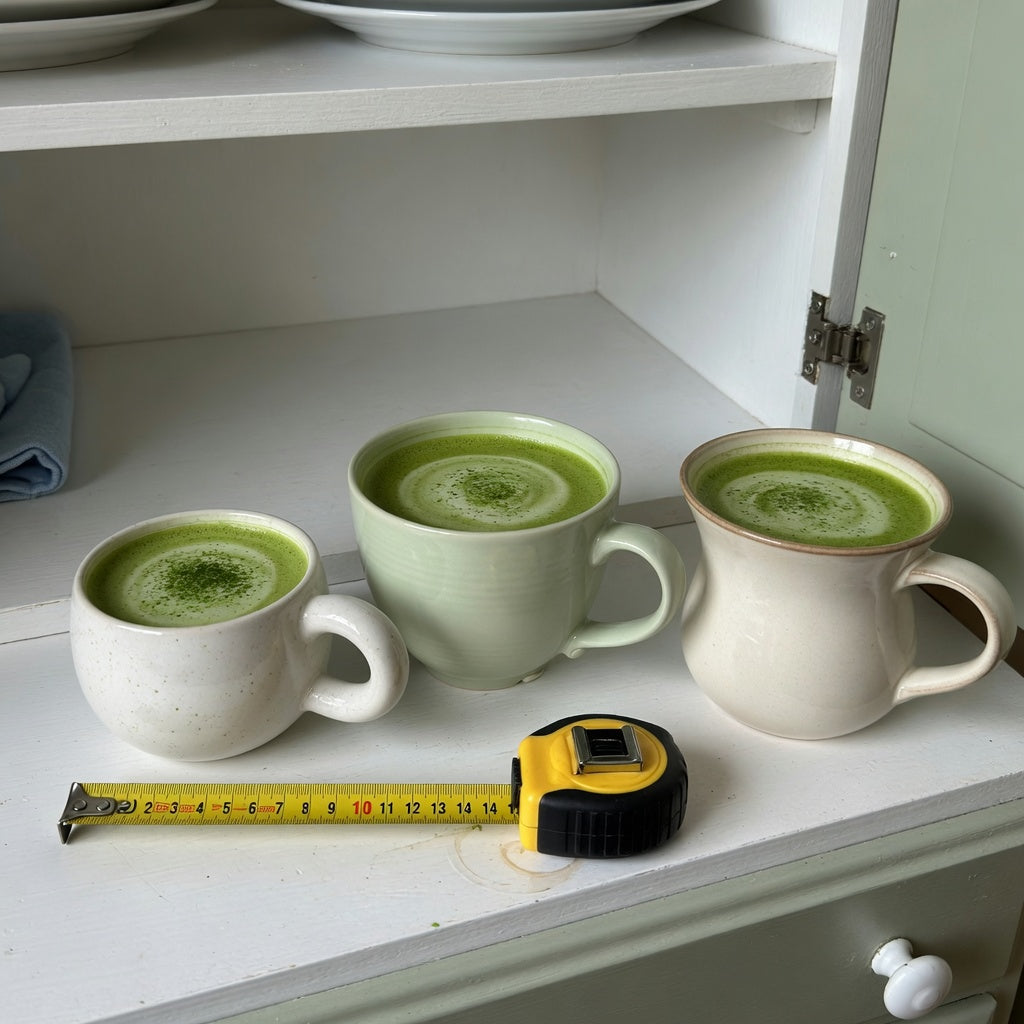
Matcha Latte Mug Storage Fit Guide: Shape and Shelf Checks
Compare listed capacities, the Ball Handle mug's 11.2 cm diameter, visible opening shapes, and handle-clearance questions before choosing a mug for a shelf, cabinet, or office cupboard.
Read more
Leave a comment
This site is protected by hCaptcha and the hCaptcha Privacy Policy and Terms of Service apply.