
Your ceramic sculptural mug shape and handle guide: 3 current options
Reading time: about 8 minutes
A mug can look ideal in a product photo, then reveal its real constraint beside a laptop, under a cabinet shelf, or in a hand that needs more knuckle clearance. A ceramic sculptural mug shape and handle guide should therefore compare the physical form, not just the surface design. In our store, we separate four questions: How much does it hold, how does the handle form affect the grip, how much space does the silhouette need, and is that unusual shape appropriate for the buyer?
The current comparison is focused on three ceramic options: The Flow at 400 ml, Ball Handle at 250 ml, and Handbag at 310 ml. Their appeal comes from three-dimensional form rather than printed artwork, but each form brings a practical trade-off.
The ceramic sculptural mug shape and handle guide: three forms
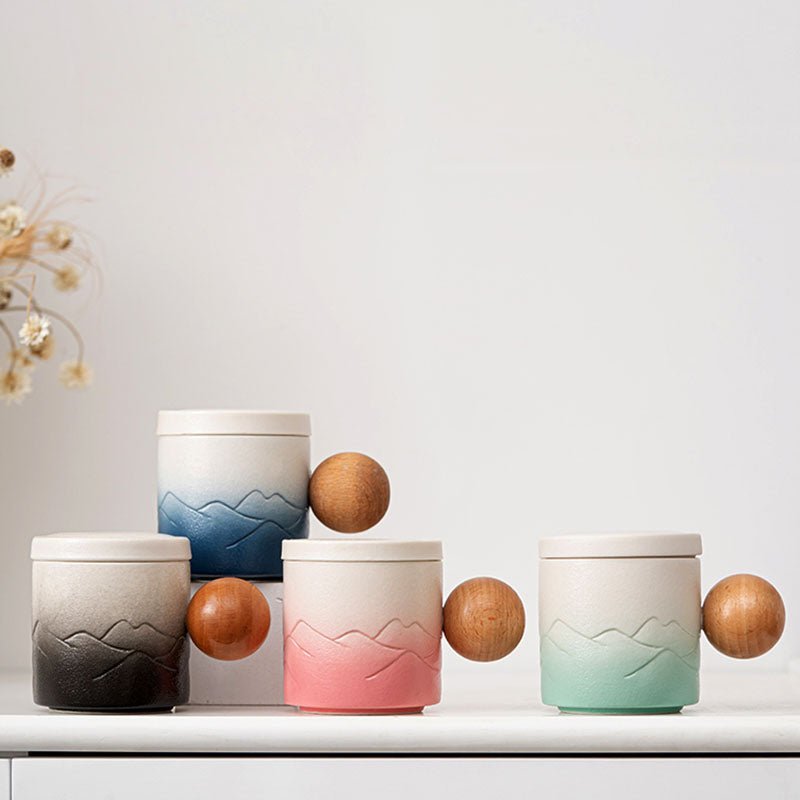
Start with the visible difference. The Flow Coffee Tea Mug uses sculptural curves and has the largest listed capacity in this group. The Ball Handle Coffee Tea Mug puts a rounded sculptural handle at the center of the design. The Handbag Coffee Tea Mug has a purse-shaped silhouette and sits between the other two by capacity.
| Current option | Listed capacity | Visible form | Best starting situation | Trade-off to check |
|---|---|---|---|---|
| The Flow | 400 ml | Sculptural curves | You want the largest drink capacity of these three and a form-led profile | Confirm current outer dimensions and handle clearance before buying for a tight shelf |
| Ball Handle | 250 ml | Rounded sculptural handle | You pour smaller servings and want the handle itself to be the visual feature | Its capacity is not suited to buyers trying to minimize refills for a large drink |
| Handbag | 310 ml | Purse-shaped silhouette | You want a recognizable object-inspired mug with a middle capacity | The unconventional profile may not suit a minimalist kitchen or a buyer who prioritizes stackability |
Those are different buying reasons. A curved body, a rounded handle, and a purse silhouette should not be treated as interchangeable decorations. If none of the three matches your space or usual serving, compare the wider unique coffee mug collection before settling on shape alone.
What do 250 ml, 310 ml, and 400 ml mean for a normal serving?
Capacity is the cleanest numerical comparison. Approximately, 250 ml is 8.5 US fluid ounces, 310 ml is 10.5 ounces, and 400 ml is 13.5 ounces. The Flow therefore lists 90 ml more than Handbag and 150 ml more than Ball Handle. That difference becomes noticeable if milk, foam, or ice also needs room.
- Choose 250 ml deliberately: Ball Handle makes sense when your normal poured serving stays comfortably below that amount and the rounded handle is the main reason for buying.
- Use 310 ml as the middle option: Handbag provides 60 ml more than Ball Handle without moving up to The Flow's 400 ml listing.
- Move to 400 ml for more room: The Flow is the straightforward choice among these three if beverage volume matters more than keeping the serving small.
A listed capacity is not a recommendation to fill a hot drink to the rim. Leave enough headroom to carry the mug without spilling, and compare the number with what you actually pour at home. Buyers who think in ounces can also use our 12 oz ceramic coffee mug shape and handle comparison; 12 US fluid ounces is about 355 ml, which falls between Handbag and The Flow. If your decision begins with a specific drink style, the cappuccino mug shape and handle guide provides a more drink-focused comparison.
How should a sculptural handle be judged before ordering?
A handle can be visually distinctive without fitting every hand in the same way. Ball Handle is the only option in this comparison with a specifically identified rounded sculptural handle, so we do not assign unlisted handle geometry to The Flow or Handbag. Use each current product page and its photos to inspect those forms directly.
- Look at the internal opening: Compare its visible height and width with the number of fingers you normally place through a mug handle.
- Check knuckle clearance: Notice how close the inner edge appears to the mug body. Buyers with larger hands should not assume a rounded outer shape guarantees a roomy opening.
- Inspect the attachment points: The areas where a handle meets the body carry the filled mug's load and deserve a close look during unboxing.
- Account for the drink's weight: Four hundred milliliters of water weighs roughly 400 grams before the mug itself is added. A larger capacity creates a different loaded grip than a 250 ml serving.
- Consider your thumb position: A sculptural curve may invite a different grip from a conventional loop. Product photos can suggest the form, but only listed measurements can confirm exact clearance.
If you have a strict ergonomic requirement, such as fitting four fingers through a handle, do not buy from appearance alone. Ask for or verify the relevant handle measurement. A conventional mug with clearly stated handle dimensions may be a better choice than any sculptural option.
Which silhouette fits an office desk, kitchen shelf, or gift?
For a desk where smaller servings are normal
Ball Handle is the relevant next step if you usually drink less than 250 ml and want an object-like handle beside your keyboard. Its rounded handle gives the design a clear focal point. Measure the open desk area first, because capacity does not reveal total width, and choose a different mug if you regularly prepare a large coffee.
For a kitchen counter where capacity and curves both matter
The Flow fits a buyer who wants the largest listed capacity here and specifically prefers sculptural curves. Check the current Flow product details against shelf height and total width before ordering. It is not the automatic choice for a compact cupboard simply because it holds more.
For an object-inspired gift
Handbag maps most directly to a recipient who enjoys fashion-related or recognizable object-shaped pieces: the purse-shaped silhouette is the reason to choose it, while 310 ml provides the middle capacity. That same specificity is a limitation. For someone who favors plain cylindrical mugs, easy stacking, or understated drinkware, use our coffee mug gift shape and handle guide to consider a less personal form.
Gift unboxings also expose a practical distinction: sculptural form is visible before anyone studies a printed detail. Match that form to the recipient's taste, not only to your own reaction to the product image.
Which listed dimensions should you compare with your space?
Milliliters describe internal volume, not the mug's outer footprint. The practical value of this ceramic sculptural mug shape and handle guide depends on keeping those measurements separate. Consult the current product listing for outer dimensions rather than estimating them from photography; if a dimension you need is not listed, confirm it before ordering.
| Measurement | Where it matters | How to check at home |
|---|---|---|
| Overall height | Cabinet shelves and clearance under a coffee machine | Measure the vertical opening at its lowest point |
| Total width including handle | Narrow shelves, desk space, and storage beside other mugs | Measure the full available rectangle, not just shelf depth |
| Rim opening | Spoon, foam, and ice clearance | Compare with a mug opening you already use comfortably |
| Base footprint | Coasters, warming surfaces, and crowded desks | Measure the usable flat surface rather than its decorative outer edge |
| Handle opening | Finger count and knuckle clearance | Compare internal clearance, not the handle's outside diameter |
Do not assume an unusual profile will nest or stack with conventional mugs. If stacking is essential, look for an explicit product statement or choose a simpler form designed around storage efficiency.
How should sculptural ceramic be inspected and cared for?
After delivery, place the empty mug on a flat counter and inspect it before use. Sculptural design does not make a chipped rim, a hairline crack, or a persistently rocking base acceptable. We pay particular attention to the rim and handle attachment areas because small damage there can affect normal handling.
- Run a fingertip carefully around the rim and other touch points to find chips or unexpectedly sharp areas.
- Examine both handle-to-body joins under direct light for hairline cracks or separation.
- Set the empty mug on a level surface and check that the base sits as expected.
- Wash before first use according to the care directions on the current product page.
Do not infer dishwasher or microwave suitability from the word ceramic alone. Glazes, decoration, and construction details can lead to different care instructions, so the current listing should control. If hand washing is called for, use a soft sponge and avoid abrasive pads that can mark some glazed surfaces. Avoid abrupt temperature changes, such as moving very cold ceramic directly to very hot liquid, unless the product's care information specifically addresses that use.
Sculptural mugs are also a poor fit for buyers who need effortless stacking, a universally familiar grip, or the largest possible drink volume. Those are functional priorities, not minor preferences, and a conventional straight-sided mug may serve them better.
Frequently asked questions
Which ceramic sculptural mug has the largest listed capacity?
The Flow has the largest listed capacity of these three at 400 ml. That is 90 ml more than the 310 ml Handbag and 150 ml more than the 250 ml Ball Handle, although outer dimensions still need to be checked separately.
Is a 250 ml Ball Handle mug large enough for my usual coffee?
It is large enough only if your normal poured serving, including milk or foam, fits comfortably below 250 ml. If you regularly make a drink close to 300 ml or want generous carrying headroom, compare Handbag at 310 ml or The Flow at 400 ml instead.
Does the Handbag mug trade capacity for its purse-shaped form?
Handbag has a listed 310 ml capacity, placing it between the other two options. Choose it because the purse-shaped silhouette suits the buyer, then confirm that 310 ml matches the intended serving and that the current dimensions fit the storage space.
Can sculptural ceramic mugs go in a dishwasher or microwave?
Check the care instructions on the current product page for the exact mug. Ceramic as a material category does not, by itself, confirm dishwasher or microwave suitability, and we do not assign unlisted care claims to these options.
Where can I compare the current shapes before buying?
Use this ceramic sculptural mug shape and handle guide to shortlist by capacity first, then verify total dimensions, handle clearance, and care instructions on the product page. Open the current unique coffee mugs collection, compare the silhouettes at the same image scale, and choose only after the mug passes your serving, grip, and storage checks.
Read more
Cacao Cup Shape and Handle Guide: 250, 390, or 400 ml
Compare CoffeifyMug's current 250, 390, and 400 ml cup options using listed capacity, the 250 ml model's 11.2 cm diameter, visible opening, handle form, and practical care checks.
Read more
Cafe Au Lait Mug Shape and Handle Guide: 400-480 ml Options
Compare The Flow 400 ml, Morning and Night 440 ml, and The Rock 480 ml by listed capacity, visible shape, handle clearance, and everyday fit. Includes practical limitations and a pre-order checklist.
Read more
Leave a comment
This site is protected by hCaptcha and the hCaptcha Privacy Policy and Terms of Service apply.