

Ceramic Planet Mug Gift for Coffee Lovers: What to Check
Reading time: about 15 minutes
A birthday box lands on the kitchen table still warm from the mail truck. One mug already shows Jupiter, a ringed Saturn, and a small blue Earth while it is empty. Another looks almost plain until coffee goes in, then a band of planets fades up and slips away as the cup cools. Both get called a planet mug. They are not the same gift. We see that mix-up in our store whenever someone shops a ceramic planet mug gift for coffee lovers and assumes every solar-system cup shares one care label, one size, and one trick.
The page we ask people to open first is the planet coffee and tea mug. Read the current listing for capacity, whether the artwork is a fired or printed design or a heat-sensitive coating, and the exact wash and microwave line. Those three lines decide if the mug belongs in a weekday rotation or needs to be handled as a careful gift. If the recipient cares more about an odd shape than a labeled solar system, start with our unique coffee mugs and run the same checks there.
Is a ceramic planet mug gift for coffee lovers a fixed print or a heat-reveal?
Start with the empty mug. That is how it sits on a desk for most of the day, between the first pour and the rinse.
A fixed print, underglaze, or glaze decoration is visible at room temperature. The planets do not depend on the drink. Choose this when the solar system should show in a photo, on an open shelf, or across a meeting table after the coffee has gone lukewarm. It can also sit as home decor between sips, which matters if the mug is as much a shelf object as a drinking cup.
A heat-reveal, sometimes sold as heat-sensitive or color-changing, hides some or all of the art until a hot drink warms the wall. The pour is the present. It is a poor match for someone who mostly drinks iced coffee, cold brew, or water, because a cold pour is not what these coatings are built to react to. Empty, the mug may look plain. That is a letdown when the tissue comes off and the guest expected a finished illustration.
Confirm which of the two the listing actually is. Do not borrow the answer from another brand's photo that happens to show Saturn.
| What you are comparing | Fixed print or glazed art | Heat-reveal coating |
|---|---|---|
| Empty, on the counter | Planets stay visible | Design may be hidden or faint until heated |
| Hot coffee or tea | Look does not depend on temperature | Planets are meant to appear, then fade as the drink cools |
| Iced coffee | Art still shows | Do not expect the solar system to appear |
| Dishwasher household | Only if that exact listing says dishwasher safe | Often the wrong tool; many makers say hand wash and do not soak |
| Best gift moment | The mug looks finished when the box opens | The reveal with the first hot cup |
Test that split against the words on the page you are buying. It is not a specification for our planet mug. If our listing does not say heat changing, color changing, or heat sensitive, do not assume a reveal. If it does, do not assume the coating can take the same wear as a fired glaze.
Will the artwork survive the dishwasher, or is this a hand-wash mug?
Care rules are not a property of the phrase planet mug. Two cups with the same Saturn drawing can carry opposite instructions. One maker fires a print under glaze and labels the mug dishwasher and microwave safe. Another puts a heat-sensitive coating on the outside and says to hand wash, skip long soaks, and sometimes skip the microwave. Both can be right for their own process. Copying the friendlier label onto the stricter mug is how coatings peel.
In our experience with gifts in this category, the complaint that comes back later is rarely that Jupiter looks wrong. It is a cloudy patch, a flake near the handle, or a reveal that only half appears because the coating went through a dishwasher cycle the listing never allowed. A bright kitchen window can be a second problem for heat-sensitive exteriors. If the page says nothing about sunlight, do not leave the mug on a sunny sill and hope the color stays even.
Read for four lines. If a line is missing, treat it as unknown, not as permission:
- Dishwasher: top rack only is not the same as a full yes. No claim at all means hand wash until you confirm.
- Microwave: a metal rim, a metallic gold line, or a coating the maker excludes are reasons to leave it out. A blank field is not a yes. The office microwave is where unlabeled mugs get tested, and that is a bad test.
- Soaking: heat-sensitive exteriors are the ones most often hurt by a sink full of water overnight. A printed mug can still pick up a film if it sits dirty, but the coating risk is different.
- Heat source: this is drinkware, not a stovetop or oven piece. Even a real microwave claim is not an oven claim.
When the rule is hand wash, use mild soap, a soft sponge, and a towel. Skip the scouring pad on the artwork. Do not leave the mug soaking for an hour to loosen a coffee ring. If the person you are buying for runs every cup through one dishwasher load and will not make an exception, a heat-reveal planet mug is the wrong gift. Pick a listing that actually says the print is dishwasher safe, or choose another style from unique coffee mugs they will not have to baby.
Settle dishwasher and microwave status for our cup on the planet coffee and tea mug page itself. We will not guess it from a similar mug sold somewhere else.
Is 10, 12, or 16 ounces enough for black coffee or a latte?
Shoppers comparing planet mugs often have to choose among listings marked 10, 11, 12, 15, or 16 fluid ounces. That spread is large enough to annoy someone who expected a familiar cup. FDA guidance on ceramic cups and mugs describes small hollowware used for hot coffee or tea as vessels that normally hold about 8 fluid ounces, about 240 milliliters, and are made with a handle. Plenty of novelty planet mugs are sold well above that benchmark. Bigger is not automatically more generous.
Match the ounces to the drink, then confirm the number on the listing in front of you. Do not lift it from a review of a different size, and do not assume our mug matches a number you saw on another brand.
- About 10 to 12 ounces suits a home mug of black coffee or straight tea. It is easier to finish while the drink is still hot, lighter when full, and less likely to crowd a small desk beside a keyboard.
- About 15 to 16 ounces suits a latte, a large splash of milk, or someone who hates refilling at work. Full, it is heavier. A wide bowl at that volume feels clumsy if they wrap a hand around the body instead of using the handle.
- Handle and wall matter as much as the number. Thick stoneware feels like a serious gift and pleases people who like heft. It is a poor match for a small hand, a weak grip, or a shelf already stacked to the edge. Thin whiteware is lighter and chips at the rim more readily when mugs knock together in a crowded sink.
Interior color is the detail thumbnails hide. A white interior shows the drink level and also shows tea tannin after a few weeks. A dark interior hides stains and makes coffee look like a dark pool. Some people love that. Others cannot tell how much is left. If the listing does not state interior color or capacity, leave those boxes blank. A thumbnail will not tell you the ounce mark.
Eight planets on the cup, or is Pluto still in the art?
NASA describes the solar system as eight planets: Mercury, Venus, Earth, Mars, Jupiter, Saturn, Uranus, and Neptune. It also recognizes five dwarf planets: Ceres, Pluto, Haumea, Makemake, and Eris. The International Astronomical Union's 2006 definition is what moved Pluto into that dwarf-planet group. A mug that draws eight worlds follows the current definition. A mug that still includes Pluto is a cultural choice many coffee drinkers prefer. Neither print is a defect. Buying the wrong sentiment is the miss.
The friend who corrects place mats will notice a ninth planet labeled as current fact. The friend who still resents the Pluto vote may be disappointed by a strict eight-planet wrap. If you do not know which friend you have, choose art that shows the planets without a caption claiming nine planets in today's solar system.
Use these checks when a mug prints facts beside the art. Some heat-reveal cups do. Many decorative prints do not.
- Jupiter is the largest planet. NASA puts it at about 11 times Earth's width, with an equatorial diameter of 88,846 miles, about 142,984 kilometers, and more than twice the mass of the other planets combined. A caption that calls Saturn the largest is sloppy.
- Jupiter's Great Red Spot is a vast high-pressure storm that rotates counterclockwise in the southern hemisphere, and the largest known storm in the solar system. It is a storm, not a volcano and not a solid place to land.
- Moon counts and temperatures on novelty mugs get simplified or go stale. If the gift is supposed to teach, treat those lines as decoration unless the maker cites a current source. A coffee mug is not a textbook.
Stylized color is fine. A teal Mars and an oversized Earth are a gift, not a scale model. Real scale would let Jupiter swallow the layout on a curved cup. What fails is a label that states a fact the art does not support.
Does microwave-safe mean the glaze is low in lead and cadmium?
Space prints often use bright reds, yellows, and oranges, and those colors are where buyers start asking about lead and cadmium. Fair question. Microwave-safe does not answer it. That label is about heating the mug without damage or a metal spark. It is not a leach test.
For cups and mugs, the U.S. FDA action level for lead leaching is 0.5 micrograms per milliliter of leaching solution, under Compliance Policy Guide 545.450. For cadmium from ceramic small hollowware, the action level is also 0.5 micrograms per milliliter, under Compliance Policy Guide 545.400. The FDA has said extractable cadmium from ceramic ware could cause chronic cadmium poisoning if that ware keeps being used with food. Those figures are enforcement levels for a standardized leach test. They are not a personal daily allowance, and they do not prove that every attractive mug online was tested.
A pilot study in Food Safety and Risk found that lead from ceramic mugs can leach into coffee and tea. Measured amounts tracked with the individual cup, not with the drink or how long it sat. For one of five mugs, the authors' estimated daily dose went over California's 0.5 microgram-per-day maximum allowable dose level, even though their estimates still sat inside the FDA's 0.5 microgram-per-milliliter acidic-leach limit. Clearing one screen is not the same as clearing the other.
A 2025 paper in the Journal of Hazardous Materials measured cadmium and lead migration from contemporary ceramic mugs and found more coming from exterior lip areas, especially decorated lips, than from interiors. Interior results in that sample stayed within the EU limits then in force. Some exterior lead results approached or went past California Proposition 65 values. On a planet wrap, art that climbs the rim, where a mouth rests, deserves a closer look than art that stays on the body. That is not a reason to treat every illustrated mug as unsafe. It is a reason to prefer a stated test over a badge that only says lead free.
Lead free and BPA free are slogans until a method sits next to them. BPA is a plastics issue, so a BPA-free line on a ceramic mug tells you almost nothing about the glaze. Exterior heat-sensitive coatings are a separate gap: many gift listings never say whether that outside layer is documented for contact near the lip. If our planet mug listing publishes a test claim, use that claim. If it does not, do not fill the gap with a certification we have not printed.
This is also the wrong tool if you need a cup cleared for a restricted diet or a clinician's instruction. We sell gift drinkware. We do not sell medical devices, and a product page cannot clear a mug for that use.
Gift box, a name on the mug, and the handoff at the table
The person this gift is for usually likes space and also drinks coffee: a birthday, a holiday, or an office exchange. The mug can still miss if the handoff is clumsy.
Some makers ship a box you can hand over, sometimes with a short planet card. Many printed mugs arrive in a plain mailer and look like a purchase until you rewrap them. Check whether the listing says a gift box is included. If it does not, plan on your own paper. Do not assume a fact card is in the carton just because the art looks educational.
A name under the planets is offered by some sellers and not by others. It makes the gift specific, and a misspelled name is usually final. If the listing has no name field, do not email a name and hope someone adds it. If it does, type the name the way the recipient writes it, nickname included.
Before you treat any planet mug as ready to hand someone, check four presentation points:
- With the handle pointing right, the way most people set a mug down, does the art face the guest? A one-sided print can look blank from the doorway. A full wrap avoids that, but a wrap that climbs the lip brings you back to the rim question above.
- Can they see the design without pouring? A heat-reveal that looks empty in the box can disappoint at the table and delight only in the kitchen. Tell them to use a hot drink, or buy a fixed print.
- Is capacity written in ounces on the page you are ordering, not guessed from a review of another size?
- Do the care lines match the kitchen they actually have: a dishwasher load every night, or a person who already hand-washes one favorite cup?
A planet mug is not the gift for someone who wanted a travel tumbler, a pour-over dripper, or a cup they can abandon in a work cafeteria. It is a ceramic cup for home or a careful desk, for coffee or tea served hot, for a person who will look at the outside.
What should you verify on the listing before you order?
Use this as the last pass. Every line is a question for the current page, including ours, not a specification we are filling in for you.
- Fixed print or heat-reveal coating?
- Capacity in ounces, and does that match black coffee, milky coffee, or tea?
- Dishwasher: stated yes, top rack, or hand wash only?
- Microwave: stated yes, or excluded?
- Eight planets, Pluto included, or unlabeled art?
- Does the print stop before the lip, or wrap the rim?
- Interior color, handle shape, and a thick or thin wall in the photos?
- Gift box included, or do you need to wrap it?
- Any named leach test, or only a marketing badge?
- Personalization offered, and do you have the spelling?
If those answers fit the person, order the planet coffee and tea mug and keep the care line with the gift so the first week does not ruin the artwork. If answers are missing, or they really wanted a different kind of unusual cup, go through unique coffee mugs and compare on the same list. A good planet mug is a daily object with a clear job. It is not every solar-system cup on the internet, and it is not a science poster that happens to hold coffee.
Frequently asked questions
Are heat-changing planet mugs dishwasher safe?
Many are not. Makers of heat-sensitive solar-system mugs often say to hand wash, avoid long soaks, and sometimes skip the microwave, because the coating can peel or stop changing. A permanently printed or glazed mug may be labeled dishwasher safe, and those instructions belong only to that process. If our planet mug page does not state dishwasher use, wash it by hand until the listing says otherwise.
Will iced coffee show the planets on a heat-reveal mug?
No. A heat-reveal design is meant to appear when a hot drink warms the ceramic and to fade as the cup cools. Iced coffee, cold brew, and ice water will not do that. If the person lives on cold drinks, buy a fixed print so the solar system is visible without heat, and first confirm the mug you are ordering is actually a heat-reveal.
Does a ceramic planet mug gift for coffee lovers have to include Pluto?
No. NASA counts eight planets, and Pluto has been a dwarf planet under the 2006 International Astronomical Union definition, alongside Ceres, Haumea, Makemake, and Eris. Including Pluto is a style choice, not a requirement. Pick eight planets for someone who wants the current definition, and a Pluto design for someone who still wants it on the cup.
Is a microwave-safe ceramic mug automatically low in lead and cadmium?
No. Microwave-safe means the maker says the mug can be heated in a microwave. The FDA action level for lead leaching from cups and mugs is 0.5 micrograms per milliliter, and the cadmium action level for ceramic small hollowware is 0.5 micrograms per milliliter. Those are leach-test thresholds, not something a microwave icon measures. Look for a stated test rather than a badge that only says lead free or BPA free.
How hot does the drink need to be before the planets appear?
Only the maker of that exact heat-reveal mug can answer with a temperature, and many listings never publish one. What the product type supports is a hot drink, not a lukewarm leftover and not a cold pour. The image should fade again as the coffee cools. If the page does not mention heat activation at all, assume the art is a normal print and is visible all the time.
More from our blog
Read more
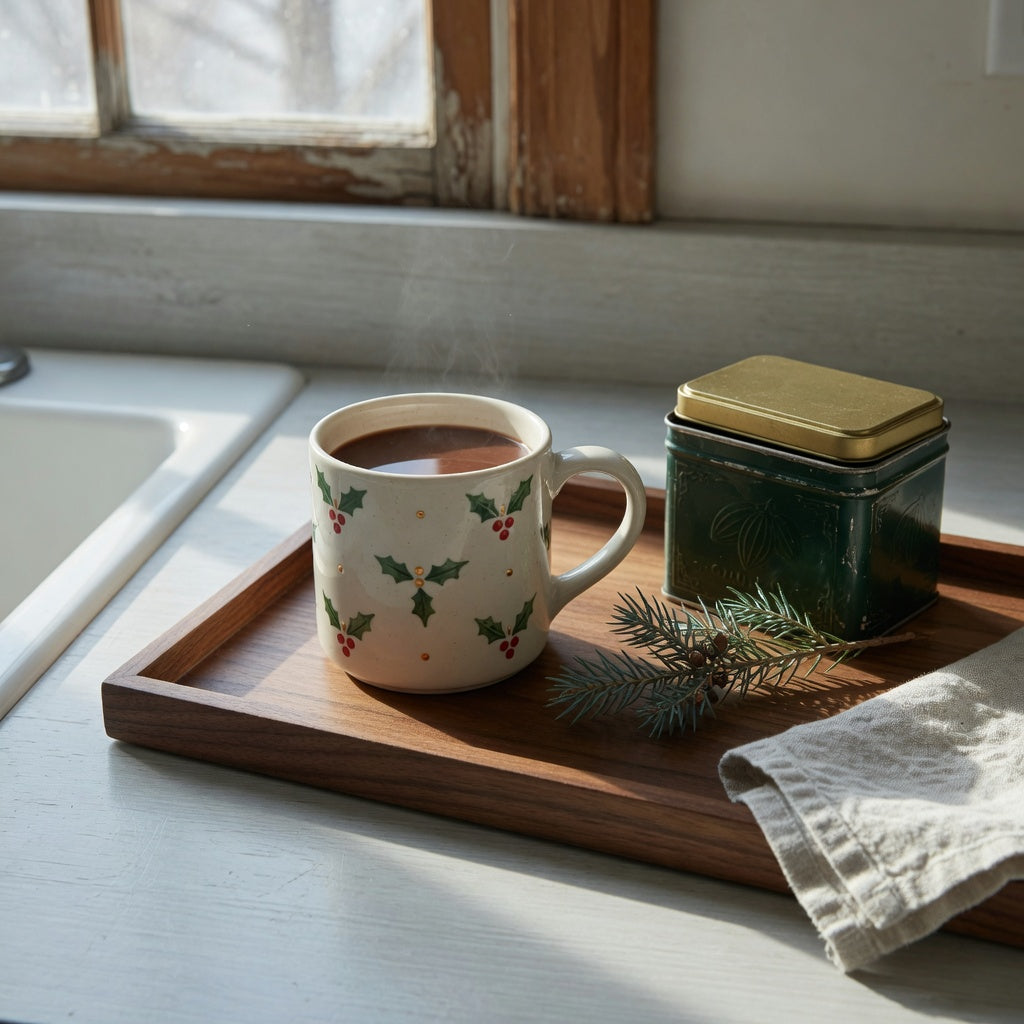
Christmas Coffee Tea Mug Gift Ideas Coffee Lovers Home Decor
Buyers comparing christmas coffee tea mug gift ideas coffee lovers home decor need a drink-versus-display decision, not another cute photo. We cover listing checks for material and care, metallic t...
Read more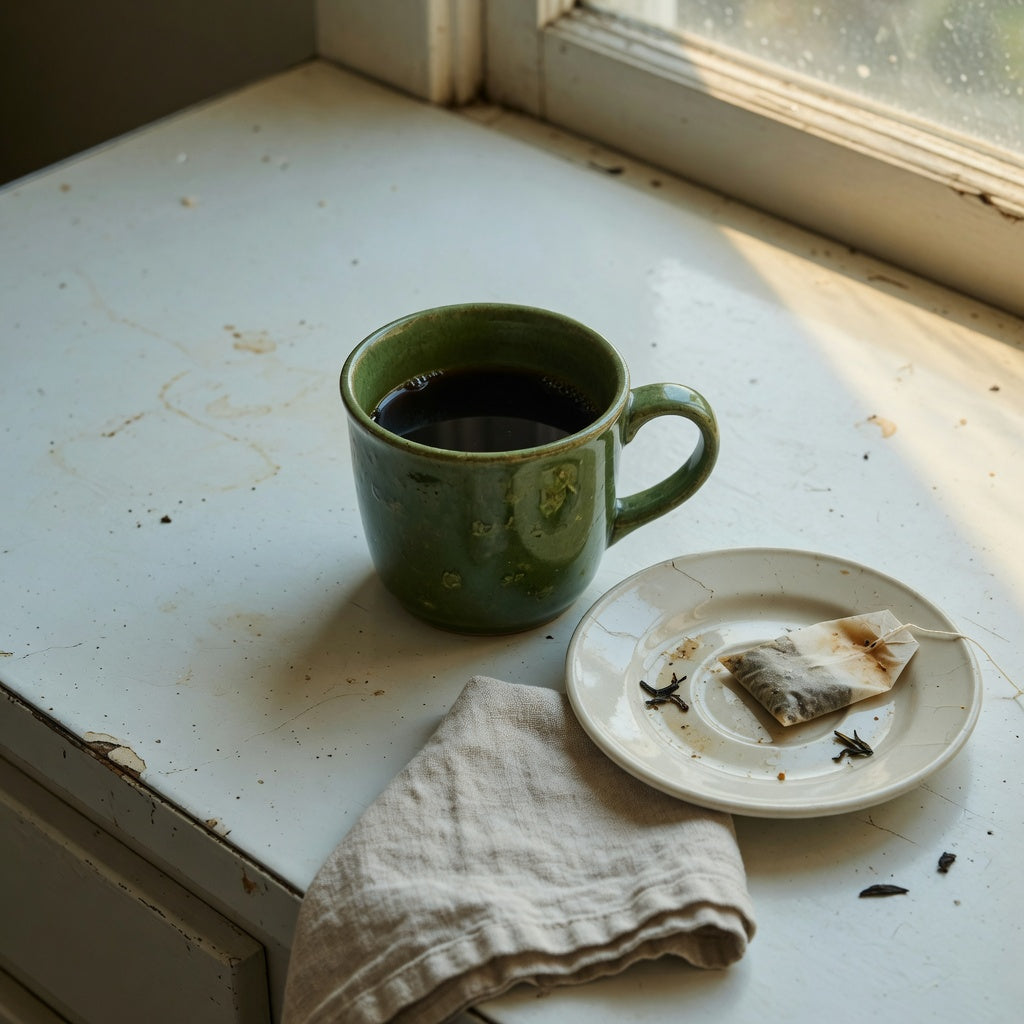
Gift Green Ceramic Coffee Tea Mug: Checks That Matter
A green ceramic mug can look finished in a photo and still fail as a daily gift. We compare glaze character, coffee versus tea capacity, food-contact wording, appliance labels, handle heat, and shi...
Read more
Leave a comment
This site is protected by hCaptcha and the hCaptcha Privacy Policy and Terms of Service apply.