
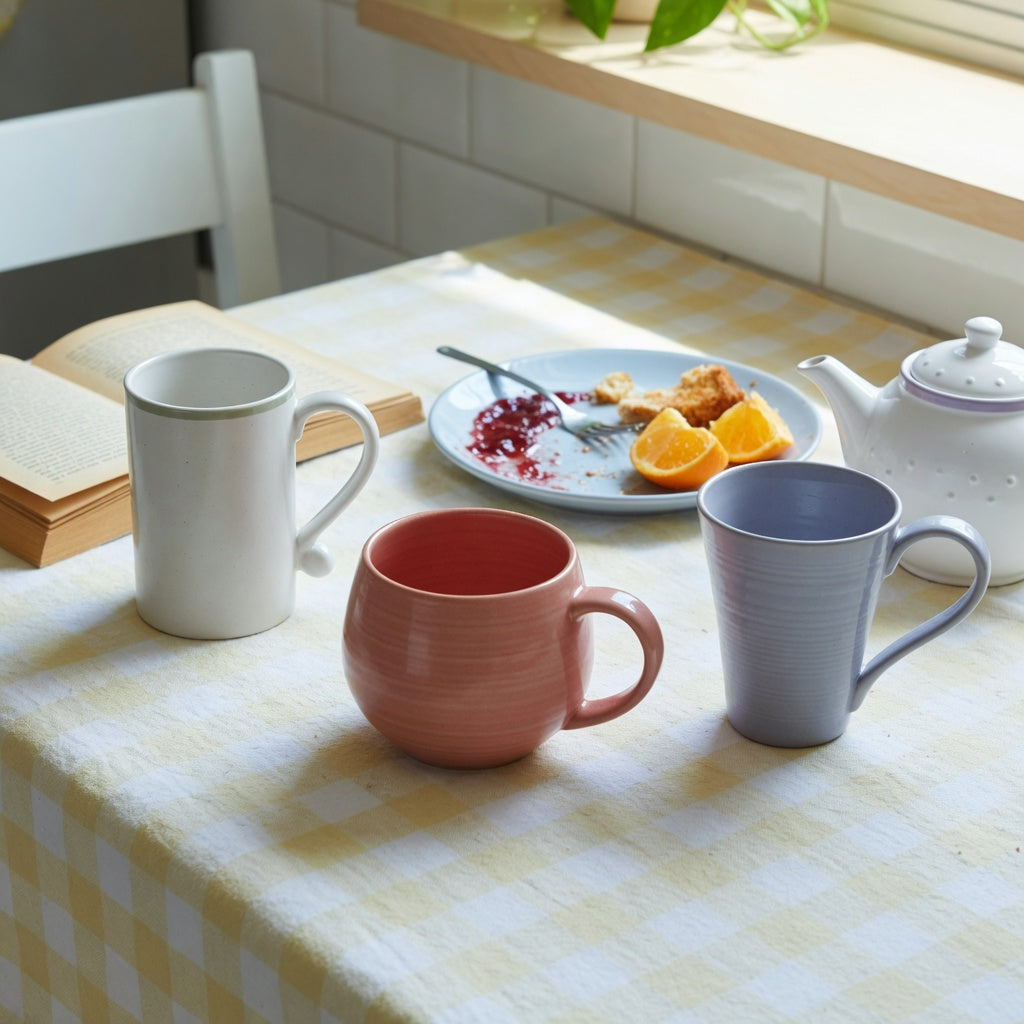
Ceramic Coffee Mug With Handle Weekend Coffee Product Shortlist Guide
Reading time: about 9 minutes
The French press is still half full, breakfast is on the table, and the mug chosen at 8 a.m. needs to suit another pour at 10. That is the practical weekend decision. Our ceramic coffee mug with handle weekend coffee product shortlist guide compares three products using details a shopper can verify before buying: ceramic material, visible handle form, listed capacity, and vessel shape.
We sell and handle this category, and the questions we hear are specific: Is 11 oz enough? Will 14 oz suit a coffee with milk or ice? Does the buyer want a conventional C-curve or a more sculptural handle? We do not rank these mugs by heat retention, ergonomic comfort, hand-size fit, strength, or appliance compatibility. Those points are not established by the product facts used here.
Which weekend serving details change the decision?
A weekday cup may be filled, finished, and rinsed in a short window. A weekend mug often stays beside a book, moves from the kitchen counter to the breakfast table, or returns for a second serving. That does not make one mug universally better. It makes your normal drink volume and preferred silhouette more relevant.
- Measure the drink, not the coffee bag: Pour your usual prepared coffee or tea into a measuring jug, including milk if you normally add it.
- Allow for your preferred headspace: A listed capacity does not tell us how close to the rim you like to fill a mug.
- Treat ice as part of the serving: Weekend iced coffee may require more vessel capacity even when the liquid portion stays the same.
Capacity should be checked first because the three mugs are listed at 11 oz, 12 oz, and 14 oz. Handle form and body shape then separate products that otherwise serve a similar purpose.
Ceramic coffee mug with handle weekend coffee product shortlist guide by routine
We built this shortlist around three recognizable weekend situations. Each recommendation includes a reason to choose the mug and an equally clear reason to leave it out.
Ball-Handled mug for a measured 12 oz reading coffee
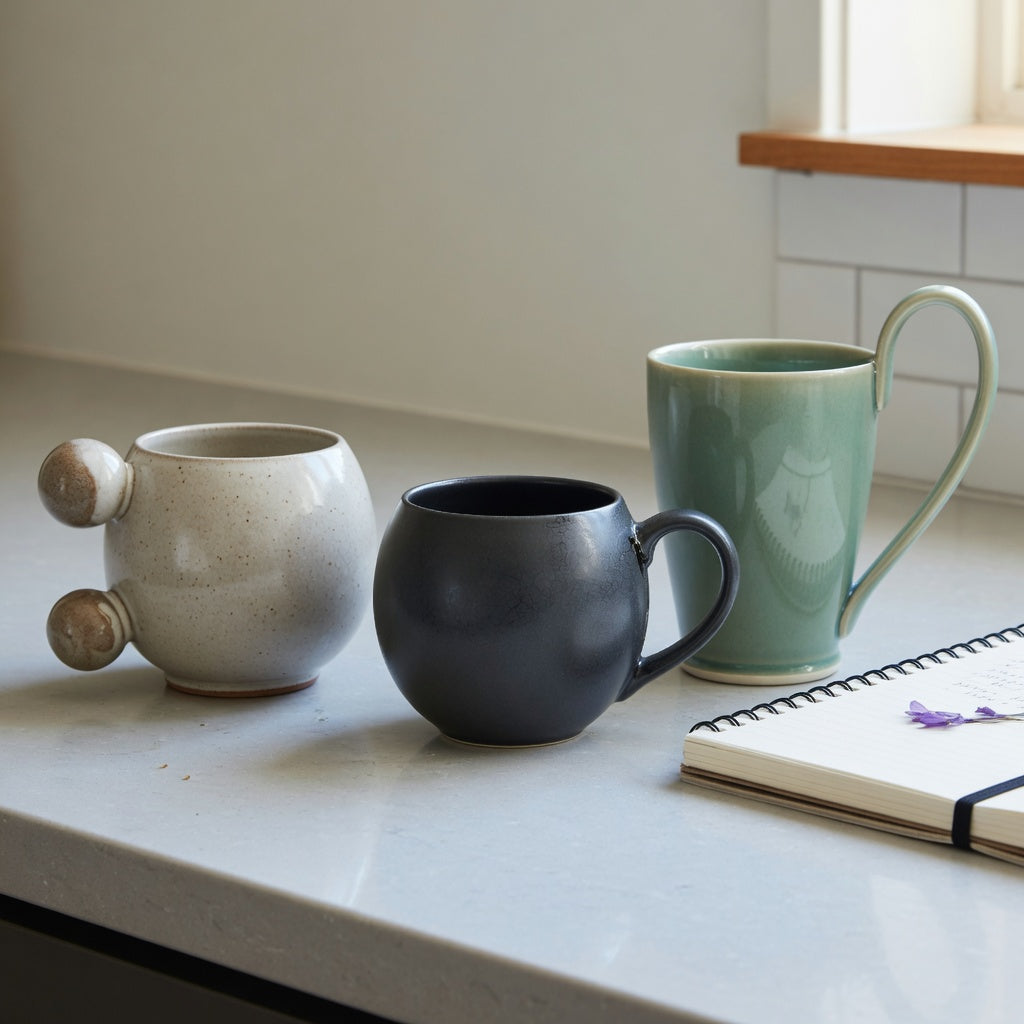
Reader situation: You usually prepare one 12 oz serving and spend the first part of the morning reading, doing a crossword, or sitting at the kitchen counter. The ceramic 12 oz Ball-Handled Coffee Tea Mug has a closed ball-loop handle and an upright cylindrical body with a gentle upper taper.
Choose it because: Its listed capacity sits between the other two options, and the ball-loop handle creates the most distinctive profile in this shortlist. It suits a buyer who has already measured a roughly 12 oz drink and wants that particular design.
Skip it because: It is not the largest option, and the closed ball form is less conventional than an open C-curve. Do not select it based on assumptions about grip or hand fit; this comparison makes no such claim.
Round mug for a 14 oz brunch or iced-coffee serving
Reader situation: Your weekend drink includes milk, extra headspace, or ice, or you simply prepare closer to 14 oz. The ceramic 14 oz Round Coffee Tea Mug has an open C-curve handle and a fully rounded vessel body.
Choose it because: At 14 oz, it has the largest listed capacity of these three mugs. That makes it the first product to compare for a larger measured serving or a brunch drink with additions that occupy more space.
Skip it because: A 14 oz vessel may be unnecessary for a shorter black coffee or tea, and the rounded silhouette will not suit buyers looking for straighter sides. Larger capacity also does not prove anything about exterior dimensions, shelf footprint, or heat retention.
The Flow mug for a shorter 11 oz pour
Reader situation: Your weekend routine is one smaller coffee after breakfast, tea on the patio, or a measured drink close to 11 oz. The ceramic 11 oz The Flow Coffee Tea Mug has an elongated flowing handle and a tapered body with a narrower base.
Choose it because: It offers the smallest listed capacity in this group and the most fluid handle silhouette. It belongs on the shortlist when 11 oz matches the drink and the narrower-base profile is part of the visual appeal.
Skip it because: It leaves less listed volume than the 12 oz and 14 oz options. A buyer who prioritizes broad base contact should also compare other vessel shapes rather than assuming a tapered mug is suitable for every patio table or soft outdoor surface.
You can view the three profiles together in our unique ceramic coffee mugs collection. Compare the product photos for handle form and vessel shape, then return to the capacity you measured at home.
How do 11 oz, 12 oz, and 14 oz narrow the shortlist?
A difference of one or two fluid ounces can matter when your usual serving already sits near the mug's listed capacity. It matters less if you deliberately leave substantial headspace. This is why we ask shoppers to measure a prepared drink rather than estimate from the size of a brewer or coffee scoop.
| Product | Listed capacity | Weekend scenario to compare | Reason to skip |
|---|---|---|---|
| Ball-Handled | 12 oz | Measured mid-size coffee beside a book or breakfast plate | You want the largest option or an open C-curve handle |
| Round | 14 oz | Larger coffee, milk-based drink, or iced serving | Your usual drink is smaller or you prefer straighter sides |
| The Flow | 11 oz | Shorter coffee or tea with a sculptural profile | You need more listed capacity or prefer a broader base profile |
Listed capacity alone cannot confirm the ideal fill level for your recipe. If your drink measures exactly 12 oz before foam, milk, or ice is added, compare the 14 oz option rather than assuming a 12 oz listing will provide the headspace you want.
What do the handle form and vessel shape actually tell you?
Product photos can establish visible design differences. They cannot establish comfort for every hand. In our store, we keep those two ideas separate so a visual preference does not turn into an unsupported ergonomic promise.
- Ball-Handled: Closed ball-loop handle with an upright body and gentle upper taper.
- Round: Open C-curve handle with a fully rounded body.
- The Flow: Elongated flowing handle with a tapered body and narrower base.
The open C-curve is the most conventional-looking handle in this group. The ball loop and elongated Flow handle make a stronger visual statement, which can matter for an open shelf or gift unboxing. If clearance, finger placement, or hand fit is a deciding factor, visible form alone is insufficient; use confirmed product dimensions or direct handling instead.
What should you inspect during a ceramic mug unboxing?
Our receiving checks focus on visible ceramic condition rather than performance assumptions. Side lighting and a flat, dry kitchen counter make small issues easier to identify before the mug enters regular use.
- Check the rim: Look for chips, rough interruptions, or visible glaze irregularities along the drinking edge.
- Inspect both handle joins: Examine where the handle meets the vessel for a visible hairline crack or separation.
- Look over the glazed body: A glaze pinhole appears as a small pit. Compare any unusual mark with the product photography before treating it as an intended finish.
- Set the empty mug on a flat counter: Check the foot ring and note any obvious rocking. This is an arrival inspection, not a promise about performance on uneven surfaces.
- Read the current care information: Ceramic is a material category, not proof of dishwasher or microwave compatibility. Follow the product page or packaging rather than testing an assumption with a dishwasher cycle.
For a gift, perform this check before wrapping. A distinctive handle may be the reason for buying, but the rim, handle joins, glaze, and base are the areas worth examining when the package arrives.
Which shoppers should skip this three-mug shortlist?
These products are intended for shoppers comparing handled ceramic vessels for home coffee or tea. A different category is more suitable in several common situations.
- Commuting: Choose a travel vessel with a confirmed lid instead of an open ceramic mug.
- Small espresso servings: Compare demitasse-size cups rather than starting at 11 oz.
- Stackable office storage: Select a product with explicitly listed stackability and exterior dimensions.
- Confirmed appliance care: Choose only after the current listing or packaging states the dishwasher and microwave guidance you require.
- Uneven outdoor surfaces: Compare actual base dimensions instead of inferring stability from a product name or photograph.
These are not minor objections. They are reasons to leave this shortlist and choose a mug style documented for the job. A weekend design should still match the surfaces, storage, serving volume, and care routine in your home.
Use this five-step check before adding a mug to the cart
- Measure your prepared weekend drink, including milk or ice.
- Decide whether 11 oz, 12 oz, or 14 oz is the closest useful listed capacity.
- Pick the visible handle form: closed ball loop, open C-curve, or elongated flowing curve.
- Compare the upright, rounded, and tapered vessel profiles in the product photos.
- Confirm current care information and inspect the mug after delivery.
Used this way, the ceramic coffee mug with handle weekend coffee product shortlist guide does not declare a universal winner. It directs a 12 oz reader toward the Ball-Handled mug, a larger brunch or iced-coffee serving toward the Round mug, and a shorter 11 oz routine toward The Flow.
Frequently asked questions
What should I compare first in a ceramic coffee mug with handle weekend coffee product shortlist guide?
Start with the volume of your prepared drink and compare it with the listed 11 oz, 12 oz, and 14 oz capacities. Then use visible handle form and vessel shape to separate the options that remain. Do not use shape alone to infer comfort, stability, or care compatibility.
Is the 14 oz Round mug automatically best for a long weekend coffee?
No. It is the largest listed option here, but the right capacity depends on your measured serving and desired headspace. Choose it for a drink closer to 14 oz; skip it if you normally prepare a smaller serving or prefer a straighter-sided vessel.
Can I assume these ceramic mugs are dishwasher or microwave safe?
No. Ceramic material by itself does not confirm either type of appliance compatibility. Check the current product page and packaging for care instructions before the first dishwasher cycle or microwave use.
Which handled ceramic mug should I open first before ordering?
Open the Ball-Handled page for a 12 oz serving, the Round page for the largest listed capacity, or The Flow page for an 11 oz serving and tapered profile. Keep your measured drink volume beside you, then use the unique coffee mugs collection to compare all three silhouettes before making the final selection.
More from our blog
Read more
Ceramic Coffee Mug With Handle First Time Buyer Product Shortlist Guide
Build a first mug shortlist from facts the listings actually provide: ceramic material, 12 oz capacity, visible handle form, and vessel shape. We compare three CoffeifyMug options for counters, des...
Read more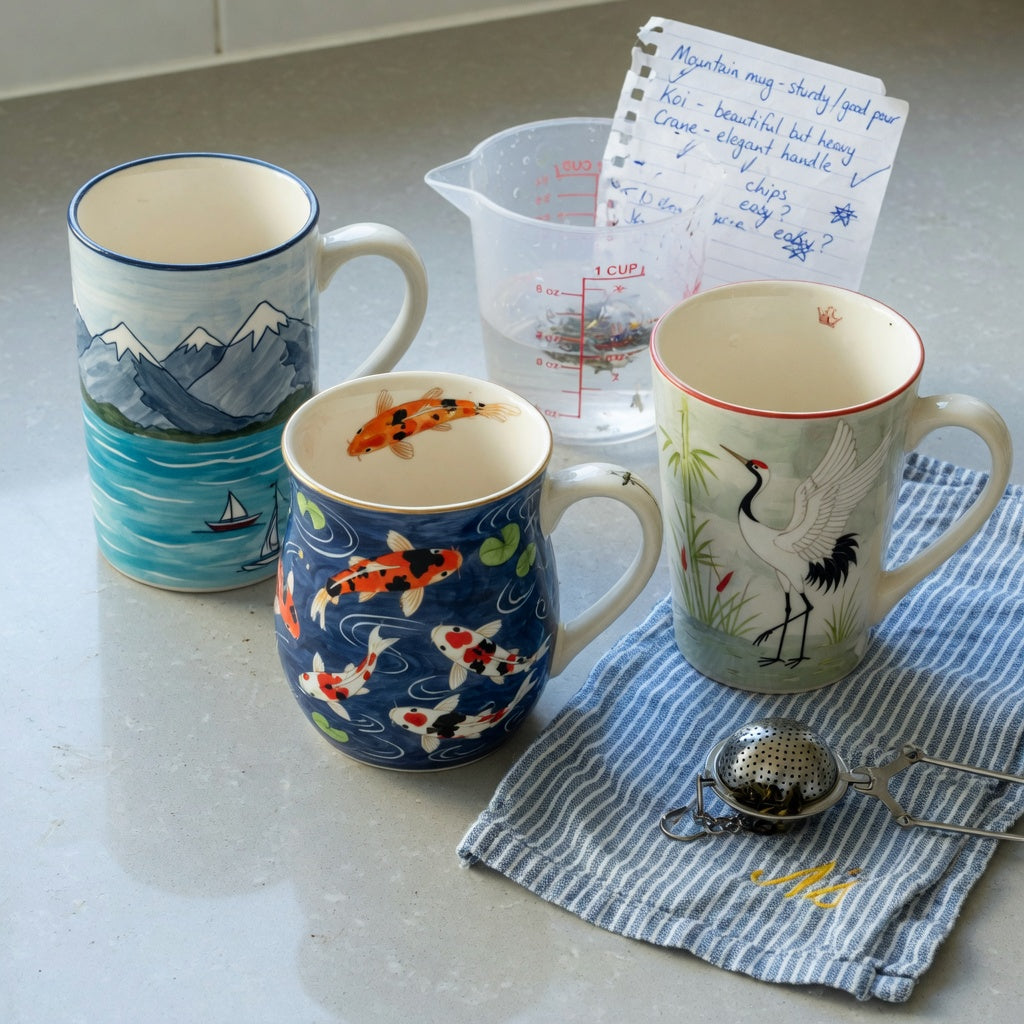
Art Coffee Mugs First Time Buyer Product Shortlist Guide
A practical first-purchase screen for art coffee mugs, including ceramic, capacity, shape, care, and imagery checks. Compare Mountain Sea, Koi Fish, and Crane options using real desk, kitchen, drin...
Read more
Leave a comment
This site is protected by hCaptcha and the hCaptcha Privacy Policy and Terms of Service apply.