
Ceramic Chai Mug: Compare Size, Comfort, Glaze, and Care
Reading time: about 14 minutes
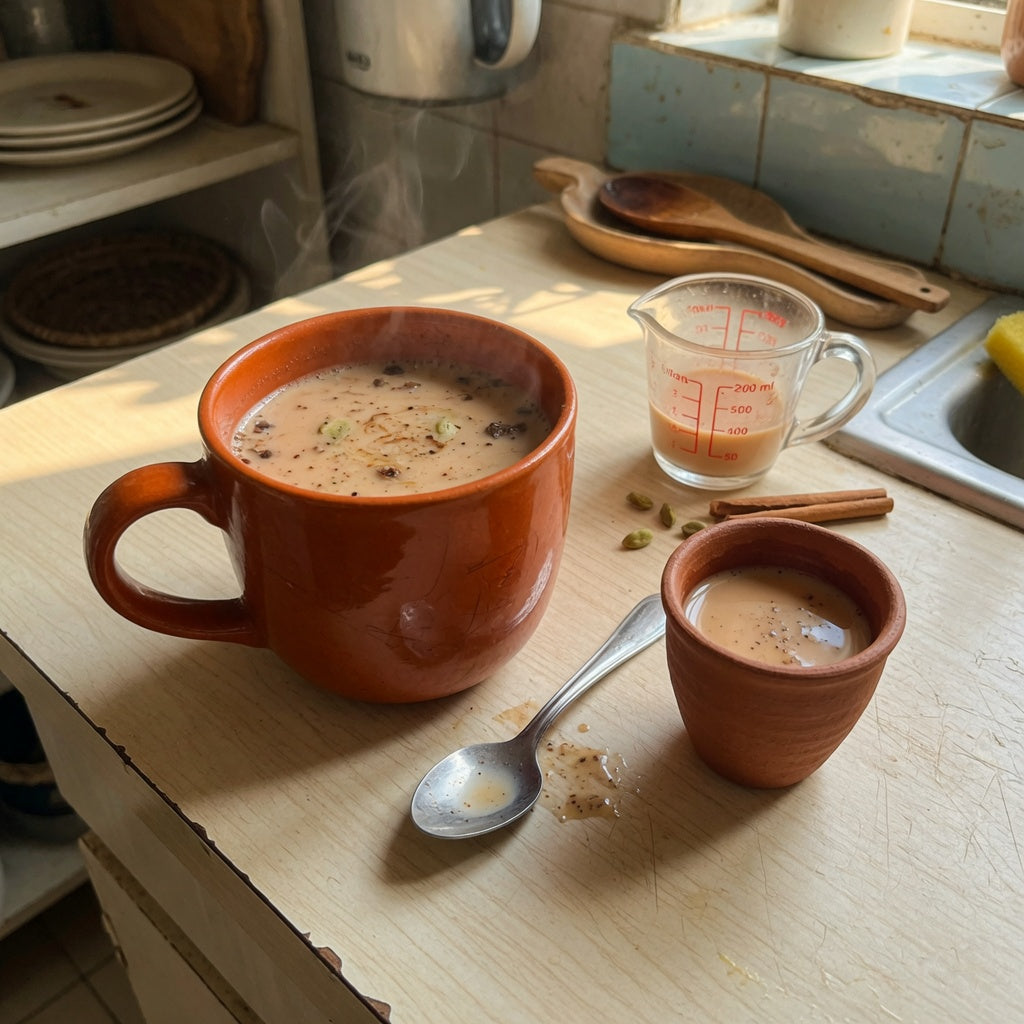
The first thing we notice when a shopper compares a ceramic chai mug in our store is not the color. It is the pause at the rim: will a milky pour leave room for a spoon, or will the drink sit almost at the edge? That question matters more than a glaze name once the mug moves from a product photo to a kitchen counter, an office desk, or a gift box.
Chai drinkers do not all want the same vessel. Some prefer a small kulhad-style serving held in both hands. Others want one large mug that can handle tea, milk, sugar, and a long stretch of reading or email. We sell and handle this category, so our comparison starts with the routine the mug has to support, not just the style it suggests.
This is a capacity-and-comfort guide based on the current CoffeifyMug catalog. The listed options are presented for coffee and tea use, with capacities of 400 ml, 440 ml, and 480 ml. We do not add claims about included tea, spices, brewing accessories, special temperature performance, cultural certification, or professional laboratory testing.
Will a ceramic chai mug hold your real milk-and-tea pour?
Many kulhad-style cups are sold in small formats, often around 5 to 8 oz, and many are handleless. That size can work beautifully for one short serving or for passing several small cups around a table. It becomes less practical when the same drinker makes one generous serving, adds milk, and wants space to stir without balancing the cup against the rim.
A reusable glazed ceramic mug solves a different problem from a small clay cup. It is meant to fit into an ordinary kitchen or office routine, where the drink may sit beside a keyboard, travel from the kettle to a dining table, or wait in the sink until the next wash. The useful comparison is not small versus large in the abstract. It is how much liquid you pour and how much room you need above it.
Before choosing a size, check these details against your actual chai habit:
- Does the finished drink include enough milk or foam to need headspace below the rim?
- Do you stir sugar or spices in the mug, or transfer the drink already mixed?
- Do you usually finish one serving quickly, or sip it through a meeting or reading session?
- Will you carry the filled mug from the kitchen to a desk or another room?
- Do you want a small traditional-style cup, or a full-size daily drink that reduces refill trips?
Capacity printed on a listing is not an instruction to fill the mug to the brim. A full rim leaves little room for a spoon, a small movement across the counter, or the milk that gets added after the tea. If your current mug is already frustratingly full, measure it with a kitchen jug and compare that amount with the listed capacity of the next mug.
How do 400 ml, 440 ml, and 480 ml change a chai routine?
The three current CoffeifyMug options make the capacity decision fairly concrete. The Flow is listed at 400 ml, Morning and Night at 440 ml, and The Rock at 480 ml. Those capacities are approximately 13.5, 14.9, and 16.2 US fluid ounces. The figures are useful for comparison, but the comfortable fill level will still depend on the mug's shape and the headspace you leave.
| Option | Listed capacity | Reader situation | Trade-off |
|---|---|---|---|
| The Flow | 400 ml, about 13.5 US fl oz | A daily drinker replacing a small cup but still wanting a manageable pour from kettle to table | Less reserve than the largest option for someone who wants a long desk drink |
| Morning and Night | 440 ml, about 14.9 US fl oz | A shopper who wants extra room for milk and stirring without choosing the biggest listed capacity | More volume and shelf space than a compact guest cup |
| The Rock | 480 ml, about 16.2 US fl oz | A big-mug drinker who dislikes tiny servings and prefers fewer refill trips | Can leave more unused space for someone who drinks a short, strong serving |
If your complaint is that small chai cups run out before you settle at your desk, start by comparing The Flow at 400 ml. It is the smallest of the three listed capacities, so it gives you more room than a miniature cup without immediately moving to the largest daily format.
For a little more room around the drink, the Morning and Night listing sits at 440 ml. That middle option makes sense for someone who wants to add milk and stir comfortably but does not want the extra volume of a 480 ml mug.
If you already know that small servings feel stingy, compare The Rock at 480 ml. It is the largest of the current three capacities and is the clearest fit for the shopper who describes their ideal chai mug as a large, sit-down serving. It is a less sensible choice for someone who fills a small cup and drinks it in a few minutes.
There is no universal best size. A 480 ml ceramic chai mug is not automatically too large for chai; it is simply a poor match if most of the volume will remain empty. Conversely, choosing 400 ml because it looks more moderate does not help if you routinely fill smaller mugs to the rim. Compare the amount you actually drink before comparing the names on the shelf.
Does glazed ceramic suit your chai better than a small unglazed kulhad?
A glazed ceramic mug and an unglazed terracotta kulhad can both serve chai, but they deliver different day-to-day experiences. Some drinkers specifically like the earthy character associated with unglazed clay. A smooth glaze will not recreate that surface or that clay-forward impression. Other shoppers care more about a reusable mug that can be wiped clean and used at a kitchen counter or office sink.
An intact glaze gives you a smoother drinking surface than raw clay, but it does not make every ceramic item automatically suitable for food. The word ceramic does not tell you how the piece was made, how the decoration was applied, whether the interior is intended for drinks, or how the seller expects you to clean it.
Use the material choice to decide the job:
- Choose an unglazed kulhad-style cup if the small serving, two-handed hold, and earthy clay experience matter more than easy weekday cleanup.
- Choose a glazed reusable mug if you want a larger serving, a smoother interior, and a vessel that fits normal home or office drinkware routines.
- Choose a different vessel entirely if you need a sealed lid, a leak-resistant bag commute, or a mug designed for a car cup holder.
Handmade ceramic kulhad chai cups can have attractive variation in rim shape, glaze pooling, and wall thickness. That variation is part of the appeal, but it also means two pieces in a set may not feel identical in the hand. A more standardized mug is usually easier to compare by capacity and repeat from one morning to the next. Neither choice is automatically superior; the right one depends on how much craft variation you want to live with.
What should you verify on the glaze before serving chai?
Food-contact status deserves its own check. The FDA guidance on lead-glazed traditional pottery explains that lead may be present in the glazes or decorations of some traditional pottery and may leach into food or drink if the pottery was not manufactured properly. That is a reason to evaluate the seller and the intended use, not a reason to assume that every handmade or imported cup is unsafe.
The FDA also explains in its guidance on imported traditional pottery and the term Lead Free that ceramicware containing extractable lead when tested by FDA methods should not be labeled Lead Free. A phrase on a product card is not the same thing as documented food-contact information.
Ceramicware that fails applicable lead-leaching tests should carry a permanent warning that it is not for food use and may poison food. Guidance from Princeton's ceramics safety resources also notes that acidic liquids and continual microwave reheating can increase lead leaching from problematic glazes. If you add lemon to chai or repeatedly reheat the same drink, vague safety language is a reason to ask questions before ordering.
When a mug arrives, inspect the actual drinking surface under bright light. Our practical receiving checklist is:
- Confirm that the item is sold for food or drink use rather than decoration.
- Reject any piece carrying a decorative-only warning.
- Check the interior for pinholes, bare clay, bubbling, sharp glaze edges, or heavy metallic decoration where the drink touches.
- Do not use a mug with a chip, crack, or rough damaged area on the rim or interior.
- Treat a Lead Free statement on an otherwise vague decorative import as something to verify, not as proof of a test result.
- If you are checking lead, cadmium, or other glaze-related compliance, ask the seller for food-contact information that applies to the specific piece.
Our current product pages provide the catalog capacity and tea-use context for each mug. We do not turn a style description into a certification, and we will not imply professional testing that is not published. Read the individual listing for any food-use, dishwasher, or microwave statement, and contact the seller when the page leaves a basic safety question unanswered.
Is a handleless cup comfortable at a desk or only at the table?
A handleless kulhad-style cup brings your hand directly around the ceramic wall. That can feel intimate and traditional at a table, but it becomes less convenient when the mug is full of hot, milky tea and you need to walk past a laptop, paperwork, or a crowded sink.
Ceramic generally transfers heat less readily than metal. A Drexel explanation of ceramic and metal conductivity helps illustrate why a metal spoon can heat quickly while a ceramic mug behaves differently. That material difference is not a fixed cool-to-touch guarantee: wall thickness, the amount of liquid, the pour temperature, and the glaze all affect how the outside feels.
A handle is usually the more practical choice for a large 16 oz ceramic chai mug, but it does not make an open mug travel-safe. Use this split when comparing forms:
- Handleless works best for seated drinking, short servings, two-handed holding, and shoppers who value a kulhad-inspired look over quick carrying.
- A handled form works best for moving from kettle to desk, keeping fingers away from the hottest wall, and sharing an office sink where mugs are grabbed quickly.
For a handled mug, inspect the handle opening, the attachment points, and the clearance between your fingers and the body in the product photos. For a handleless cup, pay attention to the outside profile and rim thickness rather than assuming all ceramic feels the same. A wide, heavy cup may be comfortable on a table and awkward in one hand.
Handmade pieces can also vary in wall thickness and rim balance, while more standardized production tends to make dimensions easier to repeat. If your priority is a consistent milk-to-tea routine, repeatable capacity may matter more than one-of-one irregularity. If your priority is the tactile craft experience, accept that the cup may require more careful handling.
Which care details matter after milk, sugar, and spice?
Plain tea leaves less residue than a milky, sweet, spiced drink. Milk film can dry just below the rim, while sugar and spice pigments can leave a visible ring if the mug sits on a desk until the end of the day. A good care routine protects the glaze and makes the mug easier to keep in rotation.
- Read the individual listing first. Do not transfer dishwasher or microwave instructions from one ceramic mug to another. If the page is silent, ask before using an appliance.
- Rinse soon after drinking. A quick rinse prevents milk and sugar from drying into the rim and base area.
- Use a warm soak and a soft sponge. For tea film, a mild baking-soda paste can help lift residue. Avoid steel wool and abrasive powders that may scratch or dull some glazes.
- Load the dishwasher with clearance. If the mug is listed as dishwasher-safe, keep it from knocking against heavier dishes. A care claim does not protect a rim from impact.
- Keep metal away from the microwave. Metallic decals or painted accents should not go into a microwave, even if the ceramic body itself has a microwave-use statement.
- Inspect after repeated use. Stop using the mug for drinks if a chip exposes the body clay in the sip zone or if rough, deep crazing begins to trap residue.
Continual microwave reheating also deserves caution because repeated reheating is one of the conditions associated with increased leaching from problematic glazes. If your routine involves warming the same mug several times, follow the exact listing guidance and consider making a fresh serving instead of treating the mug like a storage container.
A ceramic chai mug is not a substitute for ovenware, stovetop cookware, or a leakproof travel tumbler. It is also a poor choice for carrying leftover chai in a bag without a dedicated lid-and-seal system. For iced coffee at a desk, an open ceramic mug can work if you are staying put; for a commute, choose a vessel designed around sealing and transport.
Which ceramic chai mug fits a kitchen counter, office desk, or gift?
Home use gives you the most freedom to choose by volume. If one person wants a moderate serving and another dislikes refills, different capacities can be more useful than matching mugs. The 400 ml, 440 ml, and 480 ml listings make that kind of two-person comparison possible without pretending that every household drinks the same amount.
Office use adds practical constraints. A mug that looks charming on a break-room shelf may be left unused if it is uncomfortable to carry full, has no convenient grip, or takes up more desk space than the drink justifies. Check the handle, base profile, and listed care instructions alongside capacity. None of the open mug formats should be treated as leakproof or bag-safe unless the specific listing says otherwise.
Gifting needs the same honesty. During a gift unboxing, a set of tiny cups can look generous; after it reaches the cupboard, the recipient still has to wash, store, and use each piece. If the person makes one large chai at a time, two individually chosen capacities may be more useful than a decorative set of small cups. If they specifically want traditional small Indian chai cups, the larger 400 to 480 ml options are probably the wrong category.
To compare colors and silhouettes beyond the three capacities discussed here, browse the unique coffee mugs collection. Use the collection for visual comparison, then open the individual product page for the capacity and care details that apply to the mug you are considering.
Frequently asked questions
What size ceramic chai mug leaves room for milk and stirring?
There is no single correct size because finished servings vary. Compare your usual drink with the listed 400 ml, 440 ml, and 480 ml capacities, and leave space below the rim for a spoon and movement. A kitchen measuring jug makes the comparison more reliable than judging from photos.
Is a 480 ml ceramic chai mug too large for everyday chai?
It is too large if you usually drink a short serving and dislike unused space. It can suit a big-mug routine if you add milk, prefer one uninterrupted serving, or want fewer trips back to the kettle. The Rock is the current CoffeifyMug option listed at 480 ml.
Are glazed ceramic chai mugs safer than traditional kulhad cups?
Neither the word glazed nor the word kulhad answers the food-contact question by itself. Check that the specific item is intended for food use, review the seller's safety information, and avoid decorative ware or pieces with damaged interiors. A Lead Free phrase alone should not be treated as a substitute for relevant testing or compliance information.
Should I choose a handleless kulhad or a ceramic chai mug with a handle?
Choose handleless if you drink seated, prefer a two-handed hold, and want the kulhad-inspired feel. Choose a mug with a handle if you regularly carry a full drink to an office desk or want more separation between your fingers and the hot wall. Neither form is automatically leakproof or suitable for transport in a bag.
Can I put a ceramic chai mug in the dishwasher or microwave?
Only follow the instructions for that specific listing. Do not microwave metallic decoration, and do not keep using a mug with a chipped or rough drinking surface. For milk and spice residue, rinse promptly and use a soft, non-scratch cleaning method rather than aggressive scouring.
Before you order, compare these points against the mug in your cart:
- Capacity: Does 400 ml, 440 ml, or 480 ml match the amount you actually pour?
- Headspace: Will tea, milk, and a spoon fit without filling the rim?
- Material: Do you want a reusable glazed surface or an unglazed clay experience?
- Grip: Will you carry the drink, or mostly hold it at the table?
- Food use: Is the piece sold for drinks rather than decoration?
- Care: Are dishwasher and microwave instructions stated on the individual listing?
- Condition: Will you inspect the rim and interior for chips, bare spots, and rough crazing when it arrives?
If those answers point to a reusable glazed mug for daily chai, use the capacity table to choose the closest fit, open the matching product listing, and then compare the surrounding shapes in our unique coffee mugs collection. Pick the volume you will still want on an ordinary Tuesday. Choose a small kulhad-style cup only when the short serving and handleless ritual are the point of the purchase.
More from our blog
Read more

Unique Ceramic Christmas Coffee Mugs: A Practical Comparison
Compare glaze placement, food-contact information, capacity, handle clearance, appliance care, origin, and gift fit before ordering a holiday mug. Includes an arrival inspection and a practical car...
Read more
Unique Coffee Mug Gift Ideas: Compare Shape, Size, and Care
A distinctive mug only works as a gift if its shape, capacity, handle, and care needs suit the person receiving it. Use this practical comparison to find an option that belongs in their daily routi...
Read more
Leave a comment
This site is protected by hCaptcha and the hCaptcha Privacy Policy and Terms of Service apply.