




Brunch Table Coffee Mug: What Buyers Should Compare
Reading time: about 13 minutes
The last brunch setup we staged on the shop counter failed for a boring reason. The mugs looked fine in a product photo and too wide once a pastry plate, a berry board, and a small milk jug were actually on the cloth. A finger could not get through one handle while the other hand passed a plate. Another mug carried a printed brunch joke that looked sharp on day one and dull after a dishwasher cycle. People searching for a brunch table coffee mug are usually choosing between those two objects: drinkware meant to sit with the plates, and a slogan gift. They solve different problems.
There is no standards-body definition behind the phrase. It is retail and styling language. In our store the useful question is narrower. Will this piece hold the pour, sit beside the food, and survive the washing method this household actually uses?
Patterned ceramic for a brunch table, or a slogan gift?
Name the job before the glaze wins. Patterned ceramic or porcelain drinkware is a table piece. You will see it next to plates, pass it while someone reaches for fruit, stack it after the meal, and pour hot coffee into it again next weekend. A printed slogan mug is often a gift first. The decoration may be a decal or a sublimation print, and that surface does not automatically share whatever dishwasher tolerance the clay body has.
For a casual Sunday table that needs one repeatable shape, start with the round coffee and tea mug. Read the current listing for stated capacity, material, handle description, and any microwave or dishwasher line. A lifestyle photo is not those facts. When the cup itself is part of the styling, compare the pleated coffee and tea cup with the same discipline. A pleated silhouette can look right on linen and still trap sponge debris or refuse a neat stack. Confirm on that page whether this cup nests, how wide the base is, and how the maker says to wash it.
Still rejecting shapes? The unique coffee mugs collection puts different silhouettes on one page so you can rule out a footprint before you commit to a color. If the piece is really leaving in wrapping paper, our brunch coffee mug gift comparison stays on materials, capacity, and print instead of treating the joke as the whole purchase. A slogan mug is a poor fit for a household that will only run the dishwasher.
What capacity should a brunch table coffee mug hold beside the pastry?
The ounces on a listing are not the liquid line you can carry across a kitchen without sloshing onto a croissant. Leave a gap below the rim. A milky, foamy brunch drink needs more of that gap than a short black coffee. FDA lead guidance describes cups and mugs as small ceramic hollowware commonly used for coffee or tea above room temperature, normally but not exclusively about 8 fl oz (240 mL), and made with a handle. That description marks the ware the action level applies to. It is not a recommended brunch pour, and it is not the capacity of any mug we sell unless the current listing says so.
On the counter, we ask customers to clear eight checks before they order a set:
| Check | What goes wrong on a full table | Confirm on the current listing |
|---|---|---|
| Stated capacity versus usable fill | Foam, milk, and a careful carry need space below the rim | Ounces or milliliters stated for this exact piece |
| Handle opening | A thick wall or a small hole fights larger hands and some arthritic grips | Any stated handle size; otherwise judge it in hand after delivery |
| Weight when full | A stout wall gets clumsy once coffee is in it and you are passing plates | Listed weight if the maker publishes one; if not, treat heft as unknown |
| Rim thickness | A sharp or very thick lip changes the sip and how the mug meets a saucer | Nothing reliable from a hero photo; this is a first-sip check |
| Base footprint | A wide base steals the placemat from the pastry plate | Diameter only if the listing states it |
| Stack height | A set of four has to live in a cabinet between Sundays | Whether the maker says the shape nests, and whether the handle blocks the stack |
| Microwave mark | Reheating in the mug is a habit, not a styling choice | A clear yes, a clear no, or a blank. Blank is not a yes |
| Dishwasher mark and decoration | Printed slogans and metallic rims fail differently from a plain glaze | Whether this decoration is included in the appliance claim |
Handle comfort is where oversized pours lose people. A jumbo can be more coffee than anyone at the table wanted, and the opening may still be tight. Do not guess from a cropped lifestyle photo. Use published dimensions when the maker gives them, and keep a return path if the handle does not fit a real hand.
Two place settings raise a different problem than one favorite mug. Matching height, glaze, and capacity matters once both drinks sit between the fruit and the eggs. We laid out those pairing checks in our brunch coffee mug pair notes.
Stoneware heft, a thinner porcelain wall, and the handle you pass
In our experience, the empty mug on a shelf lies. A thick wall that feels sturdy in the stockroom gets clumsy once it is full and you are threading it between a juice glass and a plate of eggs. Stoneware is often sold on that stout feel. Porcelain is often sold on a lighter wall and a cleaner rim. Neither word in a title tells you the gram weight, the rim thickness, or how this exact piece will take a coffee stain. If the listing does not publish weight or diameter, treat both as unknown until the box arrives.
Footprint matters as much as capacity. A wide base steals cloth from the pastry plate. A tall narrow cup can tip when someone bumps the table. Stack height is the Monday problem. Hosts buy four, then find the cabinet only nests two because the handles collide. When we unbox samples, the first check is not the glaze. We set the mug beside a dessert plate and see whether a hand can still reach a fork.
We would not pick a jumbo footprint for a small table just because the glaze photographs well. The drink may be fine. The croissant plate will not be. Anyone who reheats every morning, or who needs a lid for the drive, is looking at the wrong object. A seated brunch mug is not a travel cup.
Gold rims, printed brunch designs, and the dishwasher after guests leave
The notes we get are specific. A handle comes out of the microwave too hot to hold, or a gold line dulls in the dishwasher. Those are different failures. If the listing does not mark the mug microwave safe, do not run a test just to see. Reheat the coffee in a vessel the manufacturer rates for the microwave, then pour. Customers also tell us a microwave-safe ceramic piece can still present a hot handle, because the liquid warms the wall. A short wait, or a handle that keeps skin off that wall, is the practical response. A longer zap is not.
Metallic decoration is the usual reason a pretty brunch piece stays out of both appliances. Gold, platinum, and other metal rims are often left out of microwave and dishwasher claims, because metal on the lip can scorch, spark, or wear off. Unless the current listing explicitly includes that metallic detail in both claims, plan on hand washing and no microwave. A blank bottom is not a hidden approval stamp. Makers put appliance guidance on a box, a hang tag, or a care line. An unmarked base does not settle it.
Prints fail on their own schedule. A ceramic body can be described as dishwasher safe while a sublimation print or decal is not. Care lines are brand-specific, and they rarely name the ink. If you will not hand-wash, skip a slogan mug whose listing hedges on the decoration. When the design is what you are paying for, read our notes on size, print durability, and safety before you add it to a brunch set.
Crazing, coffee stains, and the pieces we retire
Crazing is a network of fine cracks in the glaze. Coffee stains the lines. In worse cases, liquid seeps. Shoppers ask whether a crazed favorite is still fit to drink from. We do not have a home trick that turns a cracked glaze back into a reliable cup. Once coffee is weeping through the wall, that mug comes out of service. Stained crackle on a piece that still holds liquid is a judgment about looks and about how closely you will watch it. Seepage is not a judgment call.
- Do not soak the mug. A long bath drives stained liquid into craze lines and under a tired rim.
- Do not stack pieces while they are hot and wet. Trapped steam plus the weight above stresses rims and glaze.
- Avoid hard temperature swings, such as a refrigerator-cold mug hit with boiling water, unless the maker says this body can take that shock.
- Wash printed and metallic pieces by hand unless the listing clearly includes that decoration in the dishwasher claim.
- Retire anything that leaks, chips on the drinking surface, or grows a stain you can no longer scrub off.
Shoppers often blame earthenware, stoneware, or porcelain when a stain shows up. The clay word in a title is still not a care instruction, and reviews rarely measure staining the same way across bodies. If the maker's line for this piece is missing, assume hand washing until you know otherwise. Our pieces are not automatically the exception. Read the listing you are about to order.
Lead, cadmium, and a glaze color that tells you nothing
Glaze color will not tell you whether lead or cadmium can move into hot coffee. FDA's Compliance Policy Guide for cups and mugs sets a lead action level of 0.5 micrograms per milliliter of leaching solution, judged against any one of six units tested. In that guide, cups and mugs are small ceramic hollowware commonly used for coffee or tea above room temperature. They normally, though not exclusively, hold about 8 fl oz (240 mL) and are made with a handle. The agency has also said that some ceramic foodware leaches meaningful amounts of lead from surfaces that touch food, that food can extract the metal, and that continued use can cause harm, including chronic lead poisoning. The method referenced there includes ASTM C738.
Cadmium sits in a separate guide. Small hollowware under 1.1 liters is held to 0.5 micrograms of cadmium per milliliter of leaching solution, on any one of six units. Large hollowware is held to 0.25 micrograms per milliliter. That document does not create a separate cups-and-mugs category. It does warn that extractable cadmium could contribute to chronic cadmium poisoning if the ware remains in food use.
Two shopping traps are easy to miss. Properly made ceramicware that contains lead can still be sold legally in the United States. A lead-free claim is not a current leach report. FDA has said ceramicware labeled lead-free that nonetheless contains extractable lead may be misbranded, because the label can be false or misleading. Handmade, crude, or traditional pottery fired at inadequate or uncontrolled temperatures needs extra caution. Lead that was never fully incorporated into the glaze can move into food in amounts that create a health hazard.
A 2017 pilot looked at five ceramic mugs already known to contain lead and found lead in the coffee and tea poured into them. Coffee ranged from 0.2 to 8.6 micrograms per liter. Tea ranged from below 0.2 to 1.6 micrograms per liter. The amount tracked which cup was used, not the beverage, and not a 10-minute versus 60-minute hold. For one of the five mugs, the estimated daily dose in the paper exceeded California's 0.5 microgram-per-day Maximum Allowable Dose Level. Blood-lead levels modeled in that paper did not rise above the regulatory or guidance values the authors used. Read that for what it is: a five-mug pilot of ware already known to contain lead. It is not a survey of ordinary brunch mugs, not a reason to treat every glossy glaze as hazardous, and not a reason to ignore handmade pottery with no food-contact test.
If a home lead test indicates leachable lead, FDA's consumer advice is direct: do not use that pottery for cooking, serving, or storing food or drinks. A home screen is not the same record as a leach test on new ware. Gift listings rarely publish either one. We will not treat a clean photo as a food-contact clearance.
Cafe-style place settings versus a formal cup on a small table
A casual, cafe-style brunch can use mugs. Keep them within easy reach so a hand does not cross the fruit plate, and keep the base small enough that a pastry plate still fits. A formal tea layout is a different tool. A cup and saucer gives the spoon and the drip somewhere to go. If the meal is closer to a seated lunch with several courses, a jumbo mug is the wrong object even when the glaze is beautiful.
Leave the piece in the cart, or pick a different style, when any of these fit:
- You reheat coffee in the mug most mornings, and the listing is silent or negative on microwave use, or the rim is metallic.
- You will only use the dishwasher, and the decoration is a print or a metal band the maker has not cleared for that cycle.
- You are buying handmade, vintage, or brightly glazed pottery with no current food-contact leach result for hot drinks.
- The table is small and the base is a wide jumbo footprint.
- The handle opening is unpublished and someone at the table needs a large, easy grip.
For a plain round option, go back to the round coffee and tea mug listing and tick the eight checks against whatever that page states today. For a pleated profile, do the same on the pleated coffee and tea cup page before you order more than one. If you are still comparing silhouettes, start in the unique coffee mugs collection and set aside any brunch table coffee mug whose capacity, care line, or base size the maker has not published.
Frequently asked questions
Is a brunch table coffee mug different from a regular coffee mug?
No standards body defines one. The phrase covers patterned tableware and printed slogan gifts in whatever size the seller already offers. Judge stated capacity, the usable fill below the rim, handle opening, footprint, and the microwave and dishwasher lines the same way you would for any mug that will hold hot coffee beside a plate of food.
The base is blank. Can I still microwave this mug?
No. A blank base is not a microwave-safe mark. If the listing does not clearly allow it, heat the coffee in a container rated for the microwave and pour it in. Metallic rims are a separate reason to keep the piece out of the microwave, and a print does not automatically survive just because the clay body might.
Is a crazed glaze still all right for hot coffee?
Fine crackle can stain, and a hard temperature swing plus heavy dishwasher use can make it worse. If coffee seeps through the cracks, stop drinking from that mug. Soaking will not close the craze. We retire seeping pieces rather than guessing what is moving through the wall.
How do I check lead or cadmium before I buy?
You cannot read either metal from glaze color. FDA's action level for lead in cups and mugs is 0.5 micrograms per milliliter of leaching solution on any one of six tested units, and small hollowware under 1.1 liters is held to the same 0.5 microgram figure for cadmium. A lead-free label is not a substitute for an extractable-lead result. Handmade or crudely fired pottery without a current food-contact result is not what we would choose for daily hot coffee.
Are formal cups a better brunch choice than mugs?
For a casual cafe-style table, a mug within easy reach is appropriate, as long as the base still leaves room for the pastry plate. A formal layout usually wants a cup and saucer so the spoon has a landing spot. Match the vessel to the meal you are actually serving, then confirm capacity and care on the current listing instead of copying a styled photograph.
Ready to pick your mug? Two ways to save on today's order:
Ordering 1–3 mugs? Get an extra 10% off your 1st order with code 10_OFF Apply 10% Off & Shop Wooden-Handle Mugs →
Gifting 4+ mugs? Buy 3, Get the 4th Free applies automatically at checkout (no code needed; offers do not stack) · Free standard shipping (Nov pre-Christmas delivery: 15–20 calendar days US) · Free replacement if chipped in transit.
Popular mug buying guides: Ceramic Tea Cups & Infuser Mugs · Ceramic Mugs with Lids Compared · Wooden-Handle Tea Infuser Mugs Compared · Christmas & Secret Santa Mugs 2026 · Espresso & Cortado Cups Guide · Cup & Saucer Gift Sets · All 25 Mugs Spec Table · Mug Size Guide · Shipping & Promo FAQ
FIRST ORDER 10% OFF (CODE: 10_OFF) · OR BUY 3, GET THE 4TH FREE


Read more
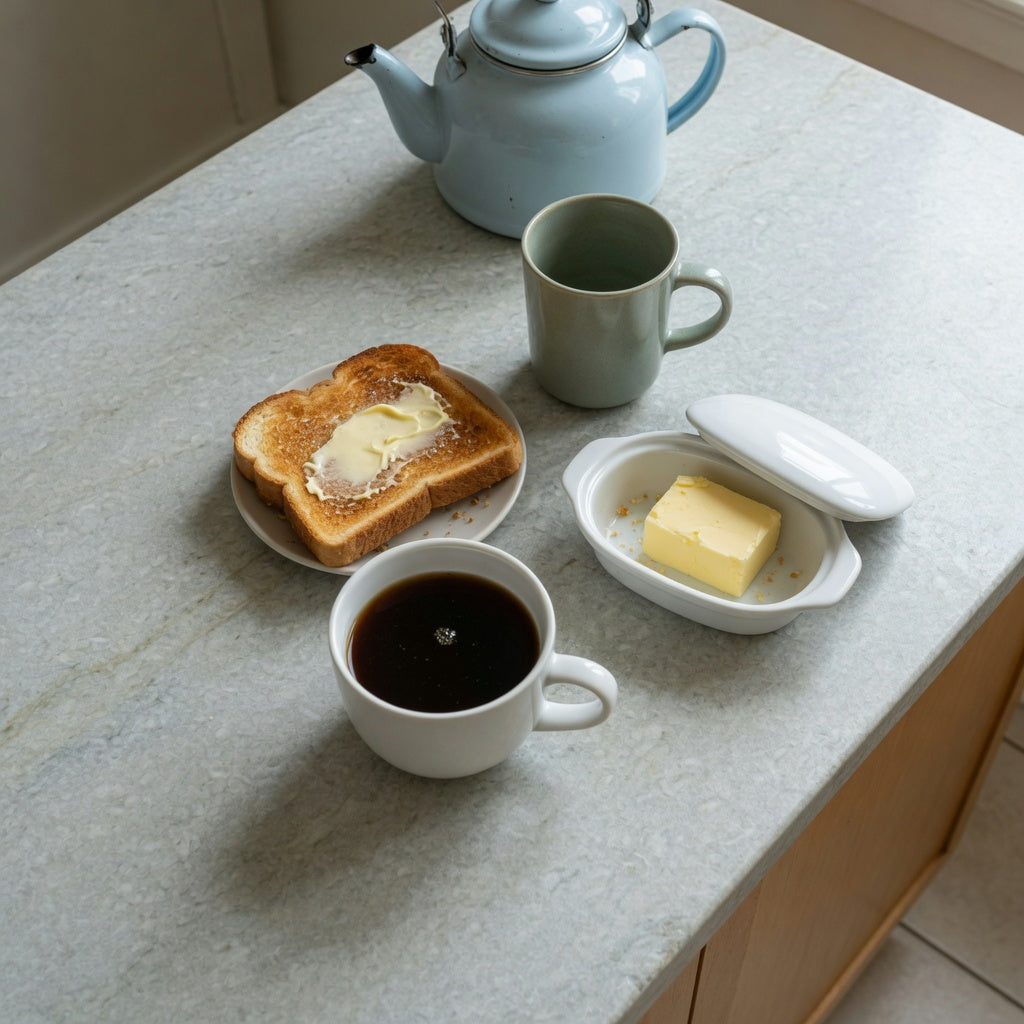
Round Mug Breakfast Routine Ideas: What Buyers Should Compare
Compare round mug breakfast routine ideas against a real counter: footprint, spoon reach, heat, glaze care, and when a taller mug fits a narrow breakfast bar better.
Read more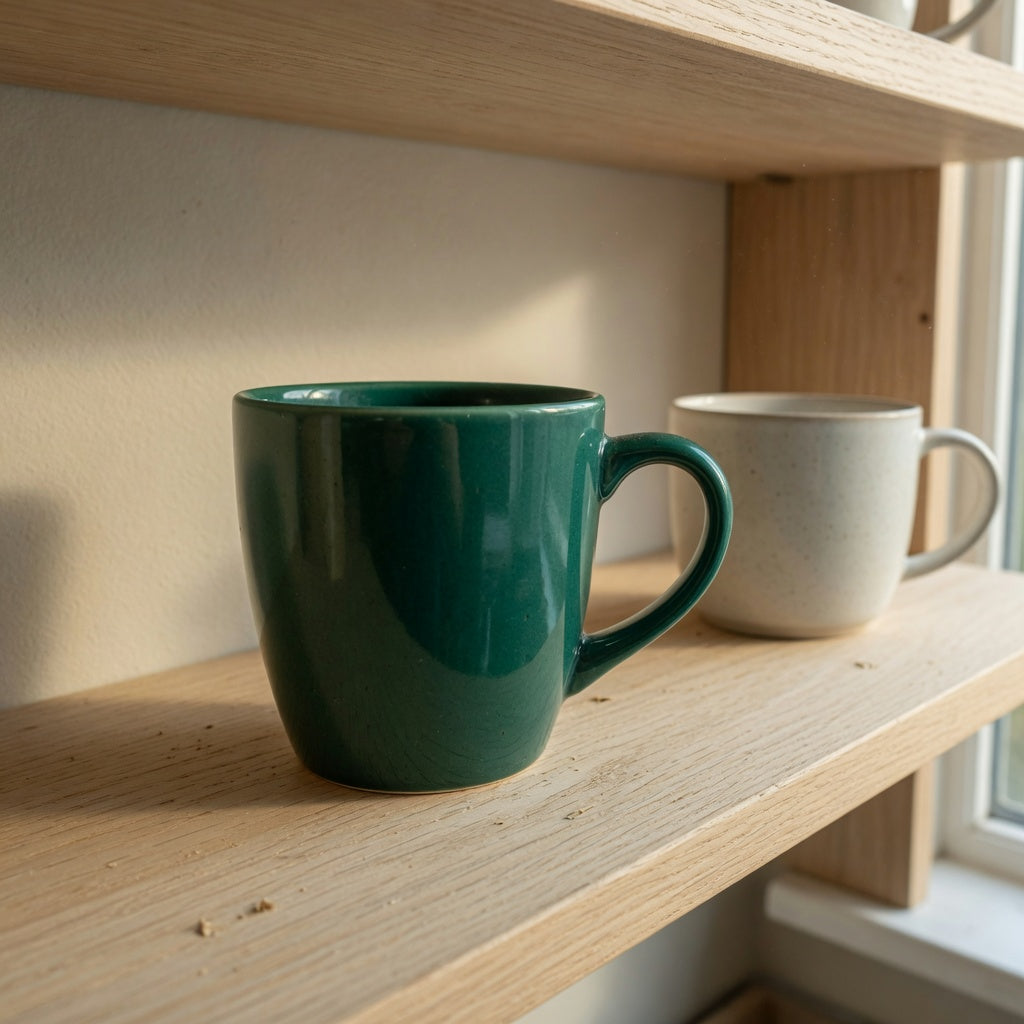
Emerald Green Ceramic Mug Open Shelf: Checks Before You Buy
An emerald mug on an open shelf is a color decision and a storage decision at once. We cover glaze shifts, footprint, dust, and which live listing facts to check before you buy.
Read more
Leave a comment
This site is protected by hCaptcha and the hCaptcha Privacy Policy and Terms of Service apply.