
Breakfast Coffee Cup Home Coffee Station Product Shortlist Guide: 3 Cups
Reading time: about 9 minutes
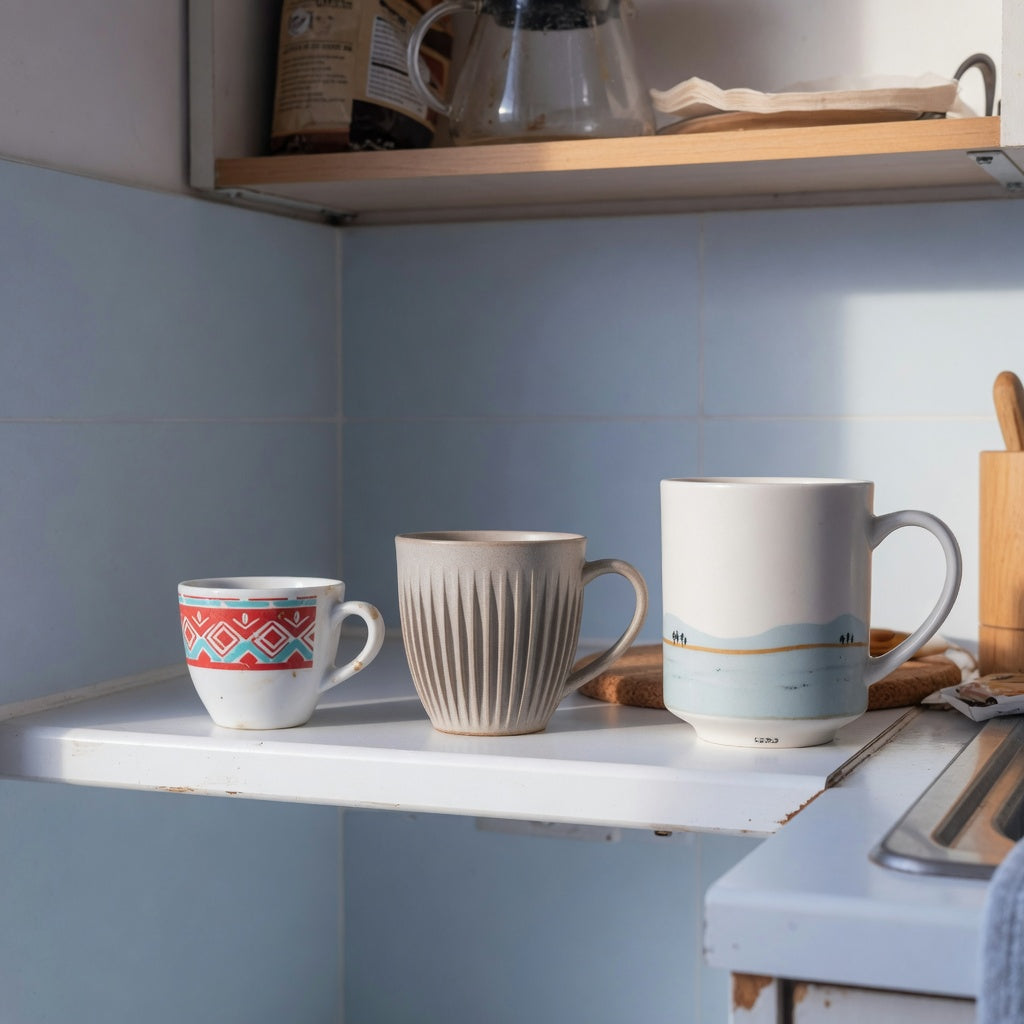
A cup can fit neatly beside an empty brewer and still be wrong once a cereal bowl, toast plate, spoon, and phone reach the table. We see the same mismatch in our store: the coffee station looks organized, but the chosen cup either needs a refill before breakfast is finished or occupies more landing space than the morning setup can spare. This breakfast coffee cup home coffee station product shortlist guide compares three products using the catalog facts we can stand behind: Retro 170 ml, Pleated 200 ml, and Landscape Tall 350 ml.
The aim is not to declare one universal winner. We match listed capacity to refill preference, counter and table footprint, shelf clearance, and cleaning habits. Capacity is verified; exact outer dimensions, material, and appliance-safe care claims are not supplied in the source facts for this comparison. We flag those points for confirmation instead of filling the gaps with assumptions.
Use this breakfast coffee cup home coffee station product shortlist guide for three morning setups
Start with what happens after the coffee is poured. In our experience, that produces a more useful shortlist than choosing by appearance alone.
- Fast weekday breakfast near the coffee station: A 170 ml cup suits someone who prefers a smaller pour and does not mind topping up.
- Toast, cereal, or a short sit-down meal: A 200 ml cup provides a modest middle capacity without moving all the way to a tall mug.
- One longer pour at a roomier table: A 350 ml mug suits a shopper who prioritizes fewer refill trips and has enough vertical and horizontal space.
The practical question is not which cup holds the most. It is which size removes the annoyance you notice most: repeated refills, an unfinished large drink, a crowded place setting, or limited storage.
170 ml, 200 ml, or 350 ml: how much do you finish at breakfast?
Listed capacity is the cleanest verified comparison point, but it is not automatically your comfortable fill level. Most people leave some headspace so the drink can be carried without sloshing. Treat the capacity as the upper reference point, then compare it with the amount you actually pour.
The differences are more revealing than the three numbers in isolation. Pleated holds 30 ml more than Retro. Landscape Tall holds 150 ml more than Pleated and 180 ml more than Retro. That means the move from 170 ml to 200 ml is a small adjustment, while the move to 350 ml changes the refill pattern more substantially.
| Product | Listed capacity | Capacity difference | Likely refill pattern | Space check |
|---|---|---|---|---|
| Retro | 170 ml | Baseline | Frequent smaller pours | Measure base and handle width |
| Pleated | 200 ml | 30 ml more than Retro | Moderate pours or one top-up | Compare total width with Retro |
| Landscape Tall | 350 ml | 150 ml more than Pleated | Fewer refills for the same total drink | Check height, base, and handle clearance |
If your usual breakfast drink is about 300 ml, both the 170 ml and 200 ml options require a second pour based on listed capacity. The 350 ml mug can accommodate that nominal amount with 50 ml remaining below its listed limit. That is capacity arithmetic, not a promise about where you will personally prefer to stop pouring.
Which cup fits a narrow counter, low shelf, and full place setting?
Capacity alone does not prove footprint. A lower-volume cup can still have a wide body or projecting handle, while a taller mug may use more vertical than horizontal space. For a reliable station check, measure the whole occupied area rather than estimating from an isolated product photo.
- Measure maximum width: Include the handle, not just the base. Handle projection often determines whether a cup can sit beside a canister or plate.
- Check the contact area: Mark the available landing zone with a piece of paper, then place your usual breakfast items around it.
- Confirm overall height: Measure shelf openings and the space below upper cabinets. Landscape Tall deserves particular attention here because height is part of its profile.
- Measure direct-brewing clearance separately: If you plan to brew into the cup, compare the appliance's tray-to-spout clearance with the product's actual dimensions. This article does not claim compatibility with any brewer.
Do this test with the station in its normal morning state, including the spoon rest, filters, or storage jars that remain on the counter. An empty countertop gives nearly every cup an unrealistic advantage.
Retro 170 ml, Pleated 200 ml, or Landscape Tall 350 ml: who fits each?
Retro 170 ml: compact-volume mornings and frequent top-ups
Reader situation: Your station is close to the breakfast table, your usual drink is modest, and you prefer finishing a smaller pour before adding more. Why it fits: Retro has the smallest listed capacity in this group, sitting 30 ml below Pleated and 180 ml below Landscape Tall. That makes it the strongest candidate for a low-volume routine, although its exact outer footprint still needs to be checked. Skip it: A 170 ml limit will become irritating if you routinely want a long drink and dislike getting up during breakfast. Review the Retro 170 ml coffee and tea cup if smaller pours are a deliberate preference rather than a compromise.
Pleated 200 ml: a modest middle without oversized capacity
Reader situation: You want more room than 170 ml but still prefer a cup that feels proportionate beside a breakfast bowl or plate. Why it fits: The 200 ml capacity is the middle option and can suit a measured morning serving or a single top-up routine. Skip it: The extra 30 ml over Retro is not a dramatic change. If your main goal is to turn two pours into one, Pleated may not go far enough. Check the shape and details of the Pleated 200 ml coffee and tea cup when you want the middle size for both capacity and visual fit.
Landscape Tall 350 ml: fewer refills with more clearance required
Reader situation: You usually pour close to 300 ml, prefer to sit through breakfast without returning to the station, and have room for a taller vessel. Why it fits: Landscape Tall provides 150 ml more listed capacity than Pleated, making it the clearest choice for reducing refill frequency. Skip it: It is a poor fit if you regularly leave large cups half-finished, have a low shelf, or already struggle to fit a cup beside the rest of breakfast. Capacity also does not guarantee longer heat retention; material, starting temperature, and drinking pace all matter. Consider the Landscape Tall 350 ml coffee and tea mug only when the extra volume solves a real problem.
What should you confirm about cup material, rim, handle, and cleaning?
The verified catalog facts used here establish capacity, not material composition or dishwasher and microwave suitability. Do not infer those details from a glossy finish or a product image. If daily dishwasher cycles or microwave reheating are requirements, confirm that the product listing or packaging explicitly supports them before ordering.
- Inspect the rim on arrival: Use angled light to check for chips and fine cracks. Do not continue using a cup with damage at the drinking edge.
- Check the handle joins: Look where the handle meets the body for visible cracks or separation, especially before giving the cup as a gift.
- Test the base: Set the empty cup on a dry, level counter and check for rocking. A stable base matters on a crowded breakfast table.
- Clean detailed surfaces carefully: Unless the supplied care directions say otherwise, use a non-abrasive sponge for hand washing and rinse any recessed exterior details so residue does not remain around them.
- Avoid abrupt temperature changes: Until the material guidance is confirmed, do not move a very cold cup directly into extreme heat. Sudden temperature changes can stress some drinkware materials.
This is the same practical arrival check we recommend when handling drinkware in our store. It takes less than a minute and catches the common problems that capacity tables cannot show.
When should you skip all three and choose another drinkware style?
These products are being compared as home breakfast cups. We are not presenting them as insulated, leakproof, travel-ready, tested for hospitality service, or compatible with a specific appliance.
- Choose a lidded travel vessel if the drink will move between a kitchen, car, and office desk.
- Consider a larger cold-drink vessel if you use a substantial amount of ice, since ice reduces the liquid volume that fits inside the listed capacity.
- Require exact product dimensions if the cup must fit below a particular brewer or inside a tightly spaced cabinet.
- Use a dedicated tableware-set listing if matching quantities are the priority. The plates, food, drinks, and station accessories discussed here are scenario context, not bundled contents.
A different style is the better purchase whenever lid security, insulation, appliance clearance, or coordinated place settings matter more than the three capacity choices in this shortlist.
A five-minute breakfast-table test that produces a two-cup shortlist
- Pour your normal serving into your current cup, then transfer it to a measuring jug to estimate the volume you actually drink.
- Write down the number of refills you consider acceptable: none, one, or several small top-ups.
- Mark the available table area, including maximum handle width, while your usual plate or bowl is in place.
- Measure shelf height and the narrowest point along the route from station to table.
- Set one care requirement, such as confirmed dishwasher suitability or simple hand-wash access to exterior details.
Keep the capacity that meets all five limits as your first choice and the nearest alternative as your backup. Once those limits are clear, the broader unique coffee mugs collection is useful for comparing style without losing sight of the practical fit.
Frequently asked questions
Which cup size is best for a small home coffee station?
This breakfast coffee cup home coffee station product shortlist guide starts with Retro 170 ml for shoppers who prefer low-volume, frequent pours. Capacity alone does not prove that it has the smallest outer footprint, so confirm the base, handle projection, and shelf clearance before deciding between Retro and Pleated.
Is the difference between a 170 ml and 200 ml cup noticeable?
The listed difference is 30 ml. That provides a little more pouring room, but it may not remove a refill if your normal breakfast drink is substantially larger than both capacities. Choose between them using shape, handling, available space, and care requirements as well as volume.
Will a 350 ml mug keep coffee hot longer than a smaller cup?
Capacity by itself does not establish heat retention. Material, wall construction, starting temperature, room conditions, and drinking pace affect how quickly a drink cools. A slow drinker may prefer smaller fresh top-ups even if a 350 ml mug reduces trips to the station.
Are these breakfast cups dishwasher and microwave safe?
Those claims are not part of the verified facts used for this comparison. Check the individual product listing and supplied care information for explicit dishwasher and microwave guidance. If either feature is essential, do not rely on appearance or product category alone.
What is the quickest way to choose among the three cups?
Write down your usual drink volume, acceptable refill count, maximum handle-to-edge width, shelf height, and required care method. Choose Retro for the smallest listed volume, Pleated for the modest middle, or Landscape Tall for 350 ml; if none meets every limit, return to the collection with those measurements instead of buying on style alone.
More from our blog
Read more
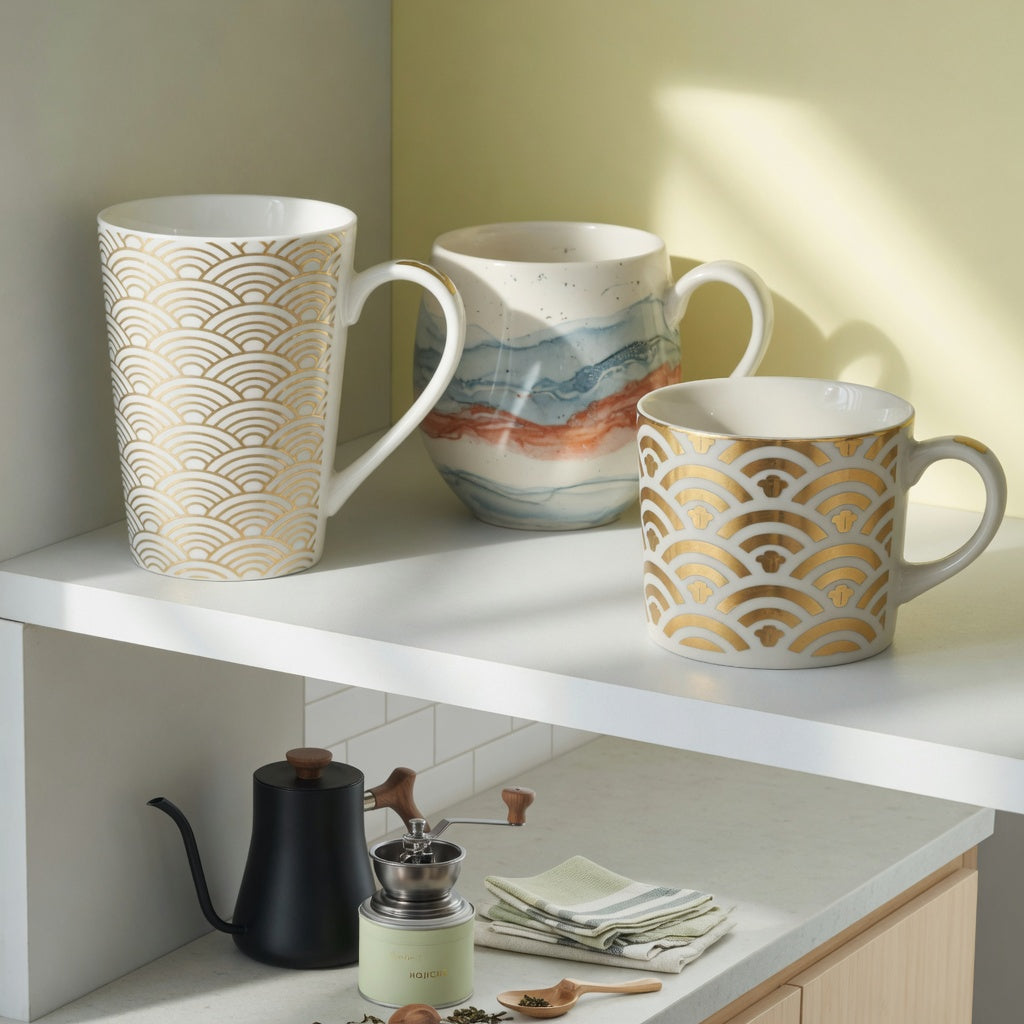
Large Decorative Coffee Mugs Home Coffee Station Product Shortlist Guide
Compare White Golden Waves Tall, The Flow, and Golden Waves Kio mugs by shelf clearance, visual role, daily handling, and care verification. Each scenario includes a practical reason to choose or s...
Read more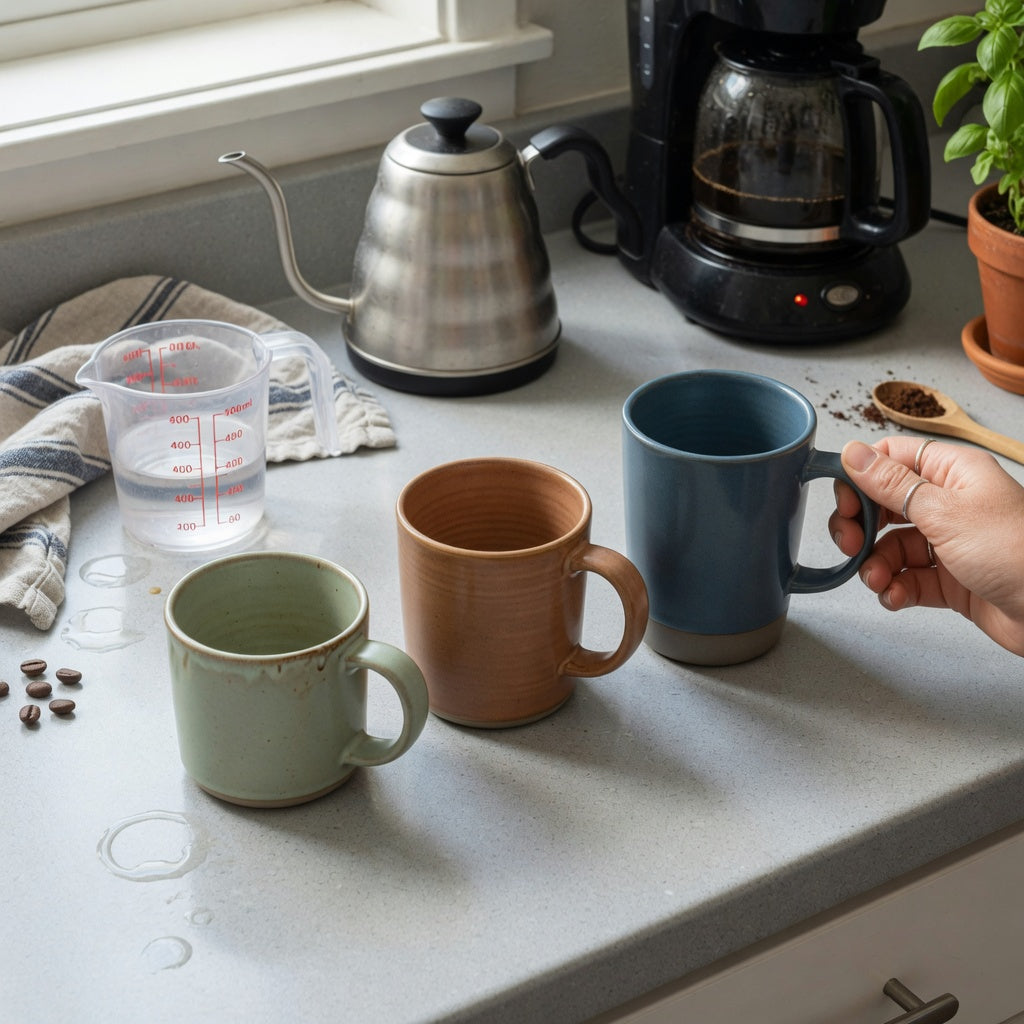
Wassail Mug Home Coffee Station Product Shortlist Guide: 3 Picks
Compare The Flow 400 ml, Morning and Night 440 ml, and The Rock 480 ml using two defensible filters: your usual serving size and handle comfort under load. Each scenario gives a clear reason to cho...
Read more
Leave a comment
This site is protected by hCaptcha and the hCaptcha Privacy Policy and Terms of Service apply.