



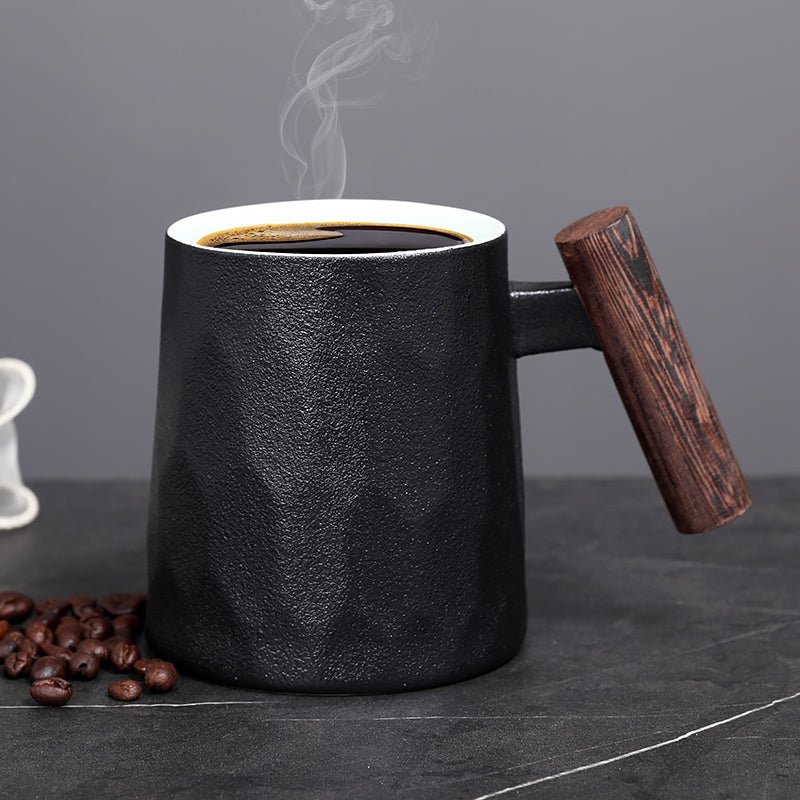
Best Size Latte Mug for Home: 400 vs 440 vs 480 ml Compared
Reading time: about 11 minutes
A customer emailed us last month with a photo of her morning latte: a wide 16 oz mug, one double shot underneath, and milk that had turned the whole drink the colour of weak tea. She blamed the beans. The beans were fine. The mug was doing the damage.
We sell drinkware, so weigh our bias accordingly. But the arithmetic is not ours to invent. A latte is espresso, steamed milk, and a thin cap of microfoam, and the cup fixes that ratio before you touch the grinder. In our experience, the best size latte mug for home is the one that matches the drink you already finish — and that is a job for a measuring jug, not for the word printed on the box.
What does a 400 ml mug do to a double shot that a 200 ml cup does not?
A typical double shot runs about 50–60 ml. Drop that into a 400 ml mug and roughly 340 ml of the finished drink is milk and foam. Drop the same shot into a 200 ml cup and the milk share halves. Same beans, same grinder, same hands — two different drinks.
That number is the one the label usually hides. The capacity on a product page is normally brim capacity, measured to the very top of the rim. Nobody drinks to the brim. Leave about a centimetre of headroom so the foam has somewhere to sit and so the mug survives the walk from kitchen to sofa. A 440 ml mug pours a real-world drink closer to 400 ml.
One habit worth breaking: shopping by the word “latte”. Mugs sold under that label run from 150 ml cups to 20 oz tankards, and the word tells you nothing about the pour.
What is the best size latte mug for home for an 8, 12, or 16 oz drink?
Start with the volume you finish, then check that your shot and your pitcher can build it. Our rule of thumb:
| Finished drink | Typical build | Cup to shop for | Who it suits |
|---|---|---|---|
| 150–180 ml (5–6 fl oz) | Single or double shot, small milk volume | 180–200 ml cup | Strong, coffee-forward drinks; art practice |
| 200–240 ml (7–8 fl oz) | Double shot, moderate milk | 240–270 ml cup | The café “small”; everyday espresso drinkers |
| 300–360 ml (10–12 fl oz) | Double shot, more milk | 340–400 ml mug | US café medium; the most common request we get |
| 400–480 ml (13.5–16 fl oz) | Double or triple shot | 440–500 ml mug | Large café lattes, slow morning drinkers |
| 500 ml+ over ice | Double shot, milk to the top | Tall glass or 550 ml+ vessel | Iced lattes, where ice eats a large share of the volume |
Two things follow. If your espresso stays fixed at a double shot, every step up adds milk rather than strength — a 480 ml latte built on one double shot tastes mild, and that is arithmetic, not snobbery. And if you already own a 12 oz mug you like, a 16 oz mug is not an upgrade. It is a different drink wearing the same name.
Which of our three latte-range mugs fits the drink you already make?
We keep the range deliberately narrow — 400, 440, and 480 ml — because three capacities cover most home setups without turning the decision into a spreadsheet. All three sit in the band where a double shot still reads as coffee, provided you respect the ratios above.
The Flow, listed at 400 ml
For the buyer who wants a large-feeling latte without committing to a pint of milk. At 400 ml, roughly 13.5 fl oz, it lands in the medium-to-large café band, and it is the mug we point to when a customer says their current cup makes the coffee taste thin. Two details to confirm on the listing before you commit: the rim width, if latte art matters to you, and the care line. Those shape daily use more than the capacity figure does. See The Flow coffee and tea mug.
Morning and Night, listed at 440 ml
For the routine that changes — espresso one morning, tea the next, a slightly bigger latte on a Sunday. At 440 ml, about 15 fl oz, it sits between a large café latte and a US “grande”, and the listed capacity leaves sensible headroom for a double shot plus stretched milk. It is the wrong pick if you want a small, intense 5 oz drink; a 440 ml vessel looks half empty by design in that case. Compare the Morning and Night mug.
The Rock, listed at 480 ml
For the genuinely big latte, or for one mug that handles hot and iced. At 480 ml, about 16 fl oz, it is the closest of the three to a large café serving. Be honest about the shot count: one double shot gets lost at that volume, so plan on a triple or accept a milkier cup. Look at The Rock mug.
If none of the three suits your hand, your shelf, or the way you grip a handle, the wider unique coffee mugs collection is where we keep the shapes that do not fit a tidy size ladder.
Does a wide, rounded cup actually help latte art at home?
Shape matters, though not quite the way the photos suggest. A wide, rounded interior gives the foam a shallow surface to spread across, so a pour that stacks into a blob in a tall narrow mug can fan out into a leaf. A deep, straight-sided mug pushes milk down before it reaches the surface, and the pattern collapses into the centre.
Three things we tell customers who are learning:
- Practise in a smaller cup. A 240–300 ml cup with a rounded bottom is realistic. A 480 ml mug is not, because beginners end up steaming far more milk than they can texture well.
- Judge the interior, not the exterior. Look at the inside curve in the listing photos. Sharp internal corners trap foam and make a clean pour harder.
- Match the pitcher to the cup. A pitcher far too large for a small volume gives you a shallow pool that spins instead of rolls, and the foam comes out flat and separated.
On the claim that wide cups cool a latte faster: a wider mouth does expose more surface, and plenty of drinkers report it. We have not measured it under controlled conditions, so we would not sell it as a specification. Buy width for pouring and for how the cup feels in your hand, then drink it while it is hot.
Which measurements decide whether a mug works on your counter, not just in your hand?
Three numbers cause most of the returns we see, and none of them appear on a typical size chart:
- Usable fill versus brim capacity. A 440 ml mug is not a 440 ml drink. Subtract the foam cap and the carrying margin — usually 30–50 ml in practice.
- Height under the espresso spout. Measure from the drip tray to the underside of the group head with the portafilter locked in. A mug that will not clear the spout means pulling the shot into a pitcher and transferring it, which knocks foam out of the milk.
- Handle finger room. Two fingers or three is a real difference once the mug is full and hot. Look for visible daylight between the handle and the body, not a handle pressed flat against the wall.
Two smaller checks worth making: base diameter against your drip tray, and empty weight. A heavy 480 ml mug plus 400 ml of liquid is a two-hand carry for some people. That is fine, as long as you know before ordering rather than after.
Is “lead-free” ceramic enough, and will it survive the dishwasher?
These are separate questions, and both deserve an answer from the listing rather than an assumption from a product photo.
On lead: the FDA’s chemical-contaminants tool lists an action level of 0.5 µg/ml leaching solution for lead in ceramicware cups and mugs, and 21 CFR 109.16 treats decorative ceramicware that appears suitable for food use as foodware unless it carries the required “not for food use” wording. In plain terms, glaze chemistry matters for anything you drink from daily. A “lead-free” claim should be backed by the seller; if a listing is silent, ask before you buy, not after.
On care: dishwasher and microwave suitability is product-specific, so read the care line on the exact page for each mug. Stoneware with metallic or hand-applied decoration often behaves differently from a plain glaze, and thermal shock — a hot mug into cool wash water — is a genuine failure mode. We do not publish a blanket policy across our range because finishes differ.
What milk pitcher size matches a 400–480 ml latte mug?
Rough rule: steam about double the milk you intend to pour, and keep the milk line below the base of the spout before you start. Too large a pitcher for a small volume and you get a shallow pool that spins rather than rolls; too small and you fill past the spout base, which makes a clean pour nearly impossible.
In practice, a 200 ml drink is comfortable in a small pitcher filled a third to half full. For a 400–480 ml drink, step up one pitcher size so you can steam enough milk without hitting the top. If you make both sizes regularly, two pitchers beat one compromise pitcher.
Which mug fits your morning: desk, art practice, or iced drinks?
- One hot latte every weekday, 10–12 oz: The Flow at 400 ml. Enough room for a double shot and properly stretched milk without tipping into milk-heavy territory. Check The Flow.
- Coffee one day, tea the next, or a bigger weekend drink: Morning and Night at 440 ml, the middle capacity in our range. See the 440 ml option.
- Big lattes, iced drinks, or a triple-shot habit: The Rock at 480 ml — and accept that a lone double shot will taste mild. View The Rock.
- Something outside those three shapes: browse the unique coffee mugs collection and match the listed capacity to your measured drink.
Before you add to cart, measure the mug you already own
Fill your current mug with water to the level you normally fill it with coffee. Pour that into a measuring jug and note the millilitres. That number — not the word on the box — is the size to shop for.
Then run this checklist against whichever mug you are considering:
- Listed capacity, minus 30–50 ml for foam and carrying margin.
- Height with your portafilter in place, measured on your own machine.
- Rim width and interior curve, if you pour art.
- Handle clearance for your fingers.
- Care line and any glaze or lead statement on the exact product page.
With those five answers you can choose between 400, 440, and 480 ml in about a minute — and you will know whether your next mug changes the drink or just changes the cup.
Frequently asked questions
Is a 12 oz mug big enough for a double-shot latte?
Yes. A 12 oz mug holds roughly 350 ml, which leaves about 290 ml for milk and foam after a double shot — a normal medium latte. For most home setups, 12 oz is the best size latte mug for home, and it is the answer we give most often.
Is a 16 oz latte mug too big for home?
Not too big, but it changes the drink. At 480 ml, one double shot gets diluted and you will notice the coffee tasting weaker than the same beans in a smaller cup. It suits slow drinkers, triple-shot habits, and iced lattes, where ice takes up a large share of the volume.
Does mug shape matter more than mug size for latte art?
Both matter, though they do different jobs. Shape decides whether the pour is easy — a wide, rounded interior lets foam spread into a pattern, while a tall, straight-sided mug bunches it into a blob. Size decides how much milk you steam, which is why beginners do better in a 240–300 ml cup than in a 480 ml mug.
Can I use the same mug for hot and iced lattes?
Sometimes, with a caveat. Ice takes up a large share of the volume, so a 480 ml mug that pours a full hot latte will hold a smaller iced drink once ice goes in. A tall glass shows the layers better; a mug works if you size up and are not chasing a layered look.
How do I check that a ceramic latte mug is lead-safe before buying?
Look for an explicit statement from the seller, not just the word “ceramic”. The FDA action level for lead leaching from cups and mugs is 0.5 µg/ml, and decorative ware that resembles foodware is treated as foodware under 21 CFR 109.16 unless labelled otherwise. If a listing says nothing, ask the brand directly — and read the care line while you are there. Our unique coffee mugs collection lists each mug individually so you can compare capacities before ordering.
More from our blog
Ready to pick your mug? Two ways to save on today's order:
Ordering 1–3 mugs? Get an extra 10% off your 1st order with code 10_OFF Apply 10% Off & Shop Wooden-Handle Mugs →
Gifting 4+ mugs? Buy 3, Get the 4th Free applies automatically at checkout (no code needed; offers do not stack) · Free standard shipping (Nov pre-Christmas delivery: 15–20 calendar days US) · Free replacement if chipped in transit.
Popular mug buying guides: Ceramic Tea Cups & Infuser Mugs · Ceramic Mugs with Lids Compared · Wooden-Handle Tea Infuser Mugs Compared · Christmas & Secret Santa Mugs 2026 · Espresso & Cortado Cups Guide · Cup & Saucer Gift Sets · All 25 Mugs Spec Table · Mug Size Guide · Shipping & Promo FAQ
FIRST ORDER 10% OFF (CODE: 10_OFF) · OR BUY 3, GET THE 4TH FREE


Read more

Latte Mug vs Coffee Mug Size: A Practical Comparison
A latte mug and a coffee mug are merchandising labels, not standards. Here's how listed ounces, rim width, and headspace change what actually fits — and how our 400, 440, and 480 ml mugs line up wi...
Read more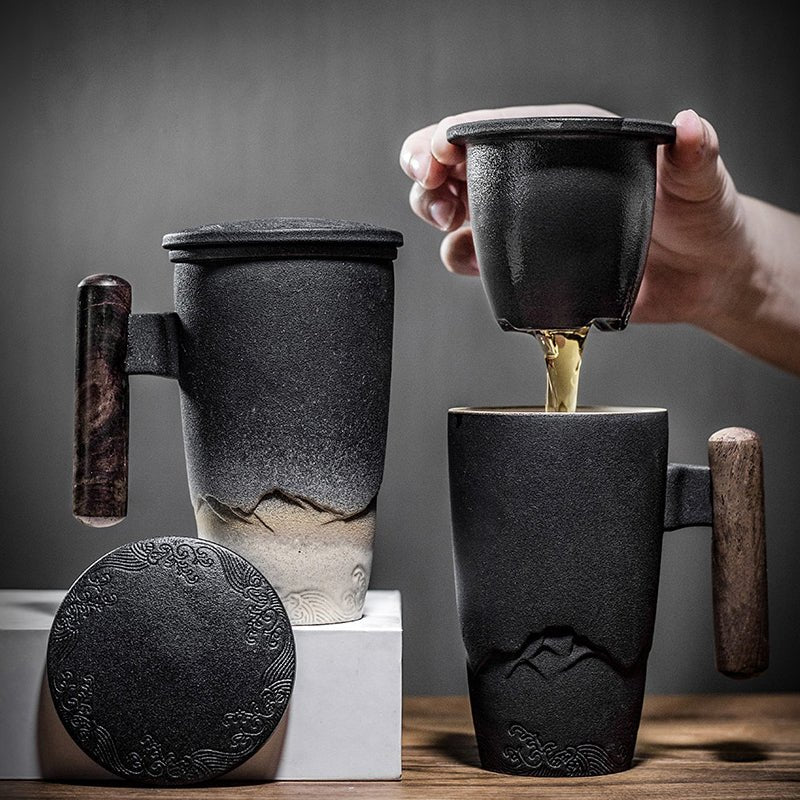
Coffee Pause Mug for Home Office: What Buyers Should Compare
A pause mug is half message, half drinkware. Here is how we walk buyers through capacity, decoration method, heat loss, handle clearance, and wash routines before they commit to a mug for a desk th...
Read more
Leave a comment
This site is protected by hCaptcha and the hCaptcha Privacy Policy and Terms of Service apply.