




Best Mug Size for Apartment Coffee: What to Compare
Reading time: about 13 minutes
A 16 oz mug looks generous on a product grid and then fails in a galley kitchen: the handle bumps the faucet, the rim taps the brewer spout, and the only free surface left is the top of the fridge. Orders we pack for apartments run into that sequence more often than a complaint about color. The best mug size for apartment coffee is the pour you can carry and the shape you can store, not the biggest ounce on the chart.
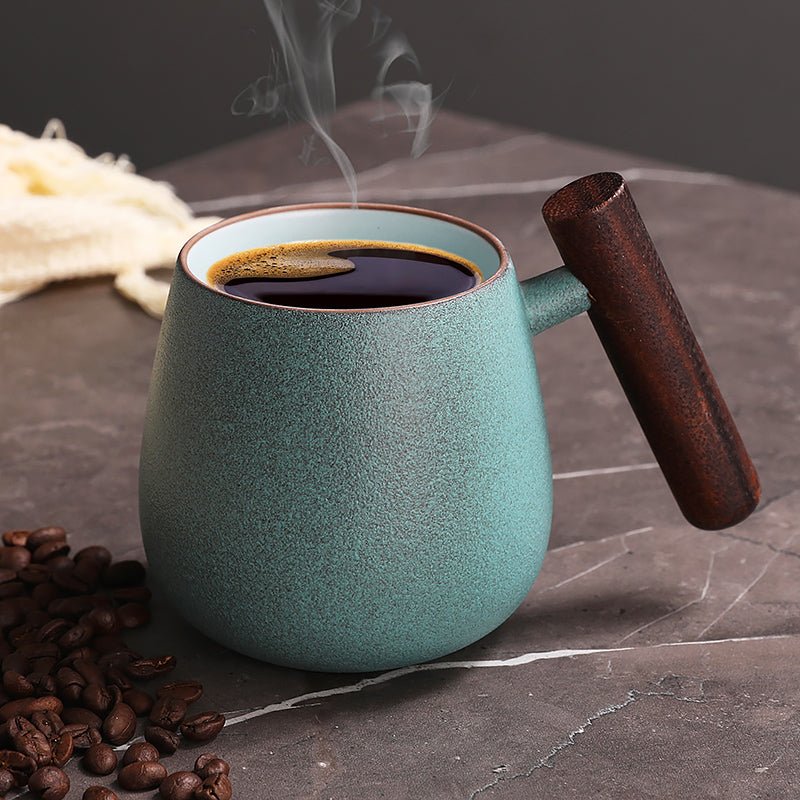
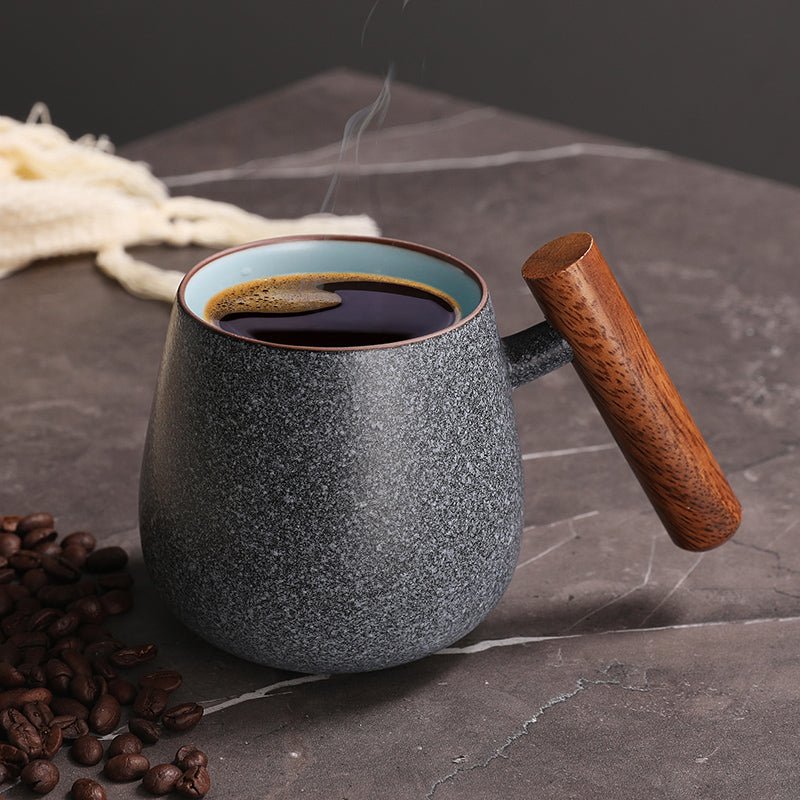
Shoppers who email our store usually stall between an everyday 8–12 oz mug and a 12 or 16 oz option. Match the drink first. Then check the vertical gap under the brewer. Then see whether the shape stacks. A round profile is often steadier on a narrow morning counter than a tall cup, but that only helps if the height printed on the listing clears your machine. Read capacity, height, and material on the current page for our round coffee and tea mug before you assume it matches a 12 oz habit. If you are still comparing silhouettes, open the unique coffee mugs collection and judge each one against the drink you make on a Tuesday, not against the photo that looks largest.
What is the best mug size for apartment coffee when the counter is already full?
Start with the drink you make before work, not a café order you repeat twice a year.
- Short black coffee or one espresso-based drink. A mug around 8 oz is easier to finish while it still tastes like the brew you intended, and it steals less shelf. It is a poor match for a full drip pour plus cream.
- Daily drip with a modest splash of milk. Buyers we hear from often land around 11–12 oz, as long as they leave headspace. That range gets tight once foam or a heavy ice load shows up.
- Lattes, iced coffee, or a long pour you nurse for an hour. A 15–16 oz mug gives mixing room. Skip it as the default when the upper cabinet is low, the brewer sits in a short gap, or you will not add more coffee to match the extra water.
We do not treat one ounce as the answer for every rental kitchen. A 16 oz mug that has to live on the counter because it will not fit the shelf has already lost the apartment test. One daily driver that stacks beats a set of six that turns the counter into overflow storage.
A measuring cup, a coffee-maker mark, and a drinking mug are three different pours
This mismatch causes more routine-fit complaints than glaze color ever does. Three cups show up before breakfast, and they do not agree.
- A U.S. measuring cup. In household measure, one cup is 8 fluid ounces. NIST’s household table puts that cup near 237 milliliters. Its kitchen equivalencies use 240 mL for 1 cup and about 30 mL for 1 fluid ounce. Use those figures when you scale a recipe or read a caffeine note tied to fluid ounces.
- A coffee-maker cup mark. That mark is a machine serving size, not a measuring cup and not your mug. Brands do not all use the same mark. Do not read an 8-cup carafe as 64 fl oz of coffee you drink, and do not assume one mark fills a 12 oz mug.
- A drinking mug. The printed number is usually brim capacity, often somewhere near 8, 12, or 16 fl oz. Brim-full is not how you carry coffee from the brewer to the table.
Brim capacity is the ceiling. The pour you can carry without watching the rim is the size that matters.
If the machine and the mug disagree, trust a liquid measuring cup once. Brew your normal setting into the mug, then pour that coffee into the measure. You will see whether the setting you like is a comfortable pour or a rim-full mug. A sticky note inside the cabinet door saves the argument the next time a listing only shows a round number.
8 oz, 12 oz, or 16 oz for black coffee, milk, or ice
Labeled capacity is the ceiling. A comfortable pour sits lower. This is the split we use when someone is choosing between sizes for a small kitchen.
| What you actually drink | Range shoppers compare | Where it fails in an apartment |
|---|---|---|
| Black drip or an Americano finished in one sitting | About 8–12 oz | Around 8 oz overflows a generous pour-over; 16 oz invites a weak, oversized pour |
| Drip plus a splash of milk or cream | About 12 oz, sometimes 16 oz | A heavy cream pour in 12 oz sloshes if you fill to the logo line |
| Latte, cappuccino, or a thick foam cap | 12 oz at the low end, 16 oz if the milk ratio is high | A short mug under a low spout may not leave room to get a pitcher in |
| Iced coffee at home | About 15–16 oz | Ice plus coffee in 12 oz becomes a small drink; a tall 16 oz mug may miss the brewer gap or the top rack |
A 12 oz mug can take coffee plus a splash of milk if you stop about a finger below the rim. It is not the right cup for a milk-forward latte with a foam cap, or for ice that should still leave a real serving of coffee. That unused band is for stirring and for the walk from brewer to table. You are not meant to drink the full printed capacity.
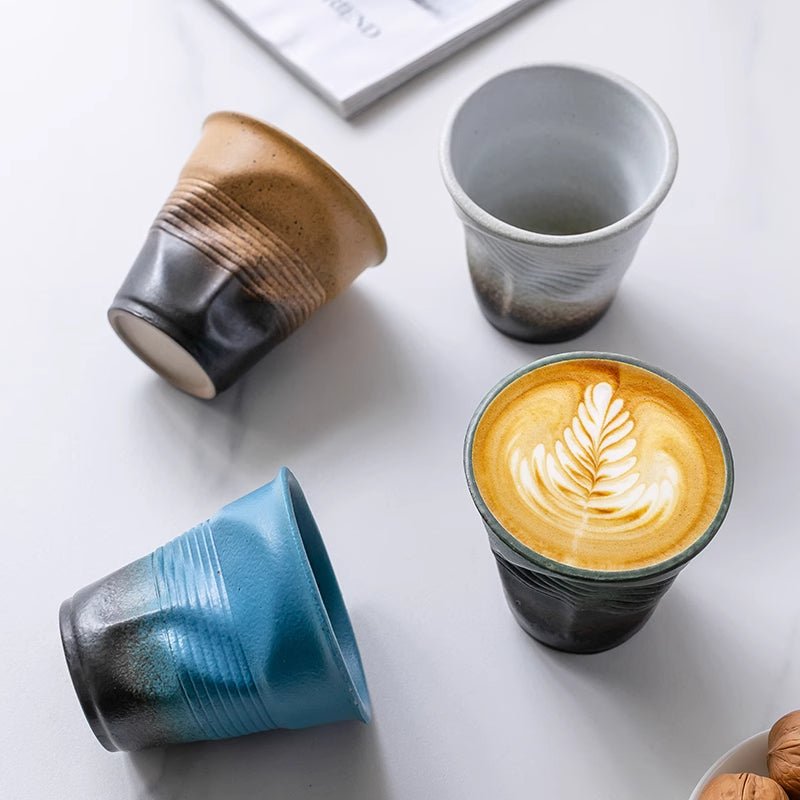
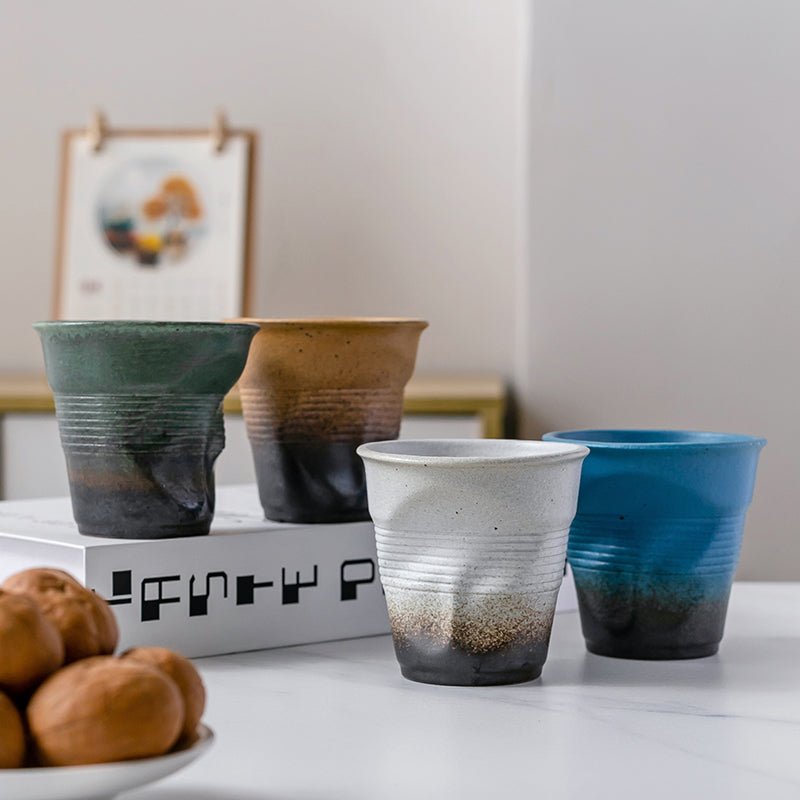
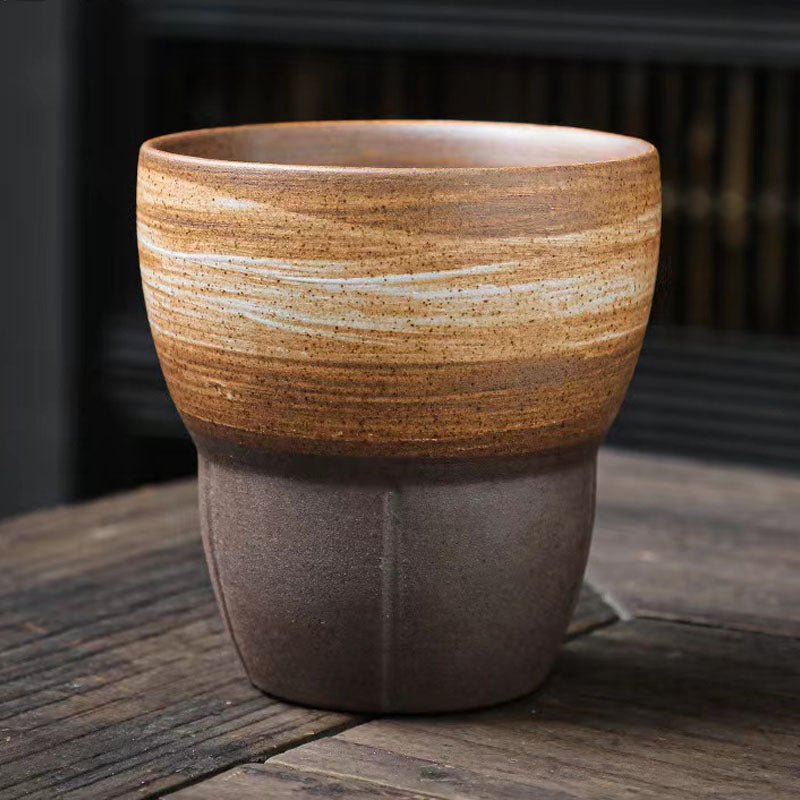
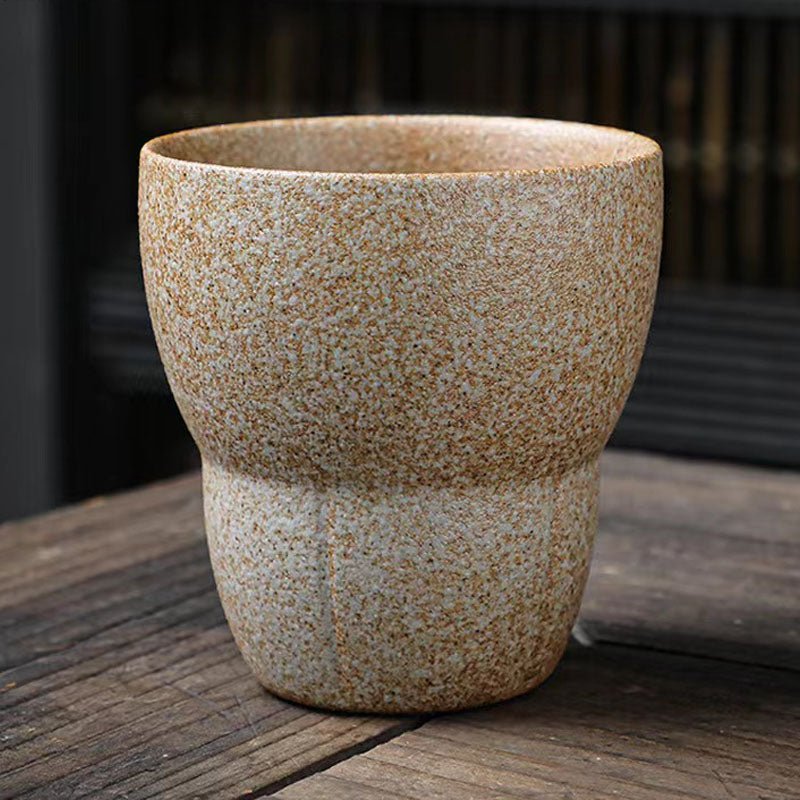
Shape changes how the same ounces behave beside a kettle. A wider round bowl can feel shorter and steadier on a narrow counter. A pleated wall can look compact in a photo and still refuse to nest, because the ridges catch on the mug underneath. Our pleated coffee and tea cup is a different profile from a plain round mug. Confirm brim capacity, height, and whether that shape stacks on the current listing. We will not guess those numbers from the product name. If stack height is missing from the page, treat nesting as unconfirmed and measure before you buy a pair.
Neither profile is a commute cup. They belong on a counter or a table. They will not seal in a bag, and they are the wrong tool when most of your coffee happens between the apartment and work. Keep a lidded mug for the trip and one open cup at home.
Brewer clearance and cabinet height decide the real fit
Measure before a tall photo wins. Apartment uppers often sit close to the counter, and a single-serve machine with the drip tray in uses the gap a mug needs.
- Set the mug on the drip tray where you actually brew and look for a small gap under the spout. If the machine lets you remove the tray, measure again. A fit that only works with the tray out means a wet counter every morning.
- Include any handle that rises above the rim. That peak, not the rim, is what strikes the cabinet or the brew head.
- Load the mug on the top dishwasher rack in the spot you would really use. A deep bowl can block the spray arm even when the ounce number looks modest. If the listing does not say the piece is dishwasher-safe, plan on hand-washing.
- Measure the clear height inside the mug cabinet, then the height of two stacked mugs plus a little slack so they do not scrape the shelf. Handles that flare also steal width between plates.
Shorter shapes that stack win when the shelf already holds plates, a rice-cooker lid, and the pan you use on Sundays. A decorative mug is a weak daily driver if it cannot stack and has to occupy the counter. Renters do better with storage that leaves no new holes: an over-cabinet hook, an adhesive hook tested on a hidden spot first, or a riser inside a cabinet you already own. Not every handle is hook-safe. Check the opening shown on the listing, and do not hang a cup with a crack at the handle join.
In our experience, a studio counter has room for a kettle, a brewer, and the mug that is actually in use. Everything else should live behind a door. If you are torn between a round everyday shape and something more sculpted, buy the weekday cup first. The guest cup can wait until that one has a shelf.
Headspace, dose, and caffeine when the mug gets bigger
A larger vessel with the same coffee dose is how a 16 oz mug earns a watery reputation. A pod or a scoop dialed for a smaller cup does not cover extra water. Move from a comfortable 12 oz pour to 16 oz and, if you want the same strength, increase the coffee with the water. If the dose is fixed, the largest setting tastes thinner. That is a brewing limit, not a defect in the mug. Confirm the material on the product page before you assume a piece behaves like everyday stoneware or porcelain. Those materials do not share weight or care instructions, and a product name alone does not tell you which one you are holding.
Pour-over follows the same rule. Use the water you actually brew. If that pour is about 300 milliliters, NIST’s kitchen figure of about 30 mL per fluid ounce puts it near 10 fl oz before the dripper finishes emptying. The last drips can push a 12 oz mug to the rim. If your recipe lands there, choose a larger mug or brew a little less. Printed capacity is not a fill line.
Caffeine tracks how much coffee you extract and how much you drink. It also moves with the bean and the method. For most adults, FDA consumer guidance describes 400 milligrams of caffeine a day—about two to three 12 fl oz cups of coffee—as an amount not generally associated with negative effects. That update lists regular brewed, non-specialty coffee at 113 to 247 milligrams in an 8 fl oz cup, and decaf at typically 2 to 15 milligrams for the same 8 fl oz size. The figure still depends on the product and the container. An older USDA Agricultural Research Service consumer table, Home and Garden Bulletin 72, listed regular brewed coffee at 103 milligrams per 6 fl oz and regular instant coffee at 57 milligrams per 6 fl oz. Treat that table as a historical consumer reference, not a lab reading for the bag on your shelf.
A bigger mug adds caffeine only when you brew and drink more coffee, not when you dilute one dose. Two large cups can reach the FDA daily illustration sooner than two short ones. If you already watch caffeine, the smaller mug is the more careful default. This is general context from published ranges, not personal medical advice.
We do not claim a small mug keeps coffee hotter. Advice on heat conflicts, and our team has not run a controlled temperature test on these cups. Wall thickness, a short preheat with hot water, a loose cover, and a cold counter all change the next sip. A large black coffee left sitting for twenty minutes cools no matter what the ounce label says. If heat is the complaint, preheat the mug and pour what you will finish soon. Size alone will not fix it.
How many daily mugs belong in a two-person apartment kitchen?
Two people do not need a dozen matched cups. In our experience, two mugs per person plus one guest spare stays manageable. Past that, cups climb onto the fridge and the counter becomes a second cabinet.
Keep weekday mugs within reach. Store the rest, or do not buy them. Follow the care line on each listing. Use the top dishwasher rack only when that page says the piece can take it, and hand-wash when it does not. Pieces shown in one collection do not automatically share a care note. Skip thermal shock: do not set a chilled mug on a hot burner or pour boiling water into a cup that just came in from a cold hallway. Rim chips and cracks where the handle joins the body are what we see when mugs are packed so tightly they knock in a shallow cabinet. A chipped rim catches the cup above it. Retire that mug from the stack.
On an open shelf, usable capacity still beats décor. A striking 16 oz cup that blocks the dinner plates is not the best mug size for apartment coffee. A shorter cup you will refill once is often the better buy.
Frequently asked questions
Is 12 oz or 16 oz the best mug size for apartment coffee?
For black coffee or drip with a splash of milk, 12 oz is usually the more practical apartment size, as long as you stop short of the rim. Step toward about 16 oz when you regularly add a lot of milk, foam, or ice, and only after the mug clears the brewer and the shelf. If the taller cup has to live on the counter, it is not the better fit.
Is a 12 oz mug enough if I add milk, cream, or foam?
A splash of milk fits if you leave room to stir and to carry the cup. A milk-heavy latte or a thick cap of foam usually needs more volume, and many people move toward 16 oz for that drink. Brew a smaller coffee portion so the dairy fits, instead of topping off a mug that is already full.
Why doesn’t my coffee maker’s cup mark match the ounces on my mug?
They measure different things. A U.S. measuring cup is 8 fl oz, about 237 mL on NIST’s household table and about 240 mL on its kitchen equivalencies. A machine’s cup mark is a brand serving size, while a mug’s ounce rating is usually brim capacity. Brew once and pour it into a liquid measuring cup if the two will not line up.
How do I know a mug will fit under a single-serve or espresso machine?
Measure the open height from the drip tray to the spout, then compare it with the mug’s full height, including any handle that rises above the rim. Repeat with the tray removed only if you are willing to brew that way every day. Confirm the listed height on the product page. Machines differ, so we do not publish one clearance number that covers every apartment setup.
Will a bigger mug make my coffee weaker or more caffeinated?
It tastes weaker if you add water and keep the same coffee dose. Caffeine goes up only when you brew and drink more coffee. For most adults, FDA guidance cites about 400 mg a day—roughly two to three 12 fl oz cups—as a level not generally associated with negative effects, and it lists a wide 113–247 mg range in an 8 fl oz cup of regular brewed coffee. Your beans and brew method can sit outside any single figure.
Five checks before another mug hits the cabinet
Run this on the listing and in the kitchen, in this order:
- Name the drink: black, a splash of milk, latte or foam, or iced.
- Pick the range—about 8 oz, 11–12 oz, or 15–16 oz—and confirm the printed capacity on the current product page rather than guessing from the photo.
- Measure spout clearance with the drip tray in, then cabinet height against the mug plus a stack partner.
- Leave headspace. If your coffee dose is fixed, do not expect a larger mug to taste the same.
- Decide where it lives. If it cannot stack, or the handle is a poor fit for a renter-friendly hook, buy one daily driver, not a set of six.
When those checks point to a round everyday cup, open the round mug for coffee and tea and verify height and ounces there. When you are still choosing a silhouette, use the unique coffee mugs and keep Tuesday’s drink as the filter.
More from our blog
Shop Popular In-Stock Mugs — Extra 10% Off 1st Order (10_OFF) + Free Shipping
 Pleated Ceramic Coffee Cup, Crumpled Paper Cup Style, 200 ml
Default color: Green
 Christmas Tree Coffee Mug with Lid and Spoon, 460 ml
Default color: Red
 Handbag Shaped Coffee Mug with Saucer and Spoon, 310 ml
Default color: Pink
 Elk & Moon Deer Coffee Mug with Tea Infuser & Lid, 420 ml
Default color: Dark Blue
Browse by budget & style: Cute & Gift Cups (10% Off Applied) · Wooden-Handle Bestsellers · Large 14–15.5 oz Mugs · Holiday Gift Mugs · 8–9 oz & Espresso Cups
Popular mug buying guides: 2026 Mug Gift Ideas · 4-Piece Mug & Espresso Cup Sets · 8 oz & 9 oz Mugs · Cute & Aesthetic Mugs · Ceramic Tea Cups & Infuser Mugs · Ceramic Mugs with Lids Compared · Wooden-Handle Tea Infuser Mugs Compared · Christmas & Secret Santa Mugs 2026 · Espresso & Cortado Cups Guide · Cup & Saucer Gift Sets · All 25 Mugs Spec Table · Mug Size Guide · Shipping & Promo FAQ
1ST ORDER: EXTRA 10% OFF (CODE: 10_OFF) · OR BUY 3, GET 1 FREE




















Read more

Mountain glaze vs diamond texture matcha set: which kit?
Our guide compares the mountain glaze vs diamond texture matcha set by configuration, color scope, spoon material, and where the utensil rest is listed. The Mountain rest is only in the eight-piece...
Read more
Morning Coffee Mug for the Counter: Fit, Pour, Care
A morning coffee mug for the counter has to clear the cabinet and the brewer, match the pour you actually finish, and show real care and food-contact wording. We walk through the checks before that...
Read more
Leave a comment
This site is protected by hCaptcha and the hCaptcha Privacy Policy and Terms of Service apply.