
Best Ceramic Mugs for Birthday Presents: A Buyer's Checklist
Reading time: about 10 minutes
A birthday mug can look perfect in tissue paper and still be pushed behind the office cups by Friday. The best ceramic mugs for birthday presents avoid that fate by matching four ordinary details: the recipient's usual pour, the way they grip a full cup, the appliance routine in their kitchen, and the style they would choose without an occasion attached.
We sell and handle design-led mugs, and our most useful checks happen away from staged photos. We look at knuckle clearance around the handle, inspect the rim and interior glaze, add water to judge the balance, and read the current care instructions. A distinctive shape gets the gift opened. Daily comfort determines whether it returns to the kitchen counter.
The best ceramic mugs for birthday presents by drinking habit
There is no single mug shape that fits every coffee or tea drinker. Start with the recipient's routine, including where the drink is made and how long it sits.
| Recipient's routine | Prioritize | Likely poor fit |
|---|---|---|
| Quick coffee at an office desk | Stable base, comfortable handle, manageable footprint | A very large or awkwardly balanced novelty mug |
| Latte, cocoa, or tea with milk | Enough headroom for milk, foam, or an infuser | A small cup filled nearly to the rim |
| Slow morning sipper | A shape that limits exposed surface area and can be prewarmed | A broad, shallow cup that lets heat escape quickly |
| Daily commuter | A sealed, insulated travel vessel | An open ceramic mug without a secure lid |
A ceramic birthday mug is a weak choice for someone who drinks only in the car, uses tiny espresso cups, or has difficulty lifting a heavy filled vessel. Buy for the habit they already have. For a recipient who uses open mugs but already owns plenty of plain ones, our collection of unique coffee mugs is a practical place to compare more distinctive designs.
11 oz or 15 oz: which capacity matches their usual pour?
Capacity numbers need context. An 11 oz mug and a 15 oz mug differ by four fluid ounces, but the larger choice is not automatically more generous. It also holds more liquid weight, occupies more shelf space, and may feel tiring in a small hand.
If you share a kitchen with the recipient, fill their current favorite mug to its normal level and transfer the water to a measuring cup. That gives you a more useful target than guessing from a product photo. Also check whether a listed capacity describes a brim-full measurement or a comfortable fill level below the rim.
- For black coffee or plain tea: match the amount they actually brew rather than leaving half the mug empty.
- For milk drinks: allow space for milk, foam, or stirring without carrying a cup filled to the lip.
- For pod or espresso machines: compare mug height with the clearance under the dispenser.
- For crowded cupboards: check total width including the handle, not only the body diameter.
Capacity also affects balance. As the mug gets larger, the handle position and grip become more noticeable. A 15 oz ceramic mug gift can suit someone who enjoys a long home coffee, but it is not the safest default for every recipient.
Handle, rim, and foot details that product photos can hide
We test handle comfort with water in the mug because an empty cup can disguise poor balance. A narrow handle may feel fine on the shelf, then press into one finger once the cup is full. Look for enough space between the handle and body to keep knuckles away from the hot sidewall, along with a handle cross-section that does not have a sharp inner edge.
The drinking rim deserves the same attention. A thin rim can feel precise and refined, while a thicker rim may feel more substantial. Neither is universally better. The problem is an uneven, chipped, or rough drinking edge. Inspect listing photos for exposed clay, glaze skips, and impact damage around the lip.
Three common ceramic surface issues are worth distinguishing:
- Crazing: a network of fine lines in the glaze. It is different from a crack through the whole mug, but it can discolor and makes the surface harder to keep looking clean.
- Pinholes: tiny openings in the glaze. A mark on the exterior may be cosmetic; defects on the food-contact surface deserve closer questioning.
- Rough foot rings: unglazed clay beneath the mug can collect grit or mark delicate tables. A coaster helps, but a gift buyer should still inspect the base finish.
Unusual silhouettes create personality, but they can sacrifice stackability, cupboard efficiency, or neutral grip positions. That trade-off is acceptable for someone who treats a mug as a display object. It is frustrating for a recipient who wants every cup to fit neatly in one cabinet row.
Porcelain, stoneware, and earthenware at the desk and sink
Porcelain, stoneware, and earthenware are all ceramic bodies, but the label can hint at weight and construction. It cannot guarantee durability, heat retention, or dishwasher performance by itself.
| Ceramic body | Typical gift appeal | Trade-off to check |
|---|---|---|
| Porcelain | Can be made with a thinner profile and refined rim | Thin edges need careful stacking and handling |
| Stoneware | Often feels substantial and suits visible glaze effects | A thick body may become heavy once filled |
| Earthenware | Can provide a rustic, craft-led appearance | The more porous body depends heavily on an intact food-contact glaze |
Do not select stoneware solely because a description implies it will keep coffee hot. Cooling also depends on wall thickness, opening width, fill volume, room temperature, and whether the mug was prewarmed. A thick, cold mug can initially draw heat from the drink. A quick warm-water rinse before pouring can help a slow sipper, but an open ceramic cup still will not perform like a sealed vacuum-insulated travel mug.
How can a buyer check glaze and food-contact safety?
A glossy surface is not proof that pottery is suitable for drinks. Lead can leach from ceramic glaze when pottery is not formulated and fired correctly. The FDA contaminant-level table gives an action level of 0.5 micrograms per milliliter of leaching solution for ceramic cups and mugs.
The FDA advises added caution with antiques, damaged pieces, pottery of crude appearance, and some traditional ware decorated heavily in bright red, orange, or yellow. Bright color alone does not prove that a modern mug is unsafe. It is a reason to verify intended food use and seller information rather than infer safety from appearance.
For an inherited or unknown piece, the FDA notes that consumer kits are available for testing a pottery food-contact surface for leachable lead. If the interior is chipped, badly crazed, or of uncertain origin, the more prudent gift decision is to keep it for display rather than serve coffee in it. A birthday present should not hand the recipient a research project.
Will the decoration survive their microwave and dishwasher routine?
Microwave-safe and dishwasher-safe are separate claims. Check both on the current product listing, and do not extend a care statement from one mug to another simply because the clay bodies look similar.
Decoration method matters. Underglaze color sits below a covering glaze, while on-glaze decoration is applied closer to the exposed surface. Sublimation printing uses a coated surface and is not the same construction as color protected beneath ceramic glaze. These distinctions can influence wear, but only the maker or seller can state the approved care routine for a specific mug.
Gold-colored or metallic-looking details need an extra check. A golden appearance does not prove that a design contains metal, but actual metallic luster should not go into a microwave. If the listing does not answer the question, treat microwave compatibility as unconfirmed.
- Read the care instructions for the exact design before ordering.
- Use a soft sponge if the exterior print or decorative finish is the reason for the gift.
- Avoid abrasive pads and powders on printed or lustred surfaces.
- Reduce thermal shock by avoiding a boiling pour into a mug that is extremely cold.
- Do not stack a rough foot ring directly against another mug's drinking rim.
Dishwasher convenience may matter more than visual novelty in a busy household. Someone who puts every cup through a heated cycle is unlikely to appreciate a delicate mug that requires careful hand-washing after each use.
Which CoffeifyMug style fits the recipient?
The product links below are style starting points, not a claim that every mug has the same capacity, ceramic body, or care instructions. Use the current listing to confirm dimensions, materials, appliance compatibility, and care before checkout.
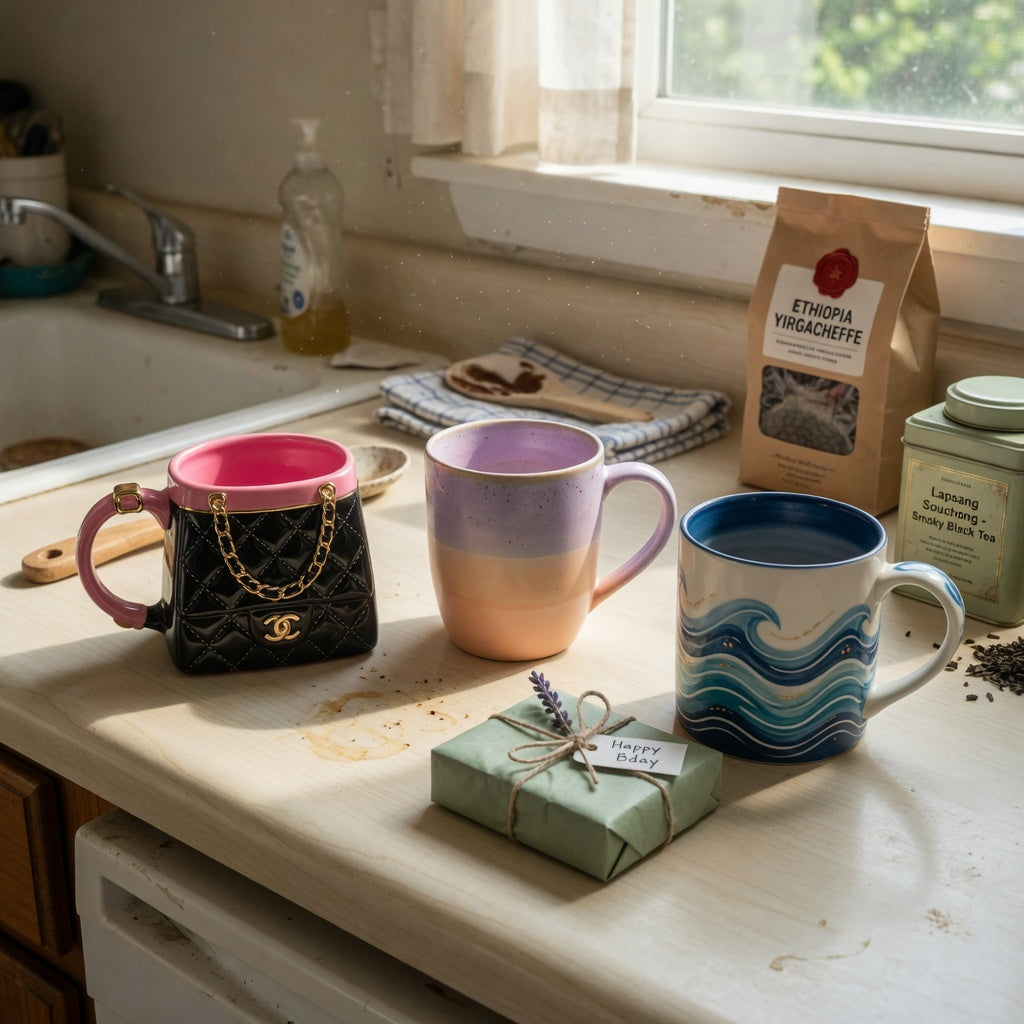
- For someone who likes fashion references and conversation pieces: compare the Handbag Coffee Tea Mug. The handbag theme connects the gift to a visible interest instead of relying on generic birthday wording. It is a weaker direction for a minimalist who values conventional shapes and easy stacking.
- For someone who chooses homeware by color: start with The Gradient Coffee Tea Mug. Review the current photos against colors already on the recipient's desk or kitchen shelf. A color-led design is less suitable if they expect a name, date, or personal photograph on the gift.
- For someone drawn to decorative wave styling: review the Golden Waves Kio Coffee Tea Mug. Confirm the current care details, particularly if the recipient reheats drinks in a microwave. The word golden in a product name does not establish whether the decoration contains metal.
If you cannot identify a clear style match, compare several shapes in the unique coffee mug collection and eliminate options that fail the recipient's practical requirements first. Style should decide between usable finalists, not excuse an uncomfortable handle or unsuitable care routine.
A seven-point check before wrapping the mug
A sealed bag of the recipient's usual coffee or a tea they already enjoy can make the present feel complete. Pack it beside the mug rather than placing loose food, a metal scoop, or an unwrapped spoon against the glaze. Hard accessories can chip the rim during transport, so wrap them separately.
- The normal drink fits with room to stir or add milk.
- The filled weight suits the recipient's grip.
- The handle leaves comfortable knuckle clearance.
- The rim and interior glaze appear smooth and intact.
- The dimensions fit their cupboard, desk, or coffee machine.
- The microwave and dishwasher guidance matches their routine.
- The design reflects their taste rather than only the birthday theme.
Frequently asked questions
How do I find the best ceramic mugs for birthday presents?
Start with the recipient's normal drink size, preferred grip, and cleaning habits. Confirm the food-contact surface is intact, then compare the handle, filled weight, dimensions, decoration, and current care instructions. Use style as the final filter among mugs that already fit those practical needs.
Is an 11 oz or 15 oz ceramic mug better for a birthday gift?
Neither capacity is automatically better. An 11 oz mug may suit a modest coffee or tea, while a 15 oz mug gives more room for larger pours and milk drinks but weighs more when full. Compare the recipient's current favorite cup and check whether the listed capacity is brim-full or a practical fill.
Are ceramic birthday mugs microwave and dishwasher safe?
Some are suitable for both appliances, but the seller must confirm those claims for the specific mug. Decoration can have different limits from the ceramic body, especially with applied prints or metallic luster. If care information is missing, do not assume compatibility from appearance.
Can lead leach from a ceramic coffee mug?
Lead can leach from glaze if ceramicware was not made and fired correctly. Use added caution with antiques, damaged interiors, crude unknown pottery, and certain traditional brightly decorated pieces identified by the FDA. Consumer surface-testing kits are available, but an uncertain or damaged mug is better kept out of drink service.
Are handmade ceramic mugs practical birthday presents?
They can be, especially for someone who values small variations in glaze, form, and handle work. Confirm capacity, food use, weight, and care because handmade pieces may not match the recipient's existing cups or appliance routine. If those trade-offs do not fit, compare other distinctive options in our unique coffee mugs and apply the seven checks above before ordering.
More from our blog
Read more
Unique Design Coffee Mugs For Gifts: Compare Before Buying
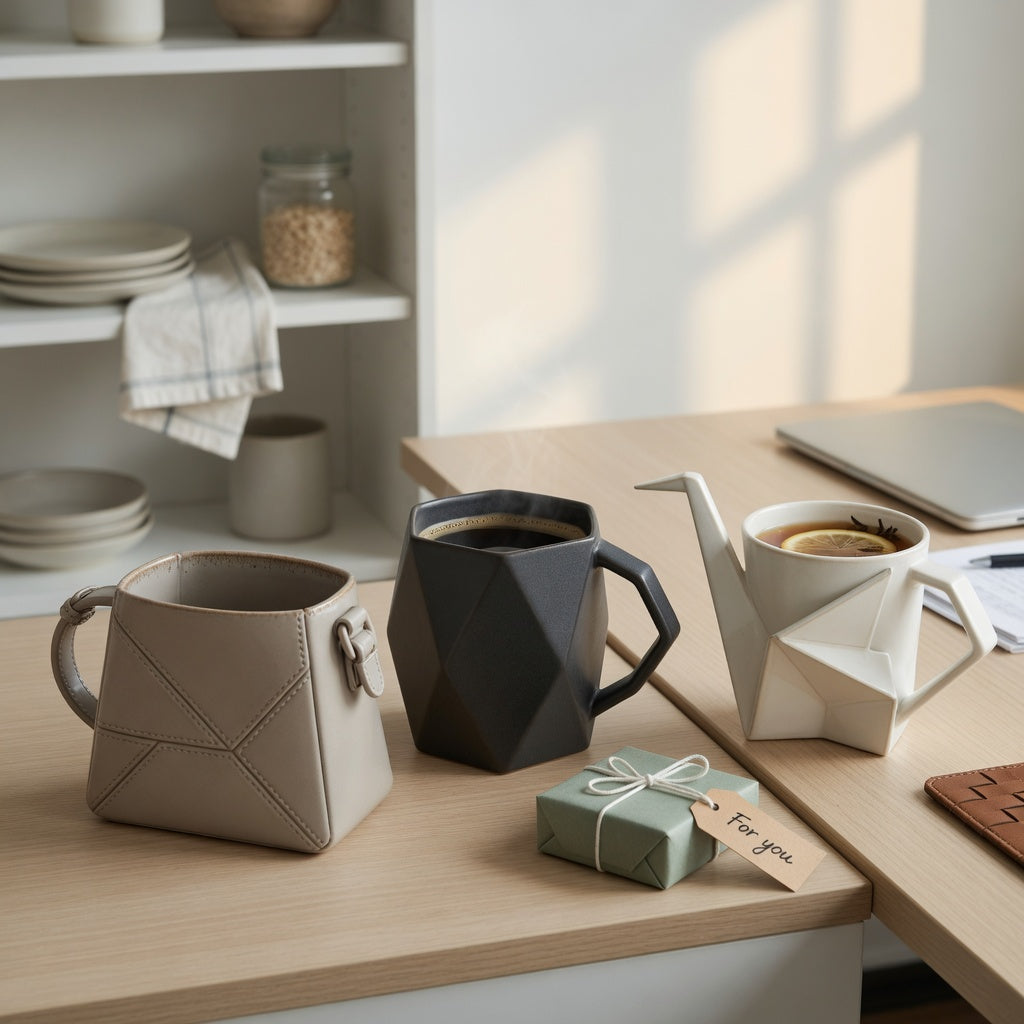
A distinctive mug only works as a gift if the recipient can hold, clean, store, and use it comfortably. Compare silhouette, rim, capacity, material, care, and recipient fit before choosing a Coffei...
Read more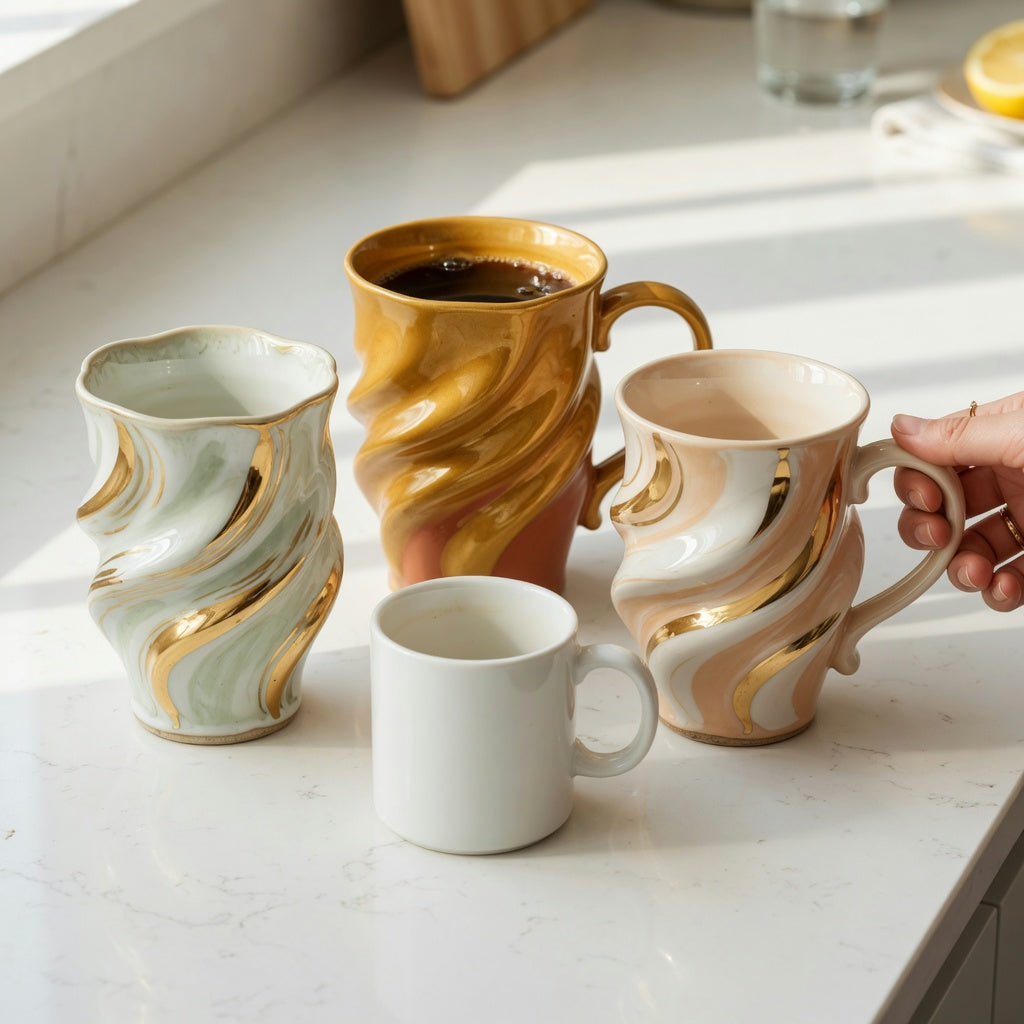
Unique Large Decorative Mugs: What to Compare Before Buying
Compare usable capacity, filled weight, handle clearance, rim comfort, food-use labeling, finish care, and cabinet fit before buying a statement mug. We also map current CoffeifyMug designs to spec...
Read more
Leave a comment
This site is protected by hCaptcha and the hCaptcha Privacy Policy and Terms of Service apply.