

Best Ceramic Mug for Home Office Pause: What Buyers Should Compare
Reading time: about 12 minutes
2:47 p.m. is not a glamorous hour in a home office. The morning sprint is done, the next call is twenty minutes out, and the mug beside the keyboard is either cold, half-full, or one careless elbow away from the laptop. That is the exact moment this category exists for. The best ceramic mug for home office pause is rarely the showiest one on the shelf — it is the one that makes a short, deliberate break easy to take and easy to clean up afterward.
We sell and handle ceramic drinkware every week, which means we process the returns and read the care emails. That changes how we compare a mug. Full-mug weight, handle clearance, foot-ring finish, glaze behavior, and whether a listing actually answers the safety questions matter more to us than a styled photo. Here is the comparison we would walk a friend through.
What makes the best ceramic mug for home office pause different from a travel mug?
A travel mug is engineered to survive a commute, a backpack, and a cup holder. A pause mug stays put. It sits on a desk, a coaster, or a notebook for ten to thirty minutes while you stretch, refill a water bottle, or stare out the window at the neighbor’s dog. Different brief entirely.
- Pause length. A genuine 10- to 20-minute break rewards an open mug you can sip from immediately. A long, distracted afternoon rewards a lid or an insulated body.
- Spill risk. Near a laptop and a paper stack, a lidded or insulated mug wins on pure risk. Open ceramic wins on feel and ritual, but only if the base is stable and you have a safe spot to set it down.
- Cleaning. A simple open ceramic mug is usually the easiest thing in the cupboard to wash. Lids, gaskets, and sliding closures add parts that trap coffee oils and turn sour over time.
- Desk presence. If the mug shows up on video calls, shape, glaze, and an unchipped rim matter. If it lives behind the monitor, heat retention and handle comfort matter more.
Buy the format for the break you actually take. If your “pause” is really a five-hour drip-feed of cooling coffee, an open ceramic mug is the wrong tool — go lidded or insulated and stop fighting it.
Which capacity, handle, and base shape survive a desk beside a keyboard?
Start with a baseline. FDA guidance on ceramic hollowware describes cups and mugs as small ceramic vessels that normally hold about 240 mL (8 fl oz), are usually made with a handle, and are used for hot drinks such as coffee or tea. That is a reference point, not a rule. Plenty of desk drinkers want room for cream, a slower sip, or fewer trips to the kitchen.
The details that decide whether a mug survives daily desk life:
- Usable capacity vs. listed capacity. A mug filled to the rim is not the same as a comfortable pour with cream in it. Verify ounces or milliliters on the listing instead of estimating from a photo — wide bodies read smaller on screen than they are in the hand.
- Handle opening. You want clearance for your knuckles, not just your fingertips. A two-finger handle is fine on a light mug and genuinely unpleasant on a heavy one, especially when you lift it one-handed with your other hand still on the mouse.
- Foot ring. Flip the mug over before you commit. A flat, smoothly finished foot ring sits steady and will not scratch a wooden desk; a rough or narrow one rocks and leaves marks.
- Full-mug weight. Empty weight tells you almost nothing. A mug that feels balanced on the shelf can feel like a small kettle when it is full and you are reaching across a keyboard.
- Base diameter vs. coaster. Measure your coaster, your wrist rest, and the gap between keyboard and monitor. A wide foot resists tipping but may not fit where you actually want to set the mug down.
- Lid fit, if you go lidded. Check whether the lid slows splashes and whether the gasket can be removed for washing. A lid you cannot clean properly is worse than no lid.
Bigger is not better by default. A large mug suits a long work block, but it is a poor match for small hands, a cramped desk, or anyone who tends to knock things over while reaching for a mouse.
Do you want one focus mug and one on-camera mug?
This comes up more than you would expect. Remote workers often end up with two mugs doing two jobs: a practical one that sits beside the keyboard all day and gets washed constantly, and a better-looking one that appears on video calls. Fighting that split is wasted energy. Plan for it instead.
In our experience the practical mug takes the abuse — metal spoons, rushed rinses, the dishwasher — while the on-camera mug gets hand-washed and kept away from the sink edge. If you are buying only one, decide which job matters more and accept the compromise. If you are buying two, pick shapes that look intentional next to each other rather than two near-identical mugs competing for the same slot.
Which mug in our store fits an open-ceramic desk pause?
If the pause is meant to feel like a deliberate switch out of work mode, start with two silhouettes and read the listings side by side.
The Landscape Tall Coffee & Tea Mug is the page to open if you want a taller, more upright profile on the desk — the kind of shape that sits behind a keyboard rather than in front of it. Check the current listing for exact capacity, height, handle opening, and care instructions before you commit, because a tall body changes how a full mug balances in the hand.
The Round Coffee & Tea Mug is the alternative if you prefer to cup the body with both hands during a pause, or if your desk has more width than depth. Again, verify dimensions, capacity, and care on the product page rather than inferring anything from the name or the photograph.
Neither shape is automatically better. The right one is the mug you can lift safely with one hand while the other stays on the mouse. If you are still narrowing silhouettes, browse the unique coffee mugs collection and shortlist two or three, then compare the exact listings rather than the category labels.
Single-wall ceramic, lidded ceramic, or vacuum — which fits a short pause?
There is no single winner here. The right format depends on whether you are optimizing for ritual, heat, or spill control.
| Type | What it does well | Trade-off to accept | Best for |
|---|---|---|---|
| Open single-wall ceramic | Feels good in the hand, easy to sip, easy to wash, shows the glaze | Cools from the open surface; no splash protection | A real 10- to 20-minute break away from the keyboard |
| Lidded ceramic | Slows heat loss and reduces splashes while still feeling like ceramic | Extra parts to clean; the lid may not be fully leakproof | A desk where the mug sits close to papers or electronics |
| Ceramic-lined vacuum | Holds heat longer and is easier to move around | Mutes aroma, heavier, less of an open-cup ritual | Long meetings or a pause that regularly gets interrupted |
| Temperature-control mug | Maintains a chosen drinking temperature | Charging, weight, cost, and more parts to maintain | Slow sippers who dislike reheating coffee |
We do not publish heat-retention minutes for ceramic mugs, because the number depends on room temperature, fill level, starting liquid temperature, and lid fit. A manufacturer’s “keeps coffee hot” line is not a measured desk test. If heat retention is the priority, choose a lidded or insulated format; if the pause itself is the point, open ceramic is easier to enjoy.
How do you read lead-free, lead-safe, and microwave-safe claims without guessing?
This is where desk-mug shopping gets serious. “Microwave-safe” describes whether the mug tolerates microwave heating. It says nothing about whether the glaze releases lead. Treat them as separate questions and read the listing twice.
The FDA’s guidance for ceramic hollowware sets an action level of 0.5 micrograms of lead per milliliter of leaching solution for cups and mugs, applied to any one of six units tested by the methods named in the guide. The same document notes that lead extractable from ceramic food-contact surfaces can cause a range of adverse health effects with continued food use. See FDA CPG Sec. 545.450.
Labels deserve scrutiny. FDA labeling guidance states that ceramicware containing extractable lead under the CPG test method should not be labeled “Lead Free,” and that using the term when extractable lead is present may be false or misleading. California’s health department draws a plainer line: lead-free tableware contains no lead, while lead-safe tableware may contain some lead as long as the amount that can enter food stays within Proposition 65 standards — and tableware above those levels may still be sold only with a written warning.
Four questions worth sending to any seller before checkout:
- Is there a food-contact test report for this exact glaze and body, not a factory certificate for a different line?
- Does the listing use “lead-free” accurately, or does it say “lead-safe” or “meets FDA requirements”?
- Are metallic rims, decals, or printed designs on the food-contact surface, or only on the outside?
- Does the microwave claim cover the whole mug — body, handle, trim, and lid?
“Food-grade ceramic” is not the same as a test statement for the exact product in the box. If a listing cannot answer those questions, ask before you buy rather than assuming.
Why do metal spoons leave gray marks, and how should you care for a desk mug?
Gray lines are one of the most common complaints we hear about ceramic mugs used with metal spoons. In our experience most of those marks are metal transfer sitting on the glaze rather than damage to the body, and they show up fastest on matte and semi-matte surfaces. A paste of baking soda and water lifts transfer from many glazes — test on the underside first. If the line catches a fingernail, stop treating it as a stain: that is a chip or a crack, and the mug should come out of rotation.
While you are inspecting, look for crazing — the fine web of cracks in a glaze, often visible on older or thermally abused mugs. Crazed glaze is a reason to retire a mug, not a reason to scrub harder.
Daily care should be boring and consistent:
- Wash after creamy drinks. Milk and cream leave a film that turns taste stale. A quick hand wash beats an overnight soak.
- Respect thermal shock. Do not pour boiling water into a mug that has been sitting in a cold car or a chilly kitchen. Warm it gradually in winter.
- Check the trim before microwaving. Metallic rims and real metal accents do not belong in the microwave even when the ceramic body is microwave-safe.
- Be careful with prints. Decals and printed designs can fade or craze in a hot dishwasher cycle, so follow the care instructions on that exact listing.
- Clean lid gaskets. Silicone seals trap coffee oils. Remove and wash them if the lid is designed for it.
If your pause usually involves loose tea or an infuser, our Best Ceramic Mug for Home Coffee Break comparison is the better read, because infusers and wider rims change how a mug handles.
What should you verify on the product page before checkout?
Use the same checklist whether you buy from us or anywhere else:
- Exact capacity in ounces or milliliters, not a vague “large” label.
- Full-mug weight if listed — or empty weight plus capacity, so you can estimate it.
- Handle opening and whether it fits a gloved hand or only two fingers.
- Base diameter and whether it clears your coaster and keyboard gap.
- Microwave and dishwasher instructions for the mug, the lid, and any trim.
- Food-contact safety statement for the exact glaze and body.
- Lid materials and whether the gasket is removable.
- Return policy in case the mug feels heavier or smaller than expected.
For a desk-specific comparison of height and handle clearance, our Tall Ceramic Mug for Home Office Desk guide goes deeper. If you are building a coffee station rather than buying one mug, the home office coffee station pair article helps you avoid buying two mugs that compete for the same job.
Frequently asked questions
Is a microwave-safe ceramic mug automatically lead-free?
No. Microwave-safe describes whether the mug is built to tolerate microwave heating; it does not prove the glaze is free of leachable lead. Look for a food-contact test statement for that exact product, and read “lead-free” versus “lead-safe” wording carefully, because the two are not interchangeable.
What size ceramic mug is best for a home-office pause?
The best ceramic mug for home office pause is the size you can lift and finish comfortably within one short break. The FDA’s mug definition uses about 240 mL (8 fl oz) as a normal cup size, so use that as a baseline and size up only if you want room for cream or fewer refills. Verify the exact capacity on the product page.
Can I microwave a ceramic mug with a lid or printed design?
Only if the exact listing says the whole mug is microwave-safe, lid included. Remove metallic trim, metal infusers, and any lid with metal parts first. Printed designs and decals vary by manufacturer, so follow the care instructions printed on that specific listing rather than a general rule.
Why does my ceramic mug get gray lines from a spoon?
Metal spoons can leave transfer marks on some glazes, especially matte and semi-matte surfaces. Try a gentle baking-soda paste on a hidden spot first. If the mark catches your fingernail, treat it as a chip or crack rather than a stain and stop using the mug.
Do I need a lid for a 10-minute coffee pause?
Not always. An open ceramic mug is easier to sip, easier to clean, and part of the ritual for many desk workers. A lid helps more when your desk is crowded, your pause tends to stretch longer than planned, or you are prone to bumping the mug near a keyboard.
Shortlist two mugs before you decide: one open ceramic shape for the pause you actually take, and one lidded or insulated option for the days your break gets interrupted. Then open the unique coffee mugs collection, compare exact capacity, handle clearance, care instructions, and food-contact statements side by side, and buy the mug that fits your desk — not the one that only looks good in a photo.
Read more

Elk Coffee Mug vs Tea Cup: What Actually Changes at Checkout
The label says mug; the shape in your hand may say tea cup. Here's how wall profile, stated ounces, heat loss, and dishwasher care really decide an elk coffee mug vs tea cup purchase — and when nei...
Read more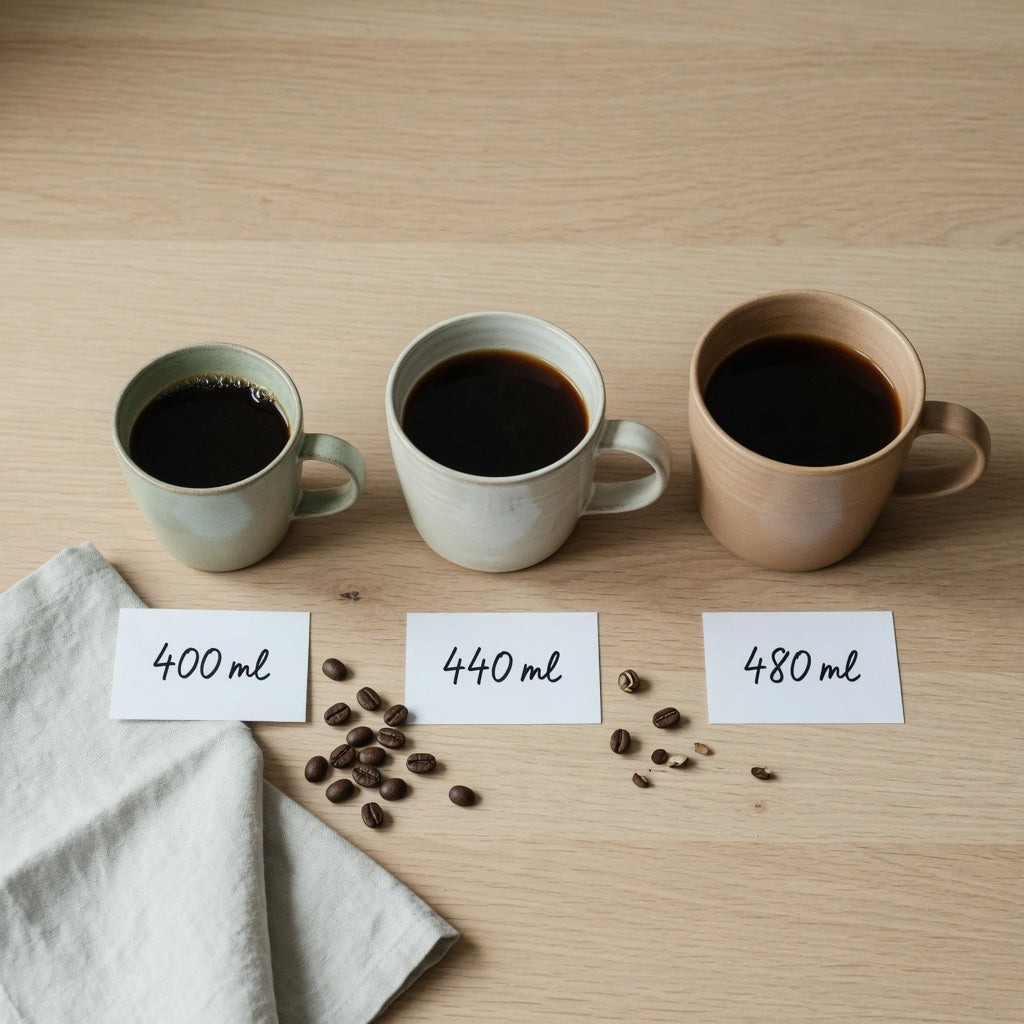
15 oz Ceramic Coffee Mugs: 400 ml vs 440 ml vs 480 ml
Fifteen ounces works out to about 444 ml, which is why our 440 ml mug is the closest thing we stock to a 15 oz ceramic coffee mug. Here is how 400 ml, 440 ml, and 480 ml differ in usable pour, hand...
Read more
Leave a comment
This site is protected by hCaptcha and the hCaptcha Privacy Policy and Terms of Service apply.