
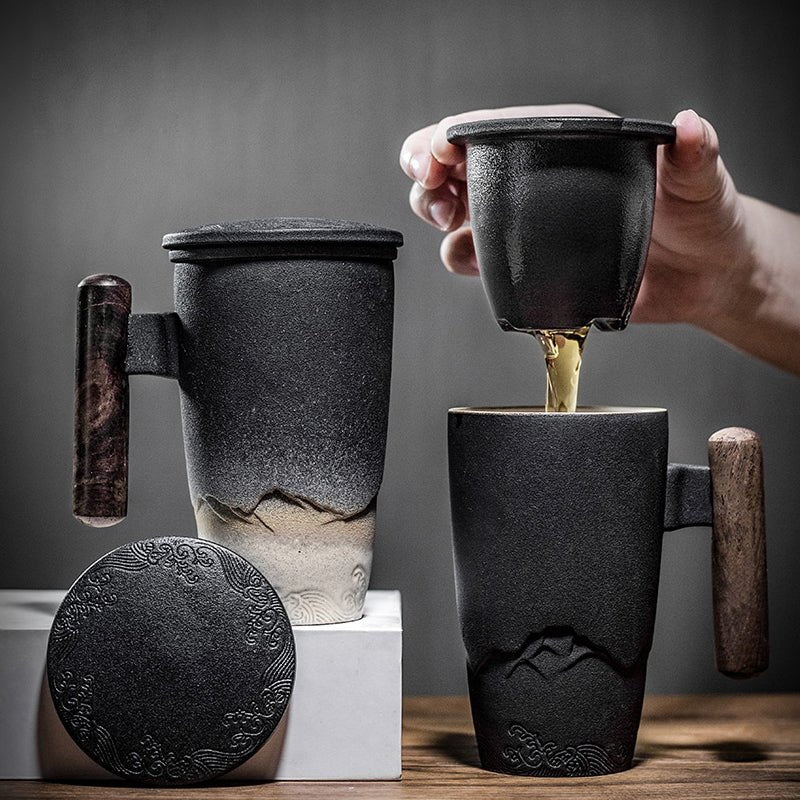
Americano Coffee Cup Shared Household Product Shortlist Guide: 3 Sizes
Reading time: about 10 minutes
A shared kitchen exposes the wrong cup quickly: one person finishes a smaller pour before breakfast, while another leaves the counter with a fuller cup and wants breathing room below the rim. Buying identical mugs can turn that difference into a daily compromise. This americano coffee cup shared household product shortlist guide treats each housemate as a separate buyer and compares three individual options using the confirmed variables in this shortlist: listed capacity and the nominal headroom left after that person's usual pour.
In our experience at our store, the clearest comparison starts with the catalog facts: Pleated 200 ml, Emerald 270 ml, and Landscape Tall 350 ml. We do not assign a universal Americano volume because households prepare and dilute coffee differently. We also do not infer machine compatibility, heat retention, material, dimensions, or care instructions from capacity. The practical move is to measure what each person actually drinks, then choose the cup that leaves the amount of reserve they prefer.
Why do 200 ml, 270 ml, and 350 ml create different household roles?
The three listed capacities are far enough apart to produce a useful shortlist. The Emerald adds 70 ml over the Pleated, while the Landscape Tall adds another 80 ml over the Emerald. From the smallest option to the largest, the difference is 150 ml. That is substantial when two people use the same kitchen but pour different finished amounts.
| Individual option | Listed capacity | Capacity position | Headroom implication | Choose when | Skip when |
|---|---|---|---|---|---|
| Pleated coffee tea cup | 200 ml | Smallest of the three | Leaves the least nominal reserve at the same measured pour | A person's finished drink plus preferred margin fits below 200 ml | Their finished amount reaches 200 ml or leaves too little margin |
| Emerald coffee tea mug | 270 ml | 70 ml above Pleated and 80 ml below Landscape Tall | Leaves a middle amount of nominal reserve at the same pour | A 200 ml option is too close, but 350 ml would add unused capacity | Housemates sit at opposite ends of the capacity range |
| Landscape Tall coffee tea mug | 350 ml | Largest of the three | Leaves the most nominal reserve at the same measured pour | A person's finished drink and desired margin need more than 270 ml | The 270 ml option already provides all the reserve they want |
We use the term nominal reserve deliberately. Subtracting a measured drink from listed capacity is useful comparison math, but it is not a verified comfortable fill line. The form of a cup and the way capacity is recorded can affect the usable margin, so nobody should plan to pour to the brim based on arithmetic alone.
Each link above leads to a separate product page. The three choices should not be read as a prepacked set or as a recommendation that everyone in the home needs the same cup. After narrowing the sizes, the unique coffee mugs collection lets you compare individual options without forcing a matching household arrangement.
How should each housemate calculate the headroom they need?
Capacity only becomes useful after each person measures a normal finished drink. Measure after adding the water, milk, or other regular additions, not just the first part of the preparation. This avoids choosing a cup around an incomplete serving amount.
- Prepare the usual finished drink. Use the amount that person actually consumes on a normal morning, not a recipe found online.
- Measure the total volume once. A kitchen measuring jug is enough. Record each housemate separately because their results may not match.
- Decide how much reserve feels practical. Someone who drinks at the counter may accept a higher liquid line. Someone carrying the cup to another room or a desk may prefer more space below the rim.
- Add the desired reserve to the measured drink. Eliminate any listed capacity below that combined number.
- Repeat for the second person. Do not average the two results unless both people genuinely want a compromise cup.
For illustration only, a person with a measured 180 ml finished drink would have 20 ml of nominal reserve in the Pleated, 90 ml in the Emerald, and 170 ml in the Landscape Tall. If that person independently decides they want at least 50 ml of reserve, the 200 ml option drops off their shortlist. Neither 180 ml nor 50 ml is a standard Americano measurement; the example simply shows how the comparison works.
This step also catches a common buying error. A shopper may describe a drink as small but regularly pour more than 200 ml after adding water. The label they use for the drink matters less than the measured amount that reaches the cup.
Americano coffee cup shared household product shortlist guide by scenario
Once both measurements are written down, the shortlist usually falls into one of three practical household patterns. Each pattern has a reason to choose a product and a clear reason to leave it out.
One housemate needs the lowest capacity and the other needs the highest
Choose the Pleated 200 ml cup for the person whose measured drink and preferred reserve fit below 200 ml. Choose the Landscape Tall 350 ml mug for the person whose combined requirement exceeds 270 ml or who deliberately wants the most nominal reserve at the same pour. This is the clearest case for two different individual products. Skip the 350 ml option if the second person's total fits comfortably within 270 ml, since extra listed capacity is not automatically useful.
Both measured totals sit in the middle
The Emerald 270 ml mug belongs on the shortlist when 200 ml leaves too little room for both people, while 350 ml creates more reserve than either wants. Its reason for inclusion is specific: it occupies the middle capacity position. Skip it if one housemate's requirement is already below 200 ml and the other's is above 270 ml. In that situation, a shared middle choice turns two clear preferences into one compromise.
One person changes serving size from day to day
Measure that person's largest normal finished drink rather than guessing from the smaller days. The Landscape Tall makes sense only if the larger measured drink plus preferred reserve needs more than 270 ml and remains within the 350 ml listing. If every normal serving fits below 270 ml with enough margin, keep the Emerald instead. A consistent smaller-volume housemate can still choose the Pleated independently; there is no need to make the variable drinker determine both choices.
Which option becomes the wrong choice in a shared kitchen?
An honest shortlist needs elimination rules. We would remove a cup for the following reasons, even if its capacity initially looks close.
- Skip the Pleated 200 ml when the person's measured finished drink plus desired reserve reaches or exceeds 200 ml. It is not a good fit for someone who routinely needs more capacity and does not want a near-rim pour.
- Skip the Emerald 270 ml when it only appears suitable because two very different preferences were averaged together. The middle size is useful for middle requirements, not as a universal household answer.
- Skip the Landscape Tall 350 ml when 270 ml already accommodates the person's normal drink and preferred reserve. The largest number is not the best value for someone who dislikes carrying unused cup capacity.
- Pause all three choices if material, exact dimensions, a lid, dishwasher care, or coffee-equipment clearance is the deciding requirement. This shortlist does not verify those details, so a product with explicitly documented specifications may suit the household better.
Capacity cannot answer every buying question. For example, we would not advise putting a cup through repeated dishwasher cycles based on this article alone. Check the current care information on the relevant product page first. The same rule applies to cabinet clearance and machine fit: use published dimensions where available rather than inferring them from a product name or photograph.
How do kitchen-counter, desk, and tea habits change the shortlist?
The location and drink type do not change the catalog capacity, but they can change how much headroom a person wants. That distinction keeps the decision practical without claiming purpose-built performance.
- Breakfast at the kitchen counter: A person who drinks immediately and rarely moves the cup may be comfortable with less reserve, provided the finished amount still fits below the listed capacity.
- Carrying a drink to a desk: Some people prefer more space below the rim while walking between rooms. The Emerald or Landscape Tall can leave more nominal reserve than the Pleated at the same pour, but none should be treated as spill-proof.
- Switching between coffee and tea: Measure the larger normal finished serving. Do not assume tea or Americano has one correct volume. The relevant figure is what that person actually pours.
- Adding water or milk after the first pour: Include those additions in the measurement. Selecting a cup around the initial coffee alone can remove the headroom needed for the finished drink.
- Relying on a dishwasher: Capacity offers no evidence about care. Verify the current product instructions before making dishwasher use part of the household plan.
In our store, we separate these questions deliberately. Capacity and headroom can narrow the shortlist, while documented product details should settle material, care, and dimensional requirements. Combining assumptions from one category with facts from another creates avoidable buying mistakes.
What should you verify on each product page before ordering?
Use the shortlist to reduce the options, then confirm the details that this capacity comparison cannot establish. A two-minute check is more useful than choosing from product photographs alone.
- Write each person's measured finished volume. Include regular additions and do not average the household.
- Add each person's preferred reserve. Use that combined figure as the minimum listed capacity to consider.
- Open the relevant individual listing. Check the Pleated page for 200 ml, the Emerald page for 270 ml, or the Landscape Tall page for 350 ml.
- Confirm current non-capacity details. Review any listed material, dimensions, care instructions, and quantity before ordering. Do not substitute assumptions from this article.
- Check the cart as individual choices. Make sure the selected quantities reflect the people and sizes on your shortlist rather than an assumed set.
- Return to the collection if a requirement is missing. The collection of unique coffee mugs is the next place to compare another style with the specifications your household needs.
Frequently asked questions
What size Americano coffee cup is best for two housemates?
There is no single best size for two people. Measure each person's finished drink and add the headroom they want, then compare that total with 200 ml, 270 ml, and 350 ml separately. Two different capacities are more practical than one compromise if their measured preferences are far apart.
How do I shortlist cups if each person pours a different amount?
Use this americano coffee cup shared household product shortlist guide as a two-person worksheet. Record each finished serving, add the desired reserve, and eliminate capacities that are too small or unnecessarily large for that individual. Do not average the results unless both people agree that a middle capacity suits them.
Are the Pleated, Emerald, and Landscape Tall cups a matching set?
Treat them as separate product listings, not as a bundled matching set. The shortlist may contain the Pleated for one person and the Landscape Tall for another, or only the Emerald if that is the sole capacity the household needs. Confirm quantities on the product page and in the cart.
Does the 350 ml Landscape Tall automatically provide better headroom?
At the same measured pour, 350 ml leaves more nominal reserve than 270 ml or 200 ml. That does not make it automatically better because some people prefer a cup closer to their actual serving requirement. It also does not establish a safe fill line or spill resistance.
Can I choose these cups based on dishwasher or coffee-machine compatibility?
Not from this comparison. The verified facts used here are listed capacity and the resulting nominal headroom comparison, so check each current product page for care, dimensions, and compatibility information. If those details are not documented and they are essential, choose a different style with explicit specifications.
Your next step is simple: write each housemate's measured finished drink and preferred reserve on separate lines, then cross out any capacity that does not fit. Compare the remaining individual choices in the unique coffee mugs collection. A sound shortlist may contain one size, two different sizes, or none of these three if another documented requirement matters more.
More from our blog
Read more
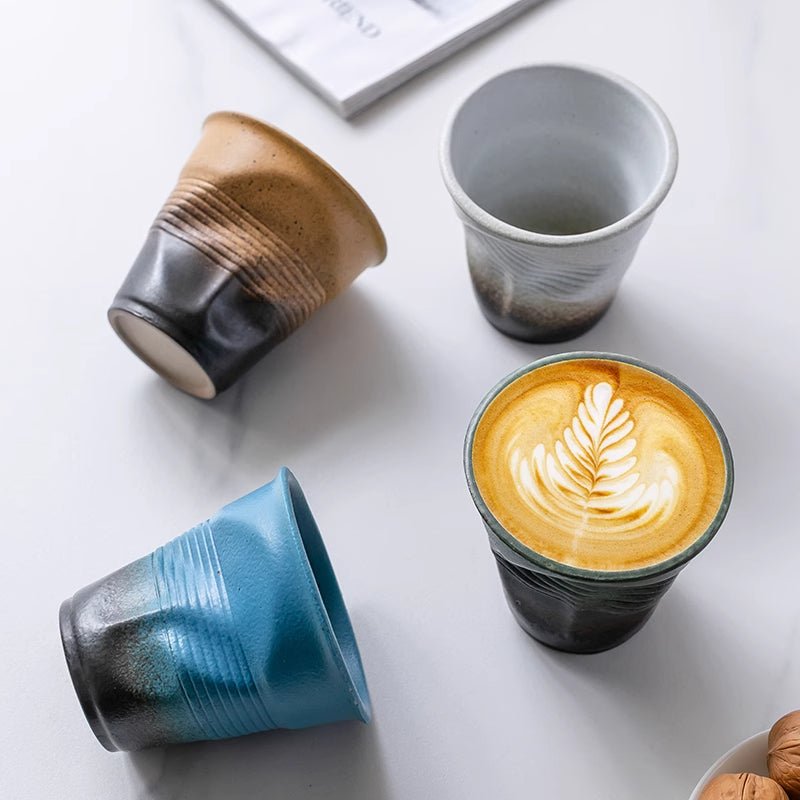
Ceramic Cortado Cup Shared Household Product Shortlist Guide: 3 Sizes
Compare the Retro 170 ml, Pleated 200 ml, and Emerald 270 ml by measured pour and calculated headroom. See which shared-household scenario fits each option and where each becomes a compromise.
Read more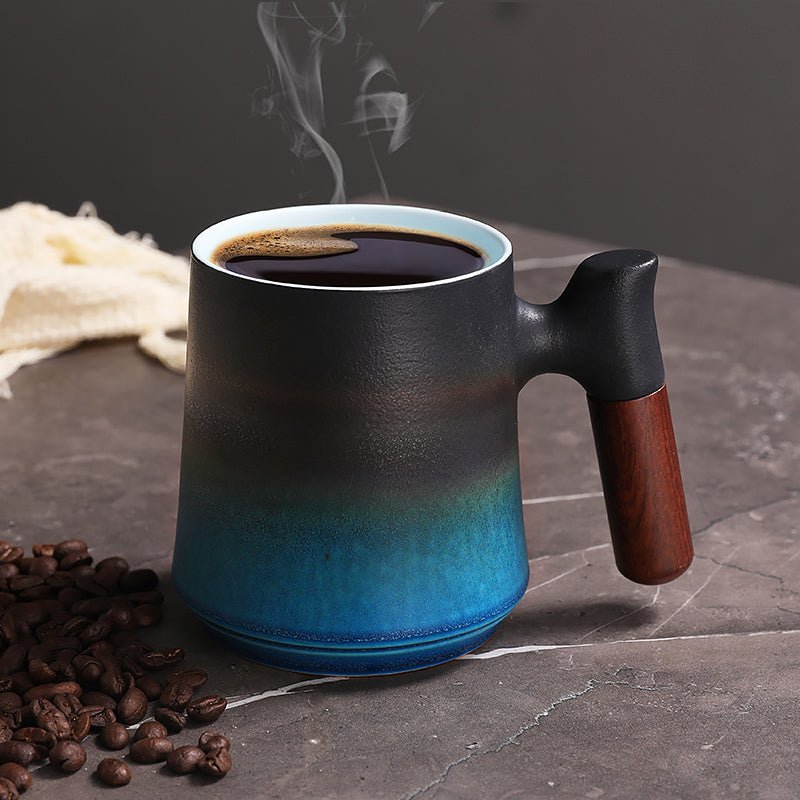
Dandelion Coffee Mug Home Office Practical Purchase Checklist
Compare The Gradient and The Flow at 400 ml with The Rock at 480 ml using a desk-first checklist for serving size, handle comfort, care, and gift fit. We also flag the specifications shoppers shoul...
Read more
Leave a comment
This site is protected by hCaptcha and the hCaptcha Privacy Policy and Terms of Service apply.