

Americano Coffee Cup Everyday Mug Rotation Practical Purchase Checklist
Reading time: about 9 minutes
At 8 a.m., one cup is beside the coffee setup, another is still on an office desk, and a third may be waiting in the drying rack. By lunch, the most decorative mug in the cupboard has not moved because its capacity does not match the drink anyone actually pours. That ordinary bottleneck is the reason for this americano coffee cup everyday mug rotation practical purchase checklist: it starts with liquid volume, intentional headroom, and the number of cups unavailable between washes.
In our experience selling mugs, a rotation earns its shelf space through repeated use rather than matching colors or identical sizes. The catalog facts we can verify for this comparison are specific: Pleated is listed at 200 ml, Emerald at 270 ml, and Landscape Tall at 350 ml. Those are listed capacities, not recommended fill lines, external dimensions, equipment clearances, or promises about heat retention. We keep those boundaries clear because capacity is useful only when it is matched to your own pour.
Why should your last three pours decide the rotation?
There is no universal Americano volume that every shopper needs to accommodate. Start with the amount you actually prepare, including anything added before you carry the cup away. Record recipe volumes or water measurements you already use; there is no need to transfer a hot drink just to measure it.
- Planned liquid: Note the approximate finished amount for three recent drinks.
- Personal headroom: Decide how much empty space you prefer for stirring, additions, or walking to another room.
- Use location: Mark whether the cup stays at the kitchen counter, moves to a desk, or remains beside a chair.
- Unavailable time: Note how long the used cup sits at a desk, in the sink, on a drying mat, or in a wash cycle.
From the questions our team handles, shoppers often treat listed capacity as the amount they should pour. It is better used as a comparison ceiling. Your planned liquid plus your chosen buffer should remain below that number, subject to the cup's actual shape and the way its listed capacity was measured.
How do you use the americano coffee cup everyday mug rotation practical purchase checklist?
- Set a realistic liquid target from a drink you prepare regularly.
- Choose your own headroom allowance based on carrying, stirring, and any additions.
- Add the target and allowance, then compare that total with 200 ml, 270 ml, and 350 ml.
- Count how many cups are normally in use or awaiting washing at the same time.
- Measure the shelf, drying area, and desk space where the rotation will live.
- Confirm any material, dimension, care, or appliance-related detail that matters to you on the current product listing before ordering.
This sequence prevents capacity from answering questions it cannot answer. It also separates two decisions that shoppers sometimes combine: choosing enough room for the drink and choosing enough cups for the household's wash rhythm.
What headroom remains at 200 ml, 270 ml, and 350 ml?
A simple subtraction gives you a first-pass comparison. For example, a planned 170 ml drink creates an arithmetic difference of 30 ml in a 200 ml listing, 100 ml in a 270 ml listing, and 180 ml in a 350 ml listing. A planned 240 ml drink changes the shortlist substantially.
| Catalog option | Listed capacity | Difference at a 170 ml plan | Difference at a 240 ml plan |
|---|---|---|---|
| Pleated | 200 ml | 30 ml | Plan is 40 ml above listed capacity |
| Emerald | 270 ml | 100 ml | 30 ml |
| Landscape Tall | 350 ml | 180 ml | 110 ml |
These figures are arithmetic examples, not serving recommendations or measured usable headroom. Rim geometry, internal shape, and the method used to establish listed capacity can affect where the liquid line sits. If your planned total is close to a listed capacity, allow more margin or ask our store for any currently available product details before deciding.
Which listed capacity fits your actual drinking pattern?
- For a planned drink comfortably below 200 ml: The Pleated 200 ml coffee and tea cup creates the smallest arithmetic gap of these three options for the same pour. It fits a shopper who intentionally prefers less unused capacity. It is not the practical choice if the liquid plus your chosen buffer approaches or exceeds 200 ml.
- For a target that outgrows 200 ml but does not require 350 ml: The Emerald 270 ml coffee and tea mug occupies the middle capacity position. It can make sense for a desk drink when 200 ml leaves insufficient room and 350 ml leaves more capacity than you want. A target close to 270 ml still leaves little arithmetic headroom.
- For a larger planned total or a wider buffer: The Landscape Tall 350 ml coffee and tea mug provides the most listed capacity in this three-product comparison. It is the relevant next step when your liquid target plus buffer exceeds 270 ml but remains within 350 ml. It is not enough for a routine total above 350 ml.
Do not infer footprint, weight, or handle size from capacity alone. A lower-capacity cup is not automatically shorter or narrower on the shelf. If none of these three capacity bands matches your calculation, compare other unique coffee mugs in our collection instead of forcing your usual drink into the closest number.
Will the cup fit your shelf, drying rack, and wash cycle?
Capacity describes internal volume, not the outside space a cup occupies. Before buying a rotation, measure the places that tend to cause friction in real kitchens and home offices.
- Measure clear shelf height, including any shelf lip or cabinet hinge that narrows the opening.
- Measure usable shelf depth with the door closed.
- Allow side-to-side room for the full cup and handle rather than estimating from the bowl alone.
- Check drying-rack slots, mat space, and clearance around neighboring dishes.
- Only plan around a dishwasher rack if the current care information confirms that washing method and the measured cup dimensions fit your setup.
Then count simultaneous use. If one cup is at the desk and another is awaiting washing when you want a fresh drink, a third cup may have a real job. If you wash and reuse one cup before every pour, extra pieces may only consume cupboard space. Two coffee drinkers or a delayed wash cycle can change that count, so use your household's busiest ordinary day rather than an idealized routine.
Which material, care, and handling details still need confirmation?
The verified facts supplied for this comparison do not establish material, overall height, diameter, weight, handle opening, stackability, microwave guidance, or dishwasher guidance. We do not fill those gaps with assumptions. Check the current product page or ask our store before purchase if any of those details determine whether the cup will work for you.
Care deserves particular attention in an everyday rotation because frequently used cups are also washed frequently. Confirm the stated instructions before building your routine around repeated dishwasher cycles or microwave use. A shopper who hand-washes immediately has a different rotation need from someone who waits for a full machine cycle.
During gift unboxing or delivery inspection, look over the rim for chips, place the base on a flat counter to check for wobble, and inspect the handle attachment for visible cracks before the first wash. These are sensible receiving checks for a cup, not predictions about how any listed product will wear. Follow the support instructions available with the order if something arrives in an unexpected condition.
When is an everyday mug rotation the wrong purchase?
- If every drink has the same volume and one cup is washed before the next use, a single correctly sized cup is simpler.
- If your normal liquid target plus desired headroom exceeds 350 ml, these three listed capacities do not solve the problem.
- If you require a travel lid, insulation, or a specific equipment clearance, choose a category that verifies those features. This capacity comparison does not establish them.
- If ice is part of your usual drink, calculate the completed drink with the ice occupying space. Do not assume a cup is intended for iced use without suitable material and care guidance.
- If exact dimensions, weight, or care method are nonnegotiable and remain unconfirmed, pause the purchase until you have those details.
A different style is the better choice when portability, extended temperature holding, or a very large serving matters more than cupboard rotation. Buying another open cup will not resolve a requirement that capacity alone cannot meet.
A seven-day check before adding another cup
Use the americano coffee cup everyday mug rotation practical purchase checklist as a short usage log before placing an order. Existing cups are enough for this observation stage.
- Record each planned drink volume for seven representative days.
- Circle the volume you prepare most often and note the largest recurring volume separately.
- Mark how many cups are unavailable at the busiest point of each day.
- Measure the storage and drying spaces once, writing down the actual clear dimensions.
- Subtract your common liquid targets from 200 ml, 270 ml, and 350 ml to compare nominal headroom.
- Shortlist only the capacity that covers a recurring use without creating an unresolved storage or care question.
This exercise may point to one cup, two different capacities, or no new purchase. All three outcomes are more useful than assembling a matching set that does not reflect how coffee moves through your day.
Frequently asked questions
Is a 200 ml cup large enough for my Americano?
It can be if your planned finished liquid plus your preferred headroom remains below the listed 200 ml capacity. A 170 ml plan leaves a 30 ml arithmetic difference, but that is not a guaranteed usable fill margin. Choose from your measured habit rather than treating 200 ml as a universal serving size.
How does the americano coffee cup everyday mug rotation practical purchase checklist help me choose?
It compares your actual liquid target, personal headroom, wash timing, and storage constraints with the three verified capacities. It does not prescribe one drink size or cup count for every shopper. The result should identify both the most relevant listed option and any missing product detail you still need to confirm.
How much headroom should I leave in an Americano cup?
There is no single allowance that suits every pour or carrying habit. Subtract your planned liquid from the listed capacity, then decide whether that difference is sufficient for stirring, additions, and the distance you carry the cup. Leave a more conservative margin if your calculation sits close to the capacity number.
Are the Pleated, Emerald, and Landscape Tall cups dishwasher-safe?
The verified facts used in this checklist do not establish dishwasher care for these products. Read the current product listing and any packaging instructions before using a dishwasher. If that information is not shown, ask our store rather than assuming.
Should I choose the 350 ml Landscape Tall for an iced Americano?
Only capacity can be compared here: 350 ml is the largest of the three listed options. Include the space occupied by ice and any additions when estimating your completed drink, then leave your chosen buffer. This article does not establish material suitability, thermal guidance, or purpose-built performance for iced drinks.
Take your most common pour, add the headroom you genuinely use, and compare the total with 200 ml, 270 ml, and 350 ml. Then check your shelf measurements and wash rhythm. With those numbers in hand, review the linked products or continue through our collection of unique coffee mugs and shortlist only the cups that answer a real daily need.
More from our blog
Read more
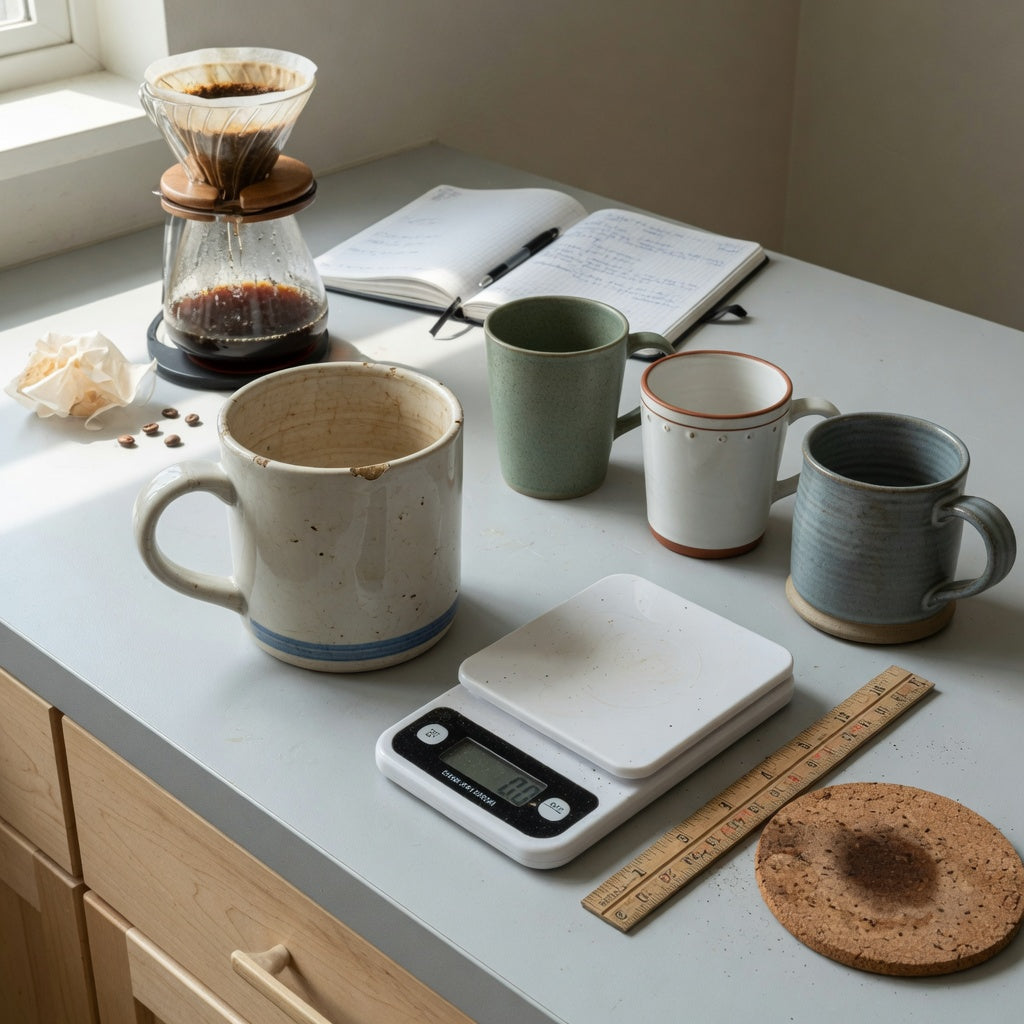
Oversized Ceramic Coffee Mugs Replacement: Practical Purchase Checklist
Replace a chipped, awkward, or worn oversized mug by measuring the old one first. This checklist covers usable capacity, handle fit, footprint, care limits, and which CoffeifyMug product pages dese...
Read more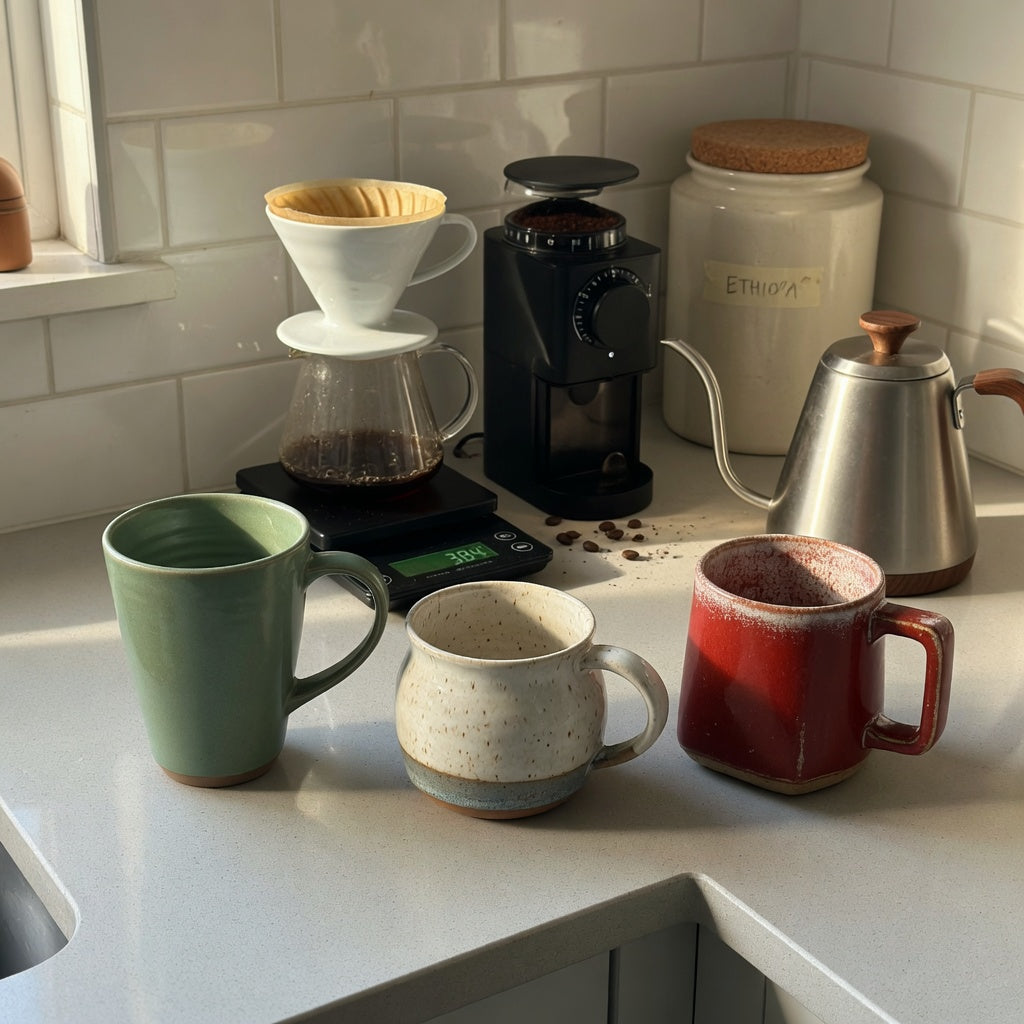
Thick Ceramic Coffee Mugs Home Coffee Station Product Shortlist Guide
Compare The Rock, The Flow, and Spittoon for a home coffee station using counter measurements, handling needs, care checks, and explicit reasons to choose or skip each mug.
Read more
Leave a comment
This site is protected by hCaptcha and the hCaptcha Privacy Policy and Terms of Service apply.