
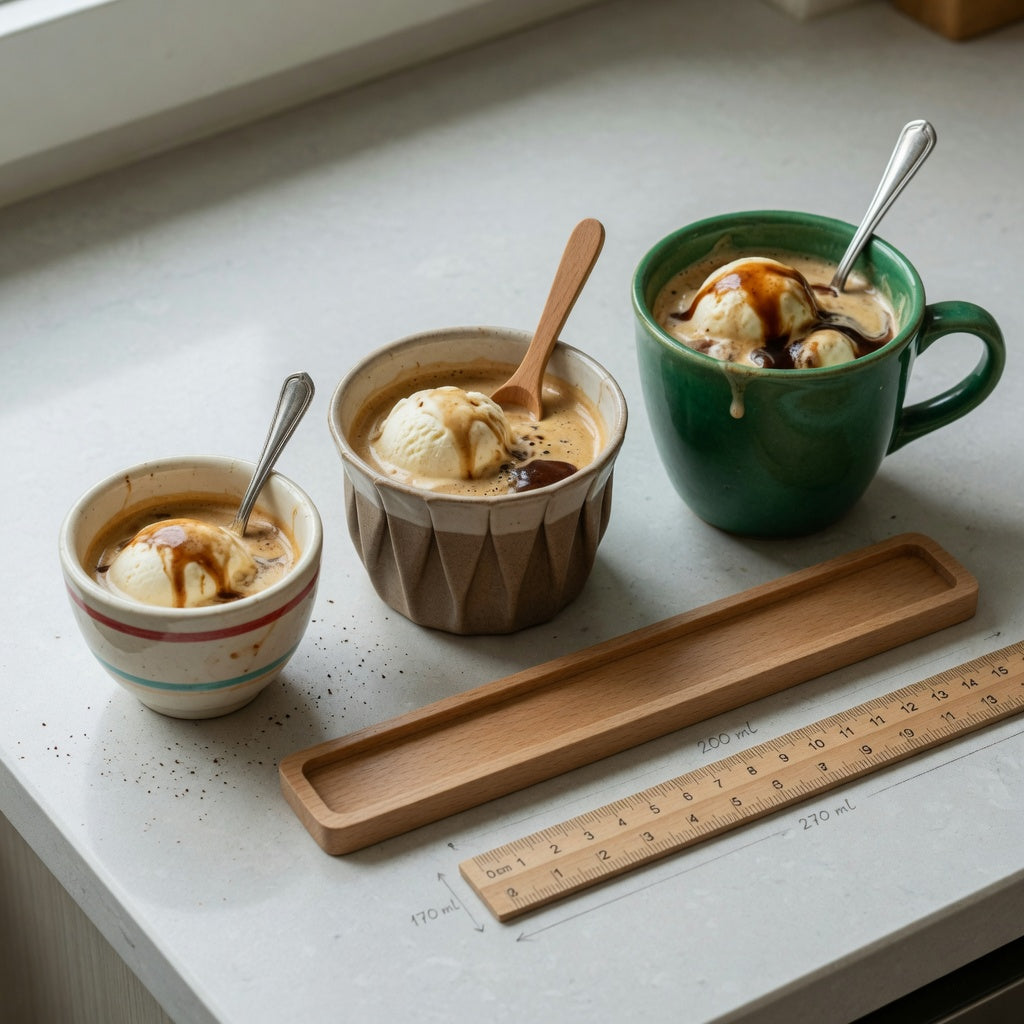
Affogato Cup Buying Priorities: Capacity, Shape, and Space
Reading time: about 9 minutes
An affogato can go from neatly contained to crowded in the few seconds between setting down the ice cream and pouring the espresso. On a narrow kitchen counter or office desk, the vessel can also leave less room than expected for the spoon, coffee maker, or serving plate you already own. That is why our affogato cup buying priorities begin with three practical variables: listed capacity, visible shape, and the space available in your routine.
In our store, we compare three current options using facts a shopper can verify: the Retro at 170 ml, the Pleated at 200 ml, and the Emerald at 270 ml. We do not treat those capacity numbers as promises about exterior dimensions, portion size, heat retention, or care performance. Your scoop and espresso pour are personal variables. The useful question is not which cup is best in isolation, but which one creates the fewest compromises in your kitchen.
Which affogato cup buying priorities should lead the decision?
Start with serving volume, then use visible shape to narrow the style, and finally verify the exterior fit. Reversing that order often leads to a good-looking cup that is too close to its capacity limit or awkward in its intended space.
| Current option | Listed capacity | Visible design cue | Best starting situation |
|---|---|---|---|
| Retro coffee tea cup | 170 ml | Compact, rounded retro cup profile | A deliberately small serving where excess capacity is not needed |
| Pleated coffee tea cup | 200 ml | Visible pleated exterior and a mid-size cup profile | A shopper who wants capacity between the two endpoints and more visual texture |
| Emerald coffee tea mug | 270 ml | Larger, more mug-like silhouette | A larger measured serving or more unused room above the same serving |
This table is a shortlist, not a substitute for checking the current product photographs and listing details. Our unique coffee mugs collection lets you open the available styles side by side before committing to a profile.
Is 170, 200, or 270 ml closest to your real serving?
There is no single home affogato volume. Scoops vary, espresso machines dispense different amounts, and some people add a second pour after the first starts to melt. A cup selected around an assumed standard can therefore be wrong even when the capacity sounds familiar.
We recommend one quick rehearsal using a measuring vessel suitable for the liquid temperature:
- Place the amount of ice cream you normally serve into the measuring vessel.
- Measure and add your usual espresso pour rather than estimating by sight.
- Observe the occupied volume after the coffee settles around the scoop.
- Decide how much open space you want for carrying, stirring, or a second small pour.
Do not plan to use every listed milliliter right up to the rim. If your normal serving already approaches 170 ml, the Retro leaves little theoretical margin and is unlikely to be the practical choice. The Pleated adds 30 ml over the Retro. The move from Pleated to Emerald is larger at 70 ml, while Emerald offers 100 ml more listed capacity than Retro.
Those differences clarify the decision. Choose the 170 ml Retro when the result of your rehearsal is intentionally compact. Move to the 200 ml Pleated when 170 ml looks restrictive but 270 ml would be more cup than your routine requires. Consider the 270 ml Emerald for a larger measured serving or when you want more potential clearance above the same contents. None of these recommendations assumes a fixed scoop count.
How do Retro, Pleated, and Emerald differ by visible shape?
The Retro presents the most classic, rounded cup appearance of the three. That makes it a sensible visual match for a compact after-dinner setting, especially if your existing tableware already has traditional curved profiles. Its 170 ml capacity remains the deciding limit; the retro look should not override a serving that measures too close to that number.
The Pleated is distinguished by the vertical texture visible around its exterior. Its 200 ml capacity sits only 30 ml above the Retro, so this is a moderate step rather than a move into large-mug territory. Choose it when the middle capacity works and you prefer a more structured surface treatment.
The Emerald is the 270 ml option and is listed as a mug rather than a cup. It has the most substantial, mug-like visual presence in this comparison. Shoppers searching for an affogato mug because they prefer a larger everyday profile may naturally start here, but the extra capacity can feel unnecessary for a consistently small dessert.
Visible shape should not be turned into an unsupported performance claim. We do not claim that the Pleated exterior changes melting speed, that the Retro profile directs espresso in a particular way, or that the Emerald retains heat for longer. The verified comparison is about appearance and listed capacity.
How should a small counter, desk, or cabinet change the choice?
Capacity measures internal volume. It does not establish exterior width, height, handle reach, or base diameter. A 170 ml cup is not automatically guaranteed to have the smallest footprint, just as a 270 ml mug cannot be assigned exact counter clearance from capacity alone.
The verified facts available for this comparison do not include exterior dimensions, so we will not invent a footprint ranking. Instead, measure the location where the cup will actually be used:
- Kitchen counter: measure the clear rectangle beside the espresso machine, including room for the spoon or plate you already use.
- Office desk: keep the intended cup position away from the keyboard edge and include any coaster in the measurement.
- Breakfast tray: check both the flat serving area and the clearance beside other dishes.
- Cabinet shelf: measure shelf height, usable depth, and the width available once nearby handles are considered.
Use millimeters for this check so a narrow clearance is not lost through rounding. If exterior dimensions are shown on a current product page, compare them directly with your measurements. If they are not shown, photographs can help you compare visible proportions, but they should not be treated as a reliable scale drawing.
This matters most in repeated routines. A cup that fits an open dining table may still be inconvenient beside a laptop every afternoon. Likewise, a profile that looks compact in a product photograph may not fit the cabinet position you had in mind once handle clearance is included.
Which cup fits a small treat, a flexible routine, or a larger serving?
Match the situation to the reason for choosing, then open the relevant product listing to confirm the current details.
- Small, measured after-dinner serving: Start with the Retro 170 ml. It fits the shopper who has tested a compact portion and wants the classic rounded visual profile. It is not a good fit if your measured contents already approach its listed capacity.
- Middle capacity with a textured exterior: Start with the Pleated 200 ml. The extra 30 ml over Retro provides a modest capacity step, while the pleated appearance gives it a distinct look. It will not satisfy someone who specifically needs the larger 270 ml range.
- Larger serving or more potential headroom: Start with the Emerald 270 ml. Its mug-like profile fits a shopper who wants the largest listed capacity in this group. It may look and feel excessive if you consistently prepare a very small affogato.
- Style still undecided: Compare the product photographs in the collection before choosing. Capacity can eliminate an unsuitable option, but the visible profile determines which remaining cup belongs with your existing setup.
Our experience selling this category is that the middle capacity often attracts undecided shoppers, but 200 ml is not automatically the correct answer. A measured routine near either end of the range is better served by acknowledging that difference instead of treating the midpoint as universally safe.
What should gift buyers verify before choosing by appearance?
A gift buyer may know the recipient's style but not the volume of their usual affogato. In that situation, begin with what can be observed: the size of cups already in the kitchen, available cabinet space, and whether the recipient tends to make a compact dessert or a more generous serving.
The Pleated 200 ml offers the middle listed capacity, but that alone does not make it a guaranteed gift fit. Retro may suit someone who collects smaller classic cups. Emerald may be more appropriate for a person who prefers a substantial mug profile and routinely wants extra capacity.
Before ordering, check the current listing for exactly what is supplied. Do not assume that a spoon, saucer, coffee, ice cream, or other serving item shown or imagined as part of the routine is included. At gift unboxing, inspect the rim and body for transit damage and place the empty cup on a flat surface to confirm that it sits as expected before use.
Which product details still need confirmation before checkout?
This comparison is intentionally limited to the supplied catalog facts: 170 ml for Retro, 200 ml for Pleated, 270 ml for Emerald, and the visible differences among their current profiles. It does not establish material, exact exterior dimensions, weight, care instructions, microwave suitability, dishwasher suitability, or resistance to rapid temperature changes.
Do not infer care performance from a glossy surface or a product photograph. Follow the current product-page instructions where they are provided. If your routine depends on a dishwasher cycle, a specific shelf clearance, or a rapid cold-to-hot serving method, confirm that requirement before ordering rather than assuming all cups in the category perform the same way.
These options are also not the right direction for every shopper. Someone who needs verified double-wall insulation, a wide shallow dessert bowl, exact commercial-service dimensions, or documented temperature-change performance should choose a product that explicitly lists those features. A visually appealing affogato cup cannot replace a missing technical specification.
Frequently asked questions
What affogato cup buying priorities matter most in a small kitchen?
Start with your measured serving volume, then compare the visible profile and verify the exterior fit against your available counter and cabinet space. Capacity alone does not prove how much surface area a cup will occupy, so use listed dimensions if they are available on the current product page.
Is a 170 ml cup large enough for an affogato?
It can be if your normal ice cream and espresso combination stays comfortably below that listed capacity. Test your usual serving in a suitable measuring vessel first. If it approaches 170 ml before allowing carrying or stirring room, consider the 200 ml or 270 ml option.
Is the 200 ml Pleated cup the safest gift choice?
It is the middle capacity in this three-product comparison, which can make it a reasonable starting point. It is not universally safest: the recipient may prefer the Retro's compact classic profile or require the Emerald's additional listed capacity.
Does the 270 ml Emerald automatically use the most desk space?
Not necessarily. Its listed capacity is the largest, but capacity is not an exterior measurement. Check current dimensions when supplied and include the full visible profile, such as any handle, in your desk measurement.
What is the final check before ordering an affogato cup?
Measure your usual serving, measure the available surface and storage space, then compare the 170 ml, 200 ml, and 270 ml listings in the current mug collection. Confirm the latest photographs, dimensions when listed, care directions, and included contents before checkout. That keeps your affogato cup buying priorities tied to your actual routine rather than an assumption based on appearance.
More from our blog
Read more
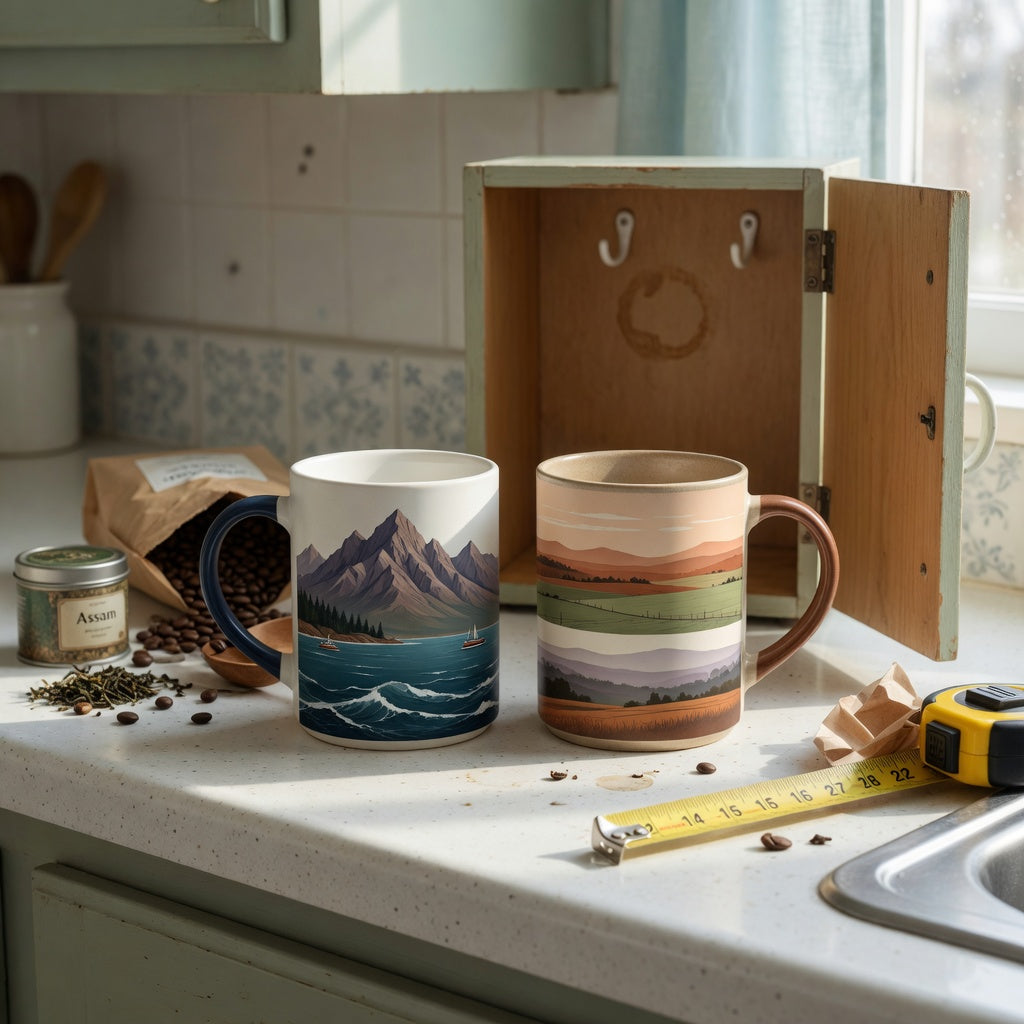
Ocean Coffee Mug Everyday Mug Rotation Practical Purchase Checklist
Compare ocean-inspired mugs by visible scene, current material and capacity listings, shelf fit, care information, and daily drink habits. This checklist also identifies unknowns that should pause ...
Read more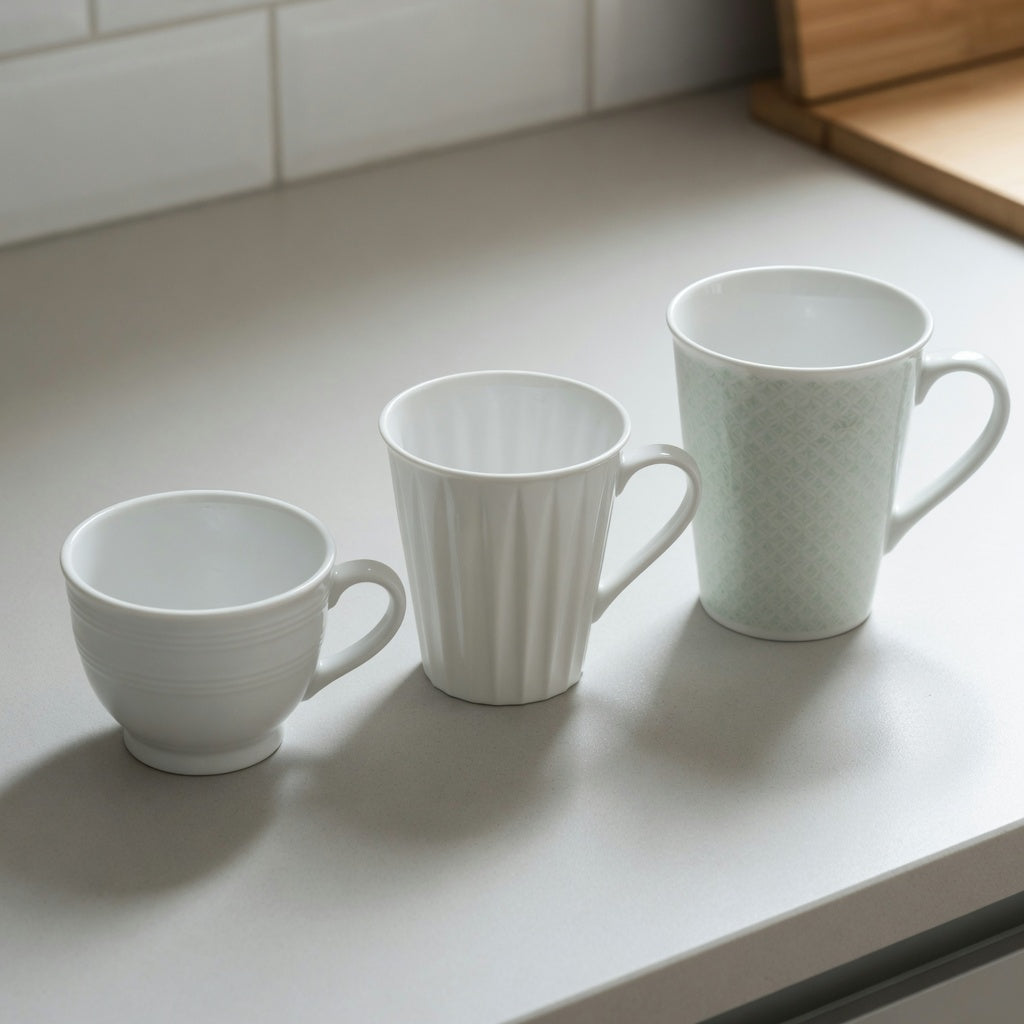
Affogato Cup Current Product Facts: 170, 200 and 270 ml
Compare the verified CoffeifyMug listings for Retro 170 ml, Pleated 200 ml, and Emerald 270 ml. See how capacity and visible shape affect the choice, plus which material, care, dimension, and acces...
Read more
Leave a comment
This site is protected by hCaptcha and the hCaptcha Privacy Policy and Terms of Service apply.