
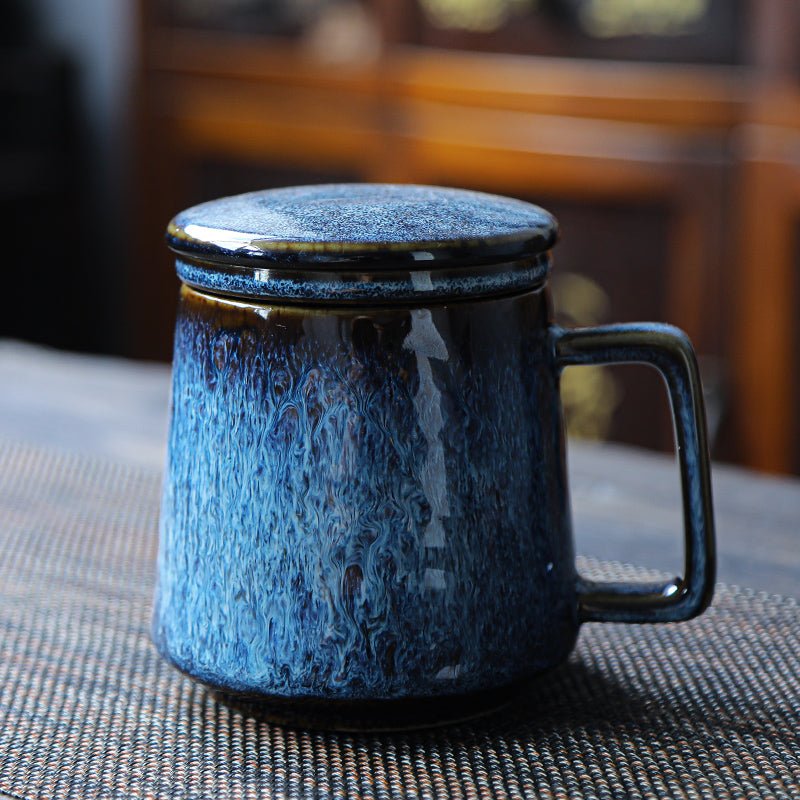
Your abstract coffee mug morning routine practical purchase checklist
Reading time: about 9 minutes
At 7:10 a.m., a mug can be visually perfect and still disrupt the routine: 250 ml may force a second kitchen trip, while 400 ml may hold more coffee than you enjoy before it cools. Our abstract coffee mug morning routine practical purchase checklist starts with the clock, your finished drink volume, and your tolerance for refills—not with the assumption that the largest mug is automatically the safest choice.
In our store, we use abstract as a shopper-facing style lens for geometric form, color transitions, and sculptural curves. We are not using it as verified creator attribution, a named art movement, a production method, an edition claim, or institutional provenance. The practical decision is about how a mug works on your kitchen counter or office desk.
Your abstract coffee mug morning routine practical purchase checklist: which decision comes first?
From handling mugs and answering pre-purchase questions, we see the same preventable mismatch: shoppers choose the exterior first and discover later that the capacity or cleaning routine is wrong. Write down these four answers before comparing designs.
- Finished drink volume: Count the coffee or tea plus milk, cream, foam, and the space occupied by ice.
- Morning timing: Decide how long the first fill needs to last before you can reasonably return to the kitchen.
- Refill tolerance: Be honest about whether a refill feels pleasant, neutral, or disruptive during work and school mornings.
- Physical fit: Check brewer clearance, cabinet space, desk room, and the way you normally wash a mug.
The verified catalog differences give you a useful starting point, but they do not answer every fit or care question.
| Reader situation | Why the option fits | Trade-off to accept | Relevant next step |
|---|---|---|---|
| Your measured drink stays below 250 ml after allowing carrying headroom, and an occasional refill is acceptable. | Rhombus has a listed 250 ml capacity and a geometric form. | It provides 150 ml less listed capacity than the larger choices, leaving less room for milk, foam, or ice. | Review the 250 ml Rhombus mug |
| You make a longer coffee or tea, prefer fewer refills, and want color to be the main visual feature. | Gradient has a listed 400 ml capacity and a color-transition finish. | A 400 ml mug may feel oversized for short servings, and its dimensions and care compatibility still need confirmation. | Check the 400 ml Gradient mug |
| You want the same 400 ml listed capacity but prioritize a more sculptural silhouette. | The Flow pairs a listed 400 ml capacity with sculptural curves. | Exact grip, cabinet, brewer, and washing fit should be verified rather than inferred from the shape description. | See the 400 ml The Flow mug |
If none of those descriptions matches your routine, compare other shapes in our unique coffee mugs collection instead of forcing a capacity or silhouette that will bother you every morning.
How many milliliters are in your actual first drink?
Machine settings and familiar cup names are poor substitutes for measuring the drink you really make. A short coffee may become a much larger serving after milk, while ice can occupy enough space to make a nominal capacity feel tight.
- Prepare your normal drink in your current mug, including every addition.
- Notice the final fill line and the headroom you need to carry it without spilling.
- After the mug is empty and cool, rinse it and refill it with cool water to the same line.
- Pour that water into a marked kitchen measuring jug and record the result.
For example, 180 ml of coffee plus 30 ml of milk equals 210 ml. Compared with a listed 250 ml capacity, that leaves only 40 ml of nominal headroom, which may or may not suit the way you carry a mug. A 250 ml brew plus 60 ml of milk reaches 310 ml; that exceeds the Rhombus listing but sits within the 400 ml listings with 90 ml of nominal space remaining.
Nominal matters here. Unless the product information expressly identifies a comfortable working volume, do not assume the listed capacity is the fill line you will want to use while walking. Foam-heavy drinks deserve an extra check; our cappuccino coffee mug morning-routine checklist explains why rim space and serving style can change the decision.
How long must one fill last before the next kitchen break?
Capacity answers how much the vessel can hold. Morning timing tells you whether that extra room is useful.
- Breakfast beside the coffee pot: A 250 ml option can make sense if the drink fits and a refill takes a few steps rather than interrupting work.
- An office desk or hour-long call: A 400 ml option gives more listed room and may reduce refill pressure, provided you actually drink that volume.
- Slow sipping: More capacity is not the same as heat retention. If you routinely leave coffee untouched, a larger serving can mean more liquid cooling before you finish it.
None of the supplied catalog facts verifies insulation, a lid, spill resistance, or cup-holder compatibility for these three mugs. If your morning includes a car commute or walking between buildings, a purpose-listed travel vessel may suit you better than choosing an abstract mug on appearance alone.
Will the geometric or sculptural form clear your brewer and cabinet?
A capacity number does not reveal mug height, base diameter, rim opening, handle projection, or total width. Those dimensions are especially relevant with a geometric or sculptural design. Rhombus and The Flow provide clear style cues, but those cues are not measurements; Gradient’s verified color-transition finish also tells us nothing about its physical footprint.
- Measure the vertical distance between your brewer’s drip tray and spout, leaving room to tilt and remove the mug.
- Check the full cabinet space needed, including the handle or widest projection rather than measuring only the vessel body.
- Compare the base footprint with your usual coaster, desk area, or mug warmer.
- Do not assume the mug is stackable or will fit a standard vehicle cup holder unless the product information confirms it.
If exact measurements are not stated on the current product page, ask before ordering. A low, broad footprint may be a better match if stability is your overriding concern; in that case, use our ceramic wide-bottom coffee mug checklist to compare a different shape category rather than accepting a sculptural form that does not fit your counter.
Can your cleanup routine support a color-transition finish or curved form?
Some shoppers put every breakfast item straight into the dishwasher. Others are comfortable hand-washing one distinctive mug. The verified facts available here do not establish material composition, dishwasher suitability, microwave suitability, or specific finish-care instructions for Rhombus, Gradient, or The Flow, so those points belong on your pre-checkout list.
- Material: Confirm the stated composition rather than identifying it from a photo.
- Dishwasher care: Look for explicit instructions, including any rack or cycle limitations.
- Microwave use: Do not assume a coffee or tea mug is microwave safe merely because of its product category.
- Finish care: Check for guidance on abrasive pads, soaking, and cleaning products, particularly if the color-transition appearance is your reason for buying.
Our team also recommends an arrival inspection before the first drink or dishwasher cycle. Under bright light, check the drinking rim for chips or rough points, inspect handle attachment areas if present for hairline cracks, place the mug on a dry flat counter to detect unexpected rocking, and look for obvious transit scuffs. For a gift, do this before the recipient’s unboxing rather than discovering a problem at the breakfast table.
If product-specific care directions are unavailable, ask our store before using an appliance. A soft, non-abrasive hand wash is a conservative temporary approach for many decorative mugs, but the product’s stated instructions should control the long-term routine.
Are you buying for your own 7 a.m. habit or someone else’s?
A gift buyer usually knows the recipient’s color preferences but not the useful details: how much they pour, how often they refill, and whether everything must survive the dishwasher. That uncertainty makes capacity more important, not less.
- A 250 ml Rhombus can disappoint someone who habitually makes a large milk coffee.
- A 400 ml choice may feel oversized to a person who drinks short servings and values compact storage.
- Gradient is the clearer direction when a color-transition finish is the known preference.
- The Flow is the relevant direction when sculptural curves are the feature the recipient would notice first.
Before placing a gift order, ask one discreet question about the recipient’s usual drink size or inspect the mug they already use. Our coffee mug gift idea morning-routine checklist covers packaging-day checks and other recipient-specific trade-offs.
What must be confirmed before you click add to cart?
Use this abstract coffee mug morning routine practical purchase checklist as a stop-or-go test. An attractive finish should not override an unknown that is essential to your routine.
- Record your normal finished drink volume in milliliters.
- Decide the maximum number of refills you will tolerate before lunch.
- Choose 250 ml or 400 ml based on that result, leaving practical headroom.
- Verify height, base footprint, rim opening, handle projection, and cabinet fit.
- Confirm material, dishwasher status, microwave status, and finish-care instructions.
- Choose among geometric form, color transition, and sculptural curves only after the functional checks pass.
- Read the current delivery and return terms, then inspect the mug before use or gifting.
Frequently asked questions
Is the 250 ml Rhombus large enough for coffee with milk?
It can be if your coffee and milk stay sufficiently below the listed 250 ml capacity to leave carrying headroom. A 180 ml coffee with 30 ml of milk totals 210 ml, leaving 40 ml of nominal space. If you add more milk, foam, or ice and dislike refills, a 400 ml option may be the more forgiving direction.
Which 400 ml mug is better for an office morning, Gradient or The Flow?
Both have the same verified 400 ml listed capacity, so decide by the visual feature you value: Gradient has a color-transition finish, while The Flow has sculptural curves. Neither is automatically the better desk mug until you verify its exact footprint, handle clearance, stability, and care requirements.
Are the Rhombus, Gradient, and The Flow dishwasher or microwave safe?
The verified catalog facts supplied for this comparison do not establish dishwasher or microwave compatibility. Check the current product information or ask the store before purchase if appliance use is essential. Do not infer care compatibility from the mug’s appearance or name.
What should I check before buying an abstract coffee mug for my morning routine?
The abstract coffee mug morning routine practical purchase checklist starts with finished drink volume, morning timing, refill tolerance, brewer clearance, storage, and cleaning method. Match those answers to 250 ml or 400 ml, then choose geometric form, a color-transition finish, or sculptural curves. Pause the purchase if an essential dimension, material detail, or care instruction remains unconfirmed.
Your next step: Measure one normal drink today and decide how many refills you will tolerate tomorrow. If the result points to 250 ml, review Rhombus; if it points to 400 ml, compare the Gradient color-transition finish with The Flow’s sculptural curves. If the shape is still open, browse our unique coffee mugs, but hold checkout until the dimensions and care instructions match the way your morning actually works.
Read more
Peppermint Tea Mug Morning Routine Practical Purchase Checklist
Match a peppermint tea mug to your actual morning: 400 ml, 440 ml, or 480 ml. We compare timing, refill tolerance, and handle-comfort checks while flagging the product details to verify before chec...
Read more
Rustic ceramic coffee mugs morning routine practical purchase checklist
Measure the drink you actually make, decide how many refills you will tolerate, and verify handle, clearance, and care details before choosing a rustic ceramic mug. We map three CoffeifyMug designs...
Read more
Leave a comment
This site is protected by hCaptcha and the hCaptcha Privacy Policy and Terms of Service apply.