
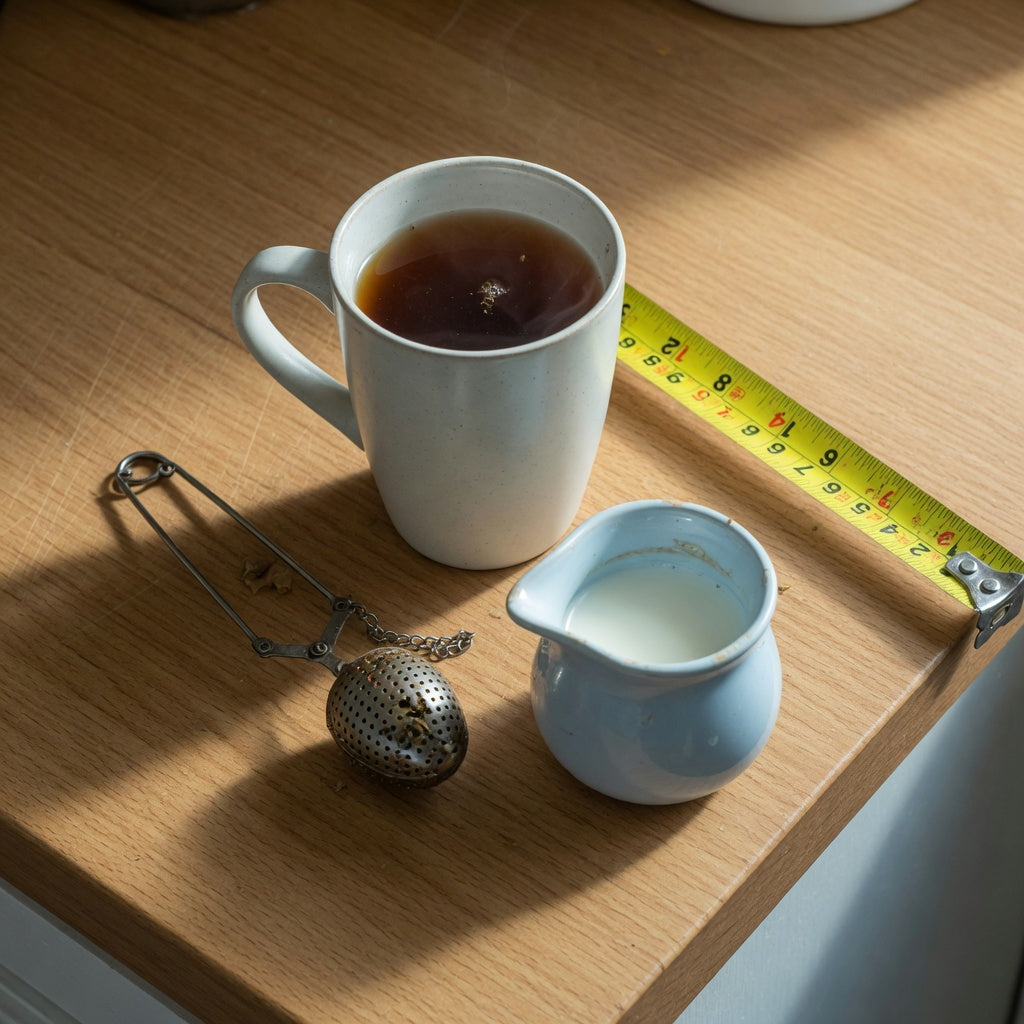
350 ml Coffee and Tea Mug: What Buyers Should Compare
Reading time: about 13 minutes
Shoppers set two boxes on our counter and ask which mug is the 12-ounce. One carton says 350 ml. The other only says large. They look similar until we pour. The taller wall nearly meets the cabinet above the kettle. The wider bowl leaves no room for the milk they actually add. That gap, not the printed number, is what we sort through before a 350 ml coffee and tea mug leaves the store.
How many ounces is a 350 ml coffee and tea mug?
NIST’s exact factor is 1 US fluid ounce = 29.57353 milliliters. Divide 350 by that number and you land near 11.83 US fl oz, which we round to about 11.8 when we talk with shoppers. A US cup is 236.5882 ml, so 350 ml is about 1.48 US cups. Kitchen charts are looser. NIST’s household cooking table treats 30 ml as 1 fl oz and 240 ml as 1 cup. Those shortcuts help at the stove. They are not the legal conversion, and they are why a 350 ml label gets called a 12 oz mug on a shelf tag.
Nothing in the law makes 350 ml the standard coffee mug. FDA guidance on lead leaching describes cups and mugs as small ceramic hollowware commonly used for coffee or tea, normally but not exclusively about 240 ml, or 8 fl oz. A 350 ml piece sits above that descriptive center. It is a retail serving, not a regulated standard size.
In our store, the listing people open first for this serving is the Landscape Tall Coffee & Tea Mug. The catalog title is Landscape Tall Coffee & Tea Mug | 350 ml. Read that 350 ml as the capacity stated in the title. It does not tell you the body material, the measured height, the handle opening, microwave approval, or dishwasher approval. Those facts have to appear on the current listing, and listings change. The word tall is part of the name. It is not a measured clearance under your cabinet. If you want this serving for straight coffee or a simple tea, start on that page and run the checks below before you order.
Is the listed 350 ml the pour you can actually carry?
Brim capacity is liquid filled until it meets the rim. A comfortable pour stops short of that. On our packing table we leave about a finger of space, sometimes more, because the walk from kettle to desk is where mugs slosh. Milk, foam, a spoon, and a tea basket all take volume the label never mentions.
Retail pages often print 350 ml and skip usable fill. Before you decide the size is enough, separate four numbers:
- Brim capacity: the full 350 ml, if that is truly what the maker measured to the lip.
- Comfortable pour: what stays put when you carry the mug. Headroom is spill control, not wasted space.
- Add-in room: milk, cream, or foam on top of coffee. Once those go in, the black-coffee serving shrinks.
- Accessory room: a deep infuser, a large pyramid bag, or a spoon resting in the bowl.
We will not name one universal everyday fill for every mug at this capacity. Shape changes it. A wide bowl can sit lower and still look generous. A narrow wall reaches the rim sooner, so the same headroom removes a bigger share of the drink. If a listing never says whether 350 ml is to the rim or to a fill line, treat the number as brim capacity and plan to drink less than that.
Which drinks fit about 11.8 fl oz, and which need more room?
For a straight filter coffee or a mug of tea with a simple bag, about 11.8 fl oz is a familiar single sitting for many adults. It is not a carafe, and it is not two drinks. People who nurse one cup through a long morning will refill. At this size, a refill is normal. It is not a defect in the mug.
Milk-heavy drinks are the tight fit. A latte, a large flat white, or coffee drowned in oat milk needs space for the dairy and the foam, not just the coffee. Shoppers who drink that way often step up to mugs labeled 14–16 fl oz. Sixteen US fl oz is about 473 ml using the same NIST factor, so the jump from 350 ml is a real increase, not a nickname. If your usual order is mostly milk, this bowl feels small once the foam crown goes on. It is also a poor match for a shared mug, or for an iced drink packed with ice, because the ice occupies the volume you thought was beverage.
Tea has a separate constraint. Brewing notes are often written per cup, and that cup is rarely defined as 350 ml. Leaf dose and steep time do not scale themselves just because the mug is larger than a teacup. A taller wall can also fight a wide basket infuser: the basket wedges, the infuser lid sits above the rim, or the leaves never have room to open. Do not assume a coffee-and-tea mug includes a strainer. If loose leaf is the main job, confirm on the listing whether an infuser is included, and whether the mouth is wide enough for the basket you already own.
Home brewers should check the brewer, not the mug slogan. We ask customers to look at the water line on their press or dripper before they expect one cycle to reach 350 ml. If the brewer finishes short, top up with hot water or brew again. The mug label is not the brewer’s output.
Will height, rim, and base clear the shelf and the cup holder?
Milliliters do not predict fit. Two mugs can both claim 350 ml while one hides under a shelf and the other will not. Before we suggest a taller profile for a small kitchen, we ask for three measurements from the tightest spot in the house, not from an open counter.
- Overall height, including any handle that rises above the rim, versus the gap under the cabinet, the microwave shelf, or the coffee-machine drip arm.
- Rim diameter, which changes how the drink smells, how a wide infuser sits, and whether a cover you already own has any chance of fitting.
- Base diameter, which decides stability on a small coaster and whether the foot rocks on a grout line or a slatted desk tray.
Add handle clearance and full weight. A full mug is heavier than an empty product photo suggests. We look for enough room that a finger can wrap through without grinding a knuckle on a hot wall. A pretty loop that only admits one finger gets tiring by the second refill. Full weight is why some people prefer a shorter, wider cup even when the milliliters match. If the current listing omits empty weight and handle span, leave those as open questions. Do not guess them from a photo.
Car cup holders are a separate test. Many holders expect a tapered travel cup, not a straight-sided table mug. A name that includes the word tall often fails that test even when 350 ml sounds modest. Open ceramic or stoneware on a car seat is also a chip risk if it tips, and we still would not assume any one listing is ceramic until the page says so. If the commute is the point, an open table mug is the wrong tool. Measure the holder, or choose a lidded travel mug and accept what the lid cannot do.
Where the listing omits height, rim, and base together, compare the page with a mug you already own instead of estimating from the thumbnail. If this silhouette is wrong for your shelf, stay with our unique coffee mugs and compare another shape at a similar serving before you compare artwork. Decoration does not change the pour. The wall and the base do.
What changes in the hand when capacity stays at 350 ml?
Capacity does not tell you whether the outside burns your palm. In our experience the material choice matters more than a small swing in volume once you are in this size band. Use the listing’s material line. A similar photo from another brand is not evidence.
| Material you might see | At the desk or table | Weak spot |
|---|---|---|
| Glazed ceramic, stoneware, or porcelain | Stable for coffee and tea, easy to sip, no lid required for foam | Wall can run hot; heavier when full; chips if it knocks a tap |
| Double-wall glass | You can watch the drink; the outer wall often stays kinder if it is truly double wall | More fragile; a microwave claim still has to be printed for that exact item |
| Vacuum stainless travel mug | The better bet for a commute at the same nominal 350 ml | A lid can leak, flatten foam, or block an infuser; advertised heat hours are not comparable across brands |
A glazed table mug is what we steer toward for breakfast at the kitchen table and for tea you want to watch steep, once the listing actually says it is glazed ceramic, stoneware, or porcelain. It is not a thermos. It will not keep coffee hot for a long drive. A metallic band or gold rim can make even a ceramic body a poor microwave candidate. An insulated bottle labeled with the same capacity is the better commute partner, and a worse partner for foam, a wide infuser, or the smell of coffee.
The Landscape listing is a table candidate only when you want a named 350 ml coffee-and-tea piece and the current page answers the material question. It is not the right pick for a sealed commute, a milk-heavy cafe drink, or a loose-leaf setup that needs a basket the listing does not mention.
Which microwave, dishwasher, and food-contact lines are worth reading?
Nothing about a 350 ml label predicts appliance safety. Glaze, metallic decoration, glass type, a plastic lid, and a stainless liner follow different rules. We only treat a mug as microwave-safe or dishwasher-safe when that exact listing says so.
FDA notes that microwaves pass through glass, paper, ceramic, and similar materials, which is why those containers are used, and that metal reflects microwave energy. Metal pans and aluminum foil are generally kept out because reflection can heat food unevenly and may damage the oven. That is physics, not a blanket yes for every ceramic mug. A gold rim, a silver decal, or an unknown glaze is a reason to leave the mug on the counter. Heat only in ware the maker specifies as microwave-safe. FDA also advises against heating food and drinks on melamine-based dinnerware in a microwave.
Dishwasher labels are just as specific. Daily cycles can dull a soft glaze, lift a printed design, or craze a finish that looked fine on day one. An unglazed foot ring can mark a rack and scratch a wood table. If the page is silent, wash by hand until you know. Do not copy care rules from another brand’s stoneware just because the milliliters match. Oven use and stovetop use are separate questions again. A mug that survives a dishwasher is not automatically an oven dish.
For hot coffee and tea, buy food-contact ware, not a display piece. Under US rules, ornamental ceramicware that looks usable for food must be permanently and conspicuously marked not for food use, with specified lead-warning language, unless a hole is bored through the potential food-contact surface. On lead, FDA’s action level for cups and mugs is 0.5 micrograms of lead per milliliter of leaching solution, applied to any one of six tested units. The agency’s contaminant table also lists a cadmium action level of 0.5 µg/ml for ceramic small hollowware. A marketing line that simply says lead-free is not the same thing as a stated test result against those limits. If the page does not show food-contact status, ask before you brew. A gift mug that arrives without that information should stay on the shelf until you can check it.
Why heat-hour claims on a travel mug of this size mislead
Keeps-hot-for-hours lines on insulated mugs near 350 ml are not interchangeable. Listings rarely share the start temperature, the room temperature, whether the lid was opened, or how full the cup was. A number without those conditions is a slogan. We do not treat one brand’s hour claim as comparable to another brand’s hour claim.
Judge the lid before the hours. A small sip hole resists spills in a bag and also flattens foam and blocks a tea basket. A slider can leak once the seal is tired. An open table mug avoids those problems and loses heat faster, which is the trade you accept at a desk. Match the vessel to the next hour of your day, not to the largest number on the package. If that next hour is a car ride, do not force an open table listing into the console.
A counter check before you order
Use this list against the live page, including the current tall 350 ml listing if a 350 ml coffee and tea mug is what you came for. Skip any line the page does not answer. Do not fill the blank from a review of a different mug.
- Confirm the stated capacity is 350 ml, and decide how much headroom you need for milk, foam, or an infuser.
- Convert it yourself if you think in ounces: about 11.8 US fl oz, not a legal standard cup.
- Write down height, rim, and base from the listing. Compare them with the shelf, the machine gap, and the cup holder.
- Check handle span and any stated weight. A tight loop feels tighter when the wall is hot and the mug is full.
- Read the material. Then read microwave and dishwasher statements for that item, including any lid or metallic decoration.
- Prefer food-contact ware over decorative-only pieces, and do not treat a lead-free phrase as a lab report.
- If you need sealed heat on a commute, leave the open table mug and shop a travel lid instead.
Order that listing only when those checks match the way you actually drink. If they do not, go back through other shapes in the collection rather than forcing one mug to be a latte bowl, a teapot, and a car cup.
Frequently asked questions
How many ounces is a 350 ml coffee and tea mug?
About 11.8 US fl oz, using NIST’s exact factor of 29.57353 ml per fluid ounce. The more precise figure is near 11.83, and 350 ml is also about 1.48 US cups of 236.5882 ml. Kitchen rounding that treats 30 ml as 1 fl oz is why people call it a 12 oz mug. That nickname is fine for shopping. It is not a regulated size.
Does the listed 350 ml mean the mug is filled to the rim?
Often the printed number is brim capacity, but many pages never say. Plan on a lower everyday pour so the mug does not slosh, and leave more room if you add milk, foam, or a tea infuser. Usable fill is smaller than the headline number. Shape decides how much smaller.
Is 350 ml enough for a latte with milk and foam?
It can hold a smaller milk drink. It gets tight once a full milk portion and a foam cap share the bowl. If that is your usual order, a mug in the 14–16 fl oz range leaves more room. Straight coffee or a simple tea fits this size more naturally.
Can I assume a 350 ml ceramic mug is microwave-safe and dishwasher-safe?
No. Capacity says nothing about glaze, metal decoration, or melamine parts, and you should not assume the mug is ceramic until the listing says so. FDA guidance is to microwave only cookware specified as microwave-safe, and not to heat food or drinks on melamine dinnerware. Metal reflects microwaves, so a metallic rim or a stainless mug stays out of the oven. If the page is silent on the dishwasher, wash by hand.
Will a tall 350 ml mug fit a car cup holder?
Do not assume it will. Holders are often shaped for tapered travel cups, and a straight table wall misses that shape even at 350 ml. The word tall in a product name is not a fit measurement. Measure the holder. If the trip is the main use, choose a lidded travel mug and read the leak and foam limits instead of forcing a table mug into the console.
More from our blog
Read more
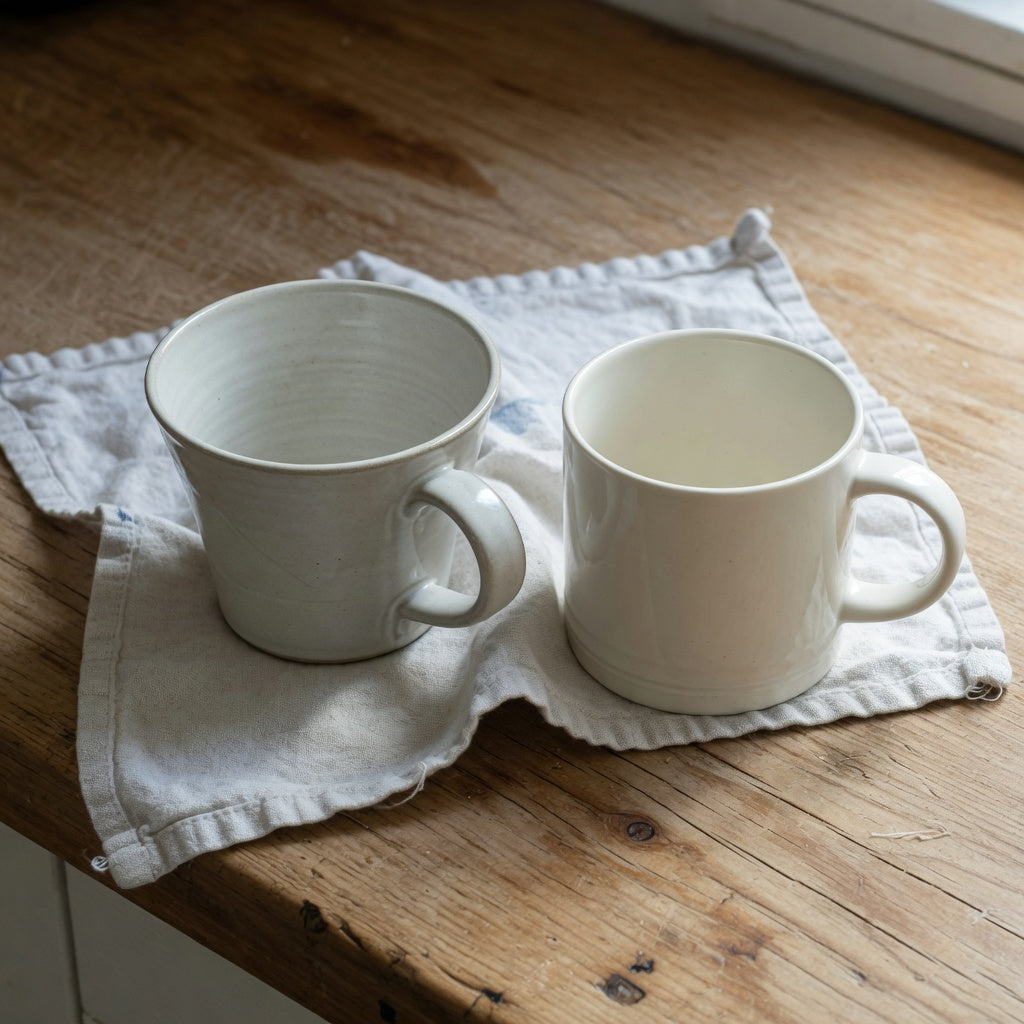
Spittoon mug vs coffee mug: job, rim, and safety
A spittoon mug vs coffee mug search mixes up a drinking mug, a spit cup, and a cupping basin. We split those jobs, then list what to verify on a novelty listing: rim, lid, capacity, and food contact.
Read more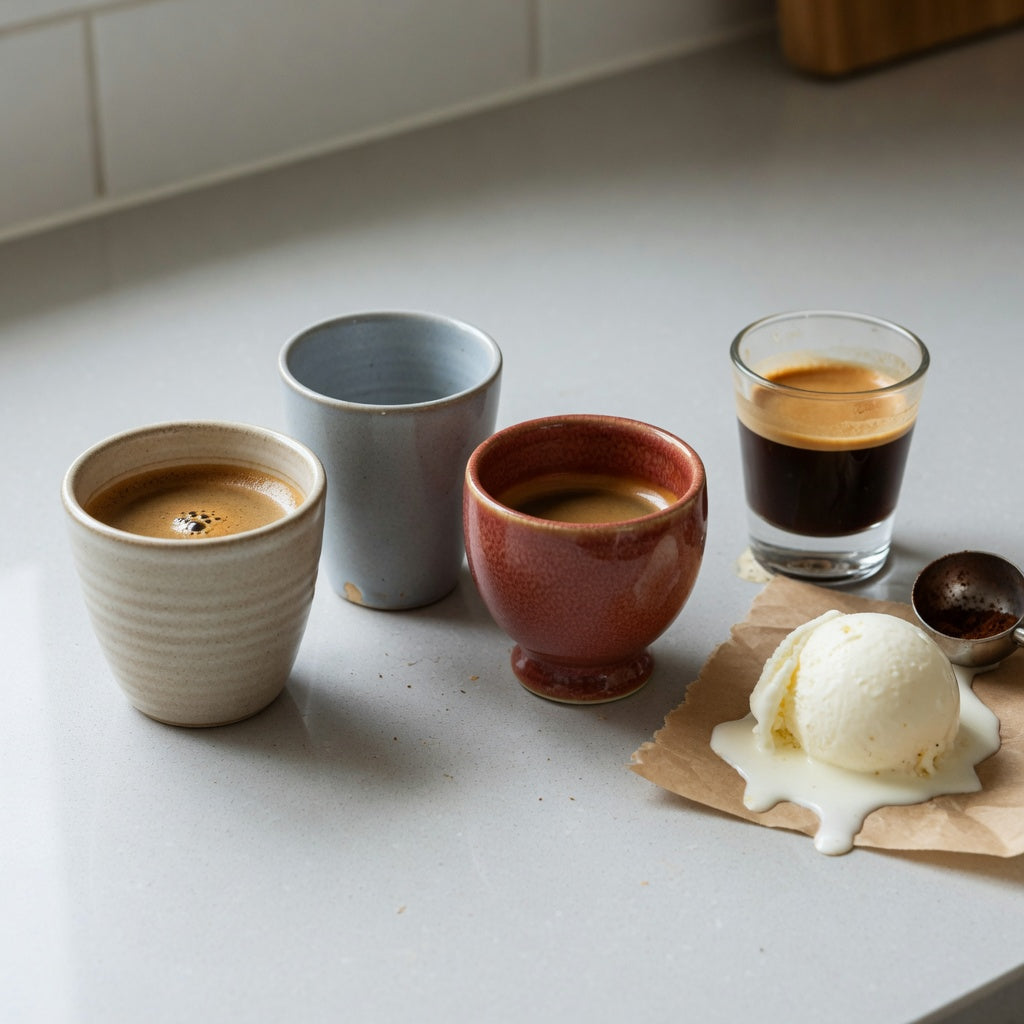
Affogato Coffee Mug Gift: Compare 170ml, 200ml & 270ml Cups
When searching for an affogato coffee mug gift, buyers often mix up novelty pun mugs with compact dessert cups. We compare the Retro, Pleated, and Emerald options by capacity and visible shape, the...
Read more
Leave a comment
This site is protected by hCaptcha and the hCaptcha Privacy Policy and Terms of Service apply.