



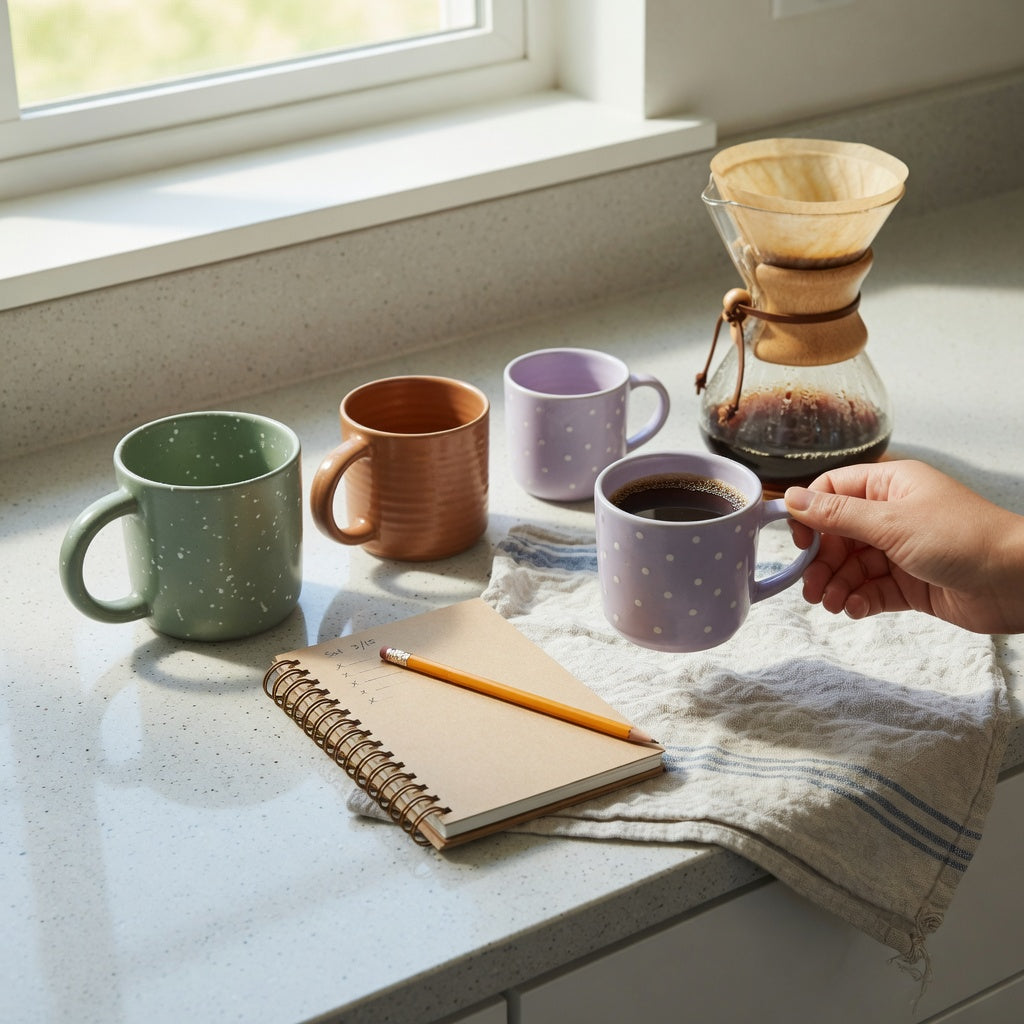
14 oz Ceramic Coffee Mugs Weekend Coffee Product Shortlist Guide
Reading time: about 11 minutes
The mug that causes the most second-guessing in our store is rarely the fancy one. It is the 14 oz ceramic mug that gets filled on a Saturday, lifted one-handed, and turns out to be a mug the buyer cannot hold comfortably or fit under the brewer with the handle turned outward. Weekday coffee hides that mismatch. Weekend coffee exposes it, because the pour is bigger, the pace is slower, and you notice the handle pressing into your fingers.
So this is our working version of a 14 oz ceramic coffee mugs weekend coffee product shortlist guide: three capacities from our own catalog, explicit reasons to pick or pass on each, and the fit and care checks that decide whether a mug earns counter space. We sell these mugs and we answer the follow-up emails, so the aim is a shortlist you can act on rather than a category encyclopedia.
What a 14 oz ceramic coffee mugs weekend coffee product shortlist guide should settle before you buy
Start with the number, because “14 oz” is doing two jobs in most listings. A U.S. fluid ounce is 29.57353 mL according to the NIST conversion guide, so 14 fl oz works out to roughly 414 mL. That is well above the FDA's typical cup-or-mug example of about 240 mL (8 fl oz), which is a useful reminder that a 14 oz mug is a deliberately generous cup, not a cafe standard.
The second job is brim capacity. A mug measured to the very top holds less once you leave headroom for the walk to the porch or a splash of milk. Some listings quote a working fill; many quote the brim. Ask directly, and if the answer is vague, plan as though the mug is one size smaller than advertised.
Third, match the mug to the drink you actually make on a Saturday:
- 10 to 12 oz drip or tea: a 14 oz mug leaves a lot of empty wall above the liquid. Not a dealbreaker, but it changes how the mug feels in the hand.
- 12 to 14 oz drip with milk: the natural home of a 14 oz ceramic mug.
- 16 oz latte or iced drink: you want the larger end of this range, or above it.
One physical detail worth holding in your head: a full mug is heavy. Brewed coffee sits close to 1 g per mL, so a 440 mL fill adds roughly 440 g of liquid before the mug's own weight is counted. Two mugs that look identical in a photo can feel entirely different when full if one has a thicker wall.
Which of our three catalog capacities fits a slow Saturday?
We publish capacities in milliliters on purpose. Ounce figures round, and rounding is exactly how a 13.5 oz mug becomes “14 oz” in a shopper's head and then feels small on the kitchen counter.
| Mug | Listed capacity | Choose it when | Skip it when |
|---|---|---|---|
| The Flow coffee and tea mug | 400 ml (~13.5 fl oz) | Your weekend pour is a 12 oz drip or a tea serving with a little headroom, and you want the most compact of the three. | You routinely build a 16 oz latte, or you want one mug to double as a generous soup cup. |
| Morning and Night coffee and tea mug | 440 ml (~14.9 fl oz) | You want the closest match to a true 14 oz pour, with a bit more room than The Flow. | Your cabinet shelf clearance is tight, or you want the smallest footprint on the shelf. Confirm exterior height before ordering. |
| The Rock coffee and tea mug | 480 ml (~16.2 fl oz) | You make milk-heavy drinks, use ice, or want room for a long weekend second cup. | A 10 to 12 oz pour is your normal. The extra capacity can read as unused space, and a fuller mug is a heavier one-handed lift. |
Those are our catalog figures, not guesses pulled from a product photo. If you want the whole lineup in one view before narrowing down, the unique coffee mugs collection lists all three together.
Which breaks the shortlist first: the handle, the height, or the stack?
In our experience, capacity is rarely what sends a mug back to the shelf. Clearance is. A mug can hold exactly the volume you want and still lose on the everyday tests that do not show up in a spec table:
- Handle opening. Can two fingers pass through comfortably when the mug is full? If your knuckles graze the wall, you will feel it on every single pour.
- Exterior height. Measure the gap under your single-serve brewer outlet and the shelf above your mug shelf. More capacity usually means a taller body, even when the width looks similar.
- Foot diameter and cup holder. A handled ceramic mug is a table and desk mug. Treat car cup-holder fit as a different product category, not a bonus feature.
- Stackability. Wide handles and flared rims sit nicely on a counter and awkwardly in a cabinet. Check whether one mug's handle nests inside the foot of the mug above it.
We would rather you order one mug, test the grip with your normal weekend pour, and come back for the second than buy a pair and discover the handle is wrong. That is the entire point of a shortlist.
Which care-line details decide where the mug lives?
Ceramic is a material, not a care rating. Read the listing line by line, because microwave, dishwasher, oven, broiler, and freezer are five separate answers and a mug can pass one while failing the rest.
- Metallic trim and handles. Gold rims, metallic paint, and some decals are the classic reason an otherwise microwave-friendly ceramic body is not microwave-safe. The body material tells you nothing about the decoration.
- Overglaze decals. A pattern printed over the glaze sits exactly where dishwasher jets and sponges work hardest. Expect gradual dulling even on mugs rated dishwasher-safe.
- Crazing and chips. Fine glaze cracks and rim chips are the two wear patterns we see most often. A chipped rim is a food-contact edge, so retire the mug instead of drinking from it.
- Staining. In our experience, coffee oils leave a visible ring on matte interiors sooner than on glossy ones. If a faint brown ring would bother you, a glossy interior is the easier ownership routine.
If a product page does not state care clearly, ask before ordering. A hand-wash-only mug can still be the right weekend mug; it is just a different routine. For a wider material comparison, our ceramic mugs for coffee and tea buyers' comparison covers where glazes and body styles diverge.
Is a “lead free” label enough for a mug you use every weekend?
This is the part of a shortlist worth slowing down for. FDA compliance guidance sets an action level of 0.5 micrograms of lead per milliliter of leaching solution for cups and mugs, judged on any one of six units using methods such as ASTM C738. Cadmium carries its own action level of 0.5 micrograms per milliliter for small hollowware. Those are leach limits applied to finished ware, not a blanket promise that every ceramic mug on a shelf behaves the same way.
The California Department of Public Health draws a distinction worth borrowing here: lead-free tableware contains no lead, while lead-safe tableware may contain some lead but does not leach above the state's standard. A “lead free” claim is a materials statement, not a test report on the specific glaze in front of you. FDA has also warned that some imported pottery labeled lead free still released extractable lead, in some cases above the action levels.
Decorative ceramicware is a related trap. Under 21 CFR 109.16, a piece that looks like it belongs at a table has to be treated as food-use ware unless it carries a “Not for Food Use” warning or is physically disabled for food contact. Coffee is also acidic, which is one reason glaze chemistry matters here more than it does for a dry snack bowl, and CDPH advises against microwaving ware that contains or might contain lead because heat can speed leaching. None of this makes ceramic mugs unsafe by default. It means the fair question is specific: can the seller point to a glaze test statement for this mug, rather than only the phrase “food safe” printed on the box?
When is a 14 oz ceramic mug the wrong choice?
- Skip it for commuting if you need a sealed lid and cup-holder fit. A handled ceramic mug is a table mug; a ceramic-lined travel mug is the right tool for a train or car.
- Skip it if you want an ultralight cup. Thick stoneware feels substantial in the hand. If you prefer a thin lip and low carry weight, compare porcelain before committing.
- Skip it for a tight cabinet if the handle is wide and the mug does not stack. Exterior height matters more than the ounce count here.
- Skip any listing that will not confirm brim versus working fill. A 14 oz mug that only holds 12 oz below the rim is not the drinking experience you ordered.
- Skip decorated food-contact surfaces if the seller cannot explain the glaze and the decoration. A pattern at the lip deserves a separate look from the interior glaze.
None of these are flaws in the mug itself. They are mismatches between the mug and the job you are handing it.
Which mug fits which weekend: porch drip, kitchen latte, or shared pot?
One slow drip coffee and a book on the porch. This is The Flow at 400 ml territory. A 12 oz pour with a little headroom means less empty wall above the coffee and a lighter mug to carry through a doorway one-handed.
A weekend latte you build in the kitchen. Milk-heavy drinks eat volume fast, so the 480 ml Rock gives you room without a second pour. If your latte lands around 14 oz, Morning and Night at 440 ml is the closer fit and the easier one to hold when full.
Two people, one pot, ten o'clock on a Sunday. Buy one mug first and test the handle with your own grip before you double the order. Handle clearance is the single detail we cannot judge for you from a product page, and it is the one you will notice every morning. If you are still weighing body types, our comparison of morning coffee ceramic mugs goes deeper on wall thickness and rim shape.
Frequently asked questions
Is 14 oz the same as 400 ml?
Not exactly. A U.S. 14 fl oz is about 414 mL, so 400 ml (~13.5 fl oz) sits just under 14 oz and 440 ml (~14.9 fl oz) sits just above it. That small gap matters when you are comparing a mug against a cafe drink size you already know.
Can I put a 14 oz ceramic mug in the dishwasher?
Only if that specific mug's care line says so. A ceramic body with a metallic handle, gold rim, or delicate overglaze decal may need hand washing even when a plain mug of the same shape is dishwasher-safe. Ceramic is the body material, not the care rating.
Should I measure my cabinet and brewer before ordering?
Yes, and measure both. Check the shelf gap above your mug shelf and the clearance from your brewer outlet to its base, then compare those numbers to the mug's exterior height. A mug can match your pour perfectly and still fail on height.
How do I ask a seller about glaze testing without sounding difficult?
Ask one direct question: do you have a lead and cadmium leach test statement for this specific mug and glaze? “Food safe” and “lead free” are labels, not results. A seller who has the paperwork will answer quickly; a vague answer is useful information too.
Which of the three should I start with if I only buy one?
The safest starting point in this 14 oz ceramic coffee mugs weekend coffee product shortlist guide is Morning and Night at 440 ml (~14.9 fl oz), because it lands closest to a real 14 oz pour. If your habit is a 12 oz drip or tea, start with The Flow instead and keep the decision simple.
What to check on the product page before you add to cart
- Confirm the listed capacity in milliliters and ask whether it is brim or working fill.
- Measure your cabinet shelf gap and your brewer clearance, then compare them to exterior height.
- Read the microwave and dishwasher line for that exact mug, not the collection.
- Check whether decoration sits at the lip or on the interior glaze, and ask for a leach test statement if it does.
- Decide which weekend pour you are actually buying for, then pick one mug rather than three.
When you are ready to compare them side by side, browse the full unique coffee mugs range and open each product page with those five checks in hand. One mug, measured once, beats a shelf of mugs that almost fit.
More from our blog
Ready to pick your mug? Two ways to save on today's order:
Ordering 1–3 mugs? Get an extra 10% off your 1st order with code 10_OFF Apply 10% Off & Shop Wooden-Handle Mugs →
Gifting 4+ mugs? Buy 3, Get the 4th Free applies automatically at checkout (no code needed; offers do not stack) · Free standard shipping (Nov pre-Christmas delivery: 15–20 calendar days US) · Free replacement if chipped in transit.
Popular mug buying guides: Ceramic Tea Cups & Infuser Mugs · Ceramic Mugs with Lids Compared · Wooden-Handle Tea Infuser Mugs Compared · Christmas & Secret Santa Mugs 2026 · Espresso & Cortado Cups Guide · Cup & Saucer Gift Sets · All 25 Mugs Spec Table · Mug Size Guide · Shipping & Promo FAQ
FIRST ORDER 10% OFF (CODE: 10_OFF) · OR BUY 3, GET THE 4TH FREE


Read more

Ceramic Mug Shapes Weekend Coffee Product Shortlist Guide
A slow Saturday pour asks different things of a mug than a weekday commute does. We shortlist three ceramic mug shapes by listed capacity, handle geometry, and where the mug actually sits between s...
Read more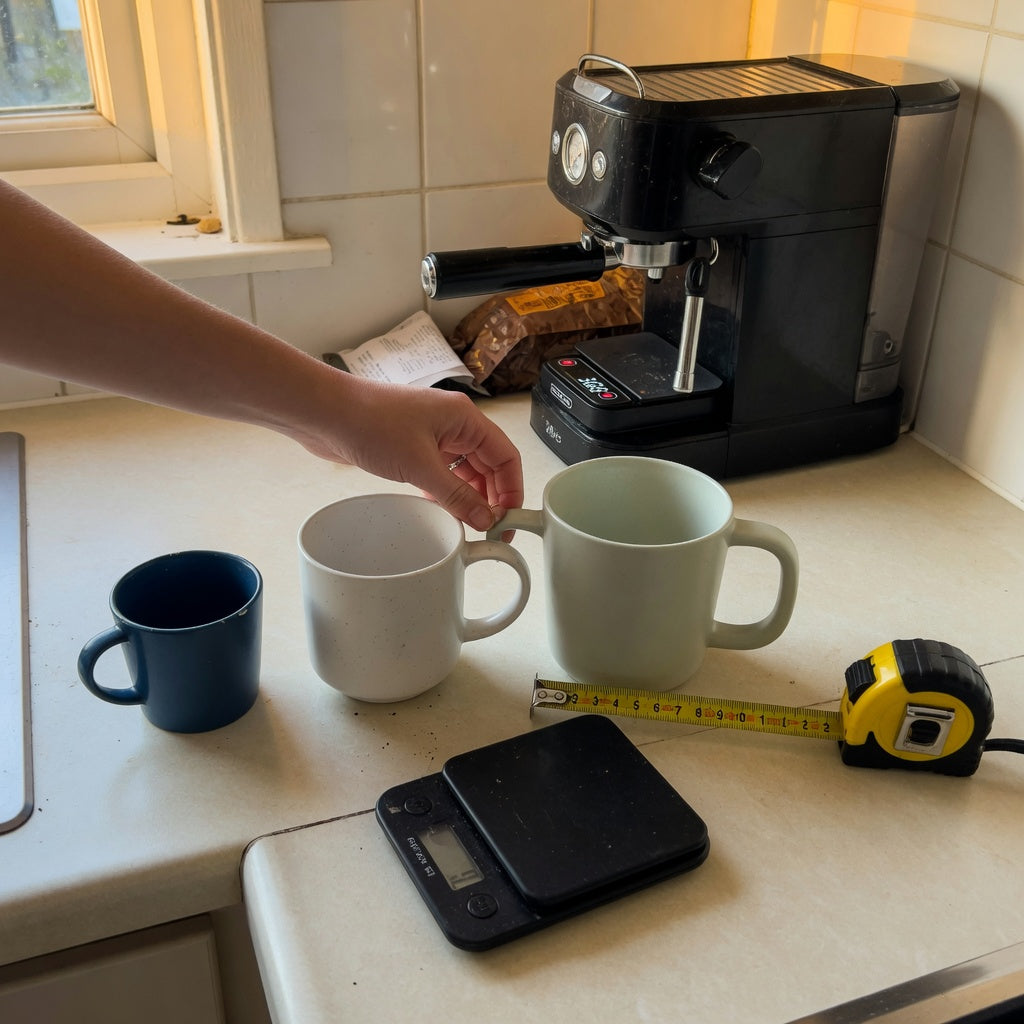
Big Latte Mug First Time Buyer Practical Purchase Checklist: 7 Checks
This big latte mug first time buyer practical purchase checklist covers what to verify on a listing before you pay — brim versus working fill, group-head clearance, handle room, care labels, and ho...
Read more
Leave a comment
This site is protected by hCaptcha and the hCaptcha Privacy Policy and Terms of Service apply.