
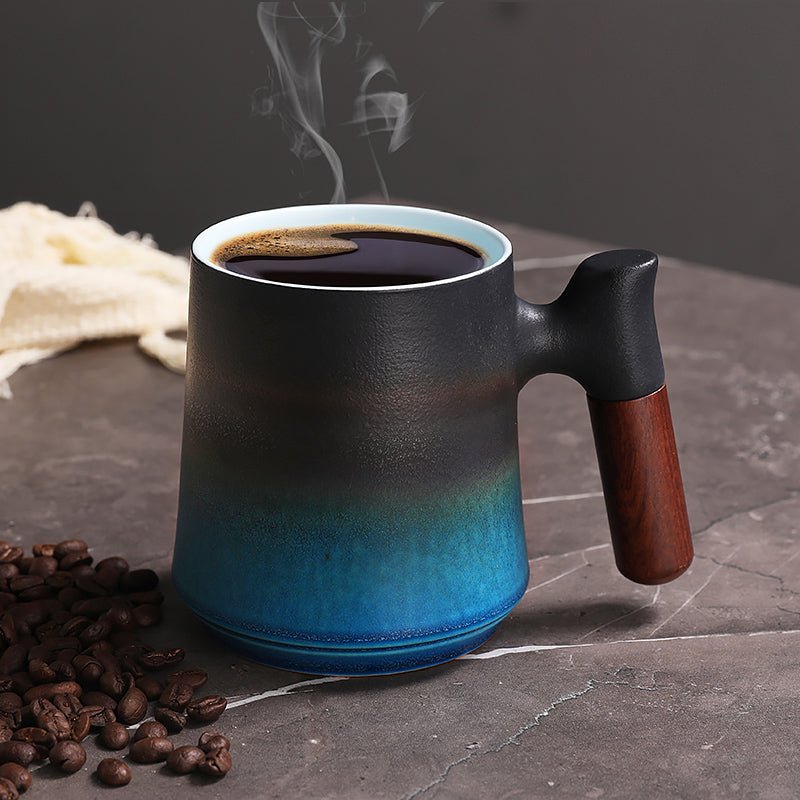
How Many Oz in a Coffee Mug? Real Sizes and What Fits Best
Reading time: about 9 minutes
A mug that looks perfect on a product page can feel too small once you pour in a full morning coffee. We hear that a lot in our store: shoppers want a simple answer to how many oz in coffee mug, but they also want to know what that size means in real life at the kitchen counter, the office desk, or during a gift unboxing.
The short answer is that most coffee mugs land somewhere between 8 oz and 16 oz. The better answer is that the right mug size depends on how you drink coffee, how much room you want for cream or milk, and whether you want a compact everyday cup or a larger mug that can handle a long work session without constant refills.
If you want a broader sizing overview, our related guides on How Many Oz in a Coffee Mug? A Practical Size Guide and How Many Oz Is a Standard Coffee Mug? cover the same topic from slightly different angles. This page focuses on what buyers usually need before they choose a mug.
What size is a coffee mug in ounces?
For everyday use, a coffee mug usually holds 8 oz, 10 oz, 12 oz, 14 oz, or 16 oz. That range covers most ceramic mugs sold for home use. Smaller mugs feel closer to a traditional cup size, while larger mugs give you room for milk, foam, or a second pour.
In practice, the printed capacity is not always the amount you should actually use. A mug labeled 12 oz may not feel full with 12 oz of liquid because you still need space below the rim. That headroom matters if you carry the mug from the counter to a desk or try to stir in cream without splashing.
| Mug size | Typical use | What it feels like |
|---|---|---|
| 8 oz | Espresso drinks, small drip coffee, tea | Compact, quick to finish |
| 10 oz | Standard coffee servings | Balanced, easy to hold |
| 12 oz | Most daily coffee drinkers | Comfortable middle ground |
| 14 oz | Milk-heavy drinks, longer sipping | Roomier without feeling oversized |
| 16 oz | Large coffee, hot chocolate, desk mug | Best if you hate refills |
If you are comparing styles inside our shop, start with the full collection of mugs and drinkware and look at shape first, not just the number on the page. A taller mug and a wider mug can both be 12 oz, but they do not feel the same in the hand.
Why does a mug’s shape matter as much as the ounce count?
Ounces tell you capacity. Shape tells you usability. Two mugs can both hold 12 oz, but one may have a narrow base and tall walls while another has a broad opening and a lower profile. That changes the way the coffee cools, how easy it is to stir, and whether the mug fits under a home espresso machine or single-serve brewer.
We see three common shape trade-offs in daily use:
- Taller mugs keep heat a little longer and can feel more secure to carry, but they may be less convenient under low cabinet shelves or coffee machines.
- Wider mugs are easier to sip from and clean, but they lose heat faster and can splash more when filled near the top.
- Heavier ceramic mugs feel sturdy on a desk, but they are not ideal if you want a light mug for commuting or frequent moving around the house.
That is why we do not recommend choosing by ounces alone. If you like a mug that feels balanced in the hand, a design like our Mountain Tall Coffee Tea Mug is worth looking at because the silhouette matters as much as the size. If you prefer a more playful seasonal style for gifting or holiday use, our Christmas Coffee Tea Mug is another example of how shape and presentation can matter just as much as capacity.
How many ounces do most people actually pour?
Very few people fill a mug to the exact brim. Real-world pours are usually lower. A coffee drinker who likes room for cream may pour less than the labeled capacity. Someone drinking black coffee may pour closer to the top, but still usually leaves a margin for movement and heat.
In our experience, the most useful way to think about it is this:
- Drink coffee black: a 10 oz to 12 oz mug often feels right.
- Add milk or creamer: 12 oz to 14 oz gives you breathing room.
- Use a mug for tea or cocoa too: 14 oz to 16 oz is more flexible.
- Prefer smaller portions: 8 oz to 10 oz keeps the drink hot and manageable.
That flexibility matters at home. It matters even more at work, where a mug often doubles as a desk companion. A larger mug reduces trips back to the kitchen, but it can also cool down more slowly and take up more space around a keyboard, notebook, or laptop.
What size should you buy for coffee, tea, or hot chocolate?
The right size depends on the drink. Coffee is only part of the equation. We see buyers use the same mug for tea, matcha, chai, and cocoa, and each drink benefits from a slightly different capacity.
- For drip coffee: 10 oz to 12 oz is the most practical range.
- For latte-style drinks: 12 oz to 16 oz works better because milk takes up space quickly.
- For tea: 8 oz to 12 oz is comfortable if you prefer a smaller serving.
- For hot chocolate: 14 oz to 16 oz is useful if you add whipped cream or marshmallows.
If you are comparing options for mixed use, check the rim width and handle clearance as well. A mug with a cramped handle may be annoying after the first week. A mug that is too shallow can be awkward for drinks with foam. These are small things, but they matter more than marketing copy usually admits.
What are the details buyers should check before choosing a mug?
Capacity is only one part of the decision. We recommend checking a few concrete details before you buy:
- Material: Most everyday mugs are ceramic or stoneware. Ceramic is common for a smooth finish and good heat retention. Stoneware often feels thicker and more substantial in the hand.
- Care: If a mug is meant for daily use, verify whether the glaze and decoration are dishwasher-safe and microwave-safe. Hand washing is still the safer choice for decorative prints, metallic accents, or delicate finishes.
- Handle shape: A comfortable handle should let at least a couple of fingers fit without scraping the mug wall. If the handle is too tight, the mug feels worse after repeated use.
- Finish quality: Watch for pinholes in the glaze, hairline cracks, uneven rims, or a wobble when the mug sits on a flat counter. Those are the kinds of defects that show up fast once a mug is used every day.
These details are why a mug can look great online but feel wrong on a table. If you want more context on fit and everyday use, the article How Many Oz Is a Regular Coffee Mug? A Practical Buyer Guide covers the practical side of choosing by size and use case.
Which mug sizes are not a good fit?
Some sizes are simply not ideal for certain buyers. A large 16 oz mug is not the best choice if you only drink short black coffees and want something that stays hot from start to finish. A small 8 oz mug is not a good fit if you routinely make milk-heavy drinks or refill only once during a long morning.
We also would not push a very large mug for people who want a lightweight feel. Bigger capacity usually means more ceramic, more weight, and more storage space. If your shelves are tight or your hand prefers a lighter cup, a mid-size mug is usually the better buy.
For shoppers who want a mug as a gift, presentation matters too. A themed mug can be a stronger choice than a plain oversized one if the goal is to give something personal and easy to use. That is one reason we often point gift buyers toward a style-first browse on our all products collection rather than forcing a capacity-only decision.
How do we think about mug size in our store?
We handle mugs as real objects, not just listing photos. That means we think about how the mug will sit on a kitchen counter, whether the handle feels comfortable after repeated washes, and whether the shape makes sense for a person who actually drinks from it every day.
Our practical rule is simple: choose the smallest mug that still fits your real routine. That keeps drinks hotter, reduces bulk, and usually makes the mug feel better in the hand. Choose larger only when you need the extra room for milk, longer sipping, or fewer refills.
If you like a slightly taller profile, take a look at the Green Waves Coffee Tea Mug. Different silhouettes can change the whole experience, even when the listed ounce count is close.
Frequently asked questions
How many oz is a normal coffee mug?
A normal coffee mug is usually 8 oz to 16 oz, with 10 oz to 12 oz being the most common everyday range. If you drink coffee black, the smaller end often feels better. If you add milk or use the mug for tea or cocoa, a larger size is usually more practical.
Is a 12 oz mug enough for coffee?
For many people, yes. A 12 oz mug is a strong all-around size because it holds a standard serving without feeling oversized. It is also easier to fit under shelves and coffee makers than many larger mugs.
Why does my mug say 12 oz but seem smaller?
Capacity is measured close to the rim, but you usually do not fill a mug to the top. That leaves space for stirring, foam, and safe handling. So a 12 oz mug can look and feel like it holds less in everyday use.
What is the best mug size for milk-based coffee drinks?
We usually suggest 12 oz to 16 oz for milk-based drinks because the milk takes up room quickly. That extra space also helps if you want foam or a splash of creamer without spilling. Smaller mugs can work, but they fill up fast.
Should I choose a bigger mug for home use?
Only if you actually use the extra space. Bigger mugs are useful for long mornings, tea, and hot chocolate, but they are heavier and can cool differently than smaller mugs. If you mostly drink standard coffee, a mid-size mug is often the better buy.
What should you do next if you are comparing mugs?
Start with how you drink, then match the mug to that routine. If you want a compact daily cup, look at 8 oz to 10 oz. If you want one mug that handles most drinks, 12 oz is usually the safest middle ground. If you want extra room for milk, tea, or longer sipping, move up to 14 oz or 16 oz.
Before you buy, compare three things side by side: size, handle comfort, and care instructions. Then browse the full CoffeifyMug collection and choose the mug that fits your cabinet space, your coffee habit, and the way you actually wash dishes at home.
Read more

Elko Coffee Mug Buying Guide: Sizes, Materials, and Best Picks
A practical guide to choosing an elko coffee mug with the right size, material, and finish for daily use, office desks, and gift buying. We compare real trade-offs so you can pick a mug that fits h...
Подробнее
BMW Coffee Mug: What to Check Before You Buy
A BMW coffee mug should feel clean, sturdy, and easy to use at a desk or in the kitchen, not just look good on a shelf. Here’s how we compare styles, sizes, and finishes before we recommend one.
Подробнее
Оставить комментарий
Этот веб-сайт защищается hCaptcha. Применяются Политика конфиденциальности и Условия использования hCaptcha.