
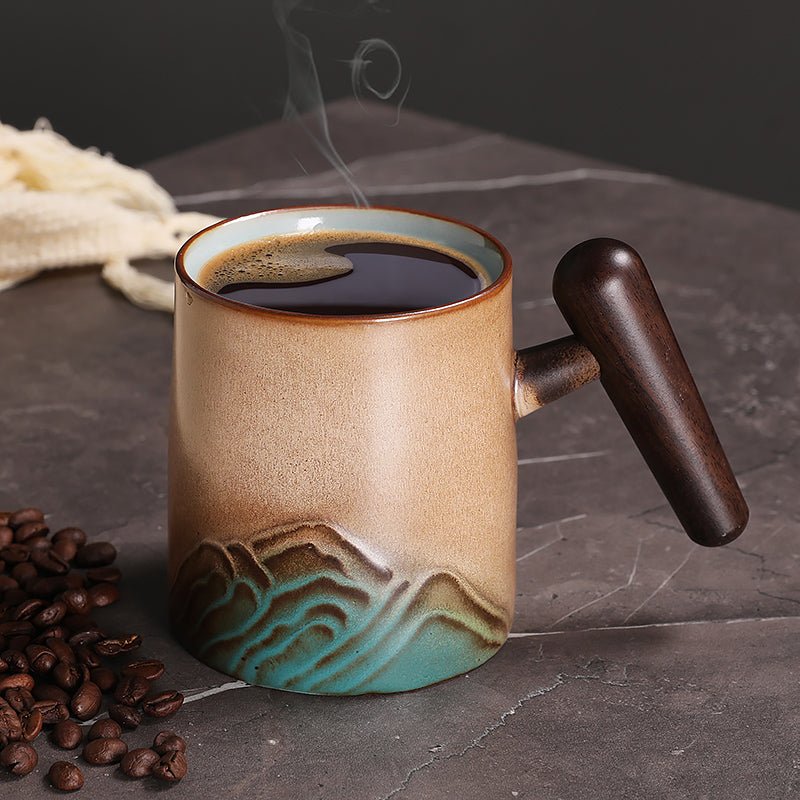
Coffee Mug Ounces: How to Choose the Right Size Before You Buy
Reading time: about 9 minutes
A mug looks simple until you pour your usual coffee into it and realize it fills faster than you expected. That is where coffee mug ounces stop being a label and start becoming a buying decision.
At CoffeifyMug, we see this all the time: shoppers want a mug that feels right on a kitchen counter, on an office desk, or as a gift that does not get tucked away after the first use. The right size depends on how you drink, how you brew, and how much room you want left for milk, foam, or a second pour.
If you want a quick browse while you compare sizes, start with our full mug collection. If you already know you want a more specific shape, our Round Coffee Tea Mug, Elk and Moon Coffee Tea Mug, and Koi Fish Coffee Tea Mug are good examples of how style and capacity need to work together.
What do coffee mug ounces actually tell you?
Coffee mug ounces tell you the approximate liquid capacity, not how much coffee you should always fill it with. A mug listed at 12 oz usually holds 12 fluid ounces to the brim, but in real use most people pour less so they can avoid splashes and leave room for cream or foam.
That distinction matters. A mug can be “12 oz” and still feel generous for black coffee, but cramped once you add milk or want a larger morning pour. We think of ounce size as the starting point, not the whole experience.
There is also a difference between nominal capacity and comfortable drinking capacity. A wide opening, a thick rim, or a tall straight-sided profile can change how full the mug feels even when the listed ounces are the same.
Our store advice: shop the ounces first, then check the shape. A mug that holds the right amount but feels awkward in hand usually ends up being the mug people stop reaching for.
Which coffee mug size fits your routine best?
The best size depends on how you actually drink coffee, not on what sounds standard. A desk coffee drinker and a weekend French press user often want very different mug sizes.
- 8 to 10 oz: Best for espresso drinks, smaller drip servings, and people who drink coffee hot and fast. These mugs are usually not ideal if you top off with a lot of milk or prefer a long, slow morning cup.
- 11 to 12 oz: A practical everyday size for many kitchens. It works well for standard drip coffee, tea, and most office coffee setups without feeling oversized.
- 13 to 15 oz: Better if you like room for creamer, a splash of foam, or a larger home pour. These are also popular for gift mugs because they feel substantial without crossing into oversized territory.
- 16 oz and up: Better for people who want a big mug on the couch or at a work-from-home desk. The trade-off is weight and heat loss; a larger mug can cool faster if you leave it sitting.
If you want a deeper breakdown of standard sizing, our related guides How Many Ounces Is a Coffee Mug? Real Sizes and Buyer Tips and How Many Ounces in a Coffee Mug? Sizes, Fits, and Buying Tips compare the common ranges shoppers ask about most.
How do coffee mug ounces change the way a mug feels in your hand?
Size affects more than capacity. It changes balance, handle feel, and whether the mug stays comfortable when it is full. A larger mug can be great on paper and still feel clumsy if the handle opening is tight or the mug is top-heavy once filled.
In practice, we look at three things when we handle mugs for our store:
- Wall thickness: Thicker ceramic usually holds heat a bit longer, but it also adds weight. That can be nice on a kitchen counter and less ideal if you carry the mug around a lot.
- Handle clearance: A mug that fits four fingers comfortably is usually easier to live with than one that pinches at the knuckles. This matters more on bigger mugs.
- Opening width: A wide mouth makes a mug feel larger and cools coffee faster. A narrower opening can keep heat in a little longer and reduce spills on a moving desk.
These details matter because many common complaint patterns are not about the artwork or the color. They are about real-use problems: a handle that feels too small, a rim that drinks too hot, or a mug that is so wide it never fits neatly under a home brewer.
Which mugs work best for gifting, desks, and everyday kitchens?
Not every coffee mug ounce range fits every use case. We see different buyers choose differently depending on where the mug will live.
For a desk: 11 to 12 oz is often the safest choice. It fits most work surfaces, is easy to carry from a kitchen to a desk, and is less likely to become a clunky visual footprint next to a keyboard or notebook.
For gifting: 12 to 15 oz tends to feel generous. That range also gives the mug enough visual presence for decorative designs, which is why mugs like the Elk and Moon Coffee Tea Mug and Koi Fish Coffee Tea Mug make sense when the goal is a present that looks intentional, not basic.
For everyday home use: A mid-size mug is usually the most forgiving. It works for coffee, tea, hot cocoa, and reheated coffee without asking the buyer to think too hard about portion size every morning.
We also see people choose a rounder mug shape when they want something comfortable to hold and easy to set down on a crowded counter. If that sounds like your setup, the Round Coffee Tea Mug is the kind of shape that tends to feel familiar quickly.
What should you check before buying a mug online?
Ounces are only part of the checkout decision. Before you buy, look at the practical details that determine whether the mug will actually work for your routine.
- Exact capacity: Check the listed ounces, but also read the product copy for the usable style of the mug. Two mugs with the same number can still drink differently.
- Material: Most everyday mugs are ceramic, which is a solid choice for heat retention and daily handling. It can chip if knocked against a sink or stacked carelessly, so storage matters.
- Care instructions: If the mug is meant for regular use, know whether it is dishwasher-safe, hand-wash only, or better suited to top-rack cleaning. That difference matters if the mug will be used at an office or washed with other dishes.
- Rim and handle design: A comfortable rim and sturdy handle are more important than a clever shape if the mug is used daily.
- Use case fit: A bigger mug is not automatically better. If you drink espresso-based drinks, an oversized mug can make your coffee feel lost. If you want a full morning pour, a smaller mug can feel too restrictive.
For shoppers comparing standard sizing and fit, our article How Many Ounces Is a Regular Coffee Mug? Buyer Guide covers the common range buyers usually expect, and How Many Ounces Is a Standard Coffee Mug? A Buyer’s Guide is useful if you are trying to avoid a mug that feels too small on arrival.
What are the trade-offs if you choose a larger mug?
A larger mug is appealing because it feels generous. The trade-off is that it can be less efficient for everyday use.
Here is what we tell shoppers to expect:
- More room, more weight: A bigger mug is heavier when full. That matters if you carry it between rooms or prefer one-handed use.
- Slower drinking, more cooling: More surface area can mean faster heat loss, especially if the mug is wide and shallow.
- More room for add-ins: If you take milk, oat milk, or foam, extra capacity is useful. If you drink coffee black, the same extra space may be wasted.
- Storage fit: Oversized mugs take up more cabinet space and can crowd a dishwasher rack.
This is why a 16 oz mug is not automatically a better buy than a 12 oz mug. It is better only if it matches how you drink.
How do we help shoppers choose the right coffee mug ounces?
Our approach is simple. We start with how much coffee you actually pour, then we match the mug to the setting. A kitchen mug, a desk mug, and a gift mug do not need the same capacity.
In our experience, the safest everyday choice is usually a mid-size ceramic mug with a comfortable handle and a shape that feels stable when full. If you like a mug that can move from coffee to tea without feeling oversized, that is the sweet spot. If you want something more decorative for gifting, choose a shape and design that still looks good sitting empty on a shelf.
For shoppers who want more context before choosing, our blog post How Many Ounces Is a Coffee Mug? Sizes, Fits, and Buying Tips gives a second pass at the sizing question from a fit perspective rather than just a measurement perspective.
Frequently asked questions
How many ounces is a normal coffee mug?
Most shoppers think of a normal coffee mug as something in the 11 to 12 oz range, but that is only a general expectation. Plenty of mugs run smaller or larger depending on the style and intended use. If you drink with milk or want a fuller morning pour, stepping up to 13 to 15 oz often feels better.
Is a 12 oz mug big enough for coffee with cream?
Yes, for many people it is. A 12 oz mug usually works well if you leave a little room and do not fill it to the rim. If you like a heavy pour of cream, foam, or flavored add-ins, a 14 or 15 oz mug gives you more breathing room.
What mug size is best for everyday use?
An 11 to 12 oz mug is usually the most versatile daily choice. It fits standard coffee and tea without feeling oversized, and it is easier to store and wash than a large mug. That said, if you routinely refill or drink larger servings at home, a mid-large mug may suit you better.
Are larger mugs worse at keeping coffee hot?
Not always, but they can feel that way in practice because there is more surface area exposed to air. A wide, oversized mug can cool faster than a smaller, deeper mug. If heat retention matters, look for a shape that is a little taller and narrower rather than just bigger by volume.
Should I choose a mug by ounces or by shape?
Start with ounces, then check the shape. Capacity tells you how much the mug can hold, but shape affects comfort, heat, and how the mug fits in hand and on a desk. A mug with the right ounces but the wrong handle or opening will still be frustrating to use.
If you want to keep comparing before you buy, start with the full collection, then narrow by the mug shape and size that matches your daily pour. The fastest decision is usually the one that matches your routine first and your design preference second.
Read more
Pfaltzgraff Coffee Mugs: What to Check Before You Buy
Pfaltzgraff coffee mugs are popular for everyday kitchens, gift sets, and collected tabletop styles, but the right choice depends on size, handle comfort, and how you plan to use them. Here’s what ...
Per saperne di più
Coffee Mugs with Scripture Verses: How to Choose a Gift or Daily Mug
A practical guide to choosing coffee mugs with scripture verses for daily use, gifting, and display. We cover size, durability, verse style, and which mug types fit real routines best.
Per saperne di più
Commenta
Questo sito è protetto da hCaptcha e applica le Norme sulla privacy e i Termini di servizio di hCaptcha.