
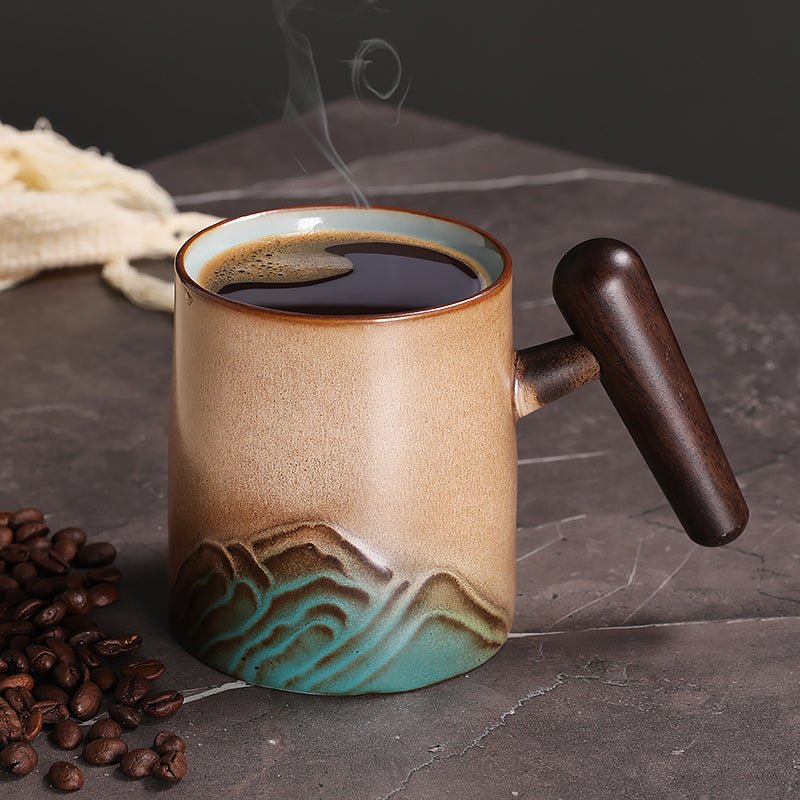
How Many Ounces in a Mug of Coffee? Buyer Guide
Reading time: about 9 minutes
The usual mistake happens at the kitchen counter. Someone buys a mug that looks generous in the photo, pours coffee into it, then realizes the cup is really meant for a smaller serving than they expected. In our store, we see that mismatch all the time, especially when shoppers want one mug that works for black coffee, milk drinks, and an office desk without feeling oversized.
How many ounces in a mug of coffee? For most everyday mugs, the practical answer is 8 to 12 fluid ounces. The exact number depends on whether you mean the mug's brim-full capacity or the amount you can comfortably drink without spilling hot coffee on the way to the table.
How many ounces is a mug of coffee in real use?
Most people do not drink a mug filled to the top. A mug labeled 12 ounces may only hold about 10 ounces of coffee in normal use once you leave space for steam, cream, foam, or a lid. That extra room matters more than people think. It keeps the drink easier to carry, easier to stir, and less likely to slosh over the rim when the mug moves from the counter to a desk.
Here is the simplest way we explain it to shoppers:
| Mug size | Practical coffee amount | Best for | Trade-off |
|---|---|---|---|
| 8 oz | About 6 to 7 oz in normal use | Small drip coffee, espresso-based drinks, shorter pours | Too small for milk-heavy drinks or long sipping sessions |
| 10 to 12 oz | About 8 to 10 oz in normal use | Everyday coffee, balanced servings, most buyers | May feel modest if you like a large refill-free cup |
| 14 to 16 oz | About 12 to 14 oz in normal use | Big morning pours, café-style drinks, office use | Heavier in the hand and takes more cabinet space |
| 20 oz and up | Usually an oversized serving | Large iced coffee, soup, very long work sessions | Not ideal if you want the coffee to stay hot and easy to sip |
If you want a quick rule: 8 ounces is small, 10 to 12 ounces is standard, and 14 to 16 ounces is large for a daily coffee mug. Anything bigger starts to behave more like a jumbo cup than a classic mug.
Why does the printed capacity not match the pour?
The number on the base or product listing usually refers to total capacity, not comfortable drinking capacity. That is the part shoppers miss. A mug can technically hold 12 ounces of liquid, but if you fill it all the way up, there is no room for movement, steam, or milk. The usable amount is what matters on a real morning, not the maximum amount a cup could possibly contain.
We also see the same physical details change how a mug feels, even when two mugs share the same ounce label:
- Wall thickness: thicker stoneware usually feels sturdier and keeps heat longer, but it adds weight.
- Rim shape: a wide rim can make a mug easier to sip from, while a narrow rim can hold heat longer but feels more enclosed.
- Handle clearance: a handle that fits two fingers comfortably is better for daily use than one that pinches or twists your wrist.
- Base stability: a mug should sit flat on a kitchen counter or office desk without rocking.
Our rule in the store is simple: a mug is only useful if it still feels balanced when full, easy to rinse after use, and comfortable enough to carry from the counter to the desk without thinking about it.
That is why two mugs with the same ounce rating can feel very different in practice. One may be compact and easy to store. Another may feel roomy but awkward if you drink one-handed while working.
Which mug size fits your drink?
The best mug size depends on the drink, not just the coffee label. A black drip coffee drinker usually needs something different from someone who adds milk, syrup, or foam.
- 8 oz: Best for short drip coffee, espresso drinks, or people who want a smaller serving and do not want a half-full mug sitting on the desk.
- 10 to 12 oz: The most flexible range for daily coffee. It works well for a standard pour, still leaves a little room for cream, and does not look oversized in the hand.
- 14 to 16 oz: Better for bigger mugs, milk drinks, and shoppers who want fewer refills. This size is common for people who sit at a workstation for hours and sip slowly.
- 20 oz and above: Useful for oversized iced coffee or soup, but not the best choice if you care about heat retention and a classic mug feel.
There is a real trade-off here. A larger mug looks generous, but it can cool coffee faster because of the extra exposed surface area. A smaller mug feels more precise, but it may be frustrating if you like a long, uninterrupted morning pour. If you prefer a mug that feels good in the hand rather than one that simply looks large, the middle range usually wins.
If you want more buying context, we cover the broader size ranges in our earlier guides, including How Many Ounces Is a Coffee Mug? Real Sizes and Buyer Tips and How Many Ounces in a Coffee Mug? Sizes, Fits, and Buying Tips.
What do we check for before we recommend a mug?
We handle mugs the same way many customers do at home: on a kitchen counter, in a dishwasher cycle, and on a desk next to a laptop. That is where the small flaws show up. A mug can look great in photos and still be annoying in daily use if the handle is cramped, the rim feels rough, or the base does not sit evenly.
These are the details we pay attention to:
- Rim quality: no sharp glaze edge, no rough spot on the lip, and no chip that will worsen with use.
- Handle comfort: enough room for two fingers without scraping the knuckles on the mug body.
- Glaze consistency: a smooth glaze is easier to clean and usually resists staining better than a visibly uneven finish.
- Common defect modes: rim chips, hairline glaze cracks, loose handle joins, and tiny pinholes in the finish.
- Care fit: plain glazed ceramic or stoneware usually handles normal washing well, but printed or metallic decoration needs more caution and should be checked against the listing.
That last point matters. Some mugs are built for daily dishwasher use. Others are better treated as hand-wash items because of the finish or decoration. If you ignore that difference, the mug may still work for a while, but the print, glaze, or detail work can age faster than the cup itself.
If you are comparing styles rather than just size, start with the Golden Waves Kio Coffee Tea Mug, the The Flow Coffee Tea Mug, and the Mountain Sea Coffee Tea Mug. Those are the kinds of options shoppers often look at when they want a mug that feels personal on a desk but still needs to work for everyday coffee.
Which mugs should you compare first?
If you are still deciding, our advice is to compare the mug against how you actually drink coffee, not against a generic ideal. A mug that is perfect for a weekend latte may be the wrong choice for a weekday drip coffee habit.
Use this short filter before you buy:
- Decide whether you usually drink black coffee, coffee with milk, or iced coffee.
- Pick the amount you want in one pour: small, standard, or large.
- Check whether the mug needs to fit in a cabinet, under a machine, or in a dishwasher rack.
- Look at the handle shape and base width, not only the artwork.
If you want to browse the full range in one place, our collection is the fastest way to compare styles and find a size that suits your routine. For shoppers who want a broader size breakdown before choosing, we also keep practical guides on related questions like How Many Ounces Is a Regular Coffee Mug? Buyer Guide and How Many Ounces Is a Standard Coffee Mug? A Buyer’s Guide.
Frequently asked questions
How many ounces is a standard coffee mug?
A standard coffee mug is usually 8 to 12 fluid ounces. In normal use, the actual pour is often a little less because most people leave space at the top. For everyday drip coffee, 10 to 12 ounces is the range we see work best for most buyers.
Is an 8-ounce mug too small for drip coffee?
Not necessarily, but it is on the small side for a full drip coffee serving. It works well if you like a shorter cup, drink black coffee, or want a compact mug that does not feel bulky on a desk. If you add milk or want one long pour, a larger mug is usually easier to live with.
Does a 16-ounce mug hold 16 ounces of coffee?
Not in the way most people use it. A mug labeled 16 ounces may hold that much if filled to the brim, but a comfortable pour is usually less. The usable amount depends on how much headspace you leave for stirring, steam, and movement from the kitchen to the table.
What mug size is best for coffee with milk?
A 10 to 14 ounce mug is a practical middle ground for coffee with milk. It gives you enough room for the coffee itself and still leaves space for cream, foam, or a splash of milk without making the cup feel too small. If you like milk-heavy drinks, avoid tiny mugs because they fill up too fast.
Are bigger mugs better for keeping coffee hot?
Not always. A bigger mug can hold more liquid, but it also exposes more surface area, which can make coffee cool faster. If heat retention matters most, a thicker ceramic or stoneware mug in the standard size range is usually more practical than an oversized cup.
What should you compare before you buy?
If you want the right answer to how many ounces in a mug of coffee, compare more than the ounce label. The useful size, the handle fit, and the way the mug feels after a few dishwasher cycles matter just as much as capacity.
- Choose 8 oz if you want a smaller, more controlled pour.
- Choose 10 to 12 oz if you want the safest everyday pick.
- Choose 14 to 16 oz if you drink larger servings or add milk often.
- Choose a mug with a comfortable handle, a flat base, and a finish that fits your care routine.
If you are ready to compare real options, start with our full mug collection and look for the mug that matches the way you actually drink coffee, not just the way it looks in a photo.
Read more
Mushroom Coffee Mug Buying Guide: Size, Style, and Daily Use
A mushroom coffee mug should look good on the counter and still feel right after the tenth refill. We break down size, finish, care, and style so you can choose one for daily use, gifting, or display.
Leer másMushroom Coffee Mug Buying Guide: Size, Style, and Daily Use
A mushroom coffee mug should look good on the counter and still feel right after the tenth refill. We break down size, finish, care, and style so you can choose one for daily use, gifting, or display.
Leer más
Dejar un comentario
Este sitio está protegido por hCaptcha y se aplican la Política de privacidad de hCaptcha y los Términos del servicio.