
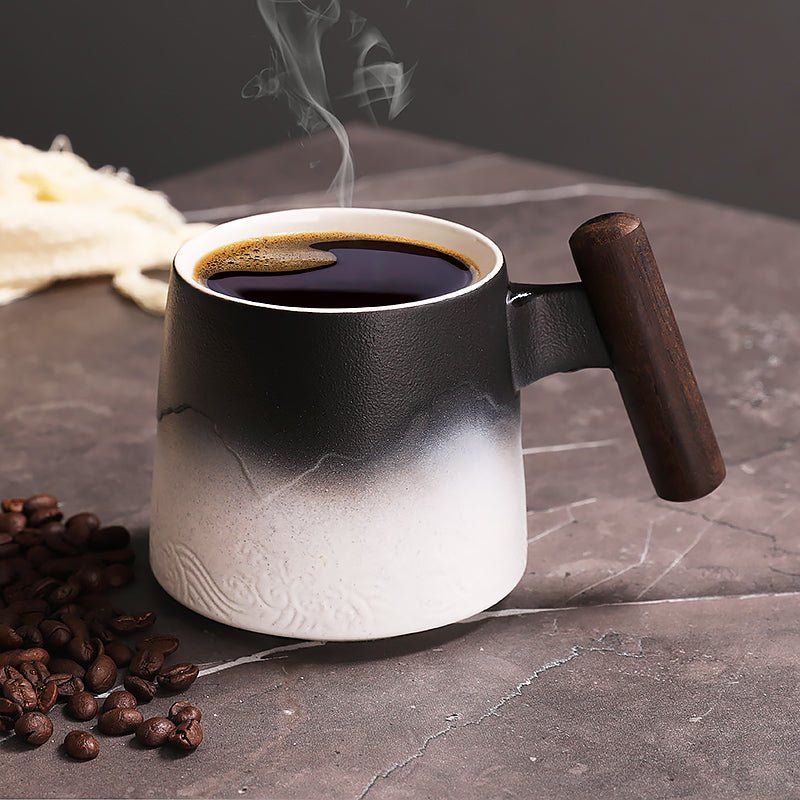
Rack for Coffee Mugs: How to Choose the Right Fit for Your Cabinet
Reading time: about 10 minutes
A rack for coffee mugs usually earns its place the first morning your cabinet door hits a handle, two mugs rattle together on the shelf, and the one cup you actually want is buried behind the travel tumbler. We see that problem often in kitchens, office break rooms, and gift setups that need to look tidy without taking over the counter.
The right rack does more than store cups. It changes how fast you can grab a mug, how much cabinet space you recover, and whether your kitchen looks organized or crowded. In our store, we think about mug storage the same way we think about the mugs themselves: fit matters, finish matters, and the wrong size is a daily annoyance.
If you are also comparing mug sizes, our size guides help with the other half of the decision. A 12 oz coffee mug guide is useful if you want a standard everyday cup, while the 16 oz coffee mugs guide and 20 oz coffee mugs guide help if you drink larger pours and need wider spacing on the rack.
What does a rack for coffee mugs need to fit?
The first question is simple: will your mugs actually hang or sit on it without crowding each other? A good rack for coffee mugs needs enough clearance for the mug body, the handle shape, and the way you reach for it. That sounds basic, but it is where many buyers miss.
We look at three measurements before recommending any storage setup:
- Handle clearance: the hook or peg must let the handle seat fully without forcing the mug to tilt.
- Mug diameter: a wide 14 oz or 16 oz mug needs more spacing than a slimmer 8 oz cup.
- Overall depth: if the rack projects too far, it can block cabinet doors or feel awkward on a narrow wall.
For smaller mugs, a compact rack can work well. For larger mugs, especially the styles covered in our 14 ounce coffee mugs guide and the 16 oz guide above, spacing becomes more important than raw capacity. A rack that claims to hold many mugs is not helpful if only the thinnest cups fit comfortably.
One common mistake is buying for count alone. A 12-hook rack sounds efficient, but if each mug bumps the next one, daily use becomes annoying. We would rather see slightly fewer mugs stored with proper spacing than a crowded rack that chips rims over time.
Which type of mug rack works best in a real kitchen?
There is no single best style. The right rack for coffee mugs depends on your space, the weight of your mugs, and whether you want the display to stay visible.
| Rack type | Best for | Trade-off |
|---|---|---|
| Countertop tree rack | Small kitchens, gift displays, everyday mugs near the coffee station | Takes counter space and can look crowded if overloaded |
| Wall-mounted rack | Saving counter space and creating a clean coffee bar setup | Needs secure mounting and the right wall surface |
| Under-cabinet rack | Using dead space below shelves or cabinets | Not ideal if the cabinet is low or the mugs are tall |
| Inside-cabinet mug holder | Hiding storage completely and reducing visual clutter | Can make tall mugs harder to access quickly |
Countertop racks are the easiest to set up. They are also the least demanding if you rent, change your layout often, or want a display that can move from kitchen to office desk. The downside is obvious: they occupy the same counter space you may already need for a grinder, kettle, or espresso machine.
Wall-mounted racks free up surface area and usually feel cleaner in a coffee nook. They are the better choice if you use mugs daily and want them within reach of a coffee maker. The trade-off is installation. If the wall is weak, the anchors are wrong, or the rack is overloaded, you will know it quickly.
Under-cabinet styles are practical for small kitchens, but only if the bottom of the cabinet leaves enough room for the mug height. This is where larger formats can become a problem. A mug that fits beautifully in a countertop rack may hang too close to a drawer pull or backsplash once it is lifted overhead.
What materials hold up best over time?
Material choice matters more than the marketing photo. A rack for coffee mugs handles repeated weight, minor bumps, and daily dust. It also sits in a kitchen, where steam, water droplets, and the occasional splash are part of the job.
The main options are:
- Metal: usually the strongest option for hooks, stems, and wall-mounted frames. We like it for stability, especially with heavier ceramic mugs.
- Wood: warmer visually and good for farmhouse or natural kitchen styles, but it can show wear faster if the finish is thin or water is left on the surface.
- Mixed materials: often wood with metal hooks, which balances appearance and durability if the joints are well made.
For everyday kitchen use, we prefer a rack with a stable base or secure mounting points and a finish that can be wiped clean with a damp cloth. Powder-coated metal is often easier to maintain than bare finishes because it resists the look of fingerprints and minor scuffs. Wood racks should have sealed surfaces if you expect coffee splashes or regular wiping near the sink.
Defect modes are worth checking before you buy. We look for loose hooks, uneven welds, rough edges that can scratch glaze, and wobbly bases that make the rack tip when mugs are added unevenly. A beautiful rack that flexes under load is not a good buy.
How many mugs should a rack actually hold?
Capacity depends on how you use the rack, not just how many cups are in the house. A family kitchen, a single-person apartment, and a shared office all need different answers.
Use this as a practical rule:
- 2 to 4 mugs for a small coffee station or a countertop display.
- 4 to 6 mugs for a daily kitchen setup where everyone has a favorite cup.
- 6 or more mugs if you want a wall feature, entertain often, or rotate seasonal mugs.
More capacity is not always better. A crowded rack makes it harder to grab one mug without knocking the next one. It also increases the chance of rim contact, especially with heavier ceramic pieces. If your mugs are oversized, the rack may need fewer positions than the product photo suggests.
That is why we usually recommend checking your mug lineup first. If most of your collection is in the 16 oz range, as covered in our 16 ounce coffee mugs size and fit guide, you will want more breathing room than a rack designed for compact cups. If your set includes a mix of sizes, think about the largest mug first and size the rack around that.
Where should you place it so it is useful, not annoying?
Placement decides whether the rack becomes part of your routine or just another object on the wall. A rack for coffee mugs works best where the hand naturally reaches after brewing: near the machine, close to the kettle, or by the pantry shelf where coffee lives.
We usually avoid three placements:
- Directly above a heat source, where steam and warmth can affect finishes over time.
- Too close to a sink, where splashes leave constant water marks.
- In a narrow walkway, where mug handles snag sleeves, bags, or cabinet doors.
If you are styling a coffee bar, keep the rack visually connected to the rest of the setup. One shelf for beans, one container for spoons, one rack for mugs. That arrangement looks intentional and keeps everything within reach. It also makes gift unboxing easier when someone receives a new mug set and wants to display it immediately.
For office desks and break rooms, the best rack is often the one with the least footprint. A compact countertop version keeps mugs accessible without taking over the shared surface. In that setting, a wall rack only works if the space is secure and people will not constantly bump into it.
What is a rack for coffee mugs not good for?
A mug rack is not a fix for every storage problem. If your mugs are very tall, unusually wide, or have heavy decorative handles, a standard rack may not fit cleanly. It is also not the right answer if you want to hide clutter completely. Open mug storage is visible by design.
It is also a poor choice for very fragile keepsakes that you rarely use. A display rack invites handling, dusting, and daily reach-in use. If you have a few heirloom mugs that should stay protected, a closed cabinet or a shelf with doors may be the better route.
We also would not use a lightweight rack for oversized stoneware. Heavy mugs put more stress on hooks and joints than most shoppers expect. If the base shifts or the mounting points flex, that is a sign the rack is being asked to do more than it was built for.
How do you choose one without overbuying?
The cleanest way to buy is to match the rack to your actual mug collection, not the idealized version you think you might own later. We see customers pick a rack based on a photo and then realize half their cups are too wide, too tall, or too heavy.
A quick checklist helps:
- Measure the tallest mug and the widest mug you plan to store.
- Decide whether you need countertop, wall-mounted, or under-cabinet storage.
- Check the finish and how it will hold up to cleaning in a kitchen.
- Leave space for the handle to move freely without bumping the next mug.
- Think about daily use, not just display.
If you are building out a new coffee corner, start with the mug size, then the rack, then the rest of the layout. That order saves more frustration than buying storage first and hoping the mugs fit later. Our full collection of coffee mugs and related pieces is a good starting point if you want to compare styles before you pick a storage setup.
In our experience, the best rack for coffee mugs is the one that disappears into your routine. It should hold steady, fit your tallest cup, and make your kitchen easier to use. Anything less becomes decoration, not storage.
Frequently asked questions
How do I know if a rack for coffee mugs will fit my mugs?
Check the height, width, and handle shape of your largest mug first. If the rack listing does not give usable spacing or hook depth, assume it may be tight for anything above a standard 12 oz cup. We recommend comparing it against the largest mug in your set, not the smallest.
Is a wall-mounted mug rack better than a countertop one?
Wall-mounted racks save counter space and work well for a coffee station, but they need secure installation. Countertop racks are easier to move and better for renters or changing layouts. The better choice depends on whether you value flexibility or surface space more.
What material is easiest to keep clean?
Powder-coated metal is usually the easiest to wipe down because it handles fingerprints and minor splashes well. Wood looks warmer, but it needs a sealed finish if it sits near water or steam. For kitchen use, smooth surfaces are easier than textured or unfinished ones.
Can I use one rack for oversized mugs?
Sometimes, but not always. Oversized mugs can crowd each other and put too much weight on smaller hooks or pegs. If most of your mugs are 16 oz or 20 oz, choose a rack that gives extra clearance instead of assuming a standard layout will work.
What is the biggest mistake people make when buying mug storage?
They buy for capacity instead of fit. A rack may claim to hold many mugs, but if the handles collide or the base wobbles, it becomes frustrating fast. Fit, stability, and access matter more than a high count on the box.
If you want to compare mug sizes before choosing a rack for coffee mugs, start with your largest everyday cup, then review the fit guides linked above and browse our products for the style that matches your space.
More from our blog
Read more

Lego Coffee Mug: What to Check Before You Buy One
A lego coffee mug should feel good in the hand, hold the right amount, and survive regular use without losing its finish. Here’s what we check for in our store before we’d recommend one to a buyer.
Weiterlesen
Steelers Coffee Mug Buying Guide: Sizes, Materials, and Gift Fit
A Steelers coffee mug should feel good in the hand, sit flat on a desk, and survive normal washing without losing the graphic. We break down size, material, care, and gift fit so you can choose the...
Weiterlesen
Hinterlasse einen Kommentar
Diese Website ist durch hCaptcha geschützt und es gelten die allgemeinen Geschäftsbedingungen und Datenschutzbestimmungen von hCaptcha.