
Coffee Mug Shelf Guide: Fit, Materials, and Display Tips
Reading time: about 9 minutes
The shelf looked right until the first tall mug had to come out at an angle. We hear that a lot in our store. Shoppers plan a neat coffee corner, mount the shelf, set out the mugs, and then realize the handle clips the cabinet, the tallest cup barely clears the shelf above, or the whole setup feels crowded by the second morning.
A good coffee mug shelf should make daily use easier, not turn storage into a small frustration you repeat every day. If you are choosing mugs and shelf space at the same time, start by browsing our full collection so you can compare the shapes you actually want to live with before you commit to a shelf depth, mounting height, or display style.
What should a coffee mug shelf handle every day?
The shelf has to do more than hold weight. It needs to let you grab a mug with one hand before work, put it back after a dishwasher cycle, and still look orderly next to a coffee maker, grinder, or office kettle. In our experience, the best setups are not the ones packed edge to edge. They are the ones that leave enough room for fingers, handles, and fast cleanup.
We judge a shelf by four daily-use checks:
- Reach: your most-used mug should come off the shelf without bumping the one beside it.
- Clearance: the handle needs side space, and the rim needs lift space above it.
- Stability: the front edge should not flex or feel shaky once several ceramic mugs are in place.
- Cleanup: coffee drips, dust, and a damp mug base should wipe off without leaving the shelf looking tired.
That last point matters more than shoppers expect. A shelf can be beautiful and still be a poor buy if it shows every ring, every fingerprint, and every splash from the milk frother. If you want a display-only shelf for seasonal pieces, you can prioritize looks more heavily. If it is your everyday station, function has to lead.
Which shelf style works best for your space?
There is no single best shelf type. The right choice depends on wall space, cabinet height, whether you rent, and how many mugs you actually use in a normal week. A small apartment kitchen, a home office desk corner, and a family coffee bar need different setups.
| Shelf style | Best for | Main trade-off |
|---|---|---|
| Floating wall shelf | Clean look, one-row display, narrow counters | Needs proper anchors and careful measuring before drilling |
| Under-cabinet rail or hooks | Saving counter space and quick grab-and-go use | Poor fit for tall mugs and heavier ceramic pieces if the hardware is light duty |
| Freestanding counter rack | Renters, temporary coffee stations, office desks | Uses counter space and can look cluttered fast |
| Box shelf or cubby shelf | Collectors, gift mugs, mixed mug heights | Bulkier look and less flexible spacing once installed |
If you rotate mugs often, a freestanding rack is easier to change. If you want a cleaner line above the counter, a floating shelf usually looks better. Under-cabinet hooks seem efficient, but they are not ideal for every mug. Wide handles, heavier bodies, and taller silhouettes all make that style less forgiving.
How much depth and height do your mugs really need?
This is where most buying mistakes happen. People measure the board, not the usable space. A decorative front lip can steal half an inch or more. A mug with a body around 3.5 to 4 inches wide can still need close to 5 inches of practical shelf depth once the handle projection and your fingers are part of the equation.
- Measure from the back wall to the true front edge where the mug body will sit.
- Check for anything that reduces usable space, such as a rail, trim, or raised lip.
- Measure the open height above the shelf so the mug can lift straight up without tipping hard forward.
- Account for handle swing. The widest point is often the handle, not the mug body.
- Leave visible gaps between mugs. If the handles nearly touch, daily use will feel tighter than it looked empty.
Tall-profile mugs need more lift space than shoppers expect. A mug can technically fit on a shelf and still be awkward every time you remove it. We tell customers to test the full movement path: set a mug down, wrap your hand around the handle, and picture lifting it out quickly with a half-awake grip. That simple check catches more problems than a product photo ever will.
It also helps to think about who uses the shelf. A single-person coffee nook can be styled more tightly. A shared kitchen, where mugs are grabbed quickly by different people all day, needs more breathing room and easier clearance.
What shelf materials hold up best around coffee, steam, and dishwashers?
Shelf material changes both the look and the maintenance. We have seen shoppers focus on color first and regret it later after steam, drips, and repeated mug movement start leaving marks.
- Solid wood: warm and sturdy, especially for a classic kitchen look, but unfinished or lightly sealed wood can show water rings if a dishwasher-warm mug goes back before the base is fully dry.
- MDF or particleboard with laminate: often budget-friendly and easy to style, but exposed seams can swell or lift if the shelf sits above a coffee maker where steam hits it day after day.
- Powder-coated metal: easy to wipe, less bothered by splashes, and a smart choice near active coffee stations, though chips at hard contact points can become visible if mugs knock against the frame.
- Glass: visually light and clean, but it shows fingerprints, dust, and base marks faster than most shoppers expect.
Hardware matters too. A sturdy bracketed shelf can carry daily ceramic use well, but adhesive-only hooks are a weak point in humid spots. Heat from a brewer and steam from a kettle are hard on glue over time. If the plan is to hang heavy mugs under a cabinet, screw-mounted hardware is the safer route.
Care is simple but easy to skip. Let mugs dry fully before putting them back on wood, wipe coffee splashes before they dry sticky, and keep the shelf far enough from the stovetop that grease does not settle on everything. Those are boring habits, but they make a shelf stay good-looking much longer.
Which mugs actually look right on a coffee mug shelf?
The best display is usually a mix of restraint and one strong visual note. On an open shelf, shape reads faster than pattern. Tall, clean silhouettes line up neatly. One unusual piece can add personality. Too many bulky or novelty shapes at once usually make the shelf feel busy, especially in a small kitchen.
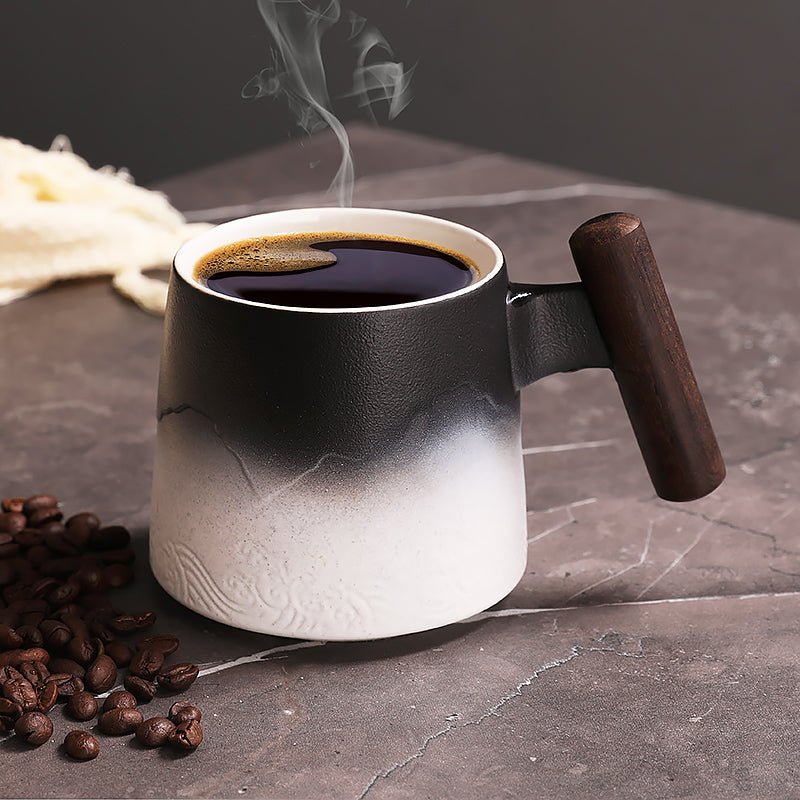
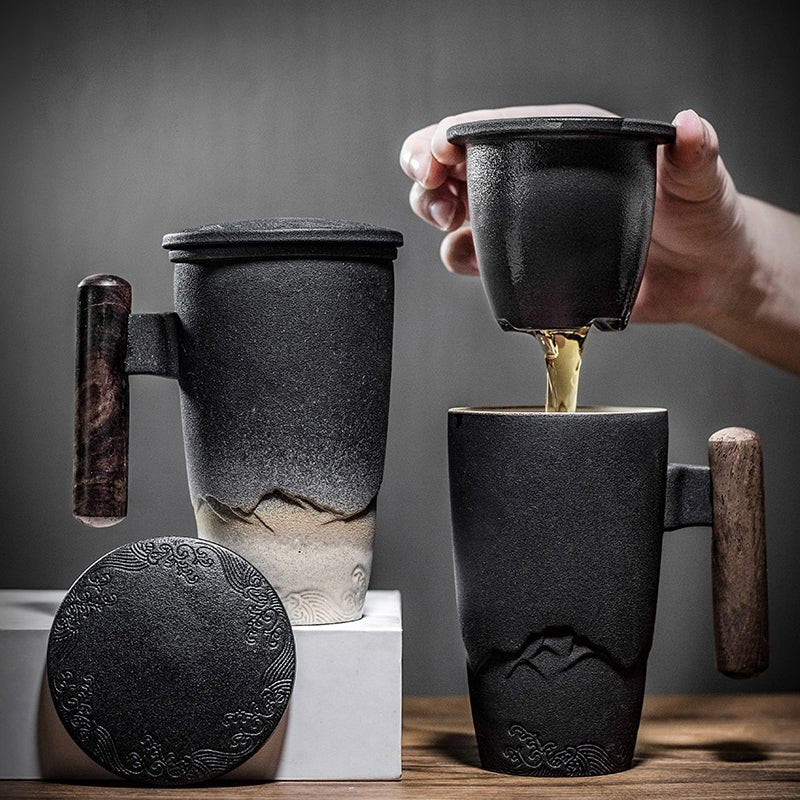
That is why we suggest comparing mug roles, not just mug designs. The White Golden Waves Tall Coffee Tea Mug and the Mountain Tall Coffee Tea Mug are better examples of the taller profiles that can read cleanly on an open shelf if you have the vertical clearance. The Handbag Coffee Tea Mug makes more sense as a focal piece than as one of six tightly packed everyday mugs. It is the kind of mug that works well after a gift unboxing or as a conversation starter on a shelf with otherwise simpler shapes.
Three display patterns tend to work best:
- Everyday row: two to four mugs you actually reach for each morning, placed in the easiest spots.
- Statement plus basics: one standout mug paired with simpler shapes so the shelf has a focal point without feeling crowded.
- Rotation shelf: a few mugs on display while extras stay in the cabinet, then swap them by season or mood.
A coffee mug shelf is not the best place for everything. Oversized travel tumblers, extra-wide soup mugs, and very heavy handmade pottery often fit better in a cabinet or drawer system. If your priority is maximum storage rather than a display moment, open shelving is usually the wrong tool.
What buying mistakes cause regret after installation?
Most disappointment comes from practical misses, not style mistakes. The shelf photo looks fine. Real use exposes the problem.
- Buying based on total width only: width matters, but usable depth and lift height decide whether the shelf feels good to use.
- Overfilling on day one: a packed shelf looks smaller, dusts harder, and makes each mug harder to grab.
- Ignoring wall and hardware strength: ceramic weight adds up quickly, especially if all the heavier mugs sit at one end.
- Mounting too close to the coffee machine: steam and splatter are rough on low-grade finishes and adhesive trim.
- Choosing the wrong shelf for the household: if everyone wants fast hidden storage, an open coffee mug shelf may become visual clutter instead of a useful station.
In our experience, the best-looking shelf is rarely the fullest one. Leaving one or two spaces open makes the display easier to clean and much easier to use. That is true in a family kitchen, a studio apartment, and even a small office coffee corner where mugs get grabbed quickly between meetings.
Frequently asked questions
How deep should a coffee mug shelf be?
Deep enough for the mug body to sit securely with some room left for the handle and your hand. Many everyday mugs need more practical depth than the rim width suggests, especially if the shelf has a front lip. Measure the mug at its widest point and then allow a little extra so it does not sit right at the edge.
Can I put a coffee mug shelf above my coffee maker?
Yes, if you leave enough clearance to remove mugs comfortably and choose a shelf finish that can handle heat and steam. This is where metal and well-finished wood usually age better than cheaper particleboard edges. If the machine vents steam straight up, avoid mounting the shelf too low.
Are under-cabinet mug hooks safe for heavy ceramic mugs?
They can be, but the answer depends on the hardware and the cabinet material. Screw-mounted hooks or rails are a better bet for heavier mugs than adhesive options. If the mugs are tall or thick-walled, an open shelf often feels safer and easier to use than hanging storage.
What mugs should stay off an open shelf?
Very heavy handmade mugs, oversized travel tumblers, and pieces you rarely use are better kept elsewhere. Open shelves also are not ideal if you dislike dusting or want a minimal visual field. In that case, keep the display shelf for a few favorites and move the rest behind a cabinet door.
How do I keep a coffee mug shelf from looking crowded?
Start with fewer mugs than the shelf can technically hold. Mix one taller or more decorative piece with simpler everyday shapes, and keep some visible empty space between handles. That makes the shelf read as intentional instead of overloaded.
Before you buy, do one quick check: measure usable depth, measure the open height above the shelf, decide how many mugs are truly everyday pieces, and then compare that plan against the shapes you actually like. If you want a practical place to start, browse our collection and choose one daily-use mug and one display piece that fit your space instead of filling every inch at once.
More from our blog
Read more
Plastic Coffee Mug Buying Guide: What to Check Before You Buy
A plastic coffee mug should feel solid in the hand, clean easily, and fit the way you actually drink coffee. We cover the material details, care limits, and trade-offs that matter before you buy.
Weiterlesen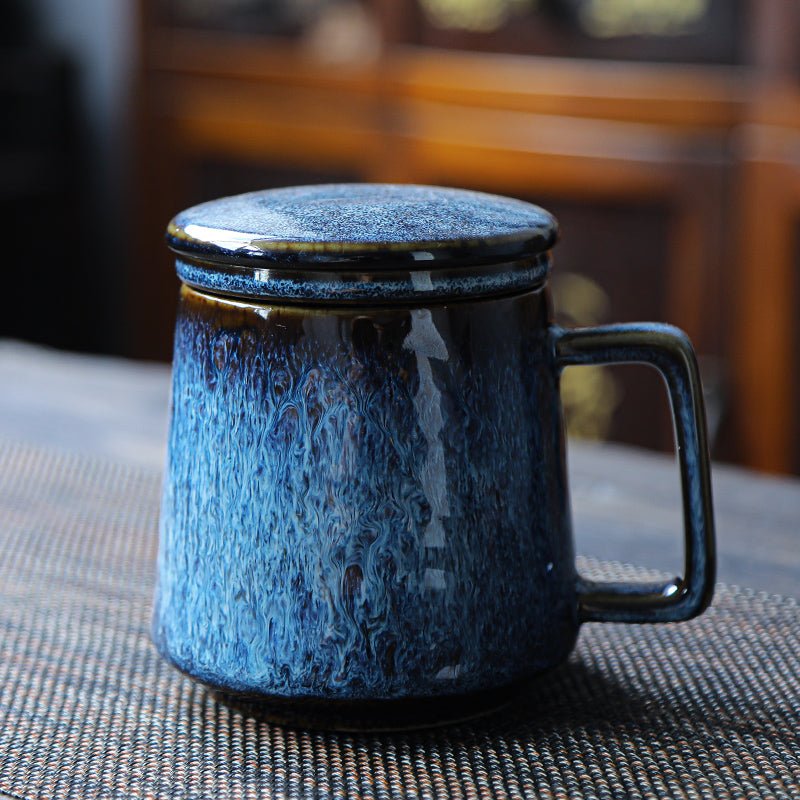
How to Get Coffee Stains Out of Mugs Without Damaging the Finish
Coffee stains build up fast on daily-use mugs, especially around the rim and inside the bowl. Here are safe ways to clean them, what to avoid, and how to keep the finish looking good.
Weiterlesen
Hinterlasse einen Kommentar
Diese Website ist durch hCaptcha geschützt und es gelten die allgemeinen Geschäftsbedingungen und Datenschutzbestimmungen von hCaptcha.