
Coffee Mug Design: How to Choose a Mug That Looks Good and Works Daily
Reading time: about 8 minutes
A mug can look great on a product page and still feel wrong in your hand by the second sip. We see that all the time: a narrow handle that pinches, a glossy finish that shows every fingerprint, or a tall mug that tips a little too easily on a crowded desk.
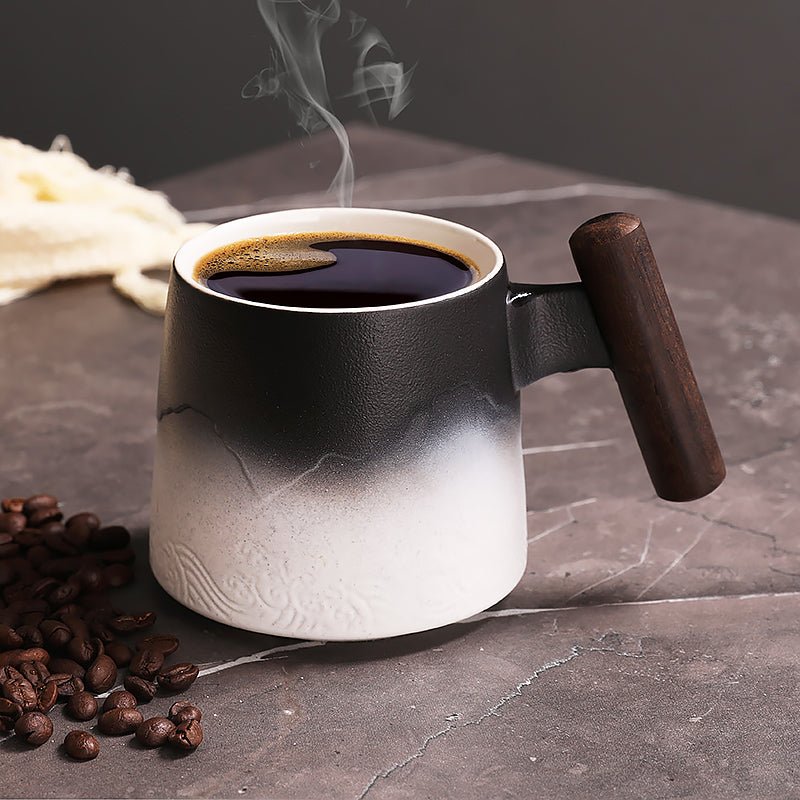
That is why coffee mug design matters as much as capacity or color. Good design is not just decoration. It is the balance between shape, comfort, material, and how the mug survives real use at a kitchen counter, in a car-adjacent office routine, or during a gift unboxing where presentation matters as much as practicality.
If you want to browse our current range while you read, start with our products page or the broader full collection.
What makes coffee mug design work in daily use?
A strong coffee mug design does three jobs at once: it feels stable, it pours a believable amount of coffee into your routine, and it does not fight your hand. That sounds simple, but many mugs miss one of those points.
In our experience, the details shoppers notice most after a week are the ones people skip during the first glance:
- Handle clearance: Your fingers should fit without scraping the mug body.
- Base stability: A flat, even base matters more on a busy desk than most shoppers expect.
- Rim shape: A slightly rounded rim tends to feel better than a sharp cut edge.
- Weight balance: A mug that is too top-heavy feels awkward even if the design looks clean.
A mug can be beautiful and still be a poor buy if it wobbles, feels cramped, or is so oversized that your coffee cools before you finish it. That is why we treat design as a usability question, not just a visual one.
Which mug materials change the design the most?
Material is where coffee mug design becomes practical. The surface finish, wall thickness, and weight all change how the mug feels and how well it holds up.
| Material | What it does well | Trade-off |
|---|---|---|
| Ceramic | Classic look, good weight, easy to print on, fits most kitchens and offices | Can chip if knocked against a sink or crowded shelf |
| Stoneware | Heavier feel, more substantial look, often hides small scuffs better | Usually bulkier and can feel too heavy for some buyers |
| Glass | Clean visual style, good for showing layered drinks | Less forgiving in daily handling and usually not the warmest feel |
| Stainless steel | Strong, travel-friendly, useful for active routines | Not the best choice if you want a classic desk mug or printed art surface |
Ceramic is still the easiest fit for most shoppers because it balances cost, weight, and decoration options. Stoneware works well if you want a denser, more substantial mug, but it is not the best choice for someone who prefers a lighter cup. Glass can look polished on a shelf, yet it is not the mug we usually recommend for rough office handling or frequent sink collisions.
If you are comparing sizes too, our related guides on 16 ounce coffee mug size, material, and fit, 20 oz coffee mug buying checks, and 24 oz coffee mug buying checks are useful for understanding how material and capacity work together.
How do shape and handle design affect comfort?
Shoppers often focus on the artwork first, then realize the handle is the part they touch every day. Handle design is where a mug becomes either comfortable or annoying.
We look at three things when we judge comfort:
- Finger space: A handle should fit at least two fingers comfortably for most adults, without forcing the knuckles against the mug body.
- Thumb balance: The mug should feel secure when you lift it with a full cup of coffee, not only when it is empty.
- Body profile: A slightly tapered or gently curved body often feels easier to hold than a perfectly straight cylinder.
Some of the most common design flaws are subtle. A handle can be too small even when the mug looks large. A mug can have a nice silhouette but a base that feels too narrow for a cluttered work desk. A thick-walled mug can feel premium, but if it becomes too heavy once filled, that premium feel turns into fatigue.
That is why a mug meant for office desks is not always the same mug we would recommend for a gift basket or a kitchen display. If your buyer is comparing visually appealing options, our article on awesome coffee mugs pairs well with this section because it focuses on use, not just appearance.
Which finishes and artwork styles hold up best?
Finish affects both the look and the maintenance. A glossy glaze reflects more light and usually looks cleaner at first glance. A matte finish often feels more modern, but it can show oils, scuffs, or abrasion marks faster depending on the surface treatment.
Artwork style matters too. A design with a simple, high-contrast graphic often reads clearly from across a kitchen or office. Dense artwork, fine lines, or text-heavy layouts can look sharp online and still become hard to read on the curved mug surface.
Here is the real-world trade-off we see most often:
- Full-wrap prints give you more design space, but alignment has to be clean or the seam will be obvious.
- Minimal logo marks age well and are less likely to feel dated.
- Personalized mugs are strong gifts, but they work best when the name placement and font are chosen carefully.
- Highly detailed artwork can look impressive in photos, but it is less forgiving on curved ceramic surfaces.
If personalization is what brought you here, our post on personalized coffee mug ideas that actually look good is worth reading before you choose a layout. The biggest mistake we see is trying to cram too much text, too many colors, or too many tiny elements into a small print area.
Common defect modes to watch for include print fading after repeated washing, light crazing in the glaze over time, a rough foot ring that scratches tabletops, and uneven print placement near the handle seam. None of those issues make a mug unusable on day one, but they do affect how long the design feels premium.
What should you check before buying a coffee mug design?
Before you buy, compare the mug the way we would if it were going on a retail shelf or a gift table. A good photo is not enough.
- Check the size in ounces. A mug that looks right in a photo may feel too small for long coffee sessions or too large for a quick espresso-based drink.
- Check the handle opening. If the listing gives dimensions, compare them to the hand of the person who will use it most.
- Check care instructions. A design that only stays nice with gentle hand washing is a different buy from one meant for daily dishwasher cycles.
- Check the base. A flat, stable base matters on stone counters, wood desks, and small kitchen shelves.
- Check the art placement. Centered designs usually look safer; off-center art can be stylish but is easier to misjudge.
For buyers who are still deciding on capacity, our guide on average coffee mug size helps set expectations before you buy. If you are comparing smaller servings, the 8 oz coffee mug guide is a better fit.
There is also a simple limitation to call out: the most visually striking coffee mug design is not always the best for heavy travel use. If someone wants something for a commute, a lid and spill resistance matter more than print style. A ceramic mug is still better for a desk or kitchen routine than for a backpack or moving car.
How do you choose a design for a gift versus for yourself?
The best design for a gift is usually not the same as the best design for your own daily mug. Gift buyers care more about immediate visual appeal and how the mug looks when opened. Personal buyers usually care more about fit, weight, and whether they will still like it three months later.
For gifts, we usually recommend:
- Clear artwork with one strong focal point
- Neutral or widely liked colors
- A size that is easy for most adults to hold comfortably
- Packaging that protects the mug without making it hard to open
For personal use, we lean toward the mug that fits the hand first. That might mean a plainer design, but a better handle, better balance, and a finish that does not annoy you every morning.
If you are shopping with both goals in mind, browse the styles in our full collection and compare them against your daily routine. The right design is the one you will keep reaching for after the novelty fades.
Frequently asked questions
What is the best coffee mug design for everyday use?
The best coffee mug design for everyday use is usually a ceramic mug with a comfortable handle, a flat base, and a simple print that will not feel dated quickly. We usually steer shoppers toward designs that balance visual appeal with grip, stability, and easy cleaning.
Are matte coffee mug designs harder to maintain?
Often, yes. Matte finishes can look refined, but they may show scuffs or hand oils more easily than glossy glaze depending on the surface treatment. If you want a lower-maintenance option, a smooth glossy ceramic mug is usually the safer choice.
What mug size works best for office coffee?
For many office desks, a mid-size mug around 12 to 16 ounces is the most practical because it is large enough for a normal pour without being bulky. Bigger mugs can be useful, but they take more desk space and can feel heavy when filled.
Do printed coffee mugs last through dishwasher cycles?
Some do, some do not. The durability depends on the print method, glaze, and care instructions from the seller, so you should always check the listing details. If a design matters to you long term, choose one that is intended for regular washing rather than display-only use.
Is a ceramic mug better than stainless steel for design?
For printed artwork and a classic coffee table look, ceramic is usually better. Stainless steel is more durable for travel, but it does not give you the same feel or display quality, and it is not the best choice if the design itself is the main reason you are buying.
If you are ready to compare options, start with a size that matches your routine, then choose a shape and finish that feel good in hand. After that, check the care instructions and browse our mug collection for a design that fits both your kitchen and your desk.
Read more
Insulated Coffee Mug with Handle: What Buyers Should Check
A practical guide to choosing an insulated coffee mug with handle that feels good in hand, holds heat well, and fits real daily use. We cover lid design, materials, care, and where a handled mug is...
Weiterlesen
Best Coffee Mugs to Keep Coffee Hot: What Actually Works
We break down which coffee mugs actually hold heat, which materials lose it fast, and what to check before you buy for home, office, or gifting.
Weiterlesen
Hinterlasse einen Kommentar
Diese Website ist durch hCaptcha geschützt und es gelten die allgemeinen Geschäftsbedingungen und Datenschutzbestimmungen von hCaptcha.