
Wood Mug Buying Guide for Daily Use, Care, and Fit
Reading time: about 8 minutes
The first thing people notice about a wood mug is not the color or the shape. It is the handle. A wooden handle changes how a mug feels in the hand, how it looks on a desk, and how carefully you need to wash it after a long coffee day.
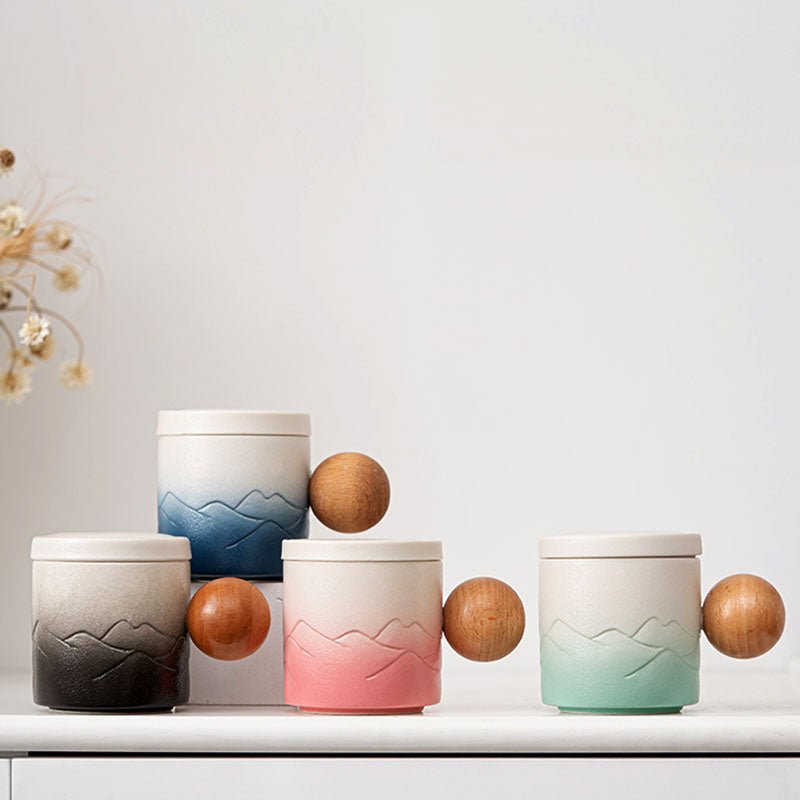
We handle this category for real shoppers, so we pay attention to the small stuff that matters after the unboxing: does the handle stay comfortable during a slow morning pour, does the mug feel balanced when it is full, and does the finish still look good after repeated cleaning? If you are comparing options, start with our Mountain Sea II Coffee Tea Mug with Wooden Handle, then compare the rest of our range in the full collection.
What makes a wood mug different from a standard mug?
A wood mug stands out because the wooden handle changes both the look and the daily handling experience. On a ceramic body, the wood brings a softer visual contrast and a warmer grip than bare ceramic or metal. In our experience, that matters most on kitchen counters, office desks, and gift tables, where the mug is handled often and seen even more often.
The trade-off is simple. A wooden handle usually asks for a little more care than an all-ceramic mug. It is not the best choice if you want a mug you can throw into the dishwasher every day without thinking. If you want the lowest-maintenance option, a plain ceramic cup may fit better. If you want something that feels more considered and a little less generic, a wood mug has a clear advantage.
For shoppers who want to compare the broader style before choosing one mug, our article Wood Mugs: How to Choose a Practical Coffee Mug That Feels Different covers the main fit points without the fluff.
Who is a wood mug actually a good fit for?
We usually see three types of buyers gravitate toward a wood mug:
- People who want a mug that feels better in the hand during slow coffee or tea breaks.
- Gift buyers who need something that looks thoughtful without being fragile or overly decorative.
- Shoppers who want a desk-friendly mug that looks cleaner and more distinctive than a standard promo cup.
It is also a strong pick for homes where the mug spends time on a counter or tray and gets noticed. The visual warmth of wood works well with light oak, matte black appliances, stone counters, and simple neutral kitchens. In an office, it tends to look more polished than a random ceramic mug from the break room.
It is not the best fit for people who prioritize dishwasher convenience above all else, or for anyone who wants a mug they can toss in the microwave without checking the care instructions. Wood and heat do not make the easiest long-term pair.
What should you check before buying one?
Before choosing a wood mug, we look at a few details that are easy to miss in product photos but matter once the mug is in daily rotation.
| What to check | Why it matters | What we look for |
|---|---|---|
| Handle shape | Determines how comfortable the mug feels when full | A grip that does not pinch the fingers and does not force a tight hold |
| Joint between wood and body | Common wear point after repeated washing | A clean connection with no rough edges or loose-looking fit |
| Finish on the wood | Affects stain resistance and long-term appearance | A smooth finish that is easy to wipe dry after washing |
| Mug weight and balance | Impacts comfort on a desk or while carrying a hot drink | A balanced feel that does not tip forward when the mug is full |
These are the details that separate a mug you enjoy using from one that just photographs well. If you want a broader buying checklist, our guide Mug Wood Buying Guide for Daily Use, Care, and Fit is a useful companion read.
We also suggest paying attention to size. A mug that feels great at 10 oz can feel too small for someone who drinks a large morning pour, while an 11 oz shape may feel right for a standard coffee or tea serving but still not suit a full travel-mug replacement. If you usually fill a mug to the top and move it around the house, balance matters more than capacity alone.
How do you care for a wood mug without ruining the handle?
Care is where buyers often overthink or underthink the problem. The right routine is not complicated, but it does need to be consistent. We tell customers to treat the wooden part differently from the mug body.
- Wash it gently with mild soap and warm water.
- Do not leave the wood soaking in the sink.
- Dry the handle right after washing, especially around the joint.
- Avoid harsh scrubbers that can scuff the finish.
- Keep it out of the microwave unless the product care instructions specifically say otherwise.
That routine protects the part most likely to age first. A wooden handle can look great for a long time if it is not repeatedly soaked and forgotten on the drying rack. The common failure mode we see is not dramatic breakage. It is gradual dulling: the finish looks tired, the wood feels a little rougher, and the mug stops looking fresh on a counter or open shelf.
If you are still choosing between styles and want a more practical care-first perspective, Mug Wood Buying Guide: Materials, Care, and What to Check goes deeper into the maintenance side.
Which wood mug style should you choose from our store?
We keep the decision simple because most buyers are trying to solve one of two problems: they want a mug that feels more personal, or they want a gift that will not get ignored after the first week. Two product pages are a good starting point.
The The Cloud Coffee Tea Mug Wooden Handle is a strong option if you want a softer visual profile and a mug that reads clean and minimal on a desk or shelf. The Mountain Sea II Coffee Tea Mug with Wooden Handle leans a little more distinctive and works well for shoppers who want a mug with more visual character.
Here is the practical way to choose between styles:
- Choose the cleaner, simpler look if the mug will live on an office desk or in a neutral kitchen.
- Choose the more expressive look if this is a gift or you want a mug that feels less ordinary.
- Choose the mug with the most comfortable handle shape if you drink slowly and hold the cup for long stretches.
We do not recommend choosing purely on photos. A wood mug can look similar across listings, but the grip and balance are what determine whether it becomes a daily favorite or sits in the cupboard. If you want to browse beyond a single style, the full collection is the best place to compare the available options side by side.
What are the real trade-offs compared with ceramic or glass?
A wood mug is not automatically better than ceramic or glass. It is different, and that difference comes with clear trade-offs.
Compared with plain ceramic, a wood mug usually offers a warmer feel and a more distinctive look, but it asks for more careful washing. Compared with glass, it often feels more substantial and less fragile in everyday use, but it can be less transparent about fill level and may need more attention to drying and storage. Compared with stainless steel, it looks more home-friendly and less utilitarian, but it is usually not the best pick for keeping drinks hot on the move.
That is why we see wood mug buyers split into two camps. One group wants a daily mug that feels nicer at the table. The other wants a gift that looks more thoughtful than a standard retail cup. If you are buying for heavy-duty commuting, a travel tumbler is probably the better tool. If you are buying for slow mornings, desk coffee, or tea after lunch, a wood mug makes more sense.
Frequently asked questions
Can I put a wood mug in the dishwasher?
Usually not, unless the product care instructions explicitly say it is dishwasher-safe. The wooden handle is the part most likely to suffer from repeated heat, moisture, and detergent exposure. Hand washing is the safer routine for long-term appearance.
Is a wood mug safe for hot coffee and tea?
Yes, a properly made wood mug is designed for normal hot drinks like coffee and tea. The key is the construction quality and the care routine, especially around the handle. We still recommend checking the product page for any specific care notes before purchase.
Does a wood mug work well for office use?
Yes, especially if you want something that looks more polished than a standard mug on a desk. It also tends to photograph well for gift sets or client-facing spaces. The main limitation is that it needs a bit more care than a plain ceramic mug.
What size wood mug should I buy for daily coffee?
For most everyday coffee drinkers, a mug in the 10 oz to 11 oz range is a practical starting point. Smaller sizes suit espresso-based drinks and short pours, while larger cups suit people who refill less often. The best choice depends on how full you like your mug and whether you use milk or cream.
What is the biggest drawback of a wood mug?
The biggest drawback is maintenance. The wooden part can age faster if it is soaked, scrubbed hard, or left wet after washing. If you want zero-care convenience, a plain ceramic mug is the safer buy.
If you are ready to compare actual options, start with the two product pages above, then use our full collection to narrow down the style that fits your kitchen, desk, or gift list best.
Read more
Printed Coffee Mugs: How to Choose the Right Style for Daily Use
Printed coffee mugs look simple, but the details decide whether they feel good in hand, survive daily washing, and work for gifting or desk use. Here’s how we compare styles, sizes, and print-frien...
Read more
Togo Coffee Mugs: How to Choose the Right Travel Mug Style
A practical guide to choosing togo coffee mugs that actually work for commuting, desk use, and gift buying. We compare shape, lid fit, spill risk, and the trade-offs that matter before you buy.
Read more
Leave a comment
This site is protected by hCaptcha and the hCaptcha Privacy Policy and Terms of Service apply.