
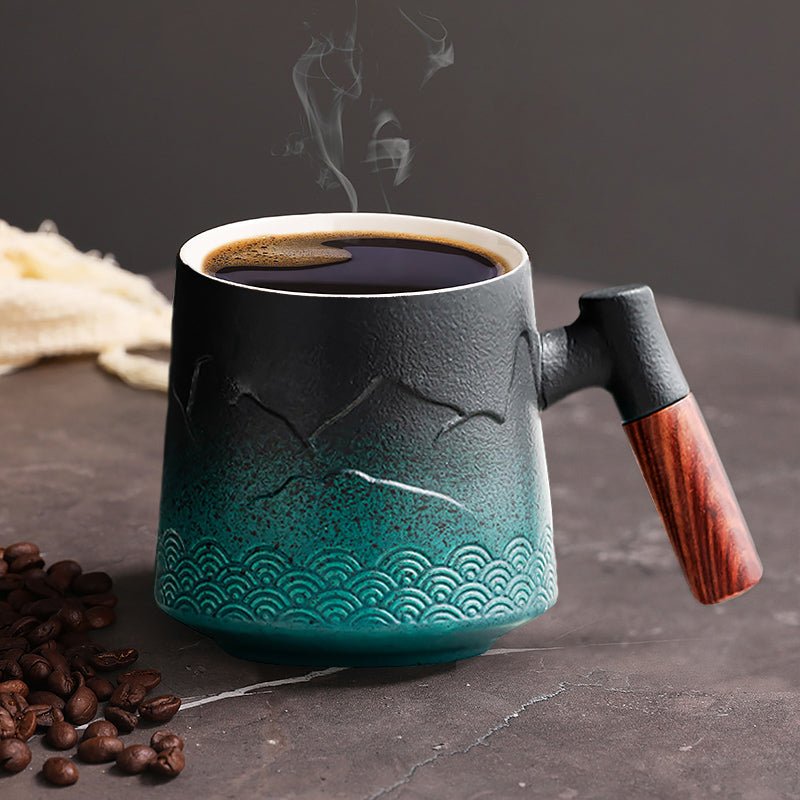
Wood Coffee Cup Buying Guide: What to Check Before You Buy
Reading time: about 9 minutes
A wood coffee cup only works if it still feels good after the third refill and still looks clean on a desk at 4 p.m. That is the real test. Not the first sip, not the product photo, but the way it handles daily use, heat, cleanup, and the occasional rough day in a kitchen sink.
In our store, we usually see two kinds of shoppers using this search: people who want the warm look of wood without giving up the reliability of a ceramic mug, and people who are genuinely looking for a fully wooden cup. Those are not the same purchase. The second option is rarer, more maintenance-heavy, and usually not the better everyday choice. For most buyers, a ceramic mug with a wooden handle is the practical version of the idea. If that is what you want, start with Mountain Sea II Coffee Tea Mug with Wooden Handle or The Cloud Coffee Tea Mug Wooden Handle. If you want to compare more cup styles side by side, browse our full collection.
What does a wood coffee cup usually mean for buyers?
Most shoppers use the phrase wood coffee cup in one of two ways. They either mean a cup made fully or mostly from wood, or they mean a mug that uses wood as part of the design, usually the handle. That distinction matters because the care, durability, and daily comfort are very different.
A full wooden cup can look beautiful, but it asks more from the owner. Wood is a natural material. It can absorb odor, react to moisture, and show wear if it is not finished and maintained properly. A ceramic mug with a wooden handle gives you the visual warmth of wood while keeping the drinking surface stable, easier to clean, and better suited to regular coffee use.
That is why we treat the phrase as a buying signal, not a fixed product type. The shopper is really asking for a cup that feels warmer and less generic than a plain diner mug. The best answer is often a hybrid design.
Which version is better: full wood or ceramic with a wooden handle?
If you are comparing options, start with the trade-off table below. It reflects the real-world questions we hear most often from people shopping for desks, kitchen counters, and gifts.
| Option | Best for | What to watch for |
|---|---|---|
| Full wooden cup | Decorative use, light sipping, buyers who want a very natural look | More care, more sensitivity to moisture, usually less suitable for daily dishwasher use |
| Ceramic cup with wooden handle | Daily coffee, desk use, gifting, buyers who want comfort and easier cleanup | The wooden part still needs care, and the mug should be checked for finish quality at the handle join |
| All-ceramic mug | Lowest-maintenance everyday use | Less distinctive visually if you want a warmer, more handcrafted look |
For most shoppers, the ceramic-plus-wood route wins. You still get the tactile contrast of a wooden grip, but you are not asking the cup itself to behave like a woodworking project on your coffee table. That matters on rushed mornings, in office kitchens, and when a mug gets rinsed quickly between meetings.
One good way to compare styles is to read our seasonal and use-case guides alongside the product pages. If you are buying for colder months or as a gift, our Autumn Coffee Mugs: How to Choose the Right Cup for Cozy Season guide is useful. If the mug needs to travel between home and camp, our Camping Cup Buying Guide for Camp, Cabin, and Everyday Coffee helps separate looks from real durability.
What should you check before buying one online?
We recommend looking at a wood coffee cup the same way we inspect incoming stock: not just for style, but for the small details that determine whether it will age well. A pretty handle is not enough. A useful mug has to survive hot liquid, repeated washing, and normal handling on a kitchen shelf.
- Material mix: confirm whether the drink body is ceramic, glass, metal, or wood. For daily coffee, ceramic is usually the most forgiving.
- Handle join: check where the wood meets the mug. That junction should look clean, even, and firmly attached.
- Finish quality: look for smooth sanding, no rough edges, and no visible cracking in the coating or glaze.
- Cleaning requirements: if the product page does not clearly say dishwasher-safe or microwave-safe, assume gentler care is the safer choice.
- Grip comfort: the handle should feel stable with one hand, even when the mug is full.
- Gift presentation: a wood-accented mug should look intentional out of the box, not like a novelty item that only works in photos.
These checks matter because the common failure points are usually not dramatic. They are small things: a handle that loosens, a rough spot where the wood was not finished well, a glaze line that shows stress after use, or water sitting too long around the wooden section. Those are the details that separate a mug you keep from one you regret ordering.
If you prefer a more curated buying path instead of scanning every product, our Coffee Cup Mug Buying Guide for Daily Use and Better Fit gives a broader framework for choosing capacity, shape, and everyday comfort.
Where does a wood coffee cup fit best in daily life?
A wood coffee cup works best in settings where the mug is seen and handled often, but not abused. That means kitchen counters, home offices, guest shelves, and gift boxes. It is a strong choice if you want a cup that feels a little warmer and more personal than a plain white mug.
In our experience, it is especially appealing for three use cases:
- Desk coffee: the wooden handle adds visual character without making the mug feel fussy.
- Gift giving: it looks thoughtful, but not overly decorative.
- Daily home use: it gives you a more tactile grip than a fully glazed mug.
There are also clear cases where it is not the best choice. If you want something you can toss into a dishwasher every day without thinking, a plain all-ceramic mug is easier. If you rely on a microwave to reheat coffee several times a day, confirm the exact product instructions first. And if you want a cup for rough outdoor use, a camping-focused cup may be a better fit than a wood-accented mug. That is why we often point shoppers toward the right use case instead of pretending one design fits everything.
For gift shoppers, the seasonal angle matters too. A wood-accented mug has a natural, cozy feel that fits fall and winter nicely, which is why our autumn mug guides often connect so well with this category. It is a better match for someone who enjoys slow mornings than someone who just wants the cheapest mug on the shelf.
How do you care for it so it lasts?
The care routine is where a wood coffee cup either stays attractive or starts looking tired. The basic rule is simple: keep the wooden part dry, and avoid giving it more heat and water exposure than it needs.
- Wash by hand unless the product page explicitly says otherwise.
- Do not leave the handle soaking in water.
- Dry the wooden section right away instead of air-drying it while wet.
- Store the mug in a dry spot, not directly over a steam-heavy kettle or dishwasher vent.
- Inspect the handle occasionally for loose fit, roughness, or finish wear.
Those steps sound basic because they are. The point is consistency. Wood handles do not usually fail all at once. They age gradually. If water is allowed to sit in seams or around edges, you may see dulling, swelling, or a rough feel long before the mug becomes unusable. A little attention keeps the cup looking like a choice, not a compromise.
That is also why a ceramic mug with a wooden handle is a good middle ground. The ceramic body handles coffee cleanly, while the wooden part gives you the warm look you wanted. You get the style without turning cleanup into a project.
What should you buy if you want the look but need practicality?
If practicality matters more than novelty, we would steer you toward the mug style rather than a full wooden vessel. That means choosing a ceramic body with a wooden handle, checking the finish carefully, and buying from a product page that gives you enough detail to judge care requirements before the mug arrives.
Among the options we carry, Mountain Sea II Coffee Tea Mug with Wooden Handle is a good place to start if you want a distinct, giftable look, while The Cloud Coffee Tea Mug Wooden Handle is the kind of mug many buyers compare when they want a softer, more understated profile. The right choice depends less on the name and more on how the mug feels in your hand and how often you plan to wash it.
If you are still deciding, use this quick checklist before buying:
- Do I want a true wood cup or a ceramic mug with wood accents?
- Will I hand wash it consistently?
- Does the handle look comfortable for a full mug of coffee?
- Is this for home use, office use, or gifting?
- Would a plain ceramic mug be easier for my routine?
That last question is the one shoppers often skip. It is also the one that prevents most regret. A wood coffee cup is at its best when you want warmth, texture, and a more personal look. If you want the least maintenance possible, a simpler mug may serve you better. If you want to compare both paths, keep the product pages open and browse the rest of our collection against your daily routine.
Frequently asked questions
Is a wood coffee cup good for everyday use?
Yes, if you choose the right kind. For most buyers, a ceramic mug with a wooden handle is more practical than a fully wooden cup because the drinking surface is easier to clean and more stable for daily coffee. The key is to treat the wooden part gently and avoid soaking it.
Can I put a wood coffee cup in the dishwasher?
Not automatically. If the mug has a wooden handle or other wooden parts, hand washing is usually the safer choice unless the product page clearly says it is dishwasher-safe. High heat and long wet cycles are rough on wood finishes.
What is the main disadvantage of a wooden coffee cup?
The main trade-off is maintenance. Wood can wear, dry out, or show moisture damage if it is not cared for properly. That is why many shoppers do better with a ceramic mug that only uses wood for the handle or accent.
Is a wood coffee cup a good gift?
Yes, especially for someone who likes warm, natural-looking kitchenware. It feels more considered than a generic mug, but it is still useful enough for daily coffee. Just make sure the recipient is the kind of person who will appreciate hand-wash care.
What should I avoid when buying one online?
Avoid listings that hide the material mix, the care instructions, or the handle construction. Those details matter more than the styling photos. If the product page is vague, it is harder to judge whether the mug will hold up in real life.
If you are narrowing your choice now, compare the two product pages above against your daily routine, then use the full collection to see what feels right for your kitchen, desk, or gift list.
Read more

Unique Coffee Cup Ideas for Daily Use, Gifting, and Display
A unique coffee cup should do more than look different. We break down which shapes, handles, and finishes hold up on real kitchen counters, office desks, and gift openings.
Read more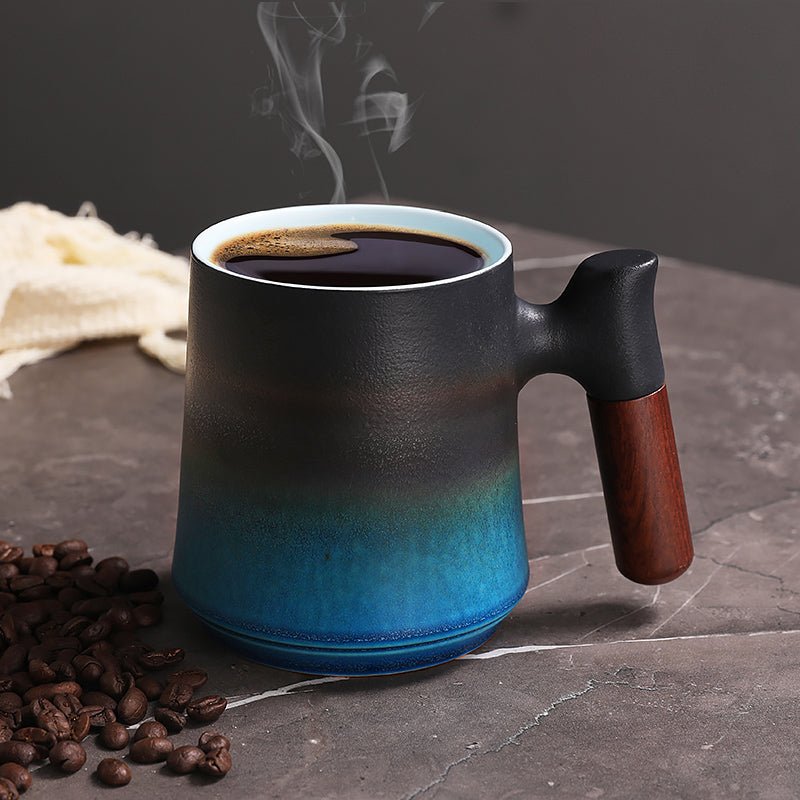
Where Can I Buy Mugs? A Practical Buyer’s Guide From CoffeifyMug
If you are comparing places to buy mugs, the real question is which seller gives you the right size, finish, and everyday durability. Here we break down the best places to shop and what to check be...
Read more
Leave a comment
This site is protected by hCaptcha and the hCaptcha Privacy Policy and Terms of Service apply.