

Two Tone Ceramic Coffee Mugs: Color, Finish, and Fit
Reading time: about 10 minutes
A mug can look balanced in a product photo and feel completely different once it is beside a coffee machine, under a low cabinet, or among an otherwise matched set. With two tone ceramic coffee mugs, the position of the second color matters as much as the colors themselves. A gradient reads softly from across the room, a wave pattern stays visible on a busy desk, and a tall profile can give a design more presence while demanding closer attention to storage and brewer clearance.
In our store, we see buyers focus first on color and then discover that height, handle opening, rim shape, or care instructions have a greater effect on daily use. This guide separates the design details visible in our product listings from general ceramic mug checks that apply across the category. That distinction matters: a product name can identify a gradient or golden wave design, but it does not establish an exact capacity, metallic content, or dishwasher rating.
Which two tone ceramic coffee mugs suit your room and routine?
Start with the place where the mug will spend most of its time. A color combination that works on a bright kitchen shelf may feel too prominent in a small office cubicle. Conversely, a restrained finish can disappear against a crowded counter. These are the most direct matches among the design directions named in our store:
- For a softer transition between colors: The Gradient Coffee Tea Mug is the relevant next page to inspect. Its named gradient direction suits a shopper who wants color without a sharply divided upper and lower section. Check the listing photographs from multiple angles before deciding, because the placement of a gradient affects how it looks when the handle faces left or right.
- For a green accent that remains visually distinct: The Green Waves Coffee Tea Mug is the clearer match. A wave motif is useful when you want the second color to be an identifiable part of the design rather than a background fade.
- For a taller silhouette and a light, golden-wave direction: Review the White Golden Waves Tall Coffee Tea Mug. The product name makes the tall format the key fit question, so confirm the listed dimensions against your cabinet, coffee machine, and preferred grip.
- For side-by-side browsing: Open the unique coffee mugs collection and compare each candidate at the same screen size. This makes differences in proportions and handle shape easier to notice than viewing one listing at a time.
Gradient, waves, or a tall profile: what changes in daily use?
The product-specific comparison here is deliberately limited to the named design direction on each linked page. Exact measurements, material specifications, included quantities, and care instructions should always come from the current product listing. The fit observations are questions to verify, not unlisted claims about an individual mug.
| Design direction | Buyer situation | Why it may fit | Trade-off to check |
|---|---|---|---|
| Gradient | You want the two colors to blend rather than form a hard boundary. | The transition can feel quieter beside neutral dishes and appliances. | Inspect every listing image to see where the transition falls around the handle and base. |
| Green waves | You want a recognizable green pattern for a desk, shelf, or gift. | The wave direction gives the second color a defined role in the design. | A strong pattern may be harder to coordinate with an already mixed dinnerware set. |
| White and golden waves, tall | You prefer a more vertical silhouette with a light-colored design. | The named tall profile can provide a different presence from a low, wide mug. | Verify cabinet height and machine clearance. Do not assume that golden means metallic or that it determines microwave care. |
If the visual distinction is still unclear, our broader two tone coffee mug style guide explains how interior color, exterior bands, handles, and finish placement change the overall effect.
Capacity, cabinet height, and handle clearance
General buying guidance: The checks in this section apply to ceramic mugs as a category. They are not specifications for the three products above unless the linked product page states them.
Capacity is only one measurement. A mug can hold the volume you want and still be awkward under a single-serve machine or uncomfortable for a large hand. Before ordering, look for these five details:
- Stated capacity: Check whether the listing gives fluid ounces, milliliters, or both. Also look for any distinction between brim capacity and a practical fill level that leaves room to carry the drink.
- Overall height: Measure from the drip tray or counter to the lowest fixed part of your brewer. For cabinet storage, measure the clear shelf opening rather than the cabinet door.
- Rim and base diameter: Rim width affects how broad the mug feels at the mouth. Base diameter matters for cup holders, warming plates, narrow shelves, and desk stability.
- Handle opening: Inner handle height and width are more useful than exterior handle size. We check whether two or three fingers fit without pressing against the ceramic and whether the knuckles contact a hot mug wall.
- Empty weight: A larger or taller mug may feel substantial before it is filled. Buyers with limited grip strength should not judge comfort from capacity alone.
For a familiar middle-size reference, use our 12 oz ceramic mug fit and care guide. Shoppers considering a longer drink or more room for milk can compare the different storage and handling questions in the 16 ounce ceramic mug buying guide. Those articles explain size categories; they do not assign an unlisted capacity to the products in this article.
Glaze boundaries and golden details: what changes care?
Two-color ceramic designs can be created through different glaze, finish, or decorative processes. The visible color boundary alone does not tell you which process was used. Use the care statement on the individual listing as the source of truth, especially for dishwasher and microwave use.
From handling mugs, we pay particular attention to the points that decorative photos do not always emphasize:
- Rim continuity: Run a clean fingertip around the cooled, dry rim before first use. It should not have a chip, sharp glaze edge, or rough exposed spot.
- Pinholes and glaze skips: Tiny pinholes can occur in a fired surface, while a glaze skip leaves an area without the expected coverage. A listing photo may show normal visual variation, but a sharp or exposed food-contact surface deserves attention.
- Crazing: This is a network of fine lines in the glaze. Do not confuse an intentional printed line with cracking that appeared after washing or a temperature change.
- Foot ring finish: Many ceramic mugs have an unglazed contact ring underneath. Check it for a rough burr before placing the mug on a wood desk or polished table; use a coaster if the base feels abrasive.
- Handle joins: Inspect both attachment points for visible cracks. Set the filled mug down if the handle ever feels loose or begins making a new sound under load.
A golden-looking color is not proof that a product contains metal. If a listing specifically identifies metallic decoration, follow its instructions and do not place it in a microwave unless the product information explicitly permits that use. Similarly, a ceramic body does not automatically make every applied finish dishwasher-safe. Hand washing with a non-abrasive sponge is the cautious choice when care information is absent or when preserving a decorative surface is the priority.
Avoid abrupt temperature changes with ceramic. Moving a cold mug directly into very hot conditions can create thermal stress. Let a chilled mug move toward room temperature, and do not place a hot mug onto a wet or very cold surface.
Coffee, tea, office desks, and gifts: where does each style fit?
For plain coffee or tea at a kitchen table, visual preference can lead the decision once capacity and comfort are confirmed. On an office desk, the base footprint and handle orientation deserve more attention. A tall mug may need extra clearance beneath shelves, while a pronounced pattern can help distinguish your mug in a shared break room.
Tea drinkers who use an infuser should compare the infuser width with the mug's listed rim diameter. Coffee drinkers using a pour-over device need a rim that supports that brewer securely. For iced drinks, confirm that the usable capacity leaves room for ice rather than relying on the nominal size alone.
Two-tone ceramic is not the best choice for every situation. An open ceramic mug is poorly suited to a commute, a moving vehicle, or a bag; a lidded travel vessel is the better tool there. A tall decorative mug may also be the wrong choice for a low machine bay, compact cabinet, or shallow dishwasher rack. Buyers who need a perfectly uniform matched set may prefer a simpler single-color finish, since decorative ceramic pieces can show minor visual differences.
For gifting, match the design to something you know about the recipient rather than choosing by novelty alone. A green kitchen or plant-filled office gives the Green Waves direction a clear context. A quieter counter may suit the Gradient design. The tall white and golden-wave direction makes more sense for someone who has space for the profile and is willing to check any finish-specific care guidance.
What should you inspect during the first wash and fill?
We recommend inspecting ceramic before putting it into the normal dishwasher rotation. That first five-minute check catches fit and finish issues while the packaging and order details are still close at hand.
- View the mug in clear daylight and compare the color, pattern placement, and included quantity with the current product page.
- Check the rim, interior, handle joins, and foot ring for chips, sharp spots, or visible cracking.
- Place the empty mug on a level, dry counter and press lightly near opposite sides of the rim. A pronounced rock can indicate an uneven base.
- Read the listing's care instructions before using a microwave or dishwasher. Do not infer care compatibility from the word ceramic alone.
- Hand wash the mug, rinse it fully, and let it dry. Avoid abrasive pads on decorative surfaces.
- Fill it over a sink the first time, then lift it by the handle while supporting the body. Confirm that the grip, balance, and practical fill level work for you.
Frequently asked questions
Are two tone ceramic coffee mugs dishwasher safe?
Some may be, but the ceramic material and two-color appearance do not establish dishwasher safety by themselves. Check the care instructions on the individual product page, because an applied decorative finish can have different requirements from the ceramic body. Hand washing is the cautious option when the listing does not provide a clear answer.
Can I microwave a ceramic mug with golden-colored waves?
Do not decide based on color alone. Golden may describe appearance without confirming metallic content, so read the product page for its material and microwave guidance. If the decoration is identified as metallic, avoid microwave use unless the manufacturer explicitly states otherwise.
Is a gradient mug easier to coordinate than a wave-pattern mug?
A gradient generally creates a softer visual transition, while a wave pattern keeps the second color more distinct. Coordination still depends on the actual listing photos, your existing dishes, and where the mug will be stored. Compare the mug against the dominant colors already on your counter or desk.
What mug measurements matter besides capacity?
Check overall height, rim diameter, base diameter, and the inner height and width of the handle. These determine brewer clearance, cabinet fit, coaster or warmer compatibility, and grip comfort. Ask for missing dimensions instead of estimating them from a staged photograph.
Are tall two-tone mugs good for office use?
They can be a good fit when the desk has enough overhead space and the base is stable for the intended surface. Confirm the listed height, base dimensions, and empty weight first. For walking between meetings, a sealed travel mug is safer than open ceramic.
Use this five-point comparison before ordering
- Choose the design direction: blended gradient, defined waves, or a taller white and golden-wave profile.
- Confirm the listed capacity and decide whether it leaves enough practical room for milk, tea infusers, or ice.
- Measure brewer clearance, cabinet height, base space, and handle comfort.
- Read the product-specific microwave, dishwasher, and finish-care instructions.
- Decide honestly whether the mug will stay at a table or whether you actually need a lidded travel vessel.
Use those five checks while browsing our unique coffee mugs collection. Open the strongest two candidates side by side, compare their current listing details, and order only after the dimensions and care requirements match the place where the mug will be used.
Read more

Unique Coffee Mugs for Gifts: Three Styles Compared
Compare three distinctive mug designs by recipient, daily-use fit, storage needs, and care considerations. This guide also includes the practical checks our team makes before a mug is wrapped and g...
Read more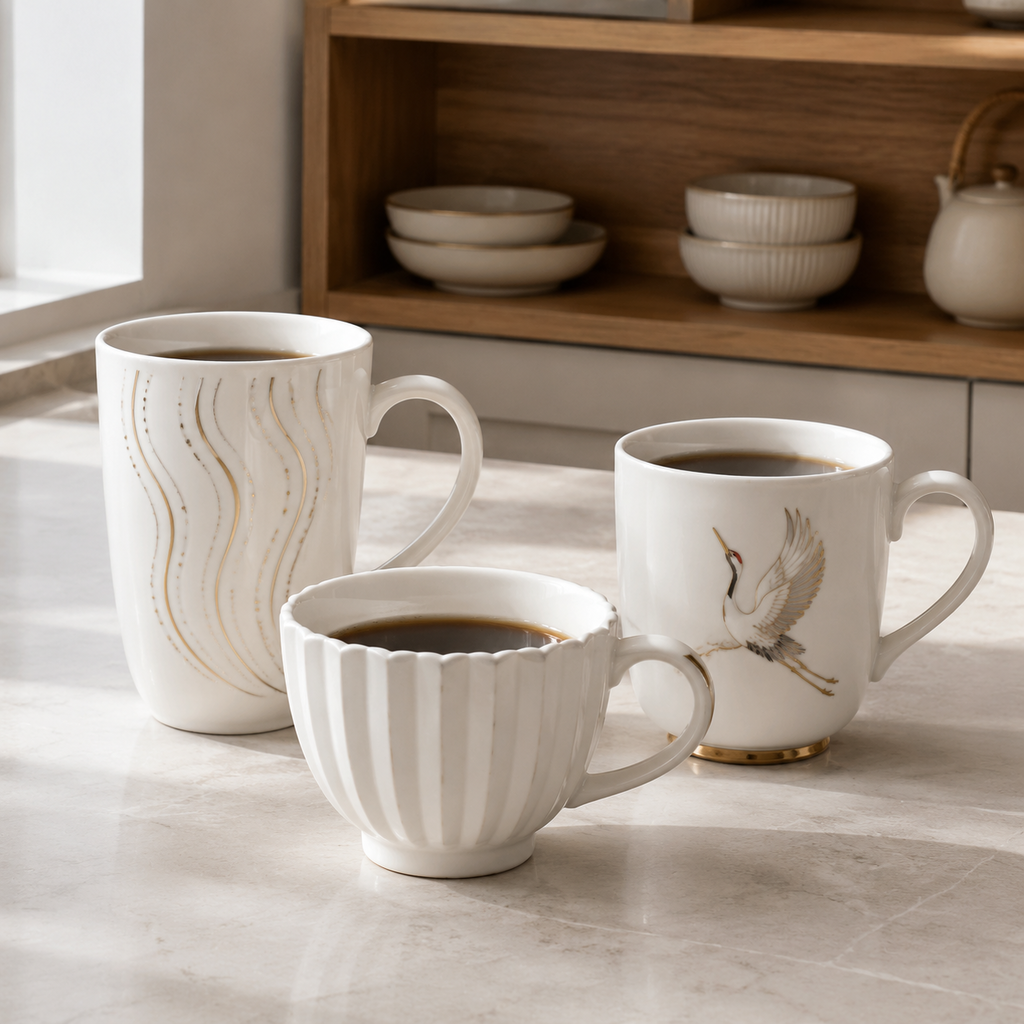
White Pottery Coffee Mugs: Shape, Finish, and Daily Fit
Compare tall, pleated, and crane-design mugs by daily-use fit, finish, measurements, and care. This guide separates product-specific design cues from general pottery buying advice.
Read more
Leave a comment
This site is protected by hCaptcha and the hCaptcha Privacy Policy and Terms of Service apply.