
Textured Coffee Mugs: What to Look For Before You Buy
Reading time: about 9 minutes
A mug can look right on a product page and still feel wrong the first time you wrap your hand around it. We see that a lot with textured coffee mugs: the texture either gives you a better grip and a more tactile feel, or it turns into something scratchy, awkward, or harder to clean than expected.
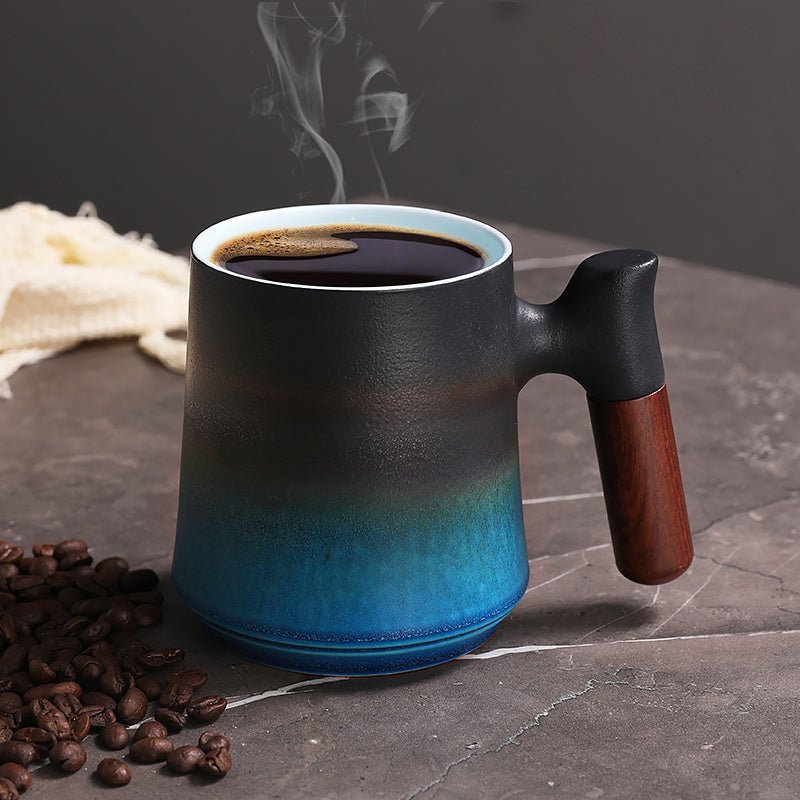
In our store, we pay attention to how a mug sits on a desk, how the handle feels with one or two fingers, and whether the outside finish still looks good after repeated dishwasher cycles. If you are comparing styles, start with our full mug collection and then narrow down by shape, size, and surface texture. For a specific example, the Gradient Coffee Tea Mug is a good reference point for a mug where visual texture and finish do a lot of the work.
What makes textured coffee mugs different from smooth mugs?
Textured mugs are not just about appearance. The surface changes how the mug feels in the hand, how easily it slips when your hands are wet, and how much visual interest it brings to an everyday coffee setup. A smooth mug can feel clean and minimal. A textured one feels more intentional and often looks better on open shelving or a work desk.
There are a few texture styles shoppers usually run into:
- Raised patterns, such as ribbing, dots, or banded relief, which add grip but can collect residue if the glaze is uneven.
- Matte or satin finishes, which feel softer in the hand but can show tea or coffee marks sooner than a glossy glaze.
- Reactive or layered surfaces, where the texture is subtle and the color variation does most of the visual work.
The main trade-off is simple: the more tactile the exterior, the more you should think about cleaning and comfort. A heavily ridged mug may feel great in winter or on a busy office desk, but it is not always the easiest choice if you want the fastest rinse-and-go cleanup.
Which texture works best for everyday coffee, tea, and desk use?
The best texture depends on where the mug actually lives. For a kitchen that sees constant use, we usually favor texture that improves grip without creating hard-to-clean grooves. For a desk mug, we look for a stable base, a handle that clears a finger comfortably, and a finish that does not feel slippery after a cold drink or a quick hand rinse.
For daily coffee and tea, the right texture usually does one of three jobs:
- Improves control if you tend to carry your mug between rooms or sip while walking.
- Adds comfort by keeping the body of the mug from feeling too hot or too slick.
- Softens the look so a simple mug feels less generic on a kitchen counter.
If you want a mug that leans more playful or nostalgic, the Retro Coffee Tea Cup is worth a look because that style tends to appeal to shoppers who want texture plus a more expressive shape. If you prefer a handle with more physical presence, the Ball Handled Coffee Tea Mug is the kind of option we recommend comparing closely for grip and balance.
For readers deciding on capacity alongside texture, our guides to 14 ounce coffee mugs and 16 oz coffee mugs can help you judge whether the mug size matches your actual pour.
How do you judge comfort before you buy?
Comfort is where many textured mugs either win the sale or lose it. A mug can have a beautiful surface and still be annoying to hold if the handle opening is too narrow, the body is too wide, or the texture runs into the spots your fingers touch most.
We check a few practical things before we recommend a mug:
- Handle clearance: Can two fingers fit comfortably, or is it really a one-finger handle?
- Rim thickness: Does the lip feel sharp, thin, or too heavy while sipping?
- Body balance: Does the mug feel top-heavy when full, especially with milk drinks or tea?
- Surface contact: Are the raised areas where your palm rests, or only where the mug is decorative?
That last point matters more than people expect. A textured mug with the grip details placed low on the body usually feels easier to live with than one that puts sharp or busy detailing exactly where your hand naturally lands. If you buy mugs as gifts, this is one of the biggest unboxing differences people notice immediately. The mug may look premium, but if it feels awkward on first lift, the rest of the design stops mattering.
What materials and finishes hold up best?
Most textured coffee mugs in this category are ceramic, and that is still the material we would expect for the best balance of weight, heat retention, and everyday durability. The important part is not just the material, but how the surface is finished.
Here is what we look for in a practical finish:
- Fully glazed interiors so coffee, tea, and milk residue do not linger in porous areas.
- Even exterior coating so the raised design does not become a dust trap or chip at the edges too quickly.
- Stable base shape so the mug does not wobble on a smooth desk or kitchen counter.
Textured finishes do have limitations. They are not the best choice if you want the absolute easiest cleanup, especially for dark roasts or sweetened tea that can leave rings in detailed grooves. They are also not our first pick for someone who wants an ultra-light travel mug feel. If portability matters more than tactile style, a different category makes more sense.
Care is straightforward, but texture changes the routine. Rinse sooner rather than later, and pay attention to the bottom edge where glazes and molded details can collect residue. If the mug is dishwasher safe, that helps, but a textured exterior still benefits from an occasional hand check so buildup does not hide in the pattern.
Which textured mug style fits home, office, or gifting?
The right choice changes depending on the setting. A kitchen mug, a desk mug, and a gift mug all need slightly different things from texture and shape.
| Use case | What to prioritize | What to avoid |
|---|---|---|
| Home kitchen | Comfortable handle, easy rinse, texture that feels good in daily rotation | Overly deep grooves that trap stains |
| Office desk | Stable base, secure grip, finish that looks good next to a laptop | Busy surfaces that collect dust or feel distracting |
| Gift purchase | Distinct look, pleasant unboxing, a shape that feels intentional | Styles that are too niche unless you know the recipient |
For gifting, texture is often what makes the mug feel less generic. The first reaction is usually tactile before it is visual. That is why we think textured coffee mugs work especially well for housewarming gifts, holiday swaps, and desk refreshes. They feel considered without needing a lot of explanation.
If you are still deciding on size and use case, our earlier guides on 12 oz coffee mugs and 10 oz coffee mugs are useful when you want a smaller daily mug instead of a larger, more open-bodied style.
What are the common problems with textured mugs?
We do not treat texture as a guaranteed upgrade. Some mugs look better than they function. The common problems are predictable, and shoppers should watch for them before buying.
- Cleaning difficulty: Fine ridges or patterned embossing can hold tea residue if the glaze is not smooth enough.
- Chipping on edges: Decorative texture near the rim or handle can wear faster if the form is delicate.
- Grip that is too aggressive: Some textures feel sturdy, but in hand they can feel rough or distracting.
- Mismatch between mug size and handle: A large mug with a small handle is a bad daily-use combination, especially for hot drinks.
That is why we try to describe mugs the way customers actually use them: on a kitchen shelf, under a coffee machine, beside a keyboard, or wrapped into a gift box. A mug should earn its place in one of those settings. If it only looks good in a styled photo, it probably is not the right buy.
Frequently asked questions
Are textured coffee mugs harder to clean?
Sometimes, yes. Mugs with deep ridges or raised patterns can hold residue more easily than smooth-sided mugs, especially around the lower body and near the handle. If you want the easiest cleanup, look for texture that is mostly visual and a fully glazed interior.
Do textured coffee mugs keep drinks hotter?
Not by much on their own. Temperature is influenced more by mug wall thickness, lid use, and how quickly you drink than by surface texture. Texture mostly affects grip and feel, not heat retention in a major way.
Are textured mugs good for office desks?
Yes, if the base is stable and the handle feels secure. We like them for desks because they look more finished than a plain utility mug and are less likely to feel slippery after a quick rinse. Just avoid overly detailed surfaces if you tend to keep papers, pens, or dust nearby.
What size textured mug is best for daily use?
Most buyers end up in the 12 oz to 16 oz range, depending on how much coffee or tea they actually pour. Smaller sizes feel lighter and are easier to store, while larger sizes work better for long work sessions or milk-heavy drinks. If you are undecided, size guides on our site can help you compare fit before buying.
Are textured coffee mugs good gifts?
Yes, because texture makes the mug feel more thoughtful than a plain mug. They are especially useful for housewarming gifts, coworker gifts, and holiday sets. The main caution is choosing a style that is not too unusual unless you know the recipient likes bolder design.
What should you check before adding one to cart?
Before you buy textured coffee mugs, we recommend a quick checklist based on how we evaluate them in our store and in real use:
- Check the handle first. It should fit your fingers without forcing your grip.
- Look at the surface detail. Decide whether it is subtle enough for daily washing.
- Confirm the mug size matches your usual drink volume.
- Think about where it will live: kitchen, office, or gift shelf.
- Prefer a finish that looks good after repeated handling, not just in a product photo.
If you want to browse by style and compare a few different shapes side by side, start with our mug collection. If you are narrowing by a specific look, the Gradient Coffee Tea Mug, Retro Coffee Tea Cup, and Ball Handled Coffee Tea Mug are solid places to compare texture, comfort, and overall feel before you choose.
The practical next step is simple: compare one textured mug for grip, one for appearance, and one for daily cleanup. That is usually the fastest way to find the mug you will still like after the first week on your counter.
Read more
Outline of Coffee Mug: How to Choose the Right Shape and Size
A mug's outline changes how it feels on the desk, how it pours, and how comfortable it is to hold for a second cup. This guide breaks down shape choices, size fit, and the checks we use in our stor...
Read more
Mom Coffee Mugs for Daily Coffee and Gift Giving
Practical mom coffee mugs are the ones that feel good in the hand, fit the drink she actually makes, and hold up to daily kitchen use. This guide breaks down shape, size, and giftability so you can...
Read more
Leave a comment
This site is protected by hCaptcha and the hCaptcha Privacy Policy and Terms of Service apply.