
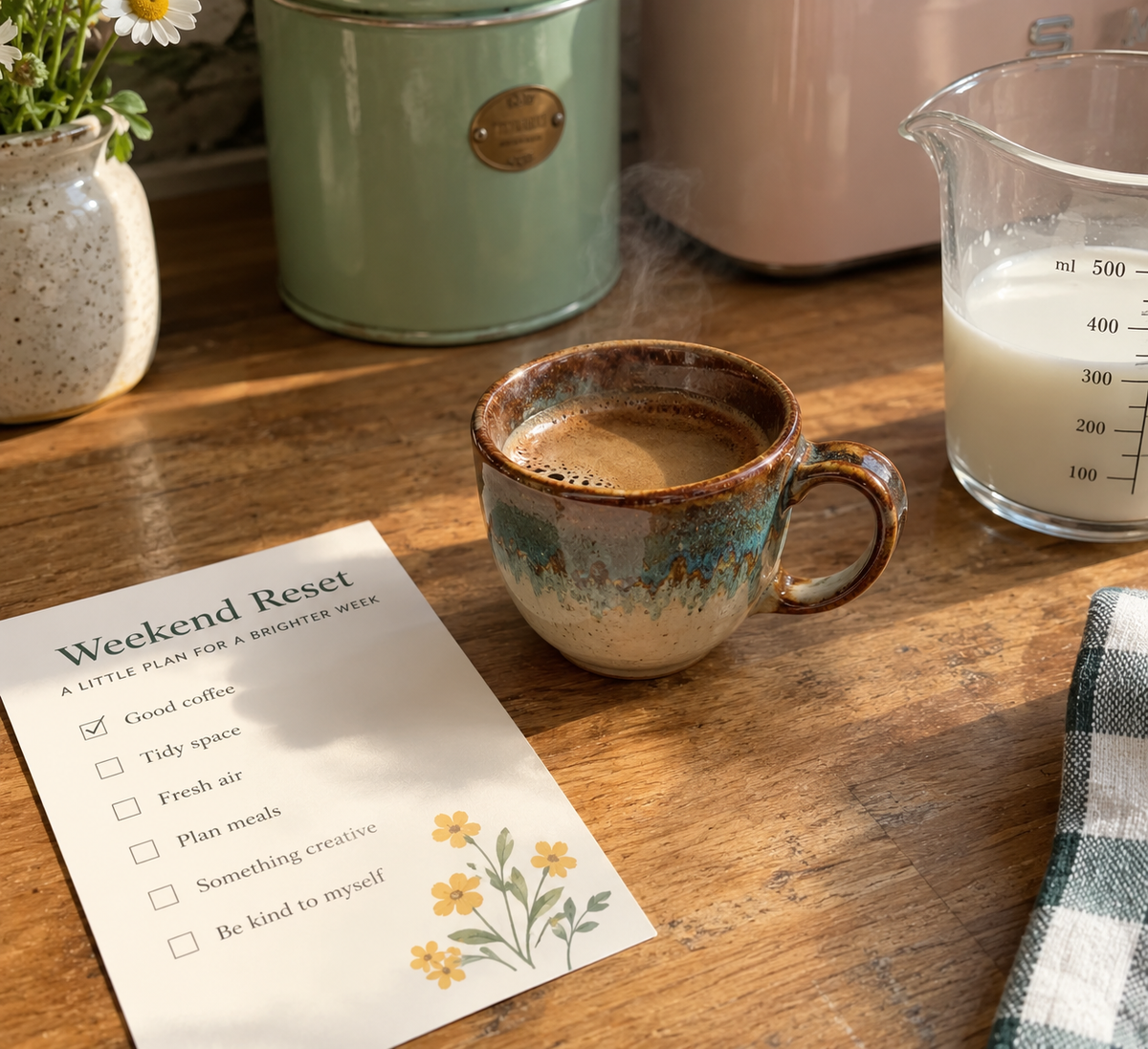
Retro Coffee Cup Buying Checklist: 8 Things to Compare Before You Buy
Reading time: about 8 minutes
The retro cups that come back to us are almost never broken in transit. They are the ones that surprised the buyer on day one: a cup smaller than the morning pour needed, a handle that pinches a wider hand, a glaze that looked glossy in photos but arrived flat and matte. Nearly every one of those returns was preventable with a two-minute retro coffee cup buying checklist, which is exactly why we wrote ours down.
Our team unpacks, shelves, and ships these cups every week, and the same handful of details decides whether a cup becomes a daily driver or gets pushed to the back of the cabinet within a month. Below is what we compare, in the order we compare it — including the honest limits of small vintage-style cups.
Which retro shape are you actually shopping for?
Retro is a shape question before it is a color question. Buyers who use that word usually have one of three silhouettes in mind, and mixing them up is the fastest route to a return.
| Cup style | Typical capacity* | Best suited to | Watch out for |
|---|---|---|---|
| Diner-style mug | Roughly 10–12 oz | Big filter coffee, long desk sessions | Weight; thick walls slow the first sip |
| Vintage small coffee/tea cup | Roughly 6–8 oz | Tea, cappuccino, short black | Too small for a full latte pour |
| Pastel or milk-glass look | Varies widely | Shelf styling, gentle daily use | Colored glazes may need gentler washing |
*Capacity varies by maker. Treat these as orientation ranges, not guarantees — the stated volume on the listing you are buying is the only number that counts.
Handle shape matters as much as capacity. A slim ring handle that looks elegant beside a saucer can pinch if you wear rings or have broader hands; a wide C-handle gives knuckle room but often cannot stack. In our store, handle fit is the detail customers mention most after a week of real use — not color, not pattern.
How much coffee does a retro cup actually hold?
Modern mugs crept upward over the years — plenty of kitchen cabinets now hold 14 to 16 oz mugs. Vintage-style cups were drawn around a smaller pour, and that gap in expectations is the most common regret we hear about. Match the capacity to the drink you actually pour:
- Espresso or short black: 2–3 oz does the job
- Tea, cortado, or home cappuccino: 6–8 oz is the sweet spot
- Standard filter coffee: plan for 10–12 oz
- Latte with real milk volume: 12 oz and up, or the froth overflows the rim
Here is the trade-off nobody mentions: a small cup of hot coffee cools faster than a big one. Tea drinkers who finish in ten minutes will never notice. If you nurse the same coffee for an hour at your desk, a small retro cup means more trips to the kettle — a pleasant ritual for some people, pure friction for others. Know which one you are before checkout.
Retro coffee cup buying checklist: the eight checks we run before a cup earns shelf space
This is the internal list our team works through for every retro-style cup we stock. It works just as well in reverse — run it against any listing before you pay.
- Stated capacity, not photo capacity. Photos distort size. Compare the listed volume to a cup you already own, and pour water into that one if you have to.
- A named material. Retro-style cups are usually ceramic, but ceramic is a family — stoneware, porcelain, and earthenware differ in weight, heat retention, and how they chip. The listing should name what you are getting.
- Glaze finish. Glossy glazes wipe clean more easily; matte finishes can hold coffee oils and dull faster under strong detergent.
- The rim. Run a fingernail along it in person, or zoom into the listing photos. Rim chips are the most common flaw in this category and the least visible in lifestyle shots.
- The handle joint. Where the handle meets the body should feel smooth. A rough seam or visible ridge is the weak point that fails first — we have seen more cups fail there than anywhere else.
- A flat, stable base. Wobble on a flat counter means a warped foot ring, and it will rattle on saucers and scuff shelves. An unglazed foot ring, though, is normal on many stoneware pieces — that alone is not a defect.
- Care instructions in writing. If a listing does not state dishwasher or microwave compatibility, assume hand wash and no microwave until the seller confirms otherwise.
- Your own storage. Wide handles and squat shapes often cannot stack. Measure the shelf gap before a pretty cup has nowhere to live.
Glaze, rim, and handle: the flaws that end a cup's career early
A few defect modes are specific to this category, and knowing them changes how you read any product page:
- Crazing — fine spiderweb lines in the glaze, common on vintage and earthenware-style pieces. Mostly cosmetic at first, but the lines hold tea and coffee stains, and staining inside crazing is very hard to reverse.
- Pinholes and glaze pooling — tiny dots or uneven color where the glaze ran thin. Hand-glazed cups vary from unit to unit, so yours may look slightly different from the product photo.
- Rim chips from stacking — the topmost casualty of crowded cabinets. If you must stack, a paper towel or felt liner between cups prevents most of it.
- Thermal shock — a cup that jumps from cold to boiling water can crack along stress points. Let it come to room temperature first, especially in cold kitchens in winter.
An honest trade-off: if you want six identical cups for a matching set, hand-finished retro-style pieces will occasionally vary in glaze depth and tone. Uniformity is what mass-produced modern mugs do best; character is what retro does best. Decide which you value before you pay.
Who our Vintage Retro Small Coffee Cup suits — and who should size up
We will be direct about the cup we know best. Our Vintage Retro Small Coffee Cup is a small-format, vintage-styled cup listed for both coffee and tea — the name tells you the size class before anything else. In our experience, it fits three buyers well:
- Tea and short-coffee drinkers who find a 12 oz mug half-empty and cold by the last sip.
- Small-space owners — studio kitchens, crowded office desks, dorm shelves — where a compact footprint beats a big mug.
- Gift givers building a retro kitchen theme, where a small cup pairs naturally with a saucer or a coffee scoop.
Who should keep looking: if you drink large lattes, refill twice before 9 a.m., or the cup will live in a rough shared office kitchen, a small cup will frustrate you — that is a sizing problem, not a quality problem. Capacity, material, and care details for this cup live on its listing, and we would rather you confirm those three specs there than take our word for it, because they are precisely the details that vary.
If the small format is not right, compare it side by side with other silhouettes in our unique coffee mugs collection before you decide — that page exists for exactly this comparison.
Kitchen shelf, office desk, or gift box: where will yours live?
The same cup earns different scores depending on its job:
- Open kitchen shelving: retro shapes are display pieces as much as drinkware. We break down which styles hold up visually and practically in our guide to the best retro coffee mugs for home decor.
- Office desk: a small cup saves desk space but means more refills across a long workday — big-coffee drinkers should weigh that honestly.
- Gifting: size and daily fit decide whether a gift cup gets used or quietly regifted. Our retro coffee tea cup gift ideas guide covers matching the size to the recipient's actual routine, not the one you imagine for them.
If retro turns out not to be your style
Some buyers discover mid-comparison that they like the idea of vintage more than the reality of a small, handle-forward cup. That is a useful discovery, and the same checklist logic transfers. We wrote a parallel pleated coffee tea cup buying checklist for readers leaning toward textured, pleated silhouettes — the capacity, rim, and care checks carry over almost word for word.
Frequently asked questions
What should I check before buying a retro coffee cup online?
Run a retro coffee cup buying checklist against the listing: stated capacity, named material, glaze finish, rim condition, handle joint, base stability, written care instructions, and whether it fits your cabinet. The three that catch the most buyers are capacity, rim condition, and missing care instructions.
Are retro-style cups smaller than regular mugs?
Usually, yes. Vintage-style cups were designed around smaller pours, so they often hold less than the 12–16 oz mugs many kitchens use today. Check the listed volume in ounces or milliliters rather than judging by photos — size surprise is the most common reason we see returns in this category.
Can retro cups go in the dishwasher and microwave?
It depends on the glaze and any decoration, and the answer changes between products. Metallic or hand-painted detailing generally means hand wash, and an unstated claim is not a yes. Read the care section on the specific listing, and default to gentle hand washing when nothing is written.
Is a small retro cup practical as an everyday coffee cup?
For tea, cappuccino, short espresso-based drinks, or anyone who drinks quickly, yes. For large filter coffee or long desk sessions, no — you will refill constantly. Match the cup to the drink you pour most mornings, not the one you order at a cafe.
Do small glaze variations mean a retro cup is defective?
Not necessarily. Slight differences in glaze depth, tone, or subtle pooling are normal on hand-finished pieces and part of the category's character. What does warrant a return: rim chips, a rough handle seam, a wobbly base, or crazing you were not told about before purchase.
Your next step takes two minutes: open our retro coffee tea cup listing with the eight checks above in front of you, confirm the capacity and care details against how you actually drink, and if the size is not right, compare silhouettes across our unique coffee mugs collection before you spend a cent. That comparison is the whole difference between a cup you use daily and one you dust.
Read more
Best Cloud Mug Buying Checklist: What Buyers Should Compare
A store-tested checklist for comparing cloud mugs: sculpted versus printed designs, wooden versus ceramic handles, capacity that matches your pour, and the appliance, glaze-safety, and packaging qu...
Read more
Coffee and Tea Mug Buying Checklist: 8 Comparisons Before You Buy
Label ounces versus real ounces, handle clearance, rim and foot-ring finish, care claims — this is the coffee and tea mug buying checklist our team runs on every mug before it earns a listing, so y...
Read more
Leave a comment
This site is protected by hCaptcha and the hCaptcha Privacy Policy and Terms of Service apply.