
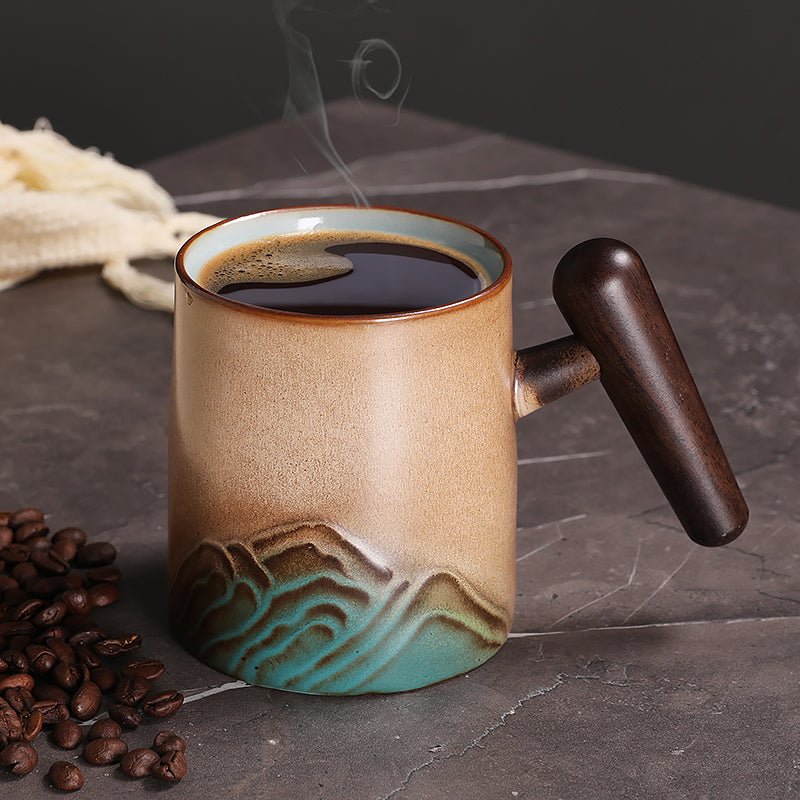
Regular Coffee Mug Size: What Buyers Should Expect Before Ordering
Reading time: about 8 minutes
A regular coffee mug size usually reveals itself on a real counter, not in a catalog. It needs to clear the drip tray, hold a useful pour without sloshing, and still feel balanced when the coffee is hot and the handle is full of weight.
In our store, we see buyers choose the wrong size for simple reasons: they want a mug that looks substantial but not oversized, fits into an office cabinet, and does not cool coffee too quickly. That is the practical test we use for a regular mug.
What does regular coffee mug size actually mean?
For most shoppers, regular coffee mug size means somewhere in the 8 to 12 oz range, with 10 to 11 oz landing in the middle of the road. That is the size that usually works for a normal drip coffee pour, a tea bag, or a small milk-based drink without looking oversized on a desk.
The part that gets missed is usable fill. A mug rated at 12 oz is not meant to be filled to the rim every time. Once you leave space for movement, crema, milk, or a spoon, the drinkable amount is lower. We judge mugs by how they behave in daily use, not just by the number on the spec sheet.
Our rule: if the cup only looks right when it is filled to the brim, it is usually too small for everyday coffee.
- 8 oz: Best for a short black coffee, tea, or a compact espresso-based drink.
- 10 to 11 oz: The closest match to what most people mean by a regular mug.
- 12 oz: Still a regular mug for many buyers, but with more room for milk and less risk of splashing.
If you want a broader benchmark before you buy, our article Average Coffee Mug Size: What Buyers Should Expect compares the common ranges in plain language.
How much coffee does a regular mug hold in daily use?
In practice, the right answer depends on how you brew. A drip machine often pours a little differently than a French press or a manual pour-over, and the same mug can feel perfect with one method and cramped with another. We look at the mug the way a buyer uses it at 7 a.m., not as a product photo.
| Nominal size | Best use | What it feels like | Trade-off |
|---|---|---|---|
| 8 oz | Short black coffee, tea, smaller portions | Compact and easy to handle | Not much room for milk or foam |
| 10 to 11 oz | Standard drip coffee, everyday desk use | Balanced and familiar | Can feel a little small for large milk drinks |
| 12 oz | Coffee with milk, larger home pours | Roomier without becoming a large mug | Can look oversized in a small cabinet |
| 14 oz+ | Long sipping sessions, oversized drinks | More like a generous cup than a regular mug | Usually too large for a true regular-mug buyer |
A regular mug should solve a simple problem: make a standard drink feel easy. If you keep a coffee pot on the counter, refill often, or use a milk frother, a 10 to 12 oz mug is usually the sweet spot. If you prefer a giant pour that stays hot for a long time, a regular mug is not the right tool.
For a more drink-focused breakdown, see Coffee Mug Ounces: How to Pick the Right Size for Daily Use. It is the better match if you are comparing ounces against real cup habits.
What should you check before you buy one?
The number on the listing is only the starting point. We always check the physical details that affect daily use, because that is where buyer regret usually starts. A mug can have the right capacity and still feel wrong if the body is too tall, the handle is cramped, or the glaze is unfinished.
- Height and width: A mug can hold 10 oz and still be too tall for a machine or shelf.
- Handle clearance: We look for enough room for three fingers without the knuckles brushing the mug wall.
- Material: Porcelain usually feels lighter and cleaner at the lip, while stoneware often feels heavier and better for a sturdy desk cup.
- Rim and wall thickness: A thin rim can feel better to sip from, but a thicker wall often hides wear better in daily use.
- Common defect modes: Watch for pinholes in the glaze, hairline crazing, rough spots where the handle joins the body, and uneven foot rings that make the mug rock on a flat table.
- Care: If you plan to use the dishwasher, a smooth glazed surface is easier to keep clean. If there is metallic decoration, do not put it in the microwave.
Those details matter more than a lot of shoppers expect. Repeated dishwasher cycles can expose glaze flaws on lower-quality ceramic. A mug that looks fine in the box can become annoying after a few weeks if the handle geometry is off or the lip feels sharp.
When buyers want a tighter visual comparison, we also point them to the shape and proportion discussion in Best Ceramic Mug Size for a Small Coffee Corner. That guide is useful if your cabinet space is limited and every millimeter matters.
Which of our mugs fit a regular coffee mug size?
If you want a straightforward everyday mug, start with the Retro Coffee Tea Cup, the Ball Handled Coffee Tea Mug, and the Pleated Coffee Tea Cup. These sit in the regular mug range without drifting into oversized cafe-bowl territory, which makes them easier to live with on a crowded kitchen shelf or office desk.
You can also browse our full collection if you want to compare shapes side by side before choosing.
- Retro Coffee Tea Cup: A good pick if you want a classic feel and a simple daily silhouette.
- Ball Handled Coffee Tea Mug: Better if you care about a more distinctive handle and want a mug that stands out as a gift.
- Pleated Coffee Tea Cup: A stronger choice if you want more visual texture on the table, though decorative surfaces can show wear more quickly than plain glaze.
Our practical view is simple: pick the mug that matches how you actually drink. If you usually finish one cup before leaving the house, a standard size works well. If you sip slowly through a long morning, or you like a lot of milk, choose the roomier end of regular rather than the smallest option.
Is a regular mug the right pick for kitchen, office, or gifting?
A regular coffee mug size is a strong choice for most home kitchens because it stacks neatly, fits into standard cabinets, and works for coffee and tea without forcing the rest of the kitchen around it. It is also the easiest size to gift if you do not know the recipient's exact habits.
In an office, regular mugs work best when the coffee source is nearby. They are less useful for long commutes or situations where the drink has to stay hot for an hour. If you want something that holds a larger pour for slow sipping, a bigger mug may be more practical.
- Best for: Drip coffee, tea, everyday home use, and most desk setups.
- Not ideal for: Oversized lattes, soup-like servings, or anyone who wants maximum capacity in one cup.
- Good trade-off: Enough room to drink comfortably without taking up too much cabinet space.
If your kitchen storage is tight, the article Average Coffee Mug Size: What Buyers Should Know Before Ordering helps you compare capacity against shelf space before you commit.
If you are still deciding between a compact mug and a fuller one, our size notes in Coffee Mug Size Guide: How to Choose the Right Fit Before Buying are the fastest way to narrow it down.
Frequently asked questions
What is the most common regular coffee mug size?
Most shoppers mean 10 to 12 oz when they say regular coffee mug size. That range gives enough room for a normal pour and a little extra space for milk or movement without turning the cup into an oversized mug.
Is a 12 oz mug still considered regular?
Yes, 12 oz is still a regular mug for many buyers. It is especially practical if you drink coffee with milk or want a little extra headroom so the cup does not feel too full.
What size mug works best for drip coffee?
A 10 to 11 oz mug is usually the cleanest fit for a standard drip coffee pour. It is small enough to feel neat and large enough to avoid constant spill risk when you add cream or stir.
Should I choose ceramic or stoneware for everyday use?
Both can work well. Ceramic or porcelain often feels a little lighter and more refined at the lip, while stoneware tends to feel sturdier in the hand and can hide small marks better over time.
Why does my mug feel smaller than the ounce rating?
Because the listed capacity is often a brim-full measurement. Once you account for safe fill space, the visible usable volume is lower, so a 12 oz mug may drink more like an 8 to 10 oz cup in daily use.
If you want the safest starting point, compare your cabinet height, your usual coffee pour, and your preferred handle style, then browse our full collection for the shape that matches your routine.
Read more
Cubs Coffee Mug Buying Guide: Size, Fit, and Gift-Ready Details
A Cubs coffee mug should do more than show team pride. We break down size, print durability, comfort, and what to check before you buy for daily use or gifting.
Read more
Papa Bear Coffee Mug Buying Guide for Gifts, Size, and Fit
A papa bear coffee mug should feel good in the hand, not just look good in a gift photo. We compare the main shape and gift checks so you can choose a mug that fits real daily use.
Read more
Leave a comment
This site is protected by hCaptcha and the hCaptcha Privacy Policy and Terms of Service apply.