
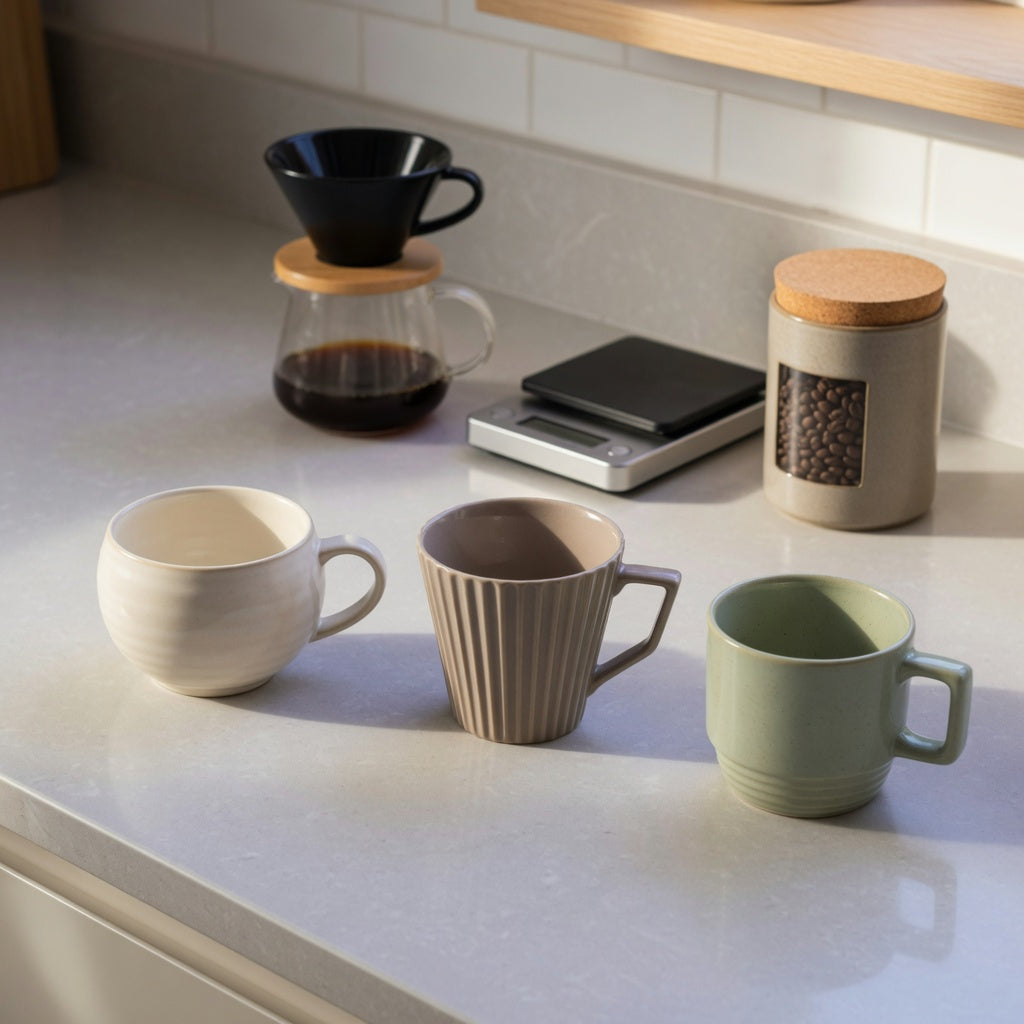
Minimalist Ceramic Mug Home Coffee Station Practical Purchase Checklist
Reading time: about 9 minutes
A neat coffee station can lose its working space because of one poorly matched mug. The handle catches the filter tin, the base crowds the scale, or the cup occupies the spot where you normally set a spoon. Our minimalist ceramic mug home coffee station practical purchase checklist starts with those everyday conflicts, then narrows the decision by material, listed capacity, visible shape, and handle layout.
In our store, we handle ceramic cups with the counter around them in mind. We check how the base sits on a flat surface, where the handle joins the body, and how much room a hand needs beside nearby equipment. In our experience, a calm-looking mug is only a useful purchase if it also fits the buyer's drink and routine. We therefore treat minimalist as a shopper-facing style description, not a formal design classification or a promise about quality, durability, or performance.
How much clear counter space does the mug actually get?
Start with the space left after the brewer, grinder, scale, canister, and spoon tray are in their normal positions. Styled product photos cannot establish fit because they do not show your equipment or working habits. Confirm external mug dimensions from the listing when available, and ask our store before ordering if a measurement essential to your setup is not shown.
- Vertical clearance: Measure from the surface supporting the mug to the lowest fixed part of your brewing setup. Do not assume compatibility from a photo of a cup beneath a different brewer.
- Counter footprint: Account for the base and the handle projection. A narrow body can still consume substantial side space if its handle extends toward the scale or canister.
- Working clearance: Leave room for your fingers, a spoon, and the path used to lift the mug. The cup may physically fit while still making the station awkward to use.
Once you have confirmed the mug's measurements, mark its full footprint on the counter with removable tape or a paper template. Include the handle, not just the base. This quick check is especially useful on shallow counters and narrow office coffee shelves, where an extra projection can block a drawer or push another item out of reach.
Use this minimalist ceramic mug home coffee station practical purchase checklist
Keep the minimalist ceramic mug home coffee station practical purchase checklist beside the product tabs as you compare them. The order matters: eliminate options that fail a functional check before deciding which surface or silhouette looks best.
- Confirm the material. The three options compared here are ceramic. Do not use the material name alone to infer microwave, dishwasher, or other care permissions.
- Write down the listed capacity. Compare it with the finished drink you normally prepare, including milk, foam, or ice.
- Verify the required dimensions. Check height, base area, rim width, and handle projection where those measurements affect your station.
- Study the handle from the side. Look at its opening, position, and distance from the cup body rather than judging it from a front-facing image.
- Choose the amount of surface detail. Decide among a quieter round form, repeated pleating, or a more expressive retro profile.
- Read the care information. Follow the specific product page and packaging rather than applying a general rule to every ceramic mug.
If an option fails on capacity, clearance, or grip, remove it from the shortlist. A visual preference does not compensate for a mug that interrupts the routine every morning.
Round, pleated, or retro: which visible shape suits the station?
The current product names and visible forms provide three useful starting points. These are not formal design categories. They are practical ways to compare how much visual detail each mug adds to the equipment and materials already on your counter.
| Reader situation | Why the form belongs on the shortlist | Product next step |
|---|---|---|
| The grinder, brewer, or backsplash already adds several lines and textures | A rounded form gives you a less textured starting point and can keep the mug from becoming another strong visual feature. | Open the round coffee and tea mug, then verify its listed capacity and handle layout against your measurements. |
| The station looks flat, but you still want an orderly silhouette | Pleating introduces repeated surface detail without relying on printed graphics. It can serve as the single textured item on a plain tray. | Compare the visible body and specifications of the pleated coffee and tea cup. |
| The station includes warm wood, older metal finishes, or vintage-influenced accessories | A retro profile can carry more character than the round starting point while remaining practical enough to assess by capacity and handle. | Review the retro coffee and tea cup beside photos of your existing setup. |
| None of the three passes the capacity, clearance, or grip checks | The right move is to change the shortlist rather than compromise on a variable you use every day. | Continue through our unique coffee mugs collection and apply the same measurements to another form. |
Round is the logical first comparison for a visually busy station. Pleated fits a shopper who wants controlled texture, while retro makes more sense when the surrounding setup already has some character. That recommendation still depends on the listed specifications. A preferred shape should not be treated as proof that the mug will fit a brewer, scale, shelf, or hand.
Does the listed capacity match the drink you actually make?
Capacity should be compared with the finished beverage, not just the coffee entering the cup. A drink may also include milk, foam, or ice, and many people prefer enough empty space to carry the mug without spilling. The listing gives you the number to compare; your routine determines whether that number is suitable.
- Mostly black coffee or tea: Record your usual finished volume and compare it directly with the listed capacity, allowing the headroom you prefer.
- Milk-based drinks: Include the milk and foam rather than choosing from the coffee portion alone.
- Iced drinks: Account for the space occupied by ice. A compact ceramic form may not suit a large iced serving even if it works well for hot coffee.
A smaller mug may occupy less visual and physical space, but it is a poor choice if it forces an extra pour. A larger mug may handle more drink formats, yet it can dominate a shallow tray or compact shelf. We recommend resolving that trade-off before comparing colors or surface details.
Will the handle work during a one-handed brewing routine?
Handle comfort is difficult to judge from a single image. Finger clearance, the distance between the handle and cup wall, and the handle's position on the body all affect how the mug feels. They also affect how far the cup must sit from a grinder, canister, or wall.
- Hold a mug you already own using your normal two-finger, three-finger, or full-hand grip.
- Measure the handle opening and note how much clearance your knuckles need from the cup body.
- Compare that reference with the product page's side views and listed measurements. Ask us if a critical handle measurement is unavailable.
A generous handle can be easier for some hands but takes more counter space. A tighter handle can keep the outline compact but may not suit larger fingers or anyone who needs a fuller grip. If handle accessibility is the main requirement, choose for that first; a different silhouette may serve you better than the most visually minimal option.
What should you verify about ceramic and care before ordering?
Ceramic identifies the material family, but it does not establish every care or performance detail. We do not assume dishwasher suitability, microwave suitability, heat retention, or resistance to sudden temperature changes unless the specific listing or supplied instructions state it. Check those details before the first dishwasher cycle or microwave use, and contact our store if the guidance is unclear.
Our team also checks several physical areas during ceramic mug handling and gift preparation. You can use the same inspection after delivery:
- Look around the rim for chips or rough contact points before drinking from the mug.
- Inspect both handle attachment points for a visible hairline crack or impact damage.
- Set the empty mug on a clean, dry, flat counter and check whether the foot sits steadily.
- Examine the drinking and gripping areas for unexpected glaze skips, sharp spots, or shipping damage.
Perform this check before using or gifting the mug. For a gift unboxing, also keep any product-specific care information with the cup instead of giving the recipient a general ceramic-care assumption. These checks do not predict long-term durability; they simply catch visible concerns at the point when the mug first arrives.
When is a different mug style the more practical purchase?
A minimalist ceramic mug is not the automatic answer for every coffee station. Choose another listing when the job requires a feature that these comparisons do not establish.
- You make large iced drinks and need substantially more room for beverage and ice.
- You need a sealed lid or a vessel designed and listed for travel.
- You require confirmed stackability for a very small cabinet or shared office shelf.
- You need an especially large handle opening or another accessibility-focused grip.
- Your station is intentionally colorful, sculptural, or mixed-pattern, and a quiet form would look disconnected from it.
Those are not failures of minimalist styling. They are signs that capacity, storage, transport, accessibility, or visual character matters more for this purchase. Return to the broader collection and apply the same material, measurement, handle, and care checks to a more suitable design.
Frequently asked questions
What does the minimalist ceramic mug home coffee station practical purchase checklist verify?
It verifies ceramic material, listed capacity, required external measurements, visible shape, handle clearance, and product-specific care information. It does not promise appliance compatibility, durability, or care permissions that are absent from the listing. Use it to remove poor fits before choosing among the round, pleated, and retro options.
Is the round mug always the best choice for a small coffee station?
No. Its less textured visible form can be a useful starting point, but the listed capacity, base area, height, and handle projection still have to fit your setup. A pleated or retro cup may be the better purchase if it meets those functional checks and suits the surrounding materials more naturally.
Can I assume a ceramic mug is dishwasher and microwave safe?
No. Ceramic is a material description, not automatic permission for either appliance. Read the exact product page and supplied care instructions, and ask our store before use if dishwasher or microwave guidance is not provided.
Should mug capacity be the same as my usual brew volume?
Not necessarily. Include milk, foam, or ice and decide how much empty space you prefer at the rim for carrying the drink. Compare that finished volume with the listed capacity rather than estimating from product photos.
What should I inspect when a ceramic mug arrives?
Check the rim, both handle joins, the foot, and the areas touched by your lips and fingers. Place the empty mug on a flat surface to check how it sits, and look for chips, cracks, sharp spots, or shipping damage before use. Do this early when the mug is intended for a gift.
Open the round, pleated, and retro product pages side by side. Write down each listed capacity, confirm the dimensions your station requires, compare the handles, and remove every option that fails a practical check. If none passes, use the collection link to select a better-fitting form rather than forcing a style choice.
More from our blog
Read more
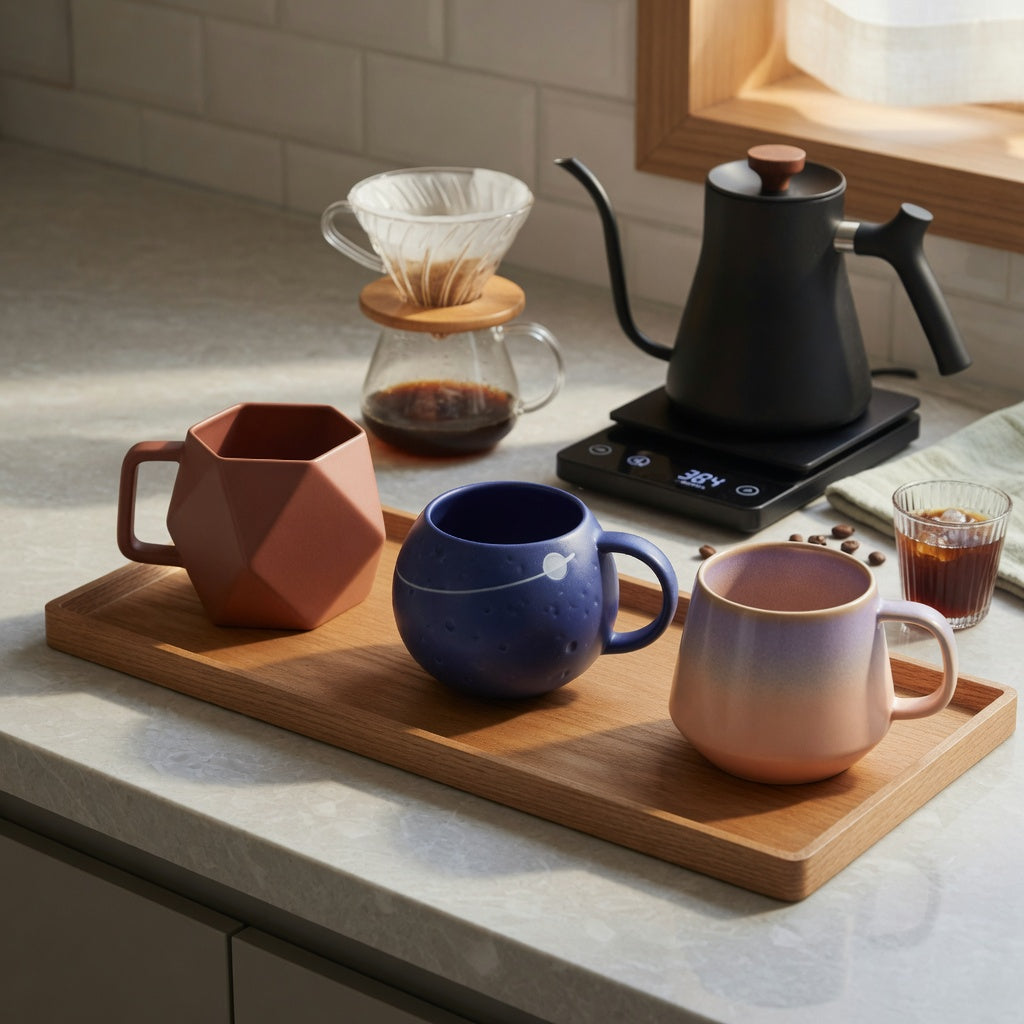
Geometric Coffee Mug Home Coffee Station Practical Purchase Checklist
Use this geometric coffee mug home coffee station practical purchase checklist to compare the Rhombus, Planet, and Gradient mugs by visible shape, listed capacity, material, counter fit, care, and ...
Read more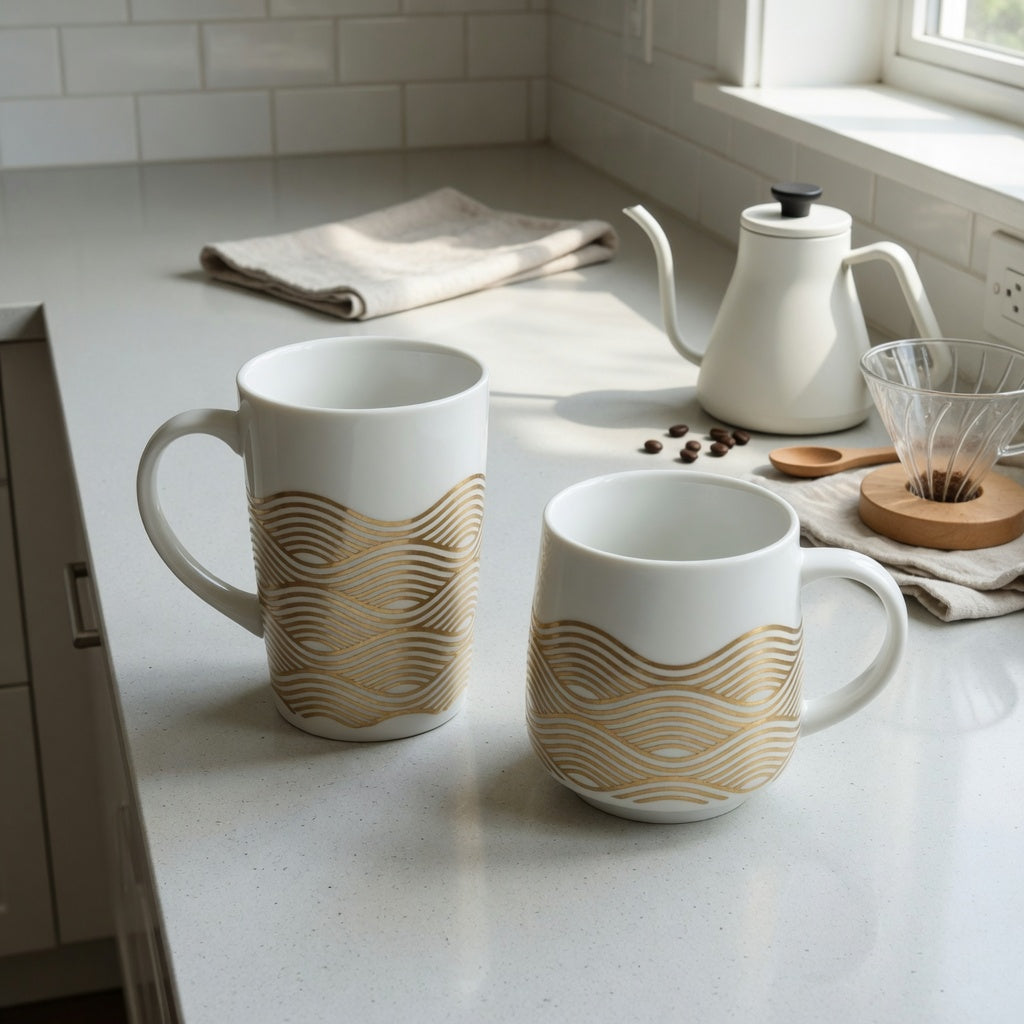
White and Gold Coffee Mug Home Coffee Station Product Shortlist Guide
Compare two current waves-pattern mug forms using practical coffee-station checks: listed capacity, visible height, shelf clearance, handle access, care verification, and reasons to skip each option.
Read more
Leave a comment
This site is protected by hCaptcha and the hCaptcha Privacy Policy and Terms of Service apply.