
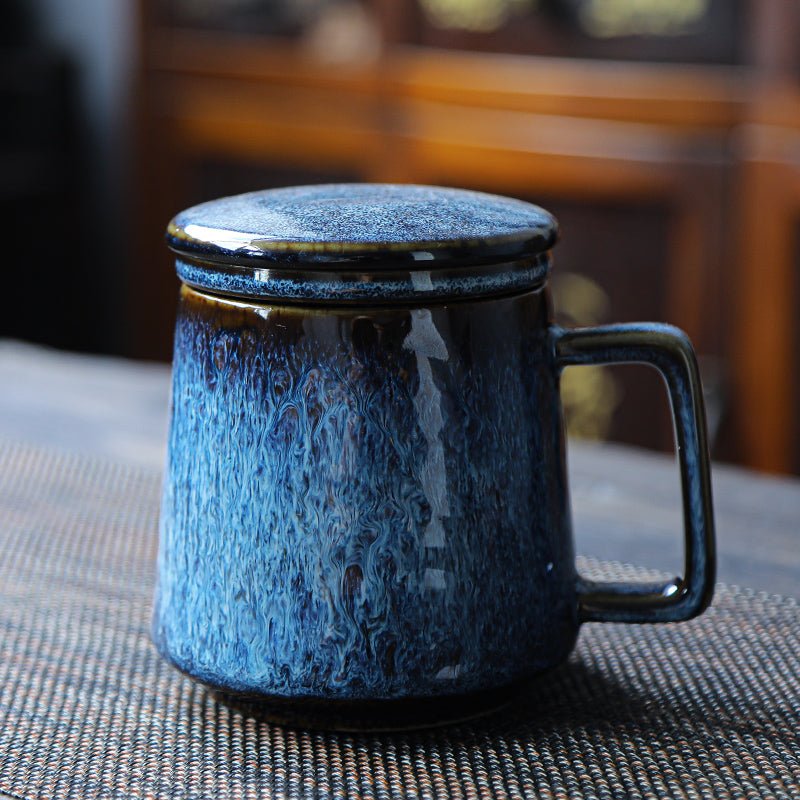
Mikasa Coffee Mugs: What to Check Before You Buy
Reading time: about 9 minutes
A mug that looks right in a product photo can still be annoying on a Monday morning. The handle may be too tight for two fingers, the rim may feel thick, or the base may wobble on a crowded office desk. That is the kind of detail shoppers notice after the first few uses, not on the first glance.
That is why people comparing mikasa coffee mugs are usually looking for more than a pretty pattern. They want a mug that feels stable, cleans up well, and still looks good after repeat dishwasher cycles. In our store, we pay attention to the same practical details: handle clearance, wall thickness, glaze quality, and whether the shape makes sense for the way you actually drink coffee.
If you want to compare styles while you read, start with our broader mug assortment in the all products collection. For a more specific alternative, the Rhombus Coffee Tea Mug is a good example of a cleaner, more geometric shape that some shoppers prefer over ornate everyday mugs.
What do shoppers really need from Mikasa coffee mugs?
Most buyers are not hunting for a display-only mug. They want something that handles daily coffee without fuss. The most common reasons a mug gets replaced are not dramatic failures; they are small frustrations that add up.
When we help customers compare mugs, we usually start with these practical checks:
- Handle comfort: Can your fingers fit through it without pressing against the mug body?
- Base stability: Does it sit flat, or does it rock slightly on the counter?
- Rim feel: Is the lip too thick for sipping, or sharp enough to notice?
- Finish quality: Is the glaze even, with no rough spots or pinholes?
- Care label: Is it clearly dishwasher-safe and microwave-safe, or does it need hand washing?
Those are the details that separate a mug you keep from a mug you tolerate. We also watch for common defect modes that show up over time: hairline cracks near the handle join, glaze crazing, faint staining in lighter interiors, and chips along the rim if mugs are stacked too tightly.
Our experience is that buyers usually regret ignoring comfort and care more than they regret choosing the wrong pattern.
Which material works best for daily coffee?
Most mikasa coffee mugs shoppers compare are in the ceramic family, but the exact feel depends on the build. Stoneware, porcelain, and standard ceramic each have a different balance of weight, warmth, and durability.
| Material | How it feels | Daily-use trade-off | Best for |
|---|---|---|---|
| Stoneware | Heavier, solid, more insulated in the hand | Can feel bulky and may show wear if the glaze is thin | People who like a sturdy mug for slow sipping |
| Porcelain | Usually lighter with a finer rim | Can feel more delicate and is less forgiving if knocked around | Shoppers who want a cleaner, more refined drinking feel |
| Ceramic | Broad category with many finishes and weights | Quality varies a lot by glaze, thickness, and firing consistency | Everyday use when the product page gives clear care details |
If you drink coffee slowly at a desk, stoneware often feels reassuring. If you want something lighter that does not feel clunky in the hand, porcelain can be a better fit. We would not recommend a heavy, oversized mug for someone who only drinks a small black coffee and wants a quick rinse at the sink. It may hold more than you need and take longer to cool.
For capacity-specific help, our guides on 12 oz Coffee Mugs: How to Choose the Right Mug for Daily Use and 14 Ounce Coffee Mugs: Size, Fit, and Buying Guide cover the sizing trade-offs in more detail.
What size and shape should you compare?
Size matters more than the marketing photos suggest. A mug that looks compact on screen can feel huge on a kitchen counter, while a tall mug can look elegant but be awkward to store under a cabinet shelf.
For most daily coffee drinkers, the useful range is still the familiar mid-size bracket. A 12 oz mug suits black coffee, smaller cappuccinos, and people who like to top off their cup later. A 14 oz or 16 oz mug makes more sense if you add milk, like a longer drink window, or want room for foam without worrying about spills.
Shape changes the experience too:
- Wide mugs cool faster and are easier to scrub by hand.
- Tall mugs hold heat a bit longer and can suit lattes or tea.
- Short, stout mugs feel stable but may take up more cabinet width.
- Narrow mugs can concentrate aroma, but some are harder to clean if the opening is tight.
If you want a deeper sizing comparison, our article on 16 oz Coffee Mugs: How to Choose the Right Mug for Daily Use is useful for people who regularly pour larger servings or make milk-based drinks.
We would not steer a buyer toward a tall mug if they need stackable storage in a shallow cabinet. Likewise, if you move your mug between a home office desk and a dishwasher several times a day, a smaller, sturdier profile is usually less fussy.
Which details make a mug better for real daily use?
This is where a good-looking mug either proves itself or starts to annoy you. The small details are the ones that matter after the first week.
- Handle opening: You want enough room for a comfortable grip, especially if you drink hot coffee and do not want your knuckles touching the mug body.
- Glaze consistency: Check for even coverage, especially around the base, inner rim, and handle joints.
- Interior finish: Light interiors look clean, but they can show coffee staining sooner than darker finishes.
- Microwave and dishwasher labeling: Confirm the care instructions on the exact product page instead of assuming every mug in a line has the same finish.
- Rim thickness: Thicker rims can feel durable, but some shoppers prefer a smoother sip.
There is also a difference between a mug that is simply dishwasher-safe and one that stays looking good after repeated cycles. On lighter glazes, we see wear show up first as dullness or faint marks from contact with other dishes. On textured mugs, buildup can collect in small ridges if the surface is not easy to rinse.
If you like a more distinctive silhouette, the Handbag Coffee Tea Mug is a better fit for gifting or statement use than for minimalist shelf storage. It is not the mug we would pick for someone who wants a plain office cup, but it can make sense for a shopper who wants something memorable on a desk or in a gift box.
For shoppers who want a more sculpted look without going novelty-heavy, the White Golden Waves Tall Coffee Tea Mug gives you a taller profile that can suit milk drinks, tea, or larger pours. The trade-off is simple: tall mugs are often less stable in cramped cabinets, so they are not the first choice if storage space is tight.
How do Mikasa coffee mugs compare with alternatives we sell?
We see some buyers choose mikasa coffee mugs because they want a familiar, home-friendly style with enough polish to sit on the table. Others want something more specific: a shape that feels better in the hand, a mug that stands out on a gift shelf, or a taller form for latte drinks.
That is where side-by-side comparison helps. Instead of choosing by brand name alone, compare the mug against the job you need it to do.
- Choose the Rhombus Coffee Tea Mug if you want a more structured shape and a clean look that still feels everyday-use practical.
- Choose the Handbag Coffee Tea Mug if you want a conversation piece or a giftable mug that is more playful than standard.
- Choose the White Golden Waves Tall Coffee Tea Mug if you want height, visual interest, and a better fit for larger pours.
If you want to browse everything in one place before deciding, our collection of all mugs is the fastest way to compare shapes, finishes, and handles without bouncing between categories.
For readers who want to check the broader buying logic first, our older guides on Mikasa Coffee Mugs: Size, Material, and Buying Guide and 12 oz Coffee Mugs: What to Check Before You Buy are useful companion reads. They cover the same decision points from a tighter sizing angle.
One limitation to keep in mind: a pretty mug is not always the best mug for daily commuting, fast kitchen cleanups, or cramped cabinet storage. If those are your priorities, go lighter, simpler, and more compact even if the design is less decorative.
Frequently asked questions
Are Mikasa coffee mugs dishwasher safe?
Many mugs in this category are dishwasher-safe, but you should always check the care instructions for the exact pattern or finish you are buying. Decorative glazes, metallic accents, and certain printed details may need gentler handling. If you want the least maintenance, choose a mug that clearly lists dishwasher-safe care on the product page.
What size Mikasa coffee mug is best for daily use?
For most people, 12 oz to 14 oz is the practical middle ground. Smaller mugs suit black coffee and tighter storage, while 16 oz gives more room for milk, foam, or tea. If you usually refill often, a mid-size mug is usually easier to live with than a large one.
Do Mikasa coffee mugs chip easily?
Any ceramic mug can chip if it gets knocked against a sink, hits another mug in the dishwasher, or is stacked tightly in a cabinet. Thicker rims and a solid base usually hold up better to daily handling, but no mug is immune to abuse. The safest approach is to look for even glaze, a flat base, and a handle that feels integrated rather than fragile.
Are Mikasa coffee mugs good for espresso or cappuccino?
They can be, but the right size matters. Espresso is usually better in a smaller cup, while cappuccino works well in a mug with enough volume for foam without making the drink feel lost. If you mostly drink milk-based coffee, a 12 oz or 14 oz mug is often more versatile than a very large cup.
What should I buy instead if I want a more distinctive mug?
If your goal is a more visible, giftable, or decorative mug, choose a shape with more personality rather than a plain everyday cup. In our store, the Handbag Coffee Tea Mug and White Golden Waves Tall Coffee Tea Mug are stronger options for style-first buyers. If you want something cleaner and easier to use daily, the Rhombus Coffee Tea Mug is the safer middle ground.
If you are narrowing this down now, use a simple checklist: handle clearance, capacity, base stability, care label, and whether the shape fits your cabinet and your daily pour. Then compare those points against the mugs in our all products collection and pick the one that matches your routine, not just the photo.
Read more
Currier and Ives Coffee Mugs: What to Check Before You Buy
A practical buying guide for currier and ives coffee mugs, with the details that matter in daily use: size, shape, care, durability, and where these mugs fit best at home or as gifts.
Read more
Blank Coffee Mugs: How to Choose the Right Shape and Finish
Blank coffee mugs work best when the shape, finish, and size match how they’ll actually be used. We break down the trade-offs we see in kitchens, offices, and gift orders.
Read more
Leave a comment
This site is protected by hCaptcha and the hCaptcha Privacy Policy and Terms of Service apply.