
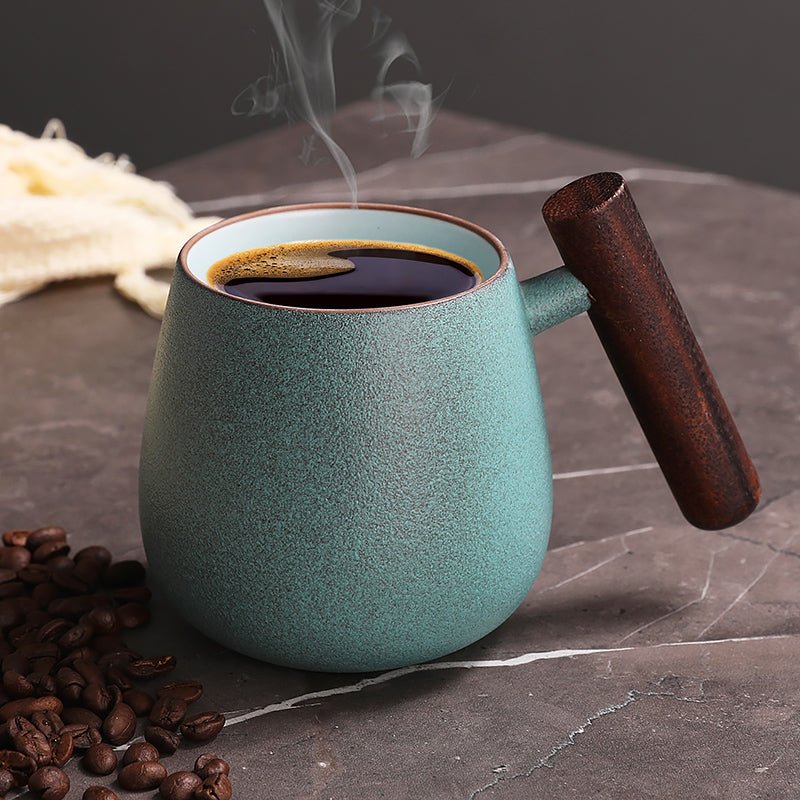
Matcha Latte Mug Capacity Guide: 250, 390, or 400 ml?
Reading time: about 9 minutes
A matcha latte that totals 220 ml fits a mug differently from one that reaches 350 ml after milk is added. That sounds obvious, but the mismatch usually becomes clear only after the drink is on the kitchen counter and the mug is either nearly full or much larger than expected. This matcha latte mug capacity guide compares the three current listed sizes in our store: 250 ml, 390 ml, and 400 ml.
We sell these mugs, and capacity questions often come down to one practical detail: the shopper knows the amount of matcha or milk used, but not the total finished drink volume. Start with that total. Then compare the listed capacity, expected refills, and the opening shape visible in the product photos. You can also see the broader selection in our unique coffee mug collection.
250 ml, 390 ml, and 400 ml at a glance
The capacities below are the figures listed for the current products. Approximate US fluid-ounce conversions are included to help shoppers who measure recipes in ounces, but the milliliter listing remains the clearest basis for comparison.
| Current mug | Listed capacity | Approximate US fl oz | Best capacity match |
|---|---|---|---|
| Ball Handle Coffee Tea Mug | 250 ml | 8.5 fl oz | Shorter servings and routines built around smaller pours |
| Round Coffee Tea Mug | 390 ml | 13.2 fl oz | Larger lattes without moving to the biggest listed option |
| Spittoon Coffee Tea Mug | 400 ml | 13.5 fl oz | Routines that call for the largest current capacity |
The main capacity jump is between 250 ml and 390 ml: 140 ml. By comparison, the difference between 390 ml and 400 ml is only 10 ml, or roughly two US teaspoons. That makes 250 ml versus 390 ml a meaningful serving decision. Between 390 ml and 400 ml, visible form and personal preference are likely to be more useful tie-breakers than capacity alone.
How should you use this matcha latte mug capacity guide?
Add the volume of every ingredient that remains in the finished drink. For a simple routine, that means the prepared matcha portion plus milk and any measured syrup or other liquid addition. Do not choose from the milk measurement alone.
- Total the planned drink. A 60 ml matcha portion plus 160 ml of milk produces 220 ml before any additional liquid is added.
- Subtract that total from the listed mug capacity. A 220 ml drink is 30 ml below a listed 250 ml capacity, 170 ml below 390 ml, and 180 ml below 400 ml.
- Account for your carrying routine. A calculated difference is not a promise of a comfortable walking or desk fill level. A shopper who carries the drink between rooms may prefer more unused capacity than someone who drinks at the counter.
- Check the current listing before ordering. Listed capacity should not be treated as a separately verified fill line or as a guarantee that every personal recipe will sit at the same visual level.
This method keeps the comparison grounded in measurable volume. It does not depend on claims about preparation performance, heat retention, or how a particular recipe should be made.
Which routine fits the 250 ml Ball Handle mug?
The 250 ml Ball Handle mug makes the clearest sense for someone who repeatedly prepares a shorter latte and does not want the serving sitting low in a much larger vessel. Its listing also gives an 11.2 cm diameter, a useful concrete dimension to check against the space available on a shelf, tray, or crowded office desk.
A 200 ml finished drink leaves a mathematical difference of 50 ml from the listed capacity. A 240 ml drink leaves only 10 ml. Those figures are arithmetic, not recommended fill lines, but they show why measuring the complete recipe matters.
This is not the strongest option for a shopper who regularly plans 300 ml or larger servings and wants one uninterrupted pour. That routine exceeds the listed 250 ml capacity and would require a smaller recipe, a refill, or a larger mug. For that shopper, the 390 ml or 400 ml listings are the relevant next step.
Does the 10 ml difference between 390 ml and 400 ml matter?
For most serving plans, 10 ml should not be the deciding variable. A 320 ml latte is 70 ml below the Round mug's listed 390 ml capacity and 80 ml below the Spittoon mug's listed 400 ml capacity. Both belong in the same general large-serving range.
- Choose the 390 ml Round mug if your situation is a larger daily latte and you prefer the Round product's visible silhouette. Its capacity fits below the 400 ml maximum while remaining much larger than 250 ml.
- Choose the 400 ml Spittoon mug if your situation calls for the largest currently listed capacity and its visible opening and body shape suit your preference.
- Do not choose between them on 10 ml alone if your recipe already fits comfortably within 390 ml. Compare the product photos and overall form instead.
We would not present either mug as automatically better. The listings do not provide matching opening-width measurements for a numerical rim comparison, so we keep that part of the decision visual rather than inventing precision that is not available.
How do refills change the daily capacity choice?
A refill pattern can matter more than the size of one serving. Someone preparing two 200 ml drinks during the day uses 400 ml in total, but each drink still fits within a 250 ml listed capacity. Buying a 400 ml mug would not be necessary unless that person wants the entire daily amount in one serving.
Consider these common patterns:
- One 200 to 220 ml serving: The 250 ml Ball Handle is the closest current capacity match, provided the shopper is comfortable with the calculated unused volume.
- Two separate short servings: The 250 ml option still fits the per-serving routine. Total daily consumption does not need to fit in the mug at once.
- One 300 to 350 ml serving: The 390 ml Round and 400 ml Spittoon are the appropriate current options. Choose between them by visible shape rather than expecting 10 ml to transform the routine.
- A recipe above 400 ml: None of these three listed capacities fits the full amount. A different mug style or a smaller serving would be more suitable.
For an office desk, fewer refills can be convenient, but only if the larger single serving reflects how you actually drink matcha lattes. A larger label does not create a benefit when the prepared volume remains 200 ml.
What does the visible opening shape tell a buyer?
Opening shape is useful as a visual and handling preference, but its limits should be clear. Review the top and angled product photos to compare how open each mug appears and how that opening relates to the body silhouette. The Ball Handle product has a listed 11.2 cm diameter; we do not relabel that figure as an exact inner opening measurement.
We also do not use visible opening shape to claim better whisking performance. If your preparation method requires a dedicated bowl, extra working space, or particular tools, prepare the matcha in the vessel intended for that method and transfer the finished drink. No included tools or ceremonial use should be inferred from these mug listings.
Shoppers who also use the same capacity range for tea can compare the serving arithmetic in our 250 ml, 390 ml, and 400 ml loose leaf tea mug capacity guide. For genuinely smaller milk-based coffee servings, our 170 ml, 200 ml, and 270 ml cappuccino capacity comparison covers a different size range.
Which product facts should not be inferred from capacity?
Capacity tells you how much volume is listed. It does not establish microwave safety, dishwasher safety, heat retention, preparation performance, or included accessories. We do not use the 250 ml, 390 ml, or 400 ml figures as evidence for any of those separate properties.
Check the current product page for the latest product and care information before purchase. If a specific appliance or cleaning method is essential to your routine and the listing does not answer it, confirm that detail rather than assuming it from the mug's appearance. The same caution applies to material expectations and exact opening measurements that are not stated.
This limitation matters for gift orders too. A recipient may like a 400 ml serving size but need care characteristics that capacity cannot answer. In that case, confirm those requirements first or choose a different style with explicitly listed information.
Frequently asked questions
What does this matcha latte mug capacity guide compare?
It compares the listed 250 ml Ball Handle, 390 ml Round, and 400 ml Spittoon capacities. It also considers refill patterns, planned finished-drink volume, the Ball Handle mug's listed 11.2 cm diameter, and opening shapes visible in the product photos.
Is a 250 ml mug large enough for a matcha latte?
It can be if the total finished drink stays below the listed 250 ml capacity. Add the prepared matcha, milk, and any other liquid ingredients before deciding; a recipe at or above 250 ml calls for a smaller pour or a larger mug.
Is there a noticeable capacity difference between 390 ml and 400 ml?
The listed difference is 10 ml, approximately two US teaspoons. For a recipe that already fits within 390 ml, visible form and personal preference are more meaningful decision points than that small capacity increase.
Can I assume these mugs are dishwasher or microwave safe?
No. Capacity and product appearance do not establish dishwasher or microwave safety. Review the current listing for care information and confirm any essential requirement before ordering.
Which mug works for a matcha latte larger than 400 ml?
None of the three current options fits more than its listed capacity, and 400 ml is the largest listed size in this comparison. Choose a different style with a suitable stated capacity or reduce the recipe rather than planning to overfill the mug.
A quick capacity check before you order
- Total your complete finished recipe in milliliters.
- Choose 250 ml for a short serving, 390 ml for a larger serving, or 400 ml for the largest current option.
- Treat 390 ml and 400 ml as close capacity peers and compare their visible shapes.
- Use the listed 11.2 cm diameter when checking space for the Ball Handle mug.
- Verify any required care, material, appliance, or accessory details on the current listing.
Once those points are clear, open the relevant product page above or compare the shapes together in our current mug collection. Match the mug to the volume you actually prepare, not the serving size you might make occasionally.
More from our blog
Read more
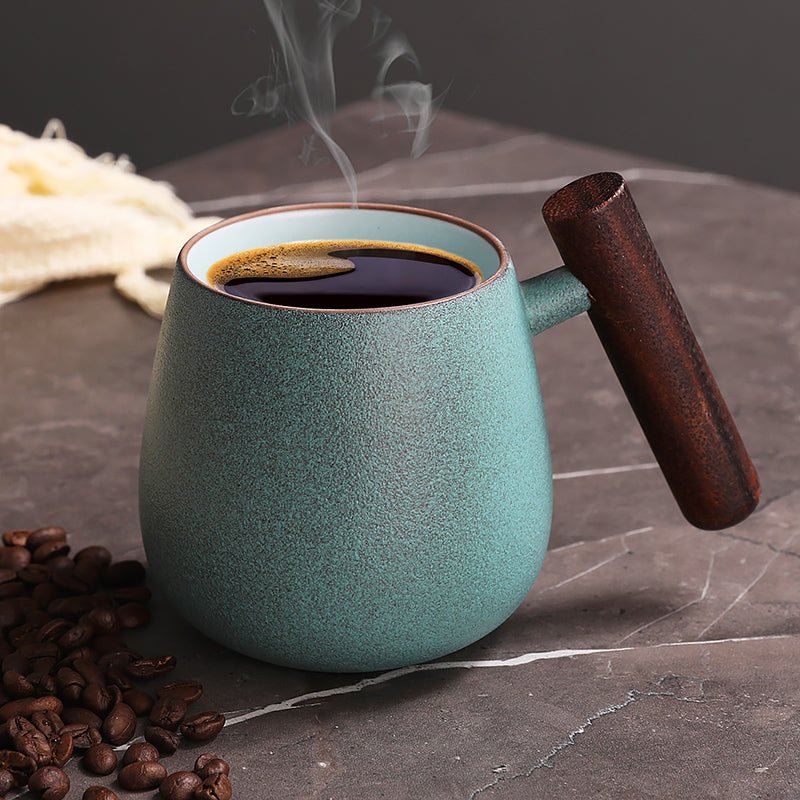
Green Ceramic Coffee Mugs Capacity Guide: 400, 440, or 480 ml
Compare our current 400, 440, and 480 ml green ceramic mugs by serving routine, refill frequency, rim clearance, desk use, and care considerations.
Read more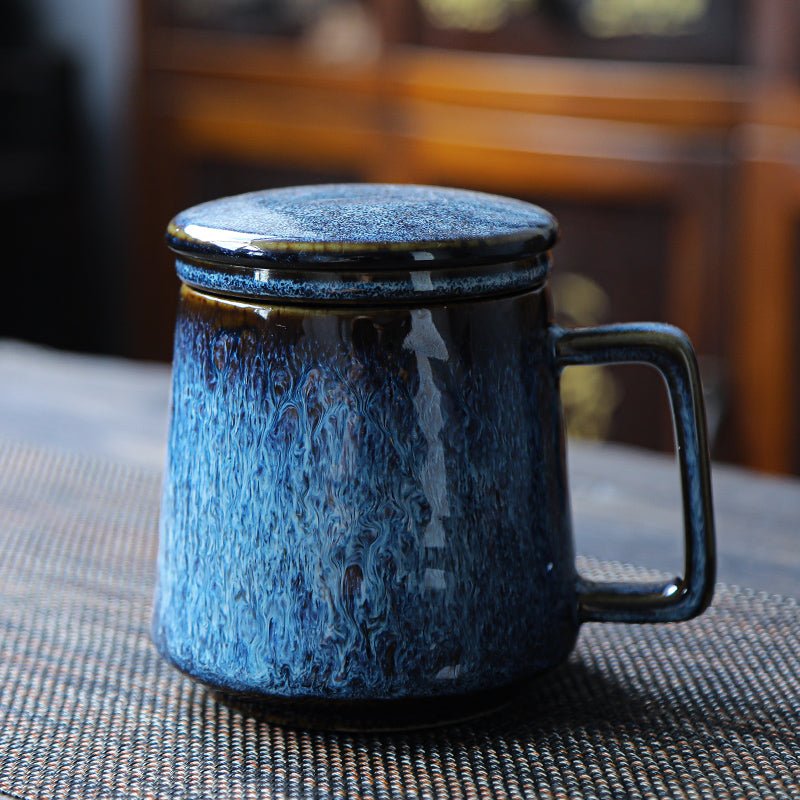
Large Unique Coffee Mugs Capacity Guide: 400, 440, 480 ml
Compare CoffeifyMug's current 400, 440, and 480 ml mugs by realistic pour size, refill pattern, milk and ice allowance, desk use, and gifting fit.
Read more
Leave a comment
This site is protected by hCaptcha and the hCaptcha Privacy Policy and Terms of Service apply.