
Lungo Coffee Cup Home Coffee Station Product Shortlist Guide
Reading time: about 9 minutes
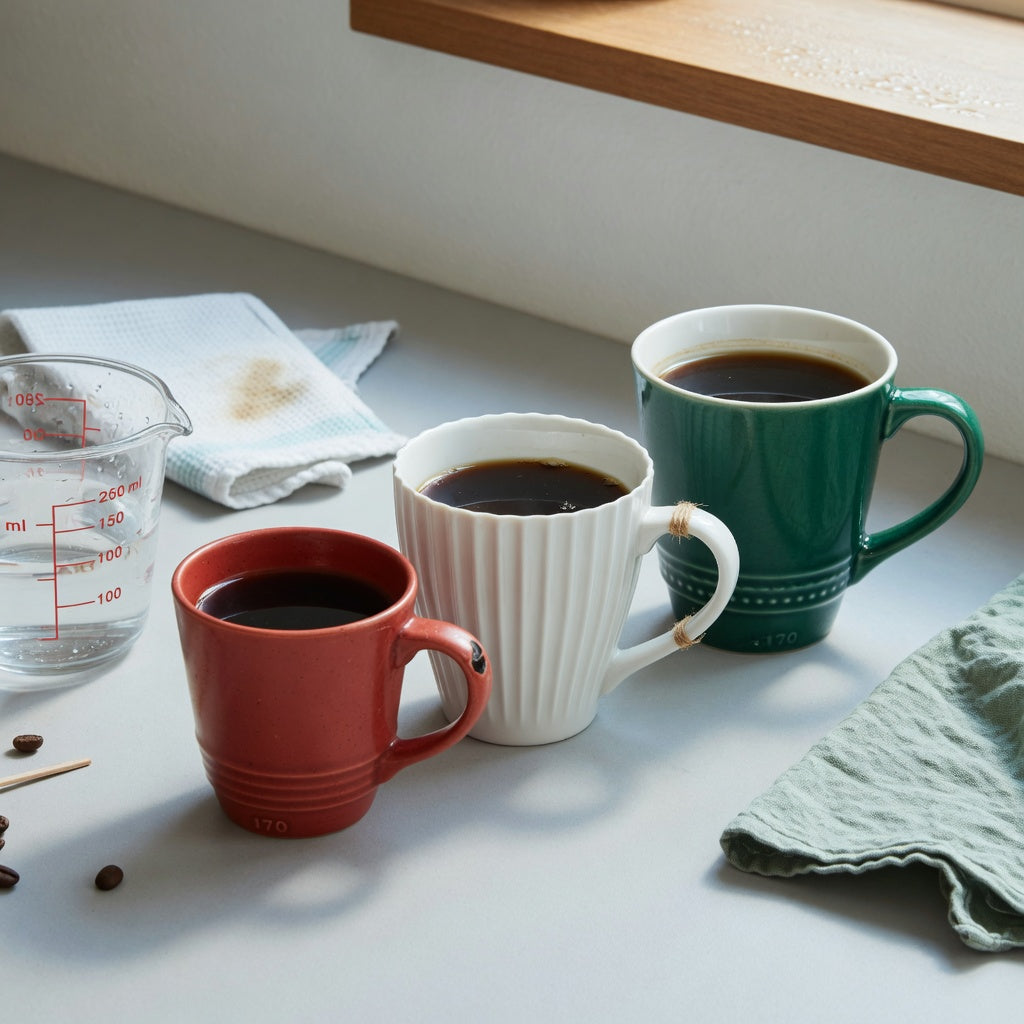
The drink is ready, but one last addition brings the liquid uncomfortably close to the rim. On another counter, a larger cup leaves far more unused capacity than its owner wants. Both situations usually begin with choosing by appearance before measuring the finished drink. This lungo coffee cup home coffee station product shortlist guide starts with a number you can verify at home, then compares the Retro 170 ml, Pleated 200 ml, and Emerald 270 ml by listed capacity and potential headroom.
We sell and handle these three designs in our store, but we do not infer exterior dimensions, equipment compatibility, material, or care instructions from capacity alone. Our shortlist stays within the facts we can support: the Retro is listed at 170 ml, the Pleated at 200 ml, and the Emerald at 270 ml. The useful choice depends on how your own finished pour sits below one of those limits.
How does a lungo coffee cup home coffee station product shortlist guide narrow the choice?
Start by measuring the drink you actually carry to the counter or desk. The name of the preparation is not enough because recipes, settings, and additions vary. Prepare it as usual, include anything normally added before drinking, and transfer it carefully to a marked measuring vessel suitable for the liquid temperature. If your routine varies, measure more than one typical serving instead of building the shortlist around an unusually small day.
- Record the finished volume. Use your own result rather than assuming every lungo has one standard size.
- Subtract that result from each listed cup capacity. The difference is an arithmetic capacity margin, which helps compare the three choices.
- Check physical constraints separately. Capacity does not reveal a cup's external height, widest point, base dimensions, or clearance under equipment.
For this article, headroom means unused capacity relative to the same measured pour. It does not mean a guaranteed vertical distance between the liquid and rim. Vessel shape affects how that empty volume looks, so a milliliter calculation cannot predict the visible gap.
How much capacity margin does each listed size provide?
A single example makes the comparison concrete. If your completed drink measures 150 ml, subtracting it from each listed capacity gives the figures below. This is arithmetic, not a recommended recipe or target fill line.
| Shortlist option | Listed capacity | Margin after a 150 ml pour | What the result tells you |
|---|---|---|---|
| Retro | 170 ml | 20 ml | Closest capacity match and the least numerical buffer |
| Pleated | 200 ml | 50 ml | A middle capacity margin within this three-cup comparison |
| Emerald | 270 ml | 120 ml | The largest capacity margin for the same measured pour |
A 20 ml margin may suit someone whose routine is consistent, but it leaves less allowance for a variable pour or later additions. A 120 ml margin gives more room by volume, yet some shoppers dislike seeing that much unused capacity. That trade-off is personal. The lungo coffee cup home coffee station product shortlist guide is most useful when you decide which outcome bothers you more before opening the product pages.
Retro 170 ml: choose it for a stable pour below the limit
The Retro 170 ml coffee and tea cup belongs on your shortlist if your measured finished drink stays comfortably below 170 ml and you want the lowest listed capacity of these three options. The reason to choose it is precision: it avoids adding the extra unused capacity that comes with the 200 ml and 270 ml choices.
Skip the Retro if your drink regularly approaches 170 ml, if you add liquid after placing the cup at the station, or if your measurements vary enough to erase the remaining margin. A listed capacity should not be treated as an instruction to fill to the rim. The Retro is also not an automatic answer for tight equipment clearance; 170 ml describes volume, not exterior height or width.
Pleated 200 ml: choose it when 170 ml feels too close
The Pleated 200 ml coffee and tea cup is the arithmetic middle of this shortlist. It provides 30 ml more listed capacity than the Retro and 70 ml less than the Emerald. Choose it when your measured pour leaves less margin than you want in the Retro but does not justify moving to the largest listed option.
That middle position does not make the Pleated a universal default. Skip it if your completed drink still sits close to 200 ml, or if your stable, smaller pour makes the Retro's lower capacity more appealing. It is also wrong to assume that a middle capacity guarantees middle exterior dimensions. Confirm any available product measurements against the exact counter, shelf, or outlet clearance where the cup will be used.
Emerald 270 ml: choose it for the widest capacity buffer
The Emerald 270 ml coffee and tea mug has the highest listed capacity in this group. For the same finished drink, it therefore leaves the largest arithmetic margin. It is the relevant next step for a shopper whose usual pour is too close to 200 ml or whose routine changes enough that the two smaller capacities feel restrictive.
Skip the Emerald if you prefer a closer match between drink volume and cup capacity. It offers 100 ml more listed capacity than the Retro and 70 ml more than the Pleated, which can be unnecessary for a smaller, repeatable serving. Do not interpret that larger number as proof of a particular height, width, weight, or equipment fit. Those variables require their own checks.
Which counter, storage, and care checks remain after capacity?
Capacity creates the shortlist; it does not finish the purchase. At our packing table and in customer product questions, we keep volume separate from the physical and care details that need direct confirmation. Before ordering, run these practical checks against the current product information:
- Outlet or shelf clearance: Measure the available vertical space, then compare it with stated exterior dimensions if supplied. None of the three capacity figures guarantees clearance beneath brewing equipment.
- Counter placement: Check the depth and width of the exact area where the cup will sit. Do not estimate the widest external point from milliliters.
- Storage: Confirm the available shelf space and never assume a cup is stackable or nestable unless the product information specifically says so.
- Care routine: Follow the current care directions on the product page or packaging. Capacity does not establish dishwasher or microwave suitability.
- First-use inspection: During unboxing, inspect the rim, body, and base for shipping damage before washing and using the cup. Set it on a level surface rather than judging stability on an uneven tray.
After washing, let the cup and its station surface dry before putting everything back. That simple routine helps prevent trapped moisture on trays or counters, but it is not a substitute for the cup's specific care instructions.
Which capacity makes sense for a shared station or a gift?
For a shared home coffee station, measure each person's finished drink separately. If the results are close, one capacity may serve both routines as long as the larger drink retains an acceptable margin. If the volumes differ substantially, forcing both people into one cup can leave one person close to the limit and the other with more unused capacity than desired. Two purposeful sizes may be more practical than several cups chosen without a routine in mind.
For a gift, ask about the recipient's usual finished volume and where the cup will live. The Pleated 200 ml is the midpoint of this three-item list, but that does not make it a universally safer gift. A recipient with a smaller repeatable pour may prefer the Retro, while someone who wants a larger capacity buffer may get more use from the Emerald. If style is still undecided after selecting a capacity range, browse our unique coffee mugs collection and apply the same measurement checks to any other shape you consider.
Three decisions before opening a product page
Use this final filter to turn the comparison into one clear next step:
- Choose Retro 170 ml if your measured finished drink stays comfortably below 170 ml and minimizing unused capacity is the priority.
- Choose Pleated 200 ml if 170 ml leaves too little margin but 270 ml adds more unused capacity than you want.
- Choose Emerald 270 ml if the 200 ml option remains too close to your finished volume or you deliberately want the largest capacity buffer in this shortlist.
If none of those statements describes your routine, pause before ordering. Measure again with every normal addition included, then verify external dimensions and current care details. A product should earn its place on the station through repeat use, not merely match the counter's color.
Frequently asked questions
Is a 170 ml cup large enough for a lungo?
There is no universal answer because finished drink volumes vary. Measure your usual completed drink and compare it with the Retro's listed 170 ml capacity. If the result sits close to 170 ml, choose a larger listed capacity rather than assuming the remaining headroom will be comfortable.
Does a 270 ml capacity mean the Emerald is taller than the other cups?
No. Capacity alone cannot establish external height, width, or overall geometry. Measure your station's available space and compare it with current product dimensions if they are provided; do not infer equipment clearance from the 270 ml listing.
How much headroom should I leave in a lungo cup?
Use a margin that accommodates your own pour variation and any additions without requiring a fill close to the rim. Subtract your measured finished volume from 170 ml, 200 ml, and 270 ml, then compare the results. The numerical margin will not reveal the exact visible distance below the rim because cup shape also affects the liquid level.
Can these lungo cups go through a dishwasher cycle?
Do not assume care compatibility from the cup name or capacity. Check the current product page or packaging for the specific care directions before using a dishwasher, microwave, or other heating method. Follow those instructions for the individual product you purchase.
Will one of these cups fit under my coffee equipment?
This lungo coffee cup home coffee station product shortlist guide cannot guarantee equipment fit because the verified comparison is limited to listed capacity and resulting margin. Measure the available height and width in your setup, then compare those measurements with the product's current exterior dimensions where available.
Your next step: Measure one normal finished drink, calculate its margin against 170 ml, 200 ml, and 270 ml, and open only the product page that matches your preferred buffer. If the physical dimensions or care information do not suit the station, return to the collection and repeat the same checks before buying.
More from our blog
Read more
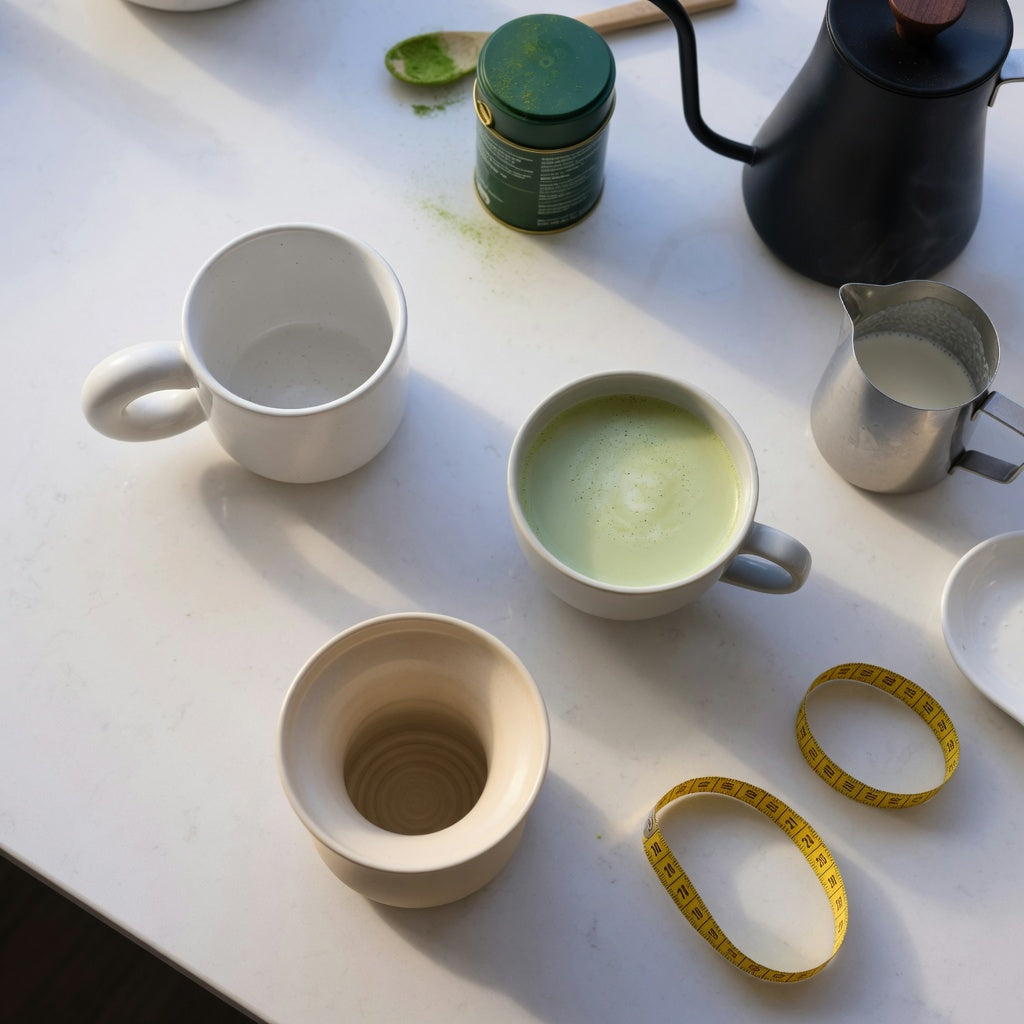
Matcha Latte Mug Home Coffee Station Product Shortlist Guide
Compare the Ball Handle 250 ml, Round 390 ml, and Spittoon 400 ml using listed capacity, the Ball Handle's 11.2 cm diameter, and visible opening shape. Each option includes a clear reason to choose...
Read more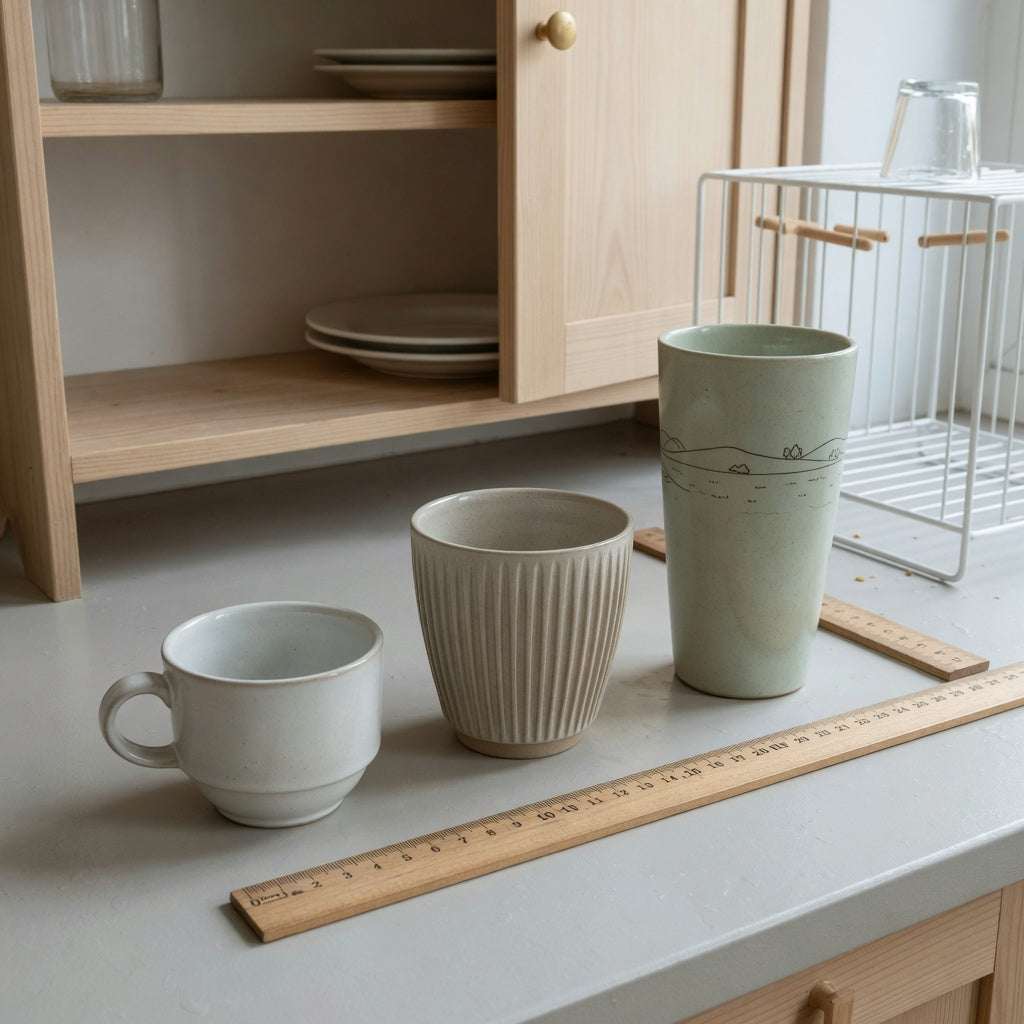
Breakfast Coffee Cup Everyday Mug Rotation Practical Purchase Checklist
Compare the verified 170 ml Retro, 200 ml Pleated, and 350 ml Landscape Tall against refill habits, breakfast-table space, storage, and care unknowns. This checklist shows what to confirm before ch...
Read more
Leave a comment
This site is protected by hCaptcha and the hCaptcha Privacy Policy and Terms of Service apply.