
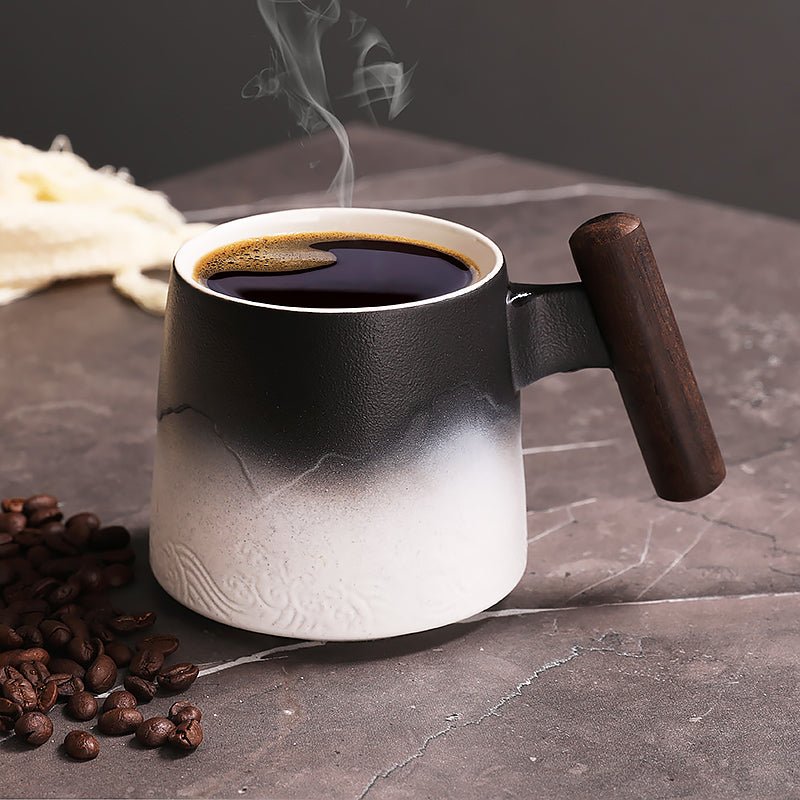
How to Remove Coffee Stains from a Mug Without Damaging the Finish
Reading time: about 9 minutes
A brown ring at the bottom of a mug usually shows up before people notice anything else. We see it most on white ceramic mugs, on mugs that sit with coffee in them for a while, and on pieces that go through the dishwasher every day without a quick hand scrub afterward.
The good news is that most coffee stains are surface stains, not permanent damage. The bad news is that the wrong cleaner or a rough scrub pad can leave the mug looking worse than the stain did. Here is how we handle coffee-stained mugs in our store context, what actually works at the sink, and when a mug needs more than a cleaning fix.
What causes coffee stains inside a mug?
Coffee leaves behind tannins. Those compounds cling to tiny pores and micro-scratches in ceramic, stoneware, and even some coated travel mugs. A glossy mug usually resists staining better than a matte or lightly textured glaze, but no finish is completely stain-proof if coffee sits in it long enough.
We also see staining happen faster when the mug has any of these conditions:
- A rougher interior glaze, especially on handmade-style ceramic mugs.
- Frequent use with black coffee, espresso, or coffee with sugar and milk residue.
- Long soak times after the cup has cooled on a desk or in a car.
- Dishwasher cycles that clean the mug but do not fully remove the stain line.
That matters if you are shopping for a mug too. A sturdy daily-use mug from our collection of all mugs may still stain eventually, but material and finish make a difference in how easy it is to clean.
What is the safest way to clean coffee stains off a mug?
The safest method is a gentle one first. Start with warm water and dish soap, then move to a mild abrasive if the stain remains. That sequence protects printed designs, gloss finishes, and the inner glaze better than jumping straight to harsh chemicals.
- Rinse the mug with warm water.
- Add a few drops of dish soap and scrub with a soft sponge.
- If the stain stays, make a paste with baking soda and a little water.
- Rub the paste on the stained area using a soft cloth or sponge.
- Let it sit for 5 to 10 minutes, then rinse well.
- Dry the mug completely so you can see whether any stain remains.
For most everyday ceramic mugs, this is enough. We use this approach because it is low-risk and does not scratch glossy interiors the way steel wool or abrasive powders can.
Trade-off: baking soda works well on surface staining, but it is not the right choice for mugs with delicate printed wraps, metallic accents, or specialty coatings that can dull under repeated scrubbing.
Does baking soda or vinegar work better on coffee stains?
Baking soda is usually the better first choice for mugs. It gives you a mild abrasive action without the harshness of a heavy scrubber. Vinegar can help loosen buildup, but it is not always the best fit for mugs that hold onto smell, especially if the mug is already prone to absorbing odors.
If you want a simple comparison, this is how we think about it:
| Method | Best for | Watch out for |
|---|---|---|
| Baking soda paste | Fresh to moderate coffee stains on ceramic and stoneware | Can leave residue if not rinsed thoroughly |
| White vinegar soak | Light staining plus mineral buildup | Not ideal for prolonged use on decorated finishes |
| Dish soap + soft sponge | Routine cleaning and light stain removal | May not lift older stains alone |
If you are trying to keep a mug looking clean for desk use or gifting, combining careful washing with the right mug material helps. We cover fit and everyday use in our guide to choosing a mug you’ll actually use, which is worth reading before replacing a stained favorite.
What should you avoid if the mug has a print, glaze, or metallic detail?
This is where people often cause damage while trying to fix a stain. A mug with a full-wrap print, a dark reactive glaze, or a metallic rim needs more caution than plain white stoneware.
- Do not use steel wool or abrasive scrub pads on printed mugs.
- Do not soak metallic-accent mugs for long periods unless the care instructions allow it.
- Do not use bleach on specialty finishes unless the mug maker specifically says it is safe.
- Do not use boiling water on a cracked mug. Heat can make small damage worse.
We handle mugs with detailed decoration this way because once a design dulls or a glaze gets scratched, you cannot clean that back. Stain removal should improve the mug, not change the surface.
How do you remove old coffee stains that have built up over time?
Older stains usually need a little more patience. They are not always permanent, but they often sit in small surface marks that regular dish soap does not reach.
For older buildup, try this:
- Fill the mug with warm water and a small amount of dish soap.
- Let it sit for 10 to 15 minutes.
- Drain it, then apply a baking soda paste to the stained area.
- Use a soft sponge in small circles, especially near the bottom seam where stains collect.
- Rinse and inspect under bright kitchen light.
- Repeat once if needed, then stop if the finish starts to look dull.
If the stain still remains after two careful rounds, the mug may have absorbed the discoloration into the surface texture. That is more common in lower-gloss stoneware and mugs that have picked up years of daily use. At that point, cleaning may improve it but not fully erase it.
For buyers comparing mug sizes, stain visibility can be different too. A smaller mug, like an 8 oz coffee mug, can show bottom staining sooner simply because there is less interior space. Larger mugs, such as a 16 ounce coffee mug or a 20 oz coffee mug, can still stain, but the extra volume often makes daily rinsing a little easier.
Is the dishwasher enough to stop coffee stains from coming back?
Not always. A dishwasher is good for routine cleaning, but it is not always strong enough to remove a stain line that has already bonded to the interior surface. We see this a lot with mugs used at office desks, where coffee sits for an hour or more before the cup gets washed.
Dishwashers are fine for many everyday mugs, especially plain ceramic ones. But if you want the mug to stay cleaner-looking, the best habit is simple:
- Rinse the mug soon after finishing your drink.
- Do not let coffee dry in the bottom.
- Hand wash printed or specialty mugs when possible.
- Dry the inside so water spots do not mix with coffee residue.
A mug warmer can also affect this routine. If you leave coffee hot for longer at a desk, residue can bake onto the cup sides more easily. We discuss that trade-off in our best coffee mug warmer guide.
What kind of mug is easiest to keep stain-free?
In our experience, the easiest mugs to keep clean are smooth-glazed ceramic mugs with a light interior, a simple shape, and no deep texture where coffee can sit. A wide mouth also helps because you can reach the bottom with a sponge more easily.
These details matter more than most shoppers expect:
- Material: glazed ceramic is usually easier to clean than porous-looking stoneware.
- Interior finish: a glossy inside resists staining better than a matte or textured one.
- Shape: a straight-sided mug is easier to scrub than one with a narrow base and curved foot.
- Care fit: if a mug is dishwasher-safe but has a printed exterior, hand washing may still keep it looking better longer.
If you are replacing a mug because the old one always looked stained, browse our products page with those details in mind. A mug that fits your routine is more useful than one that only looks good on day one.
When should you replace a stained mug instead of trying to clean it?
Replace the mug if the stain is paired with cracks, a chipped rim, a rough interior that keeps snagging, or a smell that stays after washing. A stain by itself is cosmetic. A damaged mug is a different issue.
We would also move on from a mug if:
- The glaze has started to craze heavily and trap residue.
- The printed design is peeling or fading after repeated washing.
- The inside has permanent discoloration that bothers you every time you use it.
- The handle or base has developed a chip that makes daily use less comfortable.
That is the honest trade-off. Some mugs are worth rescuing. Others are better replaced, especially if you want a clean-looking mug for the office, a gift, or a kitchen set that stays presentable on the counter.
Frequently asked questions
How to remove coffee stains from mug without scratching it?
Use warm water, dish soap, and a soft sponge first. If the stain remains, switch to a baking soda paste and rub gently with a cloth instead of a scouring pad. That gives you stain removal without dulling the glaze.
Can I use bleach to remove coffee stains from a mug?
Only if the mug maker says it is safe. Bleach can be too aggressive for printed mugs, colored interiors, and specialty finishes. For most mugs, baking soda or mild dish soap is the better first step.
Why does my white mug stain so quickly?
White mugs show coffee residue more clearly, even when the actual buildup is light. If the glaze is slightly porous or the mug sits with coffee in it for a while, stains appear faster. Quick rinsing usually makes the biggest difference.
Will the dishwasher remove old coffee stains?
It can help with fresh residue, but old stains often need a pretreat step first. A soak with warm water and dish soap, followed by baking soda, usually works better than a dishwasher alone. If the stain is baked into the glaze, it may never fully disappear.
What kind of coffee mug is easiest to clean every day?
A smooth-glazed ceramic mug with a wide opening and a simple interior shape is easiest to keep clean. Plain finishes are more forgiving than heavily textured or decorated mugs. If you want a low-maintenance daily mug, that combination is the safest bet.
If your current mug needs more than cleaning, start by checking the interior finish, the rim condition, and whether the shape is easy to reach with a sponge. Then compare the options in our mug collection so the next one is easier to keep clean from day one.
More from our blog
Read more
Fallout Vault-Tec Coffee Mug: What Buyers Should Check Before Ordering
A Fallout Vault-Tec coffee mug can be a fun desk piece, but only if the print, mug size, and finish suit how you actually drink coffee. Here’s what to check before buying so you pick a mug that hol...
Read more
Logo Coffee Mug Buying Guide: Materials, Sizes, and Best Uses
A practical guide to choosing a logo coffee mug that looks good, holds up to daily use, and fits the way you actually drink coffee. We cover size, material, care, and the trade-offs that matter bef...
Read more
Leave a comment
This site is protected by hCaptcha and the hCaptcha Privacy Policy and Terms of Service apply.