
How Many Oz in a Coffee Mug? Common Sizes and Real-World Fit
Reading time: about 9 minutes
How many oz in a coffee mug, and why does the label not tell the whole story?
A mug marked 12 oz rarely feels like a full 12 oz once you pour hot coffee into it. We see this all the time when people compare mugs on a kitchen counter, at an office desk, or while unboxing a gift: the number on the listing sounds simple, but the usable space depends on the mug shape, the thickness of the walls, and how much room you leave at the top.
The short answer is that a coffee mug is often 8 oz to 16 oz, with 10 oz, 12 oz, and 15 oz being especially common. The practical answer is more useful: the best size is the one that matches how you drink. Black coffee, cappuccinos, and quick desk refills all ask for different capacities.
If you want a broader shopping reference, our article on How Many Oz Is a Coffee Mug? Common Sizes and Real-World Fit covers the same question from a size-first angle.
What does the ounce number on a mug usually mean?
On most drinkware, the ounce number refers to the mug's total capacity when filled near the brim, not the amount you should actually pour every morning. That matters because most people do not drink from a mug filled to the lip. You need headspace for movement, heat, and anything extra you add after brewing.
In real use, a mug rated at 12 oz may be comfortable at 10 oz or a little less once you leave space for steam, milk, or a spoon. A rounded mug with thick ceramic walls can also look larger outside than it is inside. Straight-sided mugs tend to use interior space more efficiently than tapered shapes.
That is why the same ounce label can feel different from one mug to the next. The handle size, wall thickness, and opening diameter all affect the drinking experience even before you take the first sip.
Which mug sizes do most buyers actually choose?
Here is the practical breakdown we use in our store when helping shoppers compare options:
| Mug size | What it usually suits | Trade-off |
|---|---|---|
| 8 oz | Small coffee, tea, espresso-style drinks, compact cabinets | Too small for long pours or extra milk |
| 10 oz | Everyday single cup, smaller hands, coffee with some room left | Can feel tight for large drinks or heavy cream use |
| 12 oz | Most standard home brews, gift buyers, flexible everyday use | May still be smaller than people expect if they like large servings |
| 15 oz | Big coffee drinkers, long work sessions, latte-style servings | Takes more cabinet space and can feel heavy when full |
For shoppers who want a quick comparison, we also point them to How Many Oz in a Coffee Mug? Common Sizes and What Fits Best and 10 oz Coffee Mug: Size, Fit, and What to Check Before You Buy. Those two articles are useful if you are stuck between a compact mug and something closer to a café-style pour.
One detail shoppers often miss: a mug that looks “small” on a listing photo may still have a wide, stable base and a comfortable handle. In our experience, the handle is part of the capacity decision too, because a mug that is easy to grip gets used more often than one that only looks big on paper.
How much coffee can you pour and still use the mug comfortably?
The safest rule is to pour less than the maximum fill line. For hot coffee, that usually means leaving enough space so you can carry the mug without splashing and take a sip without feeling like you are right at the edge. If you add milk, foam, or creamer, subtract that from your usable coffee volume.
As a working guide:
- An 8 oz mug is usually best for a short pour or a smaller cup of tea.
- A 10 oz mug works well for one standard cup of drip coffee with a little room left.
- A 12 oz mug gives flexibility for milk, sugar, or a slightly larger pour.
- A 15 oz mug is better if you want a desk mug that does not need refilling constantly.
This is also where drinking style matters. If you tend to brew strong coffee and dilute with milk, a smaller mug can become frustrating fast. If you like a lighter pour or you use a machine that serves closer to 6 to 8 oz, a larger mug may feel oversized and heat the drink more slowly.
We see this in gift buying too. A mug that looks generous in photos can be the wrong choice for someone who drinks a small black coffee every morning. On the other hand, a person who spends long hours at a desk usually appreciates a larger format, especially when they do not want to keep getting up for refills.
Which coffee mug size fits best for home, office, and gifts?
There is no single best size. The right choice depends on how the mug will be used, where it will live, and how much space the buyer actually has for dish storage and daily cleanup.
At our store, we think about three real-life scenarios:
- Kitchen counter use: A 10 oz or 12 oz mug is usually the most forgiving. It fits standard drip coffee, hot chocolate, and tea without feeling bulky.
- Office desk use: A 12 oz or 15 oz mug makes more sense if the drink may sit for a while. Wider mugs can cool faster, but they are often easier to set down safely.
- Gift giving: A 12 oz mug is the safest middle ground. It feels useful without committing the buyer to a very large or very small format.
If you want to browse mug shapes rather than just size labels, start with our full mug collection. You can compare shape, handle style, and overall feel before narrowing down the ounce capacity.
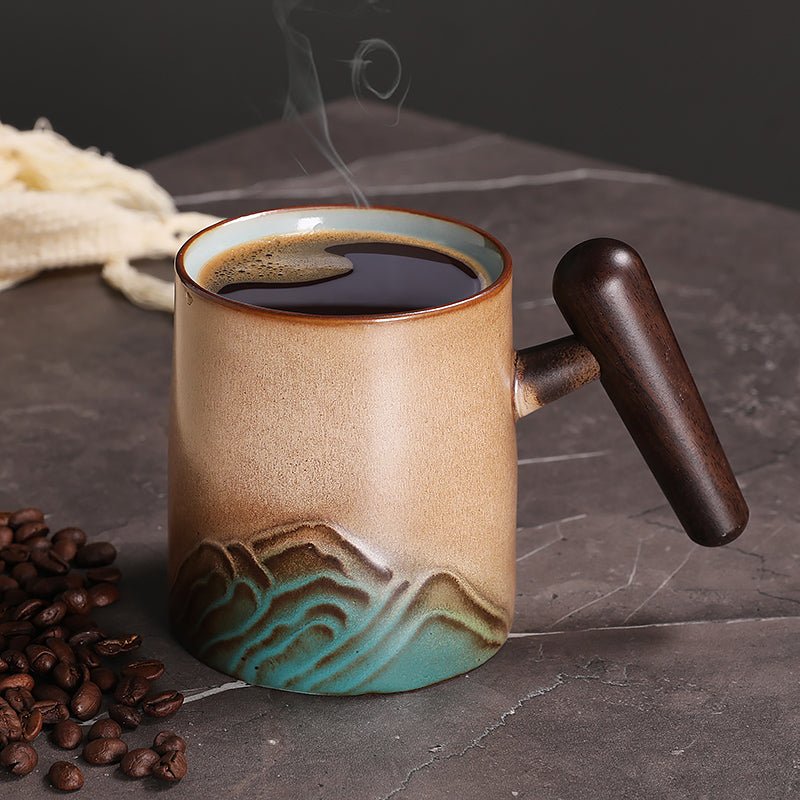
For example, the Mountain Sea Coffee Tea Mug is the kind of mug that appeals to shoppers who want something visually distinctive but still practical for everyday use. If you prefer a more playful desk mug, the Spittoon Coffee Tea Mug gives a very different silhouette. The Planet Coffee Tea Mug is another good example of how shape and visual style can matter just as much as the ounce number when someone is choosing a mug for daily use or gifting.
What should you check before buying a mug online?
We recommend checking more than the capacity. The ounce number is only one part of the decision, and it does not tell you how the mug will behave after a week of real use.
Before you buy, look at these details:
- Opening diameter: A wider mouth makes sipping easier, but it can cool coffee faster.
- Handle clearance: Some handles look fine in photos but feel cramped once your fingers are through them.
- Wall thickness: Thicker ceramic can help the mug feel sturdy, but it may reduce the interior space a little.
- Cleaning setup: If a mug has a shaped exterior or printed surface, make sure you are comfortable washing it in the dishwasher or by hand depending on the care instructions.
- Cabinet fit: Tall mugs are not ideal if your shelf spacing is tight.
That last point matters more than people expect. A 15 oz mug can be the right drinking size and still be a poor choice if your cupboard only clears short cups. We have seen plenty of buyers love a mug in the photo, then realize it does not stack, does not fit under their machine, or is awkward to store beside their everyday dishes.
If you want a second perspective on size and fit before buying, the post How Many Oz Is a Regular Coffee Mug? A Practical Buyer Guide is a useful companion read.
What is the downside of choosing a bigger mug?
A larger mug is not automatically better. Bigger mugs can be heavy when full, especially if you pour near the top and carry them one-handed. They also take up more cabinet space, may feel oversized for tea, and can make a normal coffee serving look small and disappointing.
There is also a heat trade-off. A larger opening exposes more of the drink surface to air, which can cool the coffee faster. If you are the kind of buyer who takes a mug to a meeting and sips slowly over 20 minutes, that matters. If you finish your cup quickly, it matters less.
Smaller mugs have the opposite problem. They are compact and tidy, but they may feel restrictive if you like milk drinks, pour-overs, or a generous breakfast coffee. The best choice is not the biggest mug. It is the mug that matches the drink you actually make.
Frequently asked questions
How many oz in a coffee mug is considered standard?
For most shoppers, 12 oz is the most common everyday benchmark, but 10 oz and 15 oz are also widely used. The right size depends on how much coffee you pour and whether you add milk or foam. If you want a general-purpose mug, 12 oz is the most versatile starting point.
Is a 10 oz mug big enough for morning coffee?
Yes, if you drink a single modest cup or you like room at the top. A 10 oz mug works well for drip coffee, tea, and smaller pours. It is less ideal if you make large lattes or want a mug that feels substantial on a desk.
Why does my mug say 12 oz but seem smaller than 12 oz?
Most mug ratings reflect total capacity near the brim, not the comfortable drinking amount. Wall thickness, shape, and the amount of headspace you leave all affect what the mug feels like in use. A rounded mug can also look larger on the outside than it is inside.
What size mug is best for gifts?
We usually recommend 12 oz because it is the safest middle ground. It works for coffee, tea, and hot chocolate without feeling too tiny or too oversized. If you know the person drinks a large mug every day, moving up to 15 oz can make more sense.
Should I buy a bigger mug if I use cream or milk?
Usually, yes. Milk, cream, and foam reduce the usable coffee space quickly, so a larger mug gives you more room to mix without splashing. If your usual drink includes extras, a 12 oz or 15 oz mug is often more practical than an 8 oz mug.
If you are still deciding, start with the mug style you actually want to use every morning, then compare size against your brew volume and cabinet space. From there, browse the collection and choose the mug that fits your routine instead of just the number on the label.
Read more
Cracker Barrel Coffee Mugs: What to Check Before You Buy
A practical look at Cracker Barrel coffee mugs, including the size, handle, finish, and care details shoppers should check before buying. We also compare a few rustic alternatives if you want a sim...
Read more
Car Coffee Mug Buying Guide for Fit, Spill Control, and Daily Use
A car coffee mug has to clear the cup holder, stay steady in traffic, and still be easy to clean after the commute. This guide breaks down the real trade-offs, from materials and size to lid design...
Read more
Leave a comment
This site is protected by hCaptcha and the hCaptcha Privacy Policy and Terms of Service apply.