
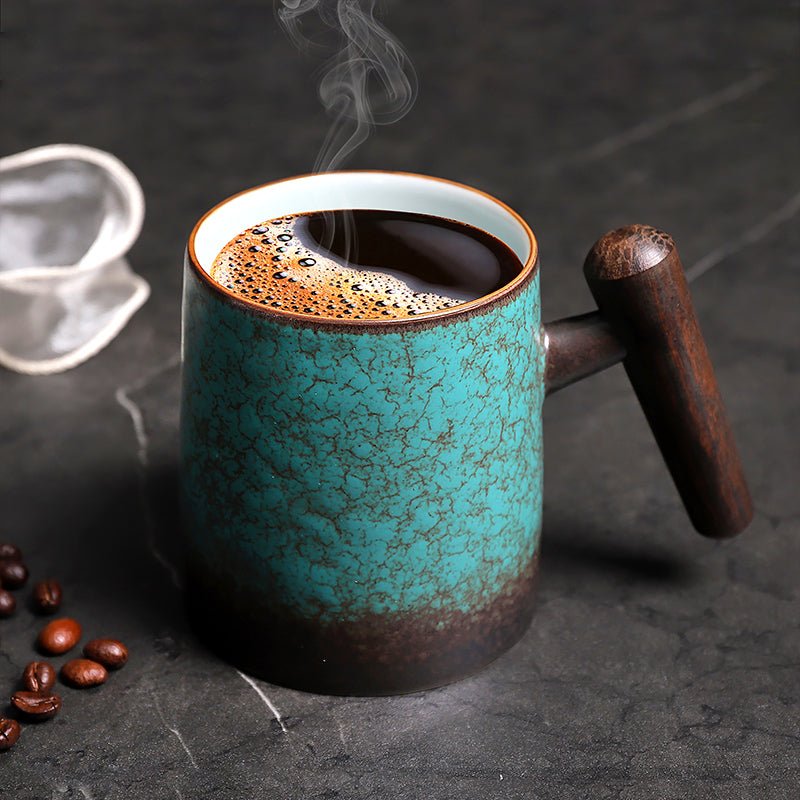
Green Tea Mug Buying Priorities: Capacity, Shape, and Space
Reading time: about 9 minutes
Put a mug beside a laptop, notebook, phone, and tea tin, and the decision stops being purely decorative. A 270 ml serving may suit a long block of uninterrupted work, while someone who prefers short pours may find that same capacity unnecessary. The green tea mug buying priorities that settle the choice are listed capacity, visible shape, and the clear space available where the mug will actually sit.
In our store, we handle and compare these products using details a shopper can verify. For this group, the confirmed capacity figures are 170 ml for the Retro, 200 ml for the Pleated, and 270 ml for the Emerald. We also compare the shapes visible in the product imagery. We do not turn style names or photographs into unsupported promises about origin, brewing performance, grip, heat retention, stability, or care requirements.
Which listed capacity matches your refill pattern?
Capacity is the cleanest starting point because the differences are measurable. The Pleated holds 30 ml more than the Retro, the Emerald holds 70 ml more than the Pleated, and the full difference between the Retro and Emerald is 100 ml. Those gaps matter more when they are connected to the amount you normally pour, not simply to a preference for a larger-looking mug.
- Short serving with intentional refills: The Retro 170 ml coffee and tea cup has the lowest listed capacity of the three. It fits a routine built around smaller pours and easy access to the kettle. It is not the practical choice for someone whose main goal is avoiding refills.
- Middle capacity without choosing the largest option: The Pleated 200 ml coffee and tea cup adds 30 ml over the Retro. It suits a shopper who finds 170 ml restrictive but does not normally want a 270 ml serving.
- More liquid per fill: The Emerald 270 ml coffee and tea mug has the largest listed capacity. For the same total amount of tea consumed, that extra capacity can mean fewer refills. The trade-off is committing to a larger pour each time you fill it.
Treat listed capacity as a comparison figure rather than a command to fill the mug to its edge. If you normally leave headroom, your actual pour will be lower. A useful home test is to measure 170 ml, 200 ml, and 270 ml into a vessel you already use. Seeing those volumes on your own counter is more informative than guessing from a product photograph.
Green tea mug buying priorities for a narrow desk or counter
Capacity and physical footprint are not interchangeable. A lower-capacity cup can be wide and low, while a higher-capacity mug can use more height. Because the verified comparison details for these three products do not include a complete set of width, depth, and height measurements, we do not rank their footprints based only on milliliters.
- Place your current mug in the exact spot where the new one will live.
- Measure the clear width and depth beside your keyboard, notebook, sink, or tea tray.
- Check vertical clearance if the mug will sit below a shelf or inside a cabinet.
- Compare those measurements with any dimensions shown on the current product page. If complete dimensions are not listed, do not assume that lower capacity guarantees a smaller base.
For a crowded desk paired with short pours, the Retro 170 ml is the first capacity to inspect, but its footprint should still be confirmed from the current page. The Pleated 200 ml is the numerical middle option for a moderately sized serving. The Emerald 270 ml makes more sense when a larger pour matters and the intended surface has enough clear room.
What does visible shape tell you before the mug arrives?
Product imagery can help you choose a silhouette, but it cannot prove how a mug will perform in your hand. The Retro presents a compact, classic cup profile. The Pleated has a visibly ridged exterior. The Emerald presents a taller, smoother profile. Our team uses those as visual comparison points only.
The Pleated's ridges may be relevant to someone who prefers a textured exterior, but visible texture is not the same as a certified non-slip surface or an ergonomic guarantee. The Emerald's taller profile is worth checking against shelf clearance, but height alone does not prove that a mug is less stable. The Retro may appear compact, yet that appearance is not a substitute for actual base and overall-width measurements.
| Current option | Listed capacity | Visible shape | Refill preference | Main limitation |
|---|---|---|---|---|
| Retro | 170 ml | Compact, classic cup silhouette | Smaller servings with more frequent refills | Not suited to shoppers seeking the largest single pour |
| Pleated | 200 ml | Vertically pleated or ridged exterior | Middle ground between the other two capacities | Visible ridges do not guarantee a particular grip experience |
| Emerald | 270 ml | Taller, smoother mug profile | Larger serving with fewer refills for the same total intake | May exceed a short-pour routine and requires a careful space check |
Which mug fits the way your morning actually runs?
Short pours with the kettle close by
Choose the Retro 170 ml if you prefer to pour a smaller amount, finish it, and refill on your own schedule. The lower listed capacity keeps the serving closer to that routine. Its limitation is straightforward: a long meeting or a desk far from the kettle may make repeated refills inconvenient.
A middle option for mixed routines
Choose the Pleated 200 ml if your serving preference falls between the two extremes. That extra 30 ml over the Retro is modest, while the mug remains 70 ml below the Emerald. It is a sensible capacity compromise, although the numerical middle is not automatically the right answer if you already know that you prefer very short or substantially larger pours.
A larger pour before work or meetings
Choose the Emerald 270 ml if your priority is putting more tea in the mug at one time. It is the clearest match for fewer refills within this three-product comparison. It is not a promise that the tea will remain at a particular temperature, and it is not the best fit for someone who habitually pours much less than 270 ml.
How should a gift buyer choose without guessing?
A gift can look right during unboxing and still spend most of its time on a shelf if the capacity conflicts with the recipient's habits. Look at the mug the person already reaches for. A small cup that is refilled several times points toward the Retro 170 ml. A moderate everyday serving points toward the Pleated 200 ml, while a visibly larger regular mug makes the Emerald 270 ml more relevant.
Shape should be the second filter. Match a preference for a classic profile, a pleated exterior, or a taller smooth form after narrowing the capacity. If the recipient's routine is unknown, compare the product imagery together in our unique coffee mugs collection. The 200 ml option is the numerical middle, but we would not present it as universally safest without knowing the person's usual pour.
Where is each option the wrong fit?
A useful recommendation includes a reason to walk away. These are the trade-offs we would check before ordering:
- Skip the Retro 170 ml if the buyer dislikes returning to the kettle or consistently prefers a larger single serving.
- Skip the Pleated 200 ml if the buyer specifically wants either the lowest or highest capacity in this group. It is also the wrong visual choice for someone who prefers a completely smooth exterior.
- Skip the Emerald 270 ml if 270 ml is more than the buyer normally pours or the available desk and shelf space has not been checked.
- Pause on all three if a particular material, dishwasher instruction, insulation feature, or other care requirement is non-negotiable and has not been confirmed on the current product page. This comparison does not assign unlisted guarantees.
A different style from the collection may be the better purchase if none of these capacity and shape combinations aligns with the routine. There is no advantage in forcing a match simply because one option has the largest volume.
A practical check before adding a mug to your cart
- Use a kitchen measuring jug to view 170 ml, 200 ml, and 270 ml in a mug you already own.
- Decide if you prefer a short serving with more refills, a middle serving, or the largest listed serving.
- Compare the compact Retro profile, the ridged Pleated exterior, and the taller smooth Emerald shape.
- Measure the intended desk, counter, shelf, or cabinet space instead of estimating footprint from capacity.
- Open the matching product page and review its current images, specifications, and care information before ordering.
This process keeps green tea mug buying priorities tied to daily use. Capacity selects the serving pattern, visible shape narrows the style, and a separate space check prevents milliliters from being mistaken for physical dimensions.
Frequently asked questions
Which green tea mug buying priorities matter most for a small desk?
Start with your usual pour size, then measure the clear desk area and inspect the visible shape. Do not assume that the 170 ml Retro has the smallest footprint solely because it has the lowest capacity. Confirm any listed dimensions on the current product page before treating desk fit as settled.
Is a 170 ml green tea mug too small for daily use?
It is not too small for someone who prefers short servings and does not mind refilling. It can be inconvenient for a person who wants one larger pour before a meeting or work session. The decision depends on refill preference rather than a universal minimum size.
How different are the three listed mug capacities?
The Retro is 170 ml, the Pleated is 200 ml, and the Emerald is 270 ml. That creates a 30 ml step from Retro to Pleated, a 70 ml step from Pleated to Emerald, and a 100 ml difference between the smallest and largest options.
Does the Pleated mug's shape guarantee a better grip?
No. The exterior is visibly pleated or ridged, but appearance alone does not establish a non-slip or ergonomic performance claim. Choose it if you prefer the visible texture and 200 ml capacity, not because of an unverified grip promise.
Which green tea mug is best for fewer refills?
The Emerald has the largest listed capacity at 270 ml, so it can require fewer refills than the 170 ml and 200 ml options for the same total amount consumed. It is still a poor fit if you normally make short pours or have not checked the space available for its taller profile.
Next step: Measure the amount you normally pour, check the mug's intended space, and then compare the three shapes in the CoffeifyMug collection. Open the product page that matches your refill routine and verify its current details before placing the order.
More from our blog
Read more
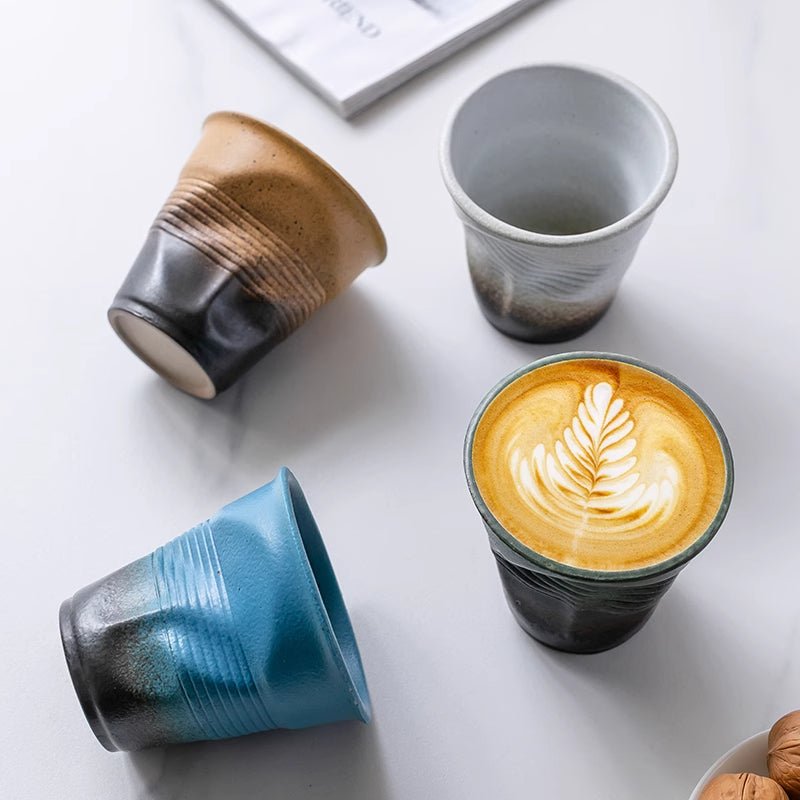
Yellow ceramic coffee mug buying priorities: capacity, shape, and space
Compare CoffeifyMug's yellow Retro 170 ml and Pleated 200 ml cups by listed capacity, visible shape, and the space around a desk, shelf, or counter. We also flag the care and fit claims these listi...
Read more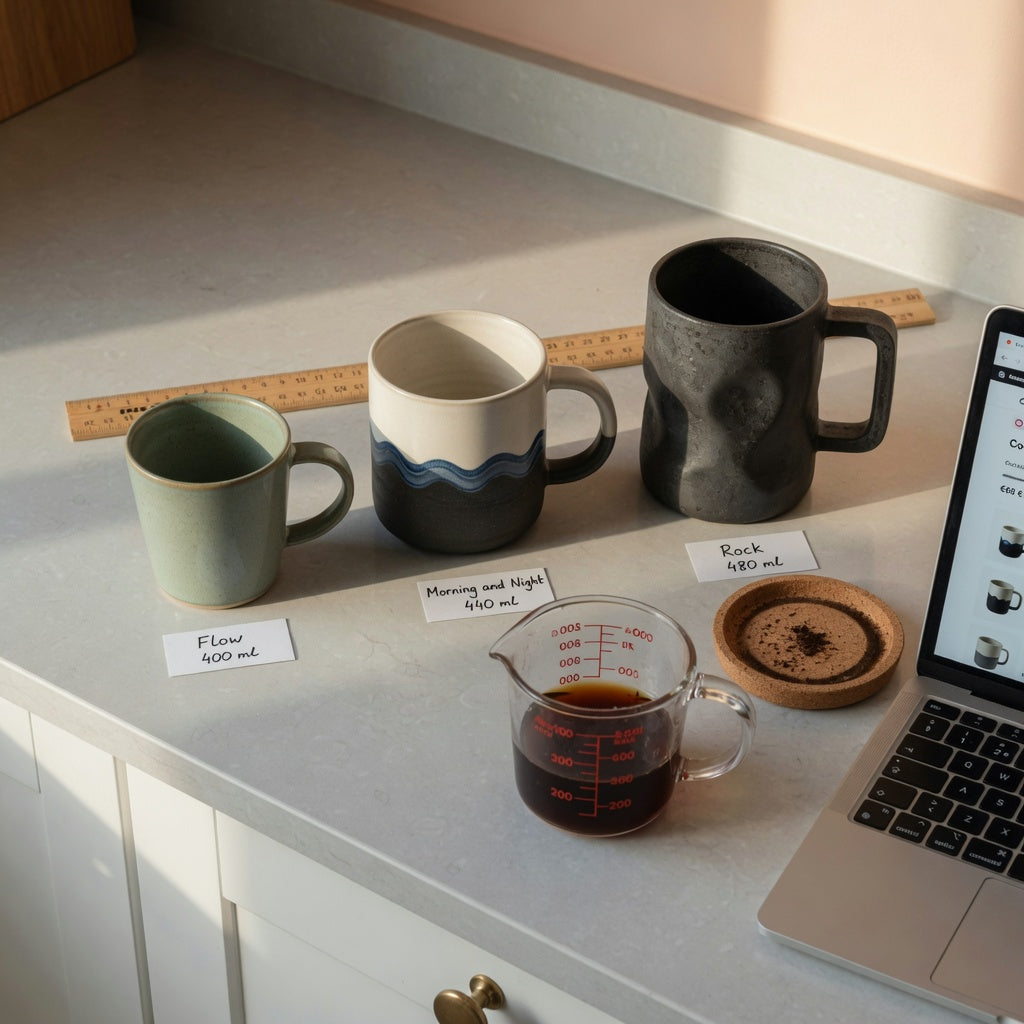
Cafe Au Lait Mug Buying Priorities: Capacity, Shape, Space
Compare CoffeifyMug's 400 ml, 440 ml, and 480 ml mugs by measured pour volume, visible shape, handle fit, and the space you actually have. See where each option fits and which details still need ch...
Read more
Leave a comment
This site is protected by hCaptcha and the hCaptcha Privacy Policy and Terms of Service apply.