
Coffee Mug Wall Holder: How to Choose the Right One for Your Kitchen
Reading time: about 9 minutes
A crowded counter usually tells the story first. The kettle is parked next to the grinder, two mugs are drying on a towel, and the cabinet door keeps bumping the handle of the mug you use every morning. That is usually the point where a coffee mug wall holder starts to make sense.
We sell and handle kitchen mug storage often enough to see the same pattern: shoppers want more space, but they do not want a rack that looks flimsy, scratches glaze, or makes mugs awkward to grab before work. A good wall-mounted holder should solve the storage problem cleanly and still match the way you actually use your kitchen.
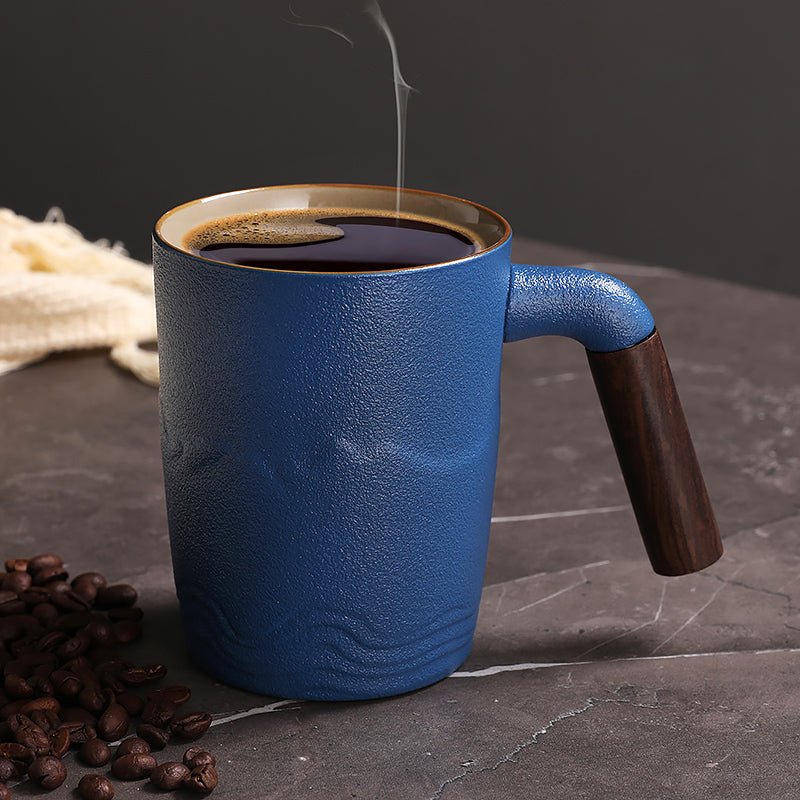
If you are comparing options, start with the basics, then work outward. Our Christmas Coffee Tea Mug, Green Waves Coffee Tea Mug, and Mountain Sea II Coffee Tea Mug with Wooden Handle are useful examples because they show how mug shape, handle style, and finish affect what a wall holder can comfortably carry and display.
For the full range of matching drinkware and accessories, you can also browse our all products collection while you compare sizes and styles.
What should a coffee mug wall holder actually do in a real kitchen?
A coffee mug wall holder should do three jobs well: free up counter space, keep mugs accessible, and hold up to repeated use without loosening or feeling wobbly. That sounds simple, but in a real kitchen the details matter. Morning traffic is fast. Hands are half awake. If the mug hook is too shallow, too tight, or mounted in the wrong spot, it becomes one more thing to annoy you.
We look at wall holders differently than decorative racks because practical use matters more than looks alone. A good unit should let the mug hang straight, leave enough clearance for the handle, and keep the cup from clinking against nearby tile or a cabinet edge. If the rack sits too close to a backsplash lip or under a low cabinet, larger mugs can hit the wall before they settle.
For most buyers, the right wall holder is the one that fits the mugs you already own, not the one that looks best in the product photo. That is why we usually recommend checking the mug handle width, the depth of the hook, and the space between the wall and the nearest obstacle before buying.
How do you choose the right size and mounting style?
Size is where many purchases go wrong. A coffee mug wall holder can look compact online and still feel oversized on a narrow kitchen wall, or too small once you try to hang a few everyday mugs. We suggest measuring the actual wall area first, then thinking about how many mugs you want within easy reach.
Here is the short version of what to check before you buy:
- Wall width: leave room for the rack plus your hand to reach in and remove mugs without hitting other items.
- Hook depth: deeper hooks are better for thicker handles and heavier ceramic mugs.
- Clearance: make sure the mug can hang freely without touching a backsplash, shelf, or cabinet base.
- Mounting surface: solid wood studs, brick, and tile-backed walls behave differently than drywall.
- Daily use pattern: if you grab the same mug each morning, place that hook at the most natural hand height.
Mounting style matters just as much. Wall-mounted racks are best for saving counter space, but they are not ideal if you rent and cannot make holes, or if your wall surface is weak and uneven. In those cases, a stand or tree may suit you better. If you want a deeper comparison, our Wall Mounted Coffee Mug Holder Buying Guide for Real Kitchens walks through the trade-offs we see most often.
In our experience, a common failure mode is not the rack itself but the installation. Screws into weak drywall anchors can loosen over time, especially if the mug is thick ceramic and used daily. Another issue is uneven mounting, which makes the rack look crooked even if it is structurally fine. If that bothers you, take the extra time to level before drilling.
Which mug materials and shapes work best on a wall holder?
The best-fit mug is not always the prettiest one. The mug’s handle shape, wall thickness, and overall weight change how comfortably it sits on a hook. A straight-sided ceramic mug usually hangs neatly. A very rounded handle, extra-thick body, or oversized novelty shape can be less stable.
We see three common mug styles in our store that illustrate the difference well:
- Christmas Coffee Tea Mug: useful if you want a seasonal display piece, but it is not the best choice if you want a year-round minimalist kitchen rack.
- Green Waves Coffee Tea Mug: a good example of a mug that works visually as a display piece while still serving daily coffee use.
- Mountain Sea II Coffee Tea Mug with Wooden Handle: the wooden handle adds character, but it also means you should check fit carefully because handle shape affects how the mug rests on the hook.
That last point matters. Wooden handles can be attractive and comfortable, but they are not the same as a standard ceramic loop handle. Some wall holders hold them well; others feel awkward because the handle angle is different. If your priority is easy daily hanging and removal, a standard mug shape is usually the safer bet. If your priority is display, then finish and profile may matter more than absolute convenience.
Dishwasher habits matter too. A mug that is washed frequently and dried fully before hanging will usually stay cleaner around the handle and rim. Hanging a mug while it is still damp can leave water marks on the hook area or nearby wall if the rack is too close to the surface.
What materials and finishes hold up best over time?
A coffee mug wall holder should survive repeated lifting, not just sit pretty in a styled photo. The finish matters because kitchen humidity, steam from the kettle, and casual wiping all add up. Metal racks are common because they usually feel sturdier than thin decorative alternatives. A powder-coated or painted finish often hides minor wear better than a bare surface, while wood accents can look warmer but need a little more care if your kitchen gets steamy.
Here is how we think about common material trade-offs:
| Material / finish | What it does well | Where it falls short |
|---|---|---|
| Metal | Strong, compact, better for daily mug use | Can scratch if the finish is thin or the hooks are sharp |
| Wood-accented | Warmer look, good for visible kitchen walls | Needs more care around moisture and heat |
| Painted / coated | Works well for clean, modern styling | Chips can show if mugs are bumped frequently |
In our experience, sharp hook edges are one of the most overlooked issues. They can chip glaze over time, especially if the mug is heavy or removed at an angle. That is why we prefer holders with smooth, rounded contact points. It sounds minor, but over months of use it makes a difference.
If you want more guidance on what to check before buying wall-hung storage, our article Coffee Mug Wall Hanging: What to Check Before You Buy is a good next read.
What are the trade-offs of a wall holder compared with a stand or tree?
A coffee mug wall holder is not the right answer for every home. That honesty helps shoppers more than hype does. The wall-mounted style wins on counter space and visibility. It loses if you need portability, if your wall cannot support hardware, or if you change kitchen layouts often.
Choose a wall holder if:
- you want to clear a counter or open shelf;
- you use the same mugs often and want easy access;
- you have a stable wall area near the coffee station;
- you like seeing mugs as part of the kitchen decor.
Choose a stand or tree instead if:
- you rent and do not want to drill;
- you need to move storage around seasonally;
- your wall is tiled in a way that makes mounting difficult;
- you store many mugs but only rotate a few at a time.
If you want a side-by-side look at those alternatives, our Coffee Mug Holder Stand: How to Choose the Right One for Your Space and Coffee Mug Tree Holder: How to Choose the Right One for Your Counter articles are useful comparison points. They are especially helpful if you are deciding between a wall-mounted display and a freestanding option.
How do you set up and care for one without damaging mugs or walls?
Setup is where a small decision can prevent a long-term annoyance. We recommend dry-fitting the placement first. Hold the rack against the wall, open and close the nearby cabinet, and check where your hand naturally reaches. If the mug hits the underside of a cabinet, move the rack lower or choose a different wall.
For care, keep it simple:
- Wipe the rack with a soft cloth every week or two.
- Dry mugs fully before hanging them back up.
- Check screws or mounting points after the first few weeks of use.
- Avoid abrasive cleaners on coated finishes.
- If you see glaze chips on mug handles, inspect the hook edge for rough spots.
We do not recommend a wall holder for very oversized travel-style mugs, especially if they are heavy when filled or awkwardly shaped. Those usually belong in a cabinet or on a sturdier shelf. A wall rack is best for everyday ceramic mugs and display-friendly cups that you can lift cleanly with one hand.
If your kitchen already has a clean wall near the coffee setup, a wall-mounted rack is often the most efficient choice. If the wall is crowded, a freestanding rack may be less fussy. That practical split is what helps keep a purchase useful after the novelty wears off.
Frequently asked questions
Will a coffee mug wall holder damage my mugs?
It should not if the hooks are smooth and the mugs are a normal size and weight. Damage usually comes from rough metal edges, forcing an oversized handle onto a tight hook, or letting mugs bang together during removal. We always suggest checking the hook finish before regular use.
Can I mount a coffee mug wall holder on tile?
Yes, but tile installation needs care. The right drill bit, hardware, and placement matter more on tile than on drywall, and you want to avoid drilling into weak spots or cracked grout. If you are not comfortable drilling tile, a freestanding holder may be the better choice.
How many mugs should I hang on one wall holder?
Use the number the rack is designed for, but also think about daily use space. A holder can technically fit several mugs and still feel cramped if the handles overlap or the cups hit the wall. Leave enough room so each mug can be lifted out without nudging the others.
Is a wall holder better than a mug tree for small kitchens?
Usually yes, if you have usable wall space. A wall holder frees the counter completely, while a mug tree still takes up surface area. If drilling is not an option, the mug tree is the easier setup, but it will not save as much space.
What kind of mug works best with a wall-mounted rack?
Standard ceramic mugs with comfortable loop handles are usually the easiest fit. Very large mugs, unusual handle shapes, and heavy decorative cups can be awkward or unstable. If you want a display piece as well as a daily mug, check the handle shape before you buy.
If you are still deciding, compare your wall space, mug handle shape, and how often you want to reach for the mug during the day. Then browse our all products collection to match a holder-friendly mug with the kitchen setup you actually have, not the one in a staged photo.
Read more
Fox Coffee Mug: How to Choose the Right Style, Size, and Gift
A fox coffee mug should do more than look cute on a shelf. We break down the styles, sizes, and finish details that matter at the desk, in the kitchen, and as a gift.
Read more
Pier 1 Coffee Mugs: How to Choose a Daily Replacement That Fits
A practical guide for shoppers replacing Pier 1 coffee mugs with something that works every day. We compare size, shape, care, and durability so you can pick a mug that fits your routine.
Read more
Leave a comment
This site is protected by hCaptcha and the hCaptcha Privacy Policy and Terms of Service apply.