
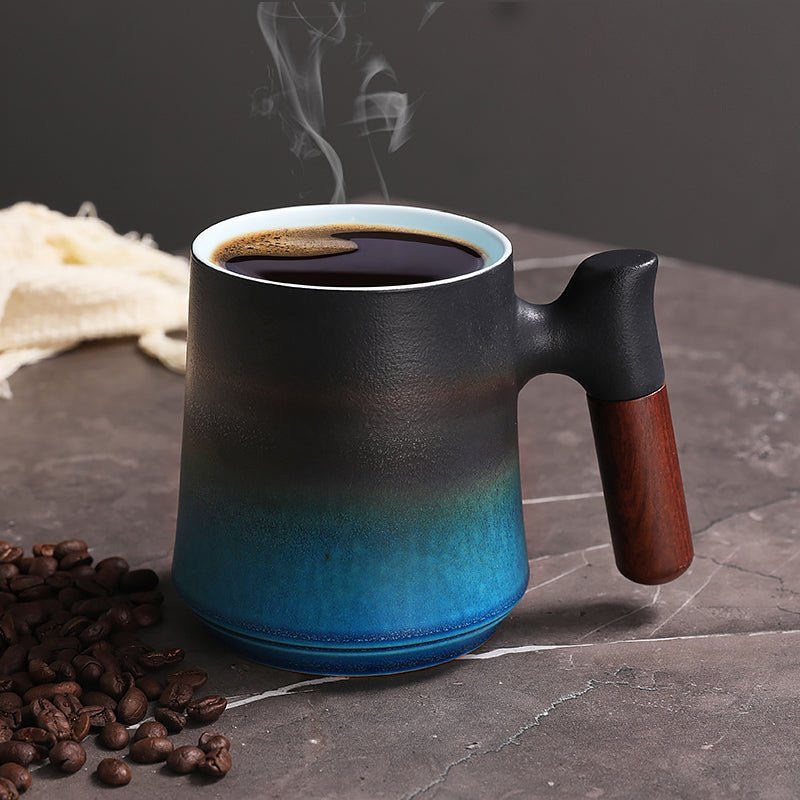
Coffee Mug Sublimation: What to Buy and What to Avoid
Reading time: about 9 minutes
A mug can look perfect on a product page and still fail the moment it goes through a heat press. We see that most often with coffee mug sublimation: the print looks crisp in mockup, then the real mug shows a faded edge, a faint seam, or a color shift after the first wash.
That is why we treat mug selection as part of the print process, not just a blank surface. If you want a quick place to compare styles, start with our full mug collection, then look at specific options like the Mountain Coffee Tea Mug, the Great Mountain Coffee Tea Mug, and the Emerald Coffee Tea Mug. Those product pages are useful if you are comparing shapes, handle comfort, and the kind of mug that feels right for a gift or daily desk use.
What does coffee mug sublimation actually print on?
Coffee mug sublimation is a transfer process that uses heat to turn sublimation ink into gas, then bonds that ink to a coated mug surface. The key word there is coated. This does not work on a random ceramic cup from a cupboard. It needs a mug with a sublimation-ready polymer coating, usually over ceramic, so the ink can lock into the surface during pressing.
In plain terms, the print becomes part of the mug’s outer layer rather than sitting on top like a sticker. That is why a good sublimation mug feels smooth, not raised. It is also why scratch resistance is usually better than with a vinyl decal, though the finish still depends on the coating quality and how the mug is washed.
From our side, the biggest difference is simple: a well-made blank gives you a clean, even transfer around the wrap, while a weak blank can show dull patches or inconsistent color near the rim and handle side. That is the part shoppers do not always see in photos.
What do you need to get a clean transfer?
If you are shopping for a setup or trying to understand why one mug prints better than another, these are the core parts that matter:
- Sublimation-coated mug: typically ceramic with a bright white coating for best color accuracy.
- Sublimation ink and paper: the design is printed in reverse, then transferred with heat.
- Mug press or heat press with a mug attachment: consistent pressure matters more than people think.
- Heat-resistant tape and protective paper: both help prevent shifting and ghosting.
Three details separate a smooth result from a messy one. First, the coating should be even from rim to lower body; if it is patchy, the print can look washed out in those spots. Second, the mug shape should match the transfer area, because a tapered or unusually curved body can distort the image wrap. Third, the handle should sit far enough away from the print zone so your design does not collide with the edge of the press.
If you are trying to choose a practical mug size, our size-focused guides on 11 oz coffee mug fit and 10 oz coffee mug fit are worth reading before you order blanks or gifts. Those sizes are common for sublimation because they are easy to wrap, easy to hold, and familiar to shoppers.
What usually goes wrong with mug sublimation?
Most failures are not mysterious. We see the same handful of problems over and over, and most can be traced back to the blank, the setup, or the care cycle after printing.
| Problem | What it looks like | Common cause |
|---|---|---|
| Ghosting | Faint double image or shadowed edges | Paper shifted during pressing or tape was not secure |
| Faded zones | One side prints lighter than the rest | Uneven pressure, poor mug coating, or low heat contact |
| Scorching | Brown marks or overheated patches | Too much heat or too much dwell time |
| Edge loss | Print does not fully reach near the rim or seam | Transfer area does not match the mug shape |
There is also a buying mistake that matters before the first press: choosing a mug just because it looks good in a gift photo. A mug can be attractive and still be a poor sublimation choice if the coating is thin, the rim feels rough, or the body is awkward for a standard wrap. That is especially true for mugs meant for office desks and repeat use, where comfort matters as much as appearance.
One more limitation: coffee mug sublimation is not the right route if you want a matte, rustic, or uncoated stoneware look. Sublimation performs best on smooth, bright surfaces. If you want a more tactile handmade look, another decoration method may suit you better.
Which mug style is best for gifts, offices, and daily use?
We usually think about mug choice in terms of how it will actually be handled. A gift mug, a desk mug, and a daily home mug do not need the same shape.
- For gifting: choose a mug with a clean, broad printable area and a shape that reads well in unboxing photos. The Great Mountain Coffee Tea Mug is a good example of the kind of piece shoppers often buy when they want something that feels a little more distinctive without getting too decorative.
- For desk use: comfort and stability matter more than novelty. A mug that sits flat and feels balanced in the hand is easier for everyday coffee, especially around laptops and paperwork.
- For home kitchens: a straightforward mug is usually the safest buy. It is easier to clean, easier to stack, and less likely to feel awkward in a dishwasher rack.
If you want a more design-forward look, our Emerald Coffee Tea Mug is a useful example of how color and shape can change the feel of a mug without changing its basic function. For shoppers who prefer a classic everyday profile, the Mountain Coffee Tea Mug is closer to the kind of mug people actually reach for every morning.
Trade-off wise, a more distinctive mug can stand out in a gift set, but it may be less flexible if you want a universal blank for repeated personalization. A very standard mug is easier to produce consistently, but it may not feel special enough for a premium gift presentation. That is the real balance in coffee mug sublimation: consistency versus personality.
How do we judge quality before buying a sublimation mug?
We look at a mug the same way a customer will use it, not just the way it photographs. In our store, that means checking handling, finish, and what kind of print the shape will actually support.
- Check the coating: it should be even, smooth, and consistent across the printable surface.
- Check the rim and handle: rough edges and uncomfortable handles become obvious after a few uses.
- Check the shape: straight-sided mugs are easier to align than aggressive curves or tapered bodies.
- Check the care expectation: if a listing does not give clear care guidance, assume you should be gentler with washing.
- Check the use case: office mug, gift mug, and daily coffee mug are not the same decision.
In our experience, the best-performing sublimation mugs are the ones that do not try too hard. They offer a clean printable surface, a comfortable handle, and a shape that does not fight the press. That is also why many buyers should read our article on what works, what fails, and what to buy before placing an order. It helps narrow the gap between a pretty product image and a mug that behaves well in real use.
How should a sublimated mug be cared for?
Care matters because a printed mug lives a rough life. It gets hot coffee, cold rinses, a drying rack, sometimes a dishwasher cycle, and occasionally a knock against a sink or desk. Even when the print is bonded well, repeated harsh washing will test the coating over time.
For best results, we recommend gentle daily handling: avoid abrasive scrubbers, do not soak the mug for long periods, and be cautious with aggressive high-heat dishwasher cycles. A soft sponge and mild dish soap are the safest routine. That does not mean every sublimated mug must be hand washed forever, but it does mean you should expect better long-term appearance if the mug is treated like a printed item rather than an uncoated restaurant cup.
Sublimation is a strong choice for custom mugs, gifts, office use, and branded merchandise. It is not the best fit for rough texture, artisan glaze, or products where the print must survive careless handling without any maintenance. That trade-off is normal. The right mug choice depends on how the buyer will actually use it, not just how the listing looks.
Frequently asked questions
What mug material works best for coffee mug sublimation?
Most buyers should look for a polymer-coated ceramic mug. Ceramic gives the mug a familiar weight and feel, while the coating is what lets the sublimation ink bond correctly. Uncoated ceramic, glass, and metal are a different story and usually need other decoration methods or special blanks.
Why does my sublimation mug look faded on one side?
That usually points to uneven pressure, poor contact with the press, or a coating issue on the mug itself. If the mug is slightly tapered or the transfer paper shifted, one side can print lighter. It is worth checking both the mug shape and the press alignment before assuming the design file is the problem.
Are sublimated coffee mugs dishwasher safe?
Some may hold up fine with careful washing, but repeated harsh dishwasher cycles can shorten the life of the print and the coating. We advise gentle cleaning when you want the mug to keep its color and sharp edges longer. If a customer wants something low-maintenance above all else, a simpler, everyday mug style is usually the safer choice.
Is coffee mug sublimation good for small gifts?
Yes, because a mug feels personal without being hard to use. It works especially well for birthdays, office gifting, and bundled presents. The main limitation is that the design needs to suit the mug shape, so oversized graphics or very thin text can be harder to read cleanly.
What size mug is easiest to buy for sublimation?
Standard sizes like 10 oz and 11 oz are common because they are familiar, easy to hold, and simple to match with most mug press setups. If you want a deeper look at size and fit, our 10 oz and 11 oz buying guides are a good next stop before you place an order.
If you are choosing a mug today, use a simple checklist: coated ceramic, comfortable handle, even printable surface, and a shape that matches how the mug will be used. From there, compare the options in our full collection and pick the style that fits the buyer, not just the mockup.
Read more
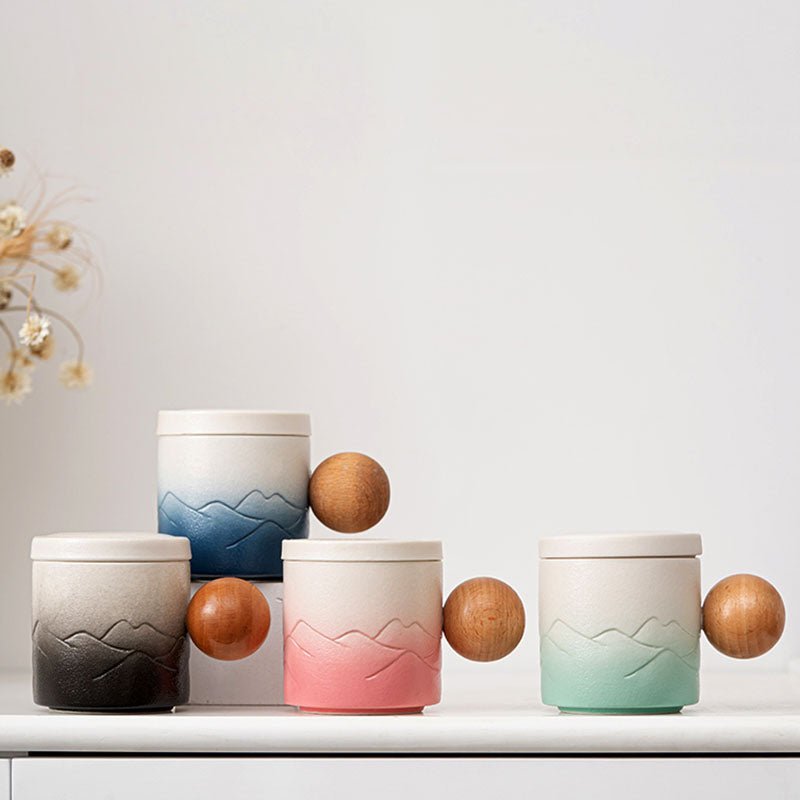
14 Ounce Coffee Mugs for Daily Coffee, Tea, and Desk Use
14 ounce coffee mugs sit in the practical middle ground for everyday coffee, tea, and office use. We break down fit, care, trade-offs, and which options make the most sense before you buy.
Read more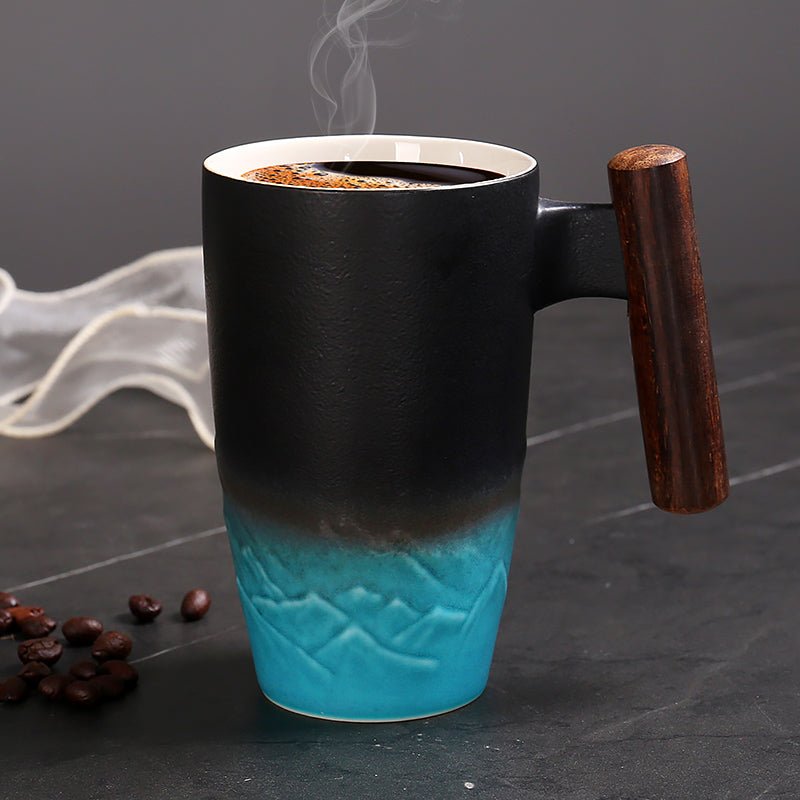
Coffee Mug Size: How to Choose the Right Capacity
Coffee mug size changes how a mug feels in your hand, how much you actually pour, and whether it fits your counter or desk. This guide breaks down the practical trade-offs buyers compare before ord...
Read more
Leave a comment
This site is protected by hCaptcha and the hCaptcha Privacy Policy and Terms of Service apply.