
Coffee Mug Display Shelves: What Actually Works at Home
Reading time: about 12 minutes
The wall above the coffee maker always looks bigger before the mugs go up. Then you place the first few cups on a shelf and the real issues show up: handles knock together, one tall mug blocks the others, and the shelf that looked perfect online suddenly feels too shallow for everyday use.
That is why we tell shoppers to judge coffee mug display shelves by daily function first and looks second. In our store, we see the same pattern over and over. The best setups are not the ones packed with the most mugs. They are the ones that let you grab your morning cup half awake, wipe the shelf easily, and still enjoy how the display looks from across the kitchen.
If you are comparing shelf options before buying, start with three practical questions: how many mugs stay out every day, what shape those mugs actually are, and where the shelf will live. A display shelf above a coffee bar has different demands than one in a home office or a gift corner. Steam, cooking grease, wall depth, and reach all matter more than most shoppers expect.
What should coffee mug display shelves do in everyday use?
A shelf has a simple job. It needs to hold ceramic mugs securely, leave enough room to remove one without bumping the others, and stay easy to clean. That sounds obvious, but a lot of decorative shelves fail on one of those points.
We usually suggest buyers think in terms of workflow:
- Morning access: Can you remove your most-used mug with one hand?
- Safe placement: Does the mug base sit fully on the shelf instead of hanging near the edge?
- Handle clearance: Is there enough side space so handles do not tangle together?
- Cleaning: Can you dust the shelf and the mugs without taking down a whole crowded row?
- Visual balance: Do the mugs look intentional, or does the shelf just feel overfilled?
Real kitchens expose weak shelves quickly. If your coffee station sits near a toaster, stove, or sink, the shelf will deal with fine grease, steam, and the occasional splash. A beautiful open shelf that is hard to wipe down becomes annoying fast. We have seen shoppers love a display on day one and resent it after a month because every mug has to be moved just to clean behind it.
That does not mean open shelving is a bad idea. It just means it works best for a manageable number of mugs, not your entire collection. If you want to display a few special pieces and keep the rest stored away, that is usually the sweet spot.
Which shelf style works best for your space?
Not every wall needs the same kind of shelf. A narrow apartment kitchen, a break-room coffee corner, and a gift display nook all call for different setups.
Single ledge shelves
These are great if you want a clean row of mugs and a simple look. They work especially well for standard rounded cups and smaller collections. The trade-off is capacity. Once you start mixing in oversized handles or tall mugs, the row can feel cramped.
Tiered wall shelves
Tiered shelves give you more display space without going very wide. They are useful if you want to separate everyday mugs from more decorative ones. The downside is vertical clearance. We often see tall mugs or high handles scrape the underside of the shelf above.
Rail or hook shelves
These can save space and keep handles separated, but they are more dependent on mug shape. Wide or unusually thick handles do not always hang neatly. If you rotate through different mug styles, hooks are less flexible than flat shelves.
Floating shelves
Floating shelves look clean and modern, and they are easy to match with different kitchens. The catch is support. A shelf holding ceramic mugs needs proper mounting into studs or strong anchors. A decorative floating shelf with weak hardware is not a good fit for heavy daily use.
For many shoppers, the best answer is still a simple wall shelf placed close to the coffee maker. If you are pairing the shelf with mugs that deserve a little visual attention, our unique coffee mugs collection is a good place to compare shapes that show well on open display before you decide how much shelf room you need.
How much spacing do mugs really need on a shelf?
This is the detail people skip, and it is the reason a lot of mug displays feel awkward in person. Mug width is only part of the story. Handles usually create the real spacing problem.
From our experience handling and selling mug styles across different silhouettes, these are the spacing checks that matter most:
- Measure the widest point. On some mugs, that is the body. On others, it is the handle.
- Leave a little side clearance. Mugs should not touch each other every time you take one down.
- Check shelf depth against the base. The foot or base ring should sit fully on the shelf.
- Allow top clearance for tall pieces. Taller mugs need more breathing room above them than people expect.
- Test your hand, not just the mug. You need room to grip the handle without scraping the mug next to it.
One real-world example: a classic round mug can often sit comfortably in a tighter row because the silhouette is predictable and the body does not flare in odd places. A textured cup or a tall statement mug may need visibly more room, even if the volume is similar. We see this often with shelves under cabinets. Buyers assume the shelf height is enough, but the hand clearance is what makes the setup frustrating.
If you are choosing mugs and shelving at the same time, it helps to compare shapes side by side. Our Round Coffee Tea Mug is the easiest kind of silhouette to place in a neat row, while the Landscape Tall Coffee Tea Mug gives you more height and presence but asks for better vertical clearance. That is not a flaw. It just means the shelf has to suit the mug, not the other way around.
What materials and construction details matter most?
Mug shelves do not carry enormous weight compared with cookware, but ceramic is still heavier than people think once you line up several pieces together. We recommend checking construction details the same way you would for any frequently used storage item.
| Feature | What to check | Why it matters |
|---|---|---|
| Shelf material | Solid wood, metal, or well-made engineered wood | Better stability and less sag over time |
| Finish | Sealed, painted, or powder-coated surface | Easier to wipe clean near coffee steam and kitchen splashes |
| Mounting hardware | Stud mounting or reliable anchors matched to wall type | Prevents wobble and keeps weight distributed safely |
| Front edge | Flat secure surface or a slight lip | Helps cups sit more confidently, especially on shallow shelves |
| Shelf depth | Enough depth for the base ring and handle position | Reduces the perched, unstable feeling some displays have |
Sealed wood is popular because it warms up a kitchen and pairs nicely with stoneware or matte ceramics. Metal shelves are often easier to wipe down and can make sense in cleaner, more modern coffee corners. Engineered wood can work too, but we would avoid flimsy boards with weak veneer edges if the shelf will hold multiple ceramic mugs every day.
There are also some defect patterns shoppers rarely think about until later:
- Sagging shelves: More common on longer spans with thin boards.
- Finish wear near the front edge: Happens where mugs are lifted on and off daily.
- Wobble after installation: Usually a mounting issue, not a mug issue.
- Water marks or grease buildup: More visible on raw or textured shelf finishes.
Care matters too. We suggest wiping open shelves with a soft dry cloth weekly, then using a lightly damp cloth as needed for residue. Avoid soaking wood shelves or leaving pooled water on painted seams. For the mugs themselves, dishwasher use is convenient if the mug is made for it, but hand drying before putting pieces back on display helps avoid water spots collecting around the base ring and on the shelf surface.
Which mug shapes display best on open shelves?
Some mugs are naturally shelf-friendly. Others are better as accent pieces than as part of a tight everyday row.
Here is the practical breakdown we use with customers:
- Round mugs: Best for symmetrical rows and easy daily access. They are usually the safest choice for small to medium shelves.
- Pleated or textured cups: Great for adding depth and visual interest, especially if your shelf would otherwise look flat. They need a little more breathing room so the texture can actually be seen.
- Tall mugs: Useful for adding height variation and making a display feel less uniform. Not ideal for low-clearance shelves or tight upper-cabinet spaces.
- Oversized mugs: Comfortable for large drinks, but they can dominate a shelf quickly and reduce capacity.
- Mixed silhouettes: Good for a collected look, but harder to keep tidy if every piece competes for attention.
Our Pleated Coffee Tea Cup is a good example of a mug that works as a shelf focal point. The texture reads well from a distance, especially on a plain shelf with open space around it. The trade-off is that it is not the best choice if you want a dense row of nearly identical mugs. For that, a simpler rounded profile usually behaves better.
If you want a display that feels balanced rather than staged, we often recommend this mix:
- Two or three everyday mugs in a compatible shape
- One textured or distinctive piece for contrast
- One taller mug only if the shelf has enough height
That arrangement works in real homes because it stays usable. You are not turning your coffee area into a fragile showroom. You are just giving the pieces some room to look good and function well.
What are the trade-offs of open coffee mug display shelves?
Open shelving looks inviting, and it makes your favorite mugs easier to reach. Still, it is not automatically the right choice for every home.
Here are the honest trade-offs:
- Pros: easy access, decorative value, better use of vertical wall space, encourages you to display mugs you actually enjoy using
- Cons: needs more frequent dusting, exposes mugs to kitchen grease or splashes, can look cluttered quickly, less ideal in homes with very active kids or limited wall support
If your kitchen runs dusty, if your coffee station is right beside the stove, or if you prefer a visually quiet room, open shelves may frustrate you. In those cases, a cabinet with one small visible display area might serve you better than a full wall shelf.
They are also not ideal for very heavy collections if the only installation option is weak drywall without proper anchoring. We would rather steer a shopper toward a smaller, safer display than oversell a shelf concept that does not fit the wall or the routine.
If you are still comparing options across styles, sizes, and use cases, browsing our all collection can help you see how different mug silhouettes change what kind of shelf makes sense.
How many mugs should you keep on display at once?
Less than you think. Most shelves look and work better when they are not full.
For daily use, we usually suggest building the display around your actual routine:
- Count your true everyday mugs. Not the whole collection. Just the ones that get used all week.
- Add one accent mug if you want personality. This could be a textured or taller piece.
- Stop before the shelf feels tight. If mugs need to be angled into place, the display is already too crowded.
- Rotate seasonally or by mood. That keeps the shelf fresh without forcing all your mugs out at once.
A half-full shelf usually looks more deliberate than a packed one. It is also easier to clean, safer to use, and kinder to more decorative mug shapes. We see buyers get the best results when they think of display as a working edit of their collection, not the entire collection itself.
Which mugs from our store pair well with display shelves?
Because we work with shoppers who care about both use and presentation, we pay close attention to how mug shapes behave on open storage. Some pieces are easy all-rounders. Others are better for a more curated setup.
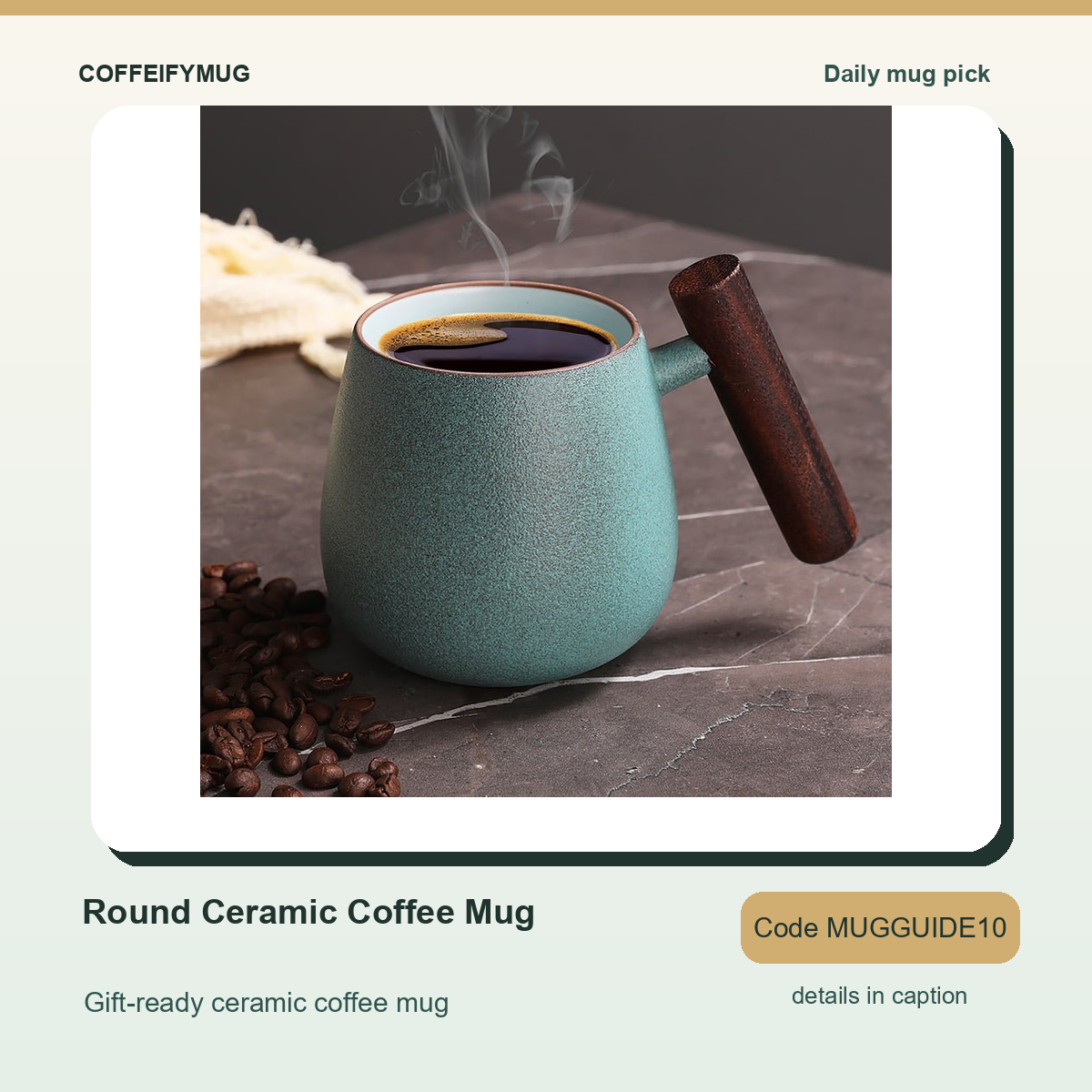
The Round Coffee Tea Mug is the most flexible option for shelf displays. It suits buyers who want a reliable everyday row and a mug shape that feels stable, familiar, and easy to space.
The Pleated Coffee Tea Cup works well if your shelf needs texture. It stands out best when it is not crowded by too many neighboring pieces.
The Landscape Tall Coffee Tea Mug adds height and can break up a flat-looking display, but we would not choose it for a shelf with very little vertical room.
If your goal is to build a display with more character, our unique coffee mugs collection is the easiest way to compare pieces that deserve open-shelf space instead of cabinet storage.
Frequently asked questions
How deep should coffee mug display shelves be?
Deep enough for the mug base to sit fully on the shelf without feeling perched near the edge. You also want enough room for the handle position and for your hand to grab the mug comfortably. Very shallow ledges can work for small decorative cups, but they are often frustrating for daily coffee mugs.
Are coffee mug display shelves practical for small kitchens?
Yes, if you keep the setup tight and purposeful. A slim shelf above or beside the coffee station can free up cabinet space and make daily mugs easier to reach. It works best when you limit the display to the mugs you actually use, not every mug you own.
Do open shelves make mugs get dusty?
Yes, open shelves collect dust faster than cabinets, especially in kitchens with a lot of air movement or nearby cooking. The upside is accessibility and display value. If that trade-off bothers you, display fewer mugs or choose a partly enclosed storage solution instead.
What mug shape is easiest to display neatly?
Round mugs are usually the easiest because their silhouette is predictable and they line up well. Textured and tall mugs can look better visually, but they need more space and more thoughtful placement. If you want the lowest-maintenance arrangement, start with rounded shapes.
Can I mix different mug styles on one shelf?
Yes, but the display works better if one style leads and the others act as accents. Too many competing silhouettes can make the shelf feel chaotic. A few round mugs with one pleated or tall piece usually looks more intentional than a shelf full of unrelated shapes.
What should you check before buying?
Use this quick checklist before you commit to a shelf or start building a display:
- Measure the wall space above or beside your coffee station
- Count how many mugs stay out every day
- Check the widest mug body and the largest handle in your set
- Decide if you want daily access, decorative display, or both
- Choose a finish that is easy to wipe in your kitchen
- Make sure the wall can support properly mounted shelving
- Leave room for one accent mug instead of cramming in extras
If you are still deciding what deserves display space, start by browsing our unique coffee mugs collection for standout pieces or scan the wider all collection to compare silhouettes. Once you know which mugs you want within reach, picking the right shelf gets much easier.
More from our blog
Read more
Coffee Mug Shelving: How to Choose Storage That Fits Your Cups
Choose coffee mug shelving that fits the mugs you actually own, not just the space on the wall. We cover spacing, weight, materials, and what to avoid so your display works in a real kitchen.
Read more
Ford Coffee Mug Buying Guide: What to Check Before You Buy
A practical guide to choosing a ford coffee mug that looks right on a desk, holds up in daily use, and still feels good in hand. We compare size, build, care, and the trade-offs that matter before ...
Read more
Leave a comment
This site is protected by hCaptcha and the hCaptcha Privacy Policy and Terms of Service apply.